.webp)
In Marathwada, climate extremes and microfinance loans are driving women into a debt cycle
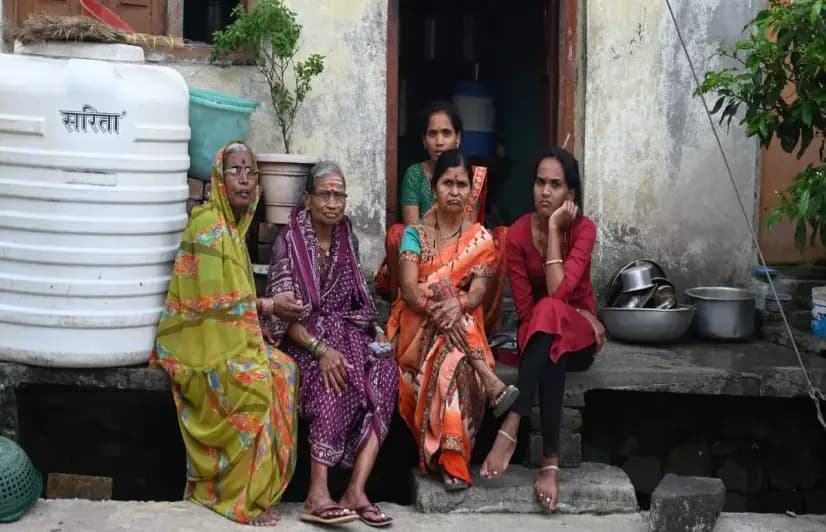
As extreme weather deepens agricultural distress, women excluded from formal credit systems are trapped between microfinance pressure and shrinking livelihoods.Parbhani, Maharashtra: “You still have the responsibility of my marriage, and so that you don’t do something like what my brother did, I am ending my life… Your Sarika”In Manoli village of Parbhani district, Maharashtra, Sarika (17) left behind a note for her family in February 2021 before she took her own life. “Dear Papa. Brother went to the field and killed himself because all the crops were scorched,” she wrote. “There is a burden of loans upon our house. Because the rains did not come, the sowing you did by taking loans got scorched…I cannot bear to see your suffering. The loan from my sister’s marriage is yet to be repaid. You still have the responsibility of my marriage.” In the same district, Lalita Nagorao Ghode (47), a woman farmer from Sonpeth taluka, left her village in the middle of the night in January 2025 and has been missing ever since. Her neighbour, Raju Kate, said her life had “become unbearable”. Ghode had been allotted a house under a government housing scheme, but when the sanctioned amount proved insufficient to complete the construction, she borrowed Rs 3 lakh in parts from a microfinance company in 2024. To repay that, she took further loans from villagers.Lalita Ghode sold this house and left the village (Photo - Sanjana Khandare, 101Reporters)The loan amount had stacked up so that she owed Rs 300 everyday to the microfinance company. Ghode had no farmland of her own and survived on daily-wage work on others’ fields. But repeated bouts of heavy rain and cloudbursts in Parbhani during the monsoon season last year had wiped out work opportunities for her.“When there wasn’t even enough food for two meals a day, how was she supposed to pay back her loan?” Kate asked.He said loan recovery agents began visiting her daily, threatening her and abusing her verbally. With no income and mounting pressure, Ghode sold the half-built house she had dreamt of owning. That same night, carrying a few belongings, she quietly left the village. No one knows where she went.Ghode is not alone. Microfinance companies aggressively market loans, personal loans, home loans, business loans, mortgage loans, vehicle loans, farmland loans, promising instant approval. Drawn in by these offers, many women farmers across Marathwada have fallen into a deepening debt trap.This is not just a suicide note, it is the pain of rural India (Photo - Sanjana Khandare, 101Reporters)Easy loans, hard livesAcross Maharashtra, networks of self-help groups once gave women financial stability. But in a region battered by unseasonal rain, long dry spells and sudden hailstorms, every calamity hits the farmer’s household directly. When crops fail, everything collapses at once and for the next season, taking another loan becomes the only way to survive. Into this desperation have stepped microfinance companies, travelling from village to village with promises of “easy instalments” and “instant approval”.Studies show the majority of borrowers from some microfinance units are women. According to ‘Sa-Dhan’, the association of microfinance companies, India has 86.7 million microfinance borrowers: 99% of them women. Of these, 77% women live in rural areas.The process of getting a loan is simple. A person just has to submit an Aadhaar and PAN, form a small group with neighbours, and money is disbursed. But as agricultural incomes collapse under climate stress, repayment becomes impossible. For many agricultural labourers, mornings now begin with loan recovery agents at their door and nights end in fear of the next instalment. Microfinance companies aggressively target women: agents visit homes and say, “Your husband’s signature isn’t needed”, or “Take the loan in your own name”. On November 2, 2025, sitting on the verandah of her home, Meera Kharat described how the debt piled up for her. She first borrowed Rs 60,000, then Rs 50,000 from another company, and another Rs 25,000 later. “I was paying Rs 7,000 every month,” she told 101Reporters. “But when the rains failed, work stopped. How are we supposed to pay?” Meera Kharat, trapped under the burden of debt (Photo - Sanjana Khandare, 101Reporters)Her daughter Divya (12), listened as she spoke. “We take loans only when there’s a need, repairing the roof, school fees, seeds, fertiliser. But when unseasonal rains destroy everything, where do we get money?A little away, Shamal Kate recounted a similar tale. “Earlier, we could repay small loans. Now companies come every month offering more. We take one to pay another. In the end, we’re buried under a burden of debt.” She counted on her fingers: Rs 70,000 from one company, Rs 60,000 from another, Rs 50,000 from a third – which amounted to over Rs 1.8 lakh total. “Everything depends on the monsoon. If it rains well, we can repay. If it does not, we are finished.”Shamal Kate, who has no work in the fields, no money in hand, and struggles to repay her loans (Photo - Sanjana Khandare, 101Reporters)Women in Sonpeth said that agents visit the village every week. If an instalment is missed, they stand at the door, shout, and humiliate women publicly. “They say, ‘You wear gold but don’t repay!’ They threaten to take utensils, the TV, even goats. When men aren’t home, they stand outside shouting until we feel ashamed and somehow pay.”A system without safeguardsThis constant humiliation has forced many women from stepping out. The mental pressure has grown so intense that some stop eating, some fall ill, and some, like Ghode, slip away quietly in the night. Lalkrishna Bahadur, a senior executive officer with Bharat Finance, oversees loan disbursement for small enterprises, goat-rearing, and home-based businesses through women’s self-help groups. He said: “Each group has 11 women members, and they are given loans of up to one lakh rupees. We verify documents and check whether the money will genuinely be used for business. Every month, 40-50 self-help group files from Parbhani are approved, and about Rs 50 lakh is disbursed. Weekly installments range from Rs 4,500 to Rs 7,000, with an interest rate of 9.5%.”If a woman misses a payment, she is charged a penalty of Rs 1,000. Failure to pay affects her credit score, making it impossible to obtain future loans. “If she still cannot repay, we file a court case,” he added.According to feminist activist Surekha Ghadge from Jintur, “These women are neither recognised as farmers, nor as labourers, nor as entrepreneurs. They are invisible in every government record. When they earn, the system takes their labour. When they fall into debt, they vanish from every list, nobody even counts them as citizens.”Local gram panchayats and the formal banking system have almost no oversight over these companies. They enter villages, give loans, collect money, and disappear. Women often don’t know which company they borrowed from, only that they must pay Rs 300-Rs 500 every week. “We don’t have papers or receipts,” said Sunita, another borrower. “The man comes, we give money. Sometimes a new agent comes and says our old installments weren’t counted, so we must start again. What do we do then?”Microfinance companies have expanded sharply across Marathwada and Vidarbha in the last five years. According to the Microfinance Institutions Network (MFIN), there are now 1,491 microfinance branches in Maharashtra, one of the five highest-borrowing states in the country. Districts like Parbhani, Beed, Jalna, Osmanabad and Nanded account for a significant share of this lending boom.“It’s a modern debt trap,” said Sheetal Kamble of Bajaj Finance Limited, who has researched women’s microfinance groups in Beed and Parbhani. “Companies tell women this is empowerment, take loans, do business. But there’s no market support, no steady income, no relief when crops fail. So they keep borrowing to repay older loans. That is not empowerment. That is entrapment.”Ghadge added that the burden falls entirely on women. “When instalments aren’t paid, the agents scold the women, not the men. The men say, ‘It is your loan. You handle it.’ So all the pressure falls on her.”Even during the Covid-19 lockdown, when farming came to a halt, loan recovery continued. Rekha from Bhogaon village recalled: “We told them we would pay later. They said, ‘If you don’t pay now, your group will be blacklisted.’ Then we had to borrow from neighbours just to pay them. How long can that go on?”In this lane of Sonpeth village, except for two houses, everyone has taken loans (Photo - Sanjana Khandare, 101Reporters)Invisible lossesIn a study by the Tata Institute of Social Sciences (TISS) on climate vulnerability and women’s livelihoods in Marathwada, researchers found that women are routinely excluded from formal credit systems like banks. As a result, they depend almost entirely on microfinance companies and informal moneylenders institutions that rarely evaluate repayment capacity in the context of climate distress. Microfinance units take advantage of this gap in the formal system. “The microfinance model assumes income stability,” said Professor Vandana Deshmukh of TISS. “But in a drought-prone area like Marathwada, stability doesn’t exist. Every failed monsoon pushes women deeper into debt.”The shift is visible on the ground. “Earlier, when our self-help group met, we talked about savings or farming,” said Meera Kharat. “Now every meeting is about who has paid, who hasn’t, and who’s being threatened by which company.”Researchers have noted that the stress and humiliation faced by indebted women often lead to mental health breakdowns, marital conflict and, in some cases, suicidal thoughts. But because women’s names rarely appear as “farmers” in land records, they are excluded from farmer-suicide statistics and compensation schemes. “When a man dies by suicide, it’s counted as a farmer death,” explained Kamble. “When a woman borrower dies because she can’t repay, she’s labelled a ‘housewife’. Her death doesn’t count as agrarian distress, even though the cause is the same.”“If work in the fields starts again, we will be able to repay the loans," says Nirmala Kapse (Photo - Sanjana Khandare, 101Reporters)According to National Crime Records Bureau data, suicides among female agricultural labourers and homemakers in rural Maharashtra have steadily risen between 2018 and 2023. Nationally in 2018, of the 4,586 suicides by agricultural labourers, 515 were women, a number that has increased in subsequent years, particularly in drought-affected districts.“We see these women in every village working all day, attending meetings, worrying about loans,” said Ghadge. “They are holding up the rural economy. But in policy documents, they do not exist.”The impact of this echoes in the narrow lanes of Sonpeth, where as lamps flicker and kitchen smoke drifts between homes, the evening conversations are not about festivals or songs, but about repayments. “How much this week?” “How much left?” “When will the agent come again?” Each household keeps a small notebook, pages smudged with thumbprints and oil, a record of survival through arithmetic.During field visits, the district administration speaks of “financial inclusion,” “women’s empowerment,” and “entrepreneurship.” But in the villages, empowerment has turned into endurance. “We wanted to stand on our feet,” Meera said. “But now the ground itself is slipping.”“We don’t want sympathy,” added Shamal Kate, tying a cloth around her head as she started walking toward the dry fields. “Just give us a chance to work, to earn, to live without running from debt collectors. The rain will come someday but we need to survive till then.”Just then, clouds gathered over Parbhani, dark but uncertain. The women looked up at the sky, some with hope, some with fear. Because in Marathwada, every drop of rain carries both a promise and a debt.This project is supported by the Internews Earth Journalism Network with funding from the Swedish International Development Cooperation Agency (Sida) Cover photo - These women from Sonpeth are caught in the trap of debt (Photo - Sanjana Khandare, 101Reporters)
In the remote, tribal villages of Gadchiroli, climate change is breeding malaria
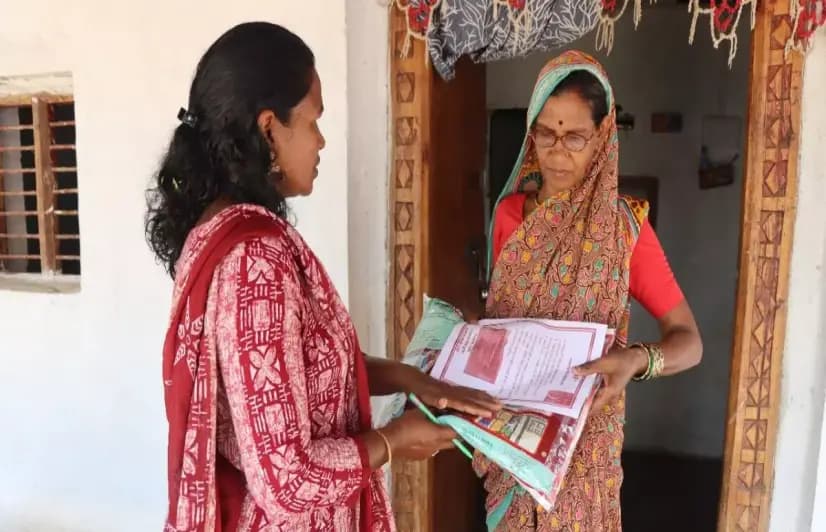
A warming climate, unpredictable rainfall, and longer mosquito breeding seasons are resulting in an unprecedented surge in malaria cases across the forested belt Gadchiroli, Maharashtra: “I lost my husband to cerebral malaria in 2018. Three years later, my elder son, who had taken his place as a constable, died the same way,” said Parvati Jagannath Madavi (40) from Aheri village in Maharashtra’s remote Gadchiroli district. By 'same way', Madavi is referring to the patrolling duty the duo undertook in the forest belt of Gadchiroli — which observes high police monitoring and patrolling due to Naxalite presence.Her son, Mahesh Madavi (28), was on forest patrol duty when he developed a persistent fever. The family took him to the Aheri Primary Health Centre (PHC), fearing malaria, but the tests came back negative, and Mahesh was prescribed some medicines along with bed rest. “But how long could he stay at home?” Parvati added. Mahesh rejoined duty within two weeks and collapsed on the job. He was once again taken to the PHC where he fell off the bed, and being severely ill, he was urgently shifted to Chandrapur district hospital. There, doctors confirmed their worst fears: Mahesh had contracted cerebral malaria and was already in a coma.“We took loans, tried everything to save him. But malaria took him too,” Parvati said.Her story is not an isolated incident. Every year, families in Gadchiroli grapple with the deadly consequences of malaria. The vector-borne disease is caused by the Plasmodium parasite, transmitted through the bites of infected female Anopheles mosquitoes. If left untreated, it can lead to severe complications, including organ failure and even death. Malaria is especially prevalent in areas surrounding the district’s 27 PHCs, with Bhamragad and Dhanora villages reporting the highest numbers. In 2023, Gadchiroli reported 5,866 malaria cases and 10 deaths. These numbers rose to 6,698 cases and 13 deaths in 2024. Gadchiroli grapples with the deadly consequences of malaria (Photo - Representative images from Pixahive)Caught between rain, heat and malariaAccording to health officials, a warming climate, unpredictable rainfall, and longer mosquito breeding seasons are resulting in an unprecedented surge in malaria cases across the forested belt. Data accessed through a Right to Information (RTI) query shows that the malaria cases in Gadchiroli have been steadily rising since 2019. That year, the district saw 2,428 malaria cases — which spiked to over 12,000 in 2021. While there was a dip in 2023, the trend reversed again in 2024.These fluctuations also mirror the changes in local climate patterns. For example, in February 2024, Gadchiroli experienced an unusually high maximum temperature of 31.6°C, which was above the normal range of 24-28°C.“Higher temperatures allow mosquitoes to live longer and spread malaria over extended periods. Mosquitoes breed in stagnant water, which becomes easily available during the monsoon, and additionally, unseasonal rains create ripe breeding grounds for them. This not only increases malaria risk during the rainy season but also extends it to unexpected times of the year and to once safer areas,” Dr Bhushan Divekar Chaudhari, Taluka Medical Officer in Bhamragad, told 101Reporters.Dr Bhushan Divekar Chaudhari, Taluka Medical Officer in Bhamragad (Photo - Sanjana Khandare, 101Reporters)Rainfall patterns too have become increasingly erratic. According to Dr Chaudhari, Gadchiroli now faces prolonged dry spells punctuated by heavy, untimely rains, especially in the pre-monsoon season. Water scarcity during low rainfall periods forces people to store water in open containers, creating ideal conditions for mosquito breeding.“Moreover, these unpredictable shifts in rainfall make agricultural planning difficult, which eventually leads to stagnant water bodies. These sources allow the mosquito population to thrive,” said Prajakta Pedapalliwar, former chairperson of the Aheri Municipal Council, adding, “Specially, in Aheri, rice is commonly cultivated, and leftover stubble is often left in the fields, which also traps water, further encouraging mosquito breeding.”“It’s crucial to break the myth that malaria is only a monsoon disease. It can strike at any time,” Pedapalliwar said.Where help doesn’t reachThe situation in Gadchiroli gets trickier due to the inaccessibility of several areas in the district. During monsoon season, about 212 villages become entirely cut off due to flooding and poor road access. Out of Gadchiroli’s 1,675 villages, 766 have fewer than 300 residents — too small to meet the criteria for posting permanent healthcare workers like ASHAs (Accredited Social Health Activists). As a result, many villages remain without even basic primary healthcare support.One such village is Jimlagatta in Aheri taluka, where in September 2024, Ramesh Veladi lost his two sons to malaria within just two hours of each other. Bajirao Veladi (3) and Dinesh Veladi (6) were taken to the nearest healthcare sub-centre in Bori village, where their condition worsened, but there was no ambulance to take them to the larger hospital in Pattigav.With no other option, Veladi carried his sons on his shoulders, walking nearly 15 kilometres through muddy paths and swollen streams. By the time he reached, it was too late. He returned the same way, this time with the lifeless bodies of his children.“One of the reasons why Aheri is relatively worse affected by the vector-borne disease as compared to other villages is the lack of proper infrastructure here,” Pedapalliwar said. “Everyone talks about developing Gadchiroli because of its mineral wealth, but real development still feels out of reach. The tribal communities don’t even have access to basic healthcare. The government says these areas don’t meet the population criteria for setting up health centres…but these are permanent settlements, where people live and farm. If the government brought healthcare to where people actually live, we could start seeing a real drop in malaria cases,” she added. Prajakta Pedapalliwar from Aheri with kids (Photo - Sanjana Khandare, 101Reporters)The cost of neglectMost malaria cases are reported during the monsoon season, when transportation becomes a major obstacle. Flooded rivers and washed-out forest paths make it difficult for patients to reach PHCs.“Government hospitals have a mandated three-day course of medication when a malarial case is reported. But, deaths occur not just because someone has contracted malaria but also due to the delay in treatment,” Dr Kailas Nikhade, an environmental researcher from Gadchiroli, said. “Even police personnel stationed in forests contract malaria, but helicopters are sent immediately to evacuate them. That level of response has never been available to ordinary citizens,” he added. For ordinary citizens, ASHA workers are responsible for delivering first-line care, but the terrain and climate conditions often limit their ability to respond promptly. Each ASHA is typically assigned multiple hamlets spread across forested areas with poor transport access. Kalpana Pungati, an ASHA worker from Kiar village in Bhamragad block, described how monsoons have become increasingly severe over the past decade, making outreach difficult. “We often have to cross overflowing rivers and streams to reach patients. Earlier, the water levels were manageable. Now, due to erratic and heavy rainfall, the volume and force of water have increased,” she said. “Roads are in bad shape, bridges are no longer reliable, and many times we have to travel alone carrying medicines and vaccines.”Sayali Meshram, a resident of Aheri, echoed the same sentiment. “During the monsoon, transportation comes to a halt. People are forced to carry sick relatives on cots or shoulders for several kilometres to reach the nearest hospital,” she said. “This year, a young child died from fever. His father had no other option but to carry the body for over three kilometres on foot. These are the deaths of poor people, and no one pays attention.”There is a pressing need to raise awareness about the seriousness of malaria (Photo sourced by Sanjana Khandare)The gaps on the groundDespite government efforts to control malaria in Gadchiroli — from distributing mosquito nets and mosquito-repellent creams to releasing guppy fish to control larvae growth — prevention remains a challenge on the ground. Pallavi Gortekar, an ASHA worker from Malewada, said, “People are given mosquito nets, but some use them to catch fish instead of protecting themselves.” According to Kavita Kudmete of Alapalli village, the nets are “too hot for children in summer, so people use them for fishing and hardly anyone uses Odomos daily.” “What we need is a large-scale intervention; mosquito nets and creams are not enough,” said Aheri resident Jayashree Madavi. She added that poor drainage systems and mismanaged wastewater are the major factors contributing to the region’s mosquito problem. Pedapalliwar, who is also an environmental researcher, agreed with Madavi, adding that tribal communities living close to forests and rivers are especially vulnerable to the vector-borne disease. “Their forest-dependent lifestyles, minimal clothing, and the lack of basic sanitation infrastructure increase their exposure to the disease,” she explained. Social activist and former Zila Parishad member Dr Lalsu Nagoti concurred. “We must go beyond health centres and mosquito nets,” he said. “Clean ponds, mosquito predators like guppies and frogs, and timely training for villagers to adapt to climate shifts are all crucial.” There is also a pressing need to raise awareness about the seriousness of malaria and the importance of timely treatment. Pedapalliwar said low literacy levels and deeply rooted traditional beliefs affect the health-seeking behaviour in the region. “Some villagers tend to delay seeking formal medical treatment or rely on home remedies first,” she added. Nagesh Madeshi from the Hope Foundation, an NGO said superstitions and language barriers obstruct early diagnosis and treatment. “At least 40% of people still turn to witch doctors as their first point of contact,” he said. “Language is another major hurdle. When doctors from outside are posted at local health centres but don’t speak tribal languages like Gondi or Madia, they are not able to explain just how dangerous malaria is.”According to experts, healthcare access is also hampered by national policies that do not account for Gadchiroli’s sparse and forested geography. Dr Abhay Bang, a public health expert and the Founder and Director of Society for Education, Action and Research in Community Health (SEARCH) said, “We definitely need flexible criteria for PHCs in tribal areas, more mobile medical units, and stronger networks of health workers in remote villages.” A plan in placeThese are universal concerns across many remote villages in Gadchiroli — a district the Ministry of Health and Family Welfare identifies as one of the six most malaria-affected in the country.In a step toward eliminating the disease, the Maharashtra government launched a district-wide malaria eradication plan on April 1, 2025. The initiative, backed by Rs 25 crore from the Tribal Development Department, was announced in the Legislative Assembly by Chief Minister Devendra Fadnavis earlier this year. Developed by a Special Task Force led by Dr Bang, the three-year plan aims to bring malaria cases in Gadchiroli down to zero.The plan includes distributing insecticide-treated mosquito nets, regular spraying in high-risk areas, immediate blood testing for anyone with fever, and health communication in tribal languages. Emphasis has also been placed on a time-bound, tightly monitored rollout, with the hope that the most vulnerable will no longer fall through the cracks of an overburdened rural health system.This story was produced as a part of 101Reporters Climate Change Reporting Grant. Cover Photo - A woman distributing mosquito nets (Photo - Sanjana Khandare, 101Reporters)
Write For 101Reporters
Follow Us On
101 Stories Around The Web
Explore All News