A three-year review of the Tax Sakhi scheme in Bhopal district

A three-year review of the Tax Sakhi scheme in Bhopal district
A review of Bhopal district’s Tax Sakhi scheme, launched in 2022, finds that while collections have improved, weak service delivery and policy instability continue to limit its promise of panchayat self-reliance.
Bhopal, Madhya Pradesh: When the Tax Sakhi scheme was launched in Bhopal district in April 2022, it was pitched as a way to reduce gram panchayats’ financial dependence on higher tiers of government while creating paid work for women from rural self-help groups and empowering them.
Under the scheme, two women from each gram panchayat were trained to collect local taxes—property, sanitation, water and commercial levies—from households, with the stated aim of strengthening village-level self-governance under the Madhya Pradesh Panchayat Raj and Gram Swaraj Act, 1993, alongside the Swachh Bharat Mission (Rural).
Going door-to-door, they collect Rs 100 in property tax, Rs 50 in swachhta (cleanliness) tax, Rs 1,400 in commercial tax from shops, fairs and markets and Rs 100 for water supply from every household. They start collection around the 10th of every month, with their working hours dependent on how fast they are able to convince the people to pay up. The entire process gets over within five to 10 days in some places, while it can take 15 to 20 days in others.
In 2022, 101Reporters first reported on the scheme and found out that Tax Sakhis were facing discontent from the villagers who questioned why they were being asked to pay taxes when basic services remained patchy. In several villages across the Fanda and Berasia blocks, collection itself was a struggle, 101Reporters had reported.
Three years later, 101Reporters returned to multiple gram panchayats in Bhopal district to ask a more fundamental question: has the scheme moved beyond tax collection to make panchayats self-reliant?
 Two women from each gram panchayat are trained to collect local taxes like property, sanitation, water and commercial levies (Photo - Sanavver Shafi, 101Reporters)
‘No facilities, no tax’
In November 2025 , Sonam Bai, a Tax Sakhi from Fanda Kalan gram panchayat, described a situation that has changed little since 2022. 101Reporters had also spoken to her three years ago.
“Ask anyone to pay tax and they immediately get angry,” she said. “They say there has never been tax in villages like in cities. We persuade people with great difficulty.”
The bigger problem, she added, begins after the tax is paid.
“Villagers agree to pay on time, but when they don’t see cleanliness, streetlights, roads, electricity or water improving, they question us. Then they say if there are no facilities they will not givetax.”
Her colleague Phulvanti Bai said the anger is often misdirected. “We convey complaints to the gram panchayat and district panchayat. But when they are not resolved, we are the ones villagers confront.”
Most unresolved complaints relate to water supply, roads and garbage collection. “If these were addressed regularly, tax collection would become much easier,” both women said, though they admitted they see little consistency in follow-up.
Interviews with Tax Sakhis across Bhopal district revealed a shared experience: villagers are less opposed to taxation itself than to the absence of visible outcomes after payment.
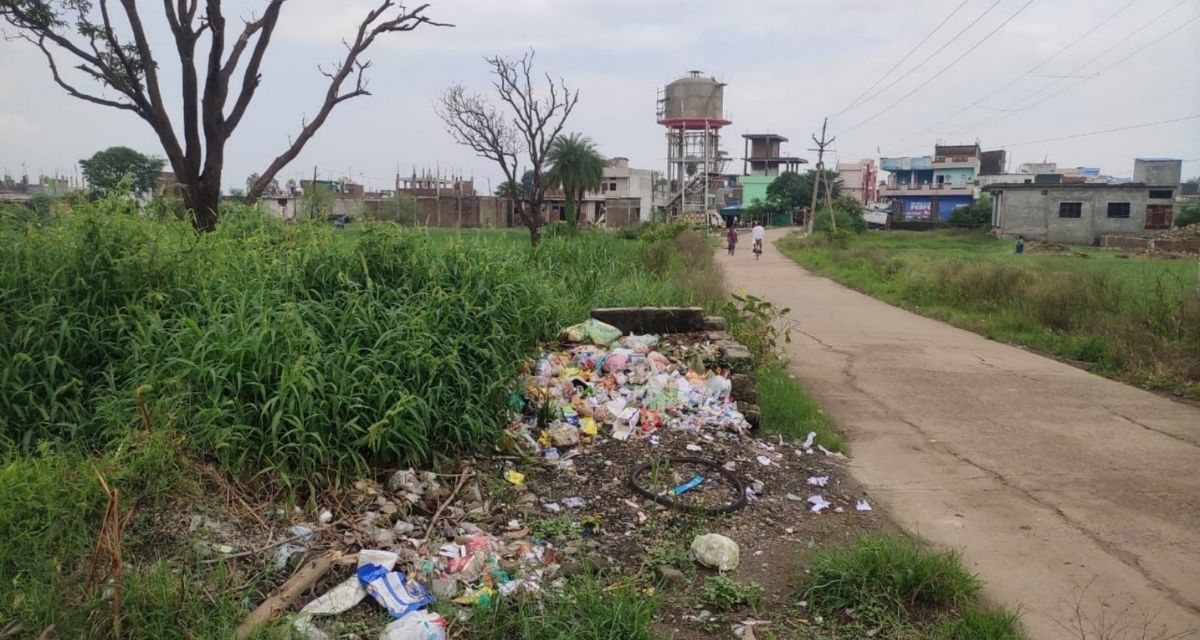 Many unresolved complaints are about garbage collection in the panchayat (Photo - Sanavver Shafi, 101Reporters)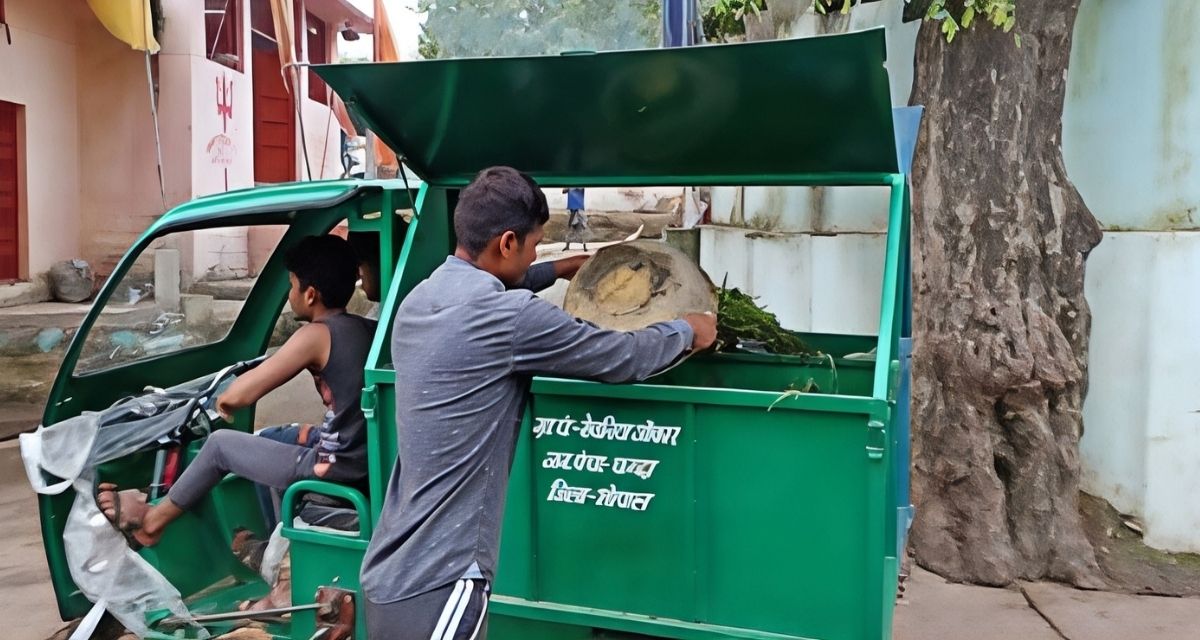
A scheme built on incentives
The Tax Sakhi scheme was conceptualised in early 2022 under then District Panchayat Chief Executive Officer Rituraj Singh. According to Girish Tavse, nodal officer of the National Rural Livelihood Mission (NRLM), the framework was prepared in January that year. By March, 374 women from 222 gram panchayats were trained to issue receipts and upload data on the Panchayat Darpan portal.
For many women, the work marked a shift in social and economic standing.
“When we earned Rs 10,000 from tax collection in the first month, it was a very big moment,” said Shanti Meena (36) from Nazirabad. “It was not just a livelihood but it also provided us with dignity.
Sonam Bai said she used her earnings to save for her children’s education.
Tax Sakhis receive a commission of 10% on total collections. On average, this translates to Rs 3,000-Rs 4,000 a month, depending entirely on how much tax they collect.
In the first year, the scheme appeared to work. More than Rs 3 crore was collected across Bhopal district. One tangible outcome was the Material Recovery Facility (MRF) centre built in Intkhedi at a cost of Rs 48 lakh, intended to segregate and recycle village waste.
Parvati Lodhi (40) from Sevaniya Onkara gram panchayat, said early resistance softened after awareness drives. “People said there had never been tax in villages. We explained that the money would be used for roads, streetlights and waste management.”
Buoyed by these results, the state administration expanded the model to districts such as Dewas and Burhanpur.
In Dewas, Tax Sakhis collected Rs 1.68 crore in six months. But, the underlying problem persisted: villagers continued to question why services did not match collections.
In Burhanpur’s Ichhapur village in 2022-23, the panchayat passed a resolution to collect water tax and assigned 11 women from self-help groups to collect dues from 2,100 households. Residents initially refused, pointing out that water was supplied only once every 15 days.
“It changed only after the sarpanch ordered water connections of 500 defaulters to be cut,” said Tax Sakhi Savita Kailash.
Since then, Rs 17.5 lakh has been collected as water tax. Borewells and storage tanks were built using the funds, and water is now supplied daily. “Now we pay tax happily,” villagers said.
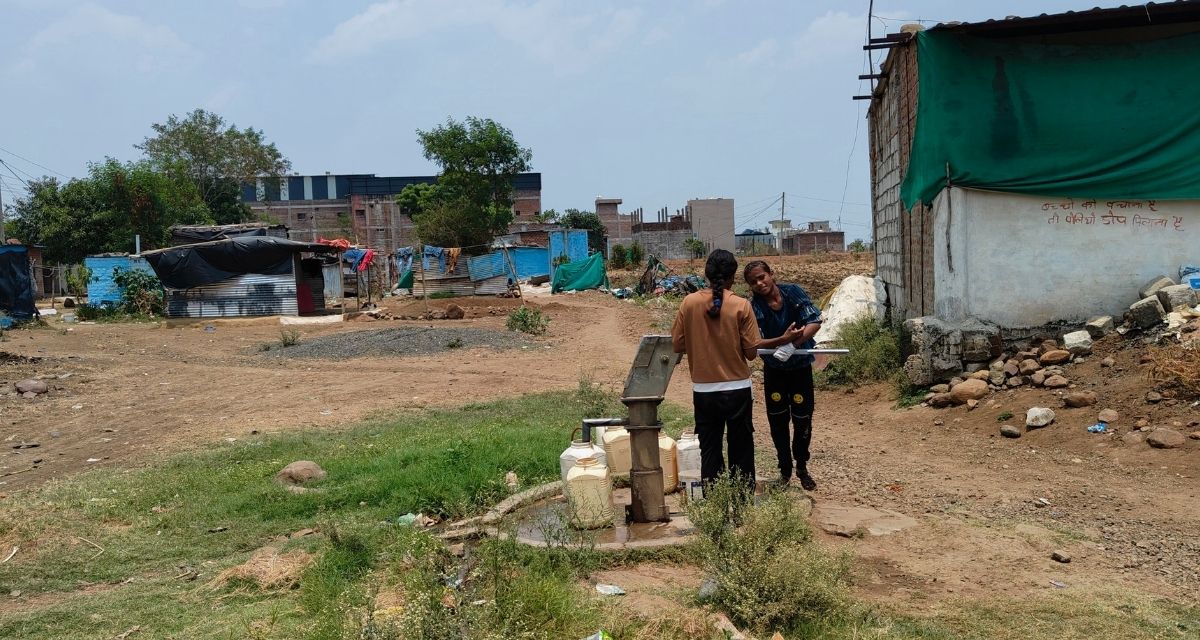 Ichhapur village panchayat passed a resolution to collect water tax (Photo - Sanavver Shafi, 101Reporters)
The election shock
Just as the scheme started stabilising, it was hit by a political shock.
During the 2023 Madhya Pradesh Assembly elections, then chief minister Shivraj Singh Chouhan announced at a rally in Berasia that the Tax Sakhi scheme would be discontinued, citing complaints about tax collection without visible improvements.
The announcement had an immediate impact.
“We went village to village explaining for months,” said Kamla, 38, from Imliya village. “After the announcement, people said, ‘See, we told you.’ Our work collapsed overnight.”
Collections fell sharply. “We went door to door and returned empty-handed,” said Sunita (32) from Parwaliya. “For months, there was no commission.”
According to Santosh Jhariya, district coordinator and MRF nodal officer, the effects rippled outward. “The fall in collection destabilised the entire system.”
Maintenance of 154 e-rickshaws and 75 tricycles stopped. Salaries were delayed. Recycling operations slowed as funds dried up. “Even the waste that came was mixed because machines weren’t maintained,” Jhariya said.
However, the scheme was revived in 2024. Revised property tax slabs were introduced from August in 222 gram panchayats, reducing tax on assets up to Rs 50,000 from Rs 200 to Rs 100. Other levies remained unchanged.
By April 2025, collections had reached Rs 2.40 crore, with around Rs 24 lakh paid as commissions.
In February 2025, Ila Tiwari took charge as CEO of the Bhopal district panchayat and issued instructions to janpad officials to revive collections.
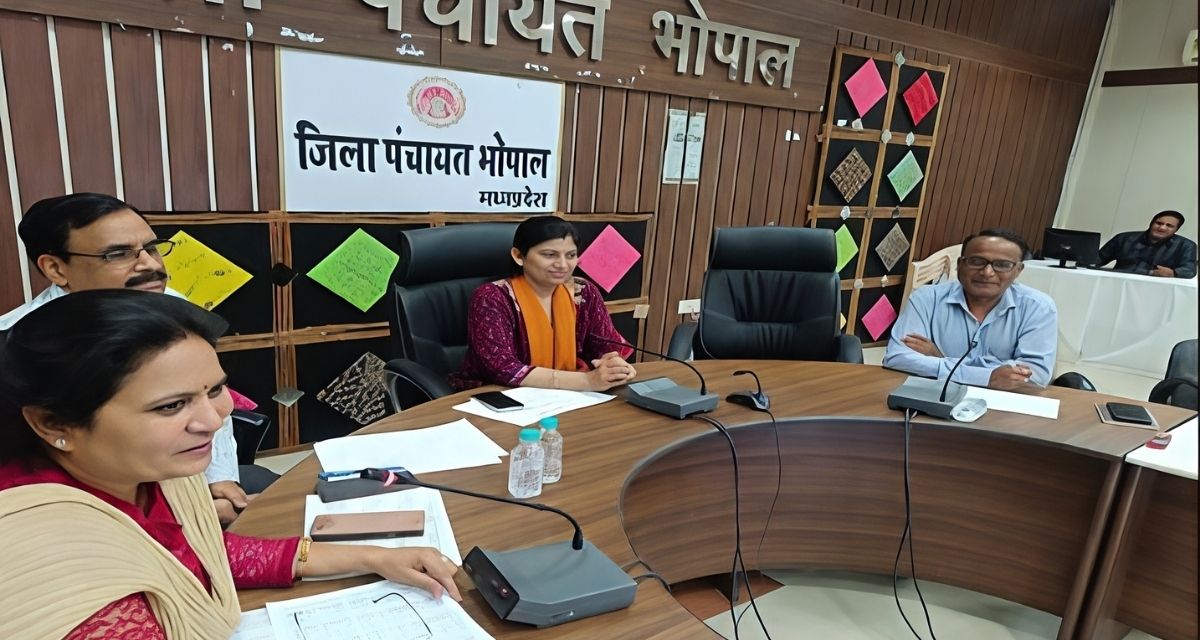
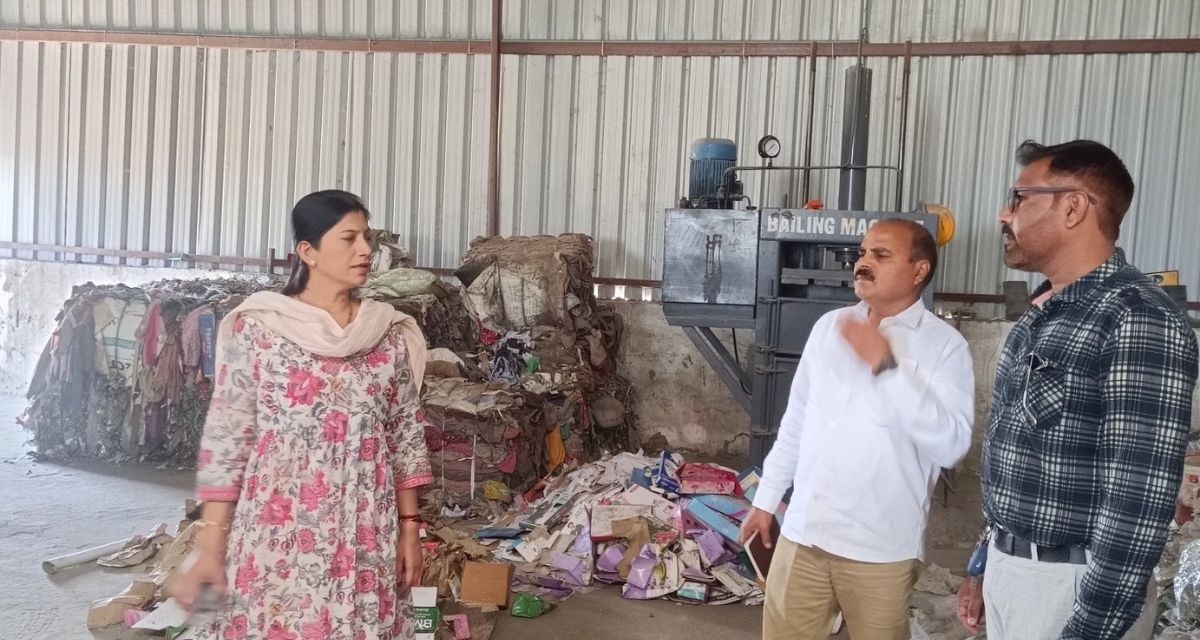 Ila Tiwari, CEO of Bhopal District Panchayat visiting and inspecting the MRF (Photo - Sanavver Shafi, 101Reporters)
But it was harder this time around to restore the trust of the public in the system.
“Villagers don’t believe the scheme is stable,” said Mamta Sahu, 36, from Mengra Kalan. “They think it can be shut anytime and that their money won’t be used for development.”
Brij Kishore (62) a resident of the village, explained the resident’s doubt. “We want development and are ready to pay. But what guarantee is there?”
Tiwari acknowledged the credibility gap. “Once a scheme is shut, it loses trust,” she said, adding that efforts were underway to focus on low-collection areas through training and awareness camps.
For Tax Sakhis like Rani Mewada from Fanda Kalan, one way to build trust is by interacting with villagers but it has been difficult answering their questions.
“They ask why there has been no road or drain for years,” she Mewada said. “Their question is valid. We have no answer.”
Despite this, some Sakhis continue to collect taxes every month, albeit with difficulty. Mewada earned Rs 3,400 in commission between July and August, and Rs 4,300 in September-October.
Self-reliance on paper
Under the Panchayat Raj and Gram Swaraj Act, 1993, gram panchayats have the right to levy and collect taxes. In practice, this autonomy has long remained on paper.
“The Tax Sakhi scheme was the first serious attempt to operationalise this right,” said social activist Rashid Noor Khan. “And initially, it worked.”
Tax Sakhis collected nearly twice as much as panchayat secretaries and employment assistants, demonstrating the impact of incentives and accountability. But the scheme’s limits soon became apparent.
“When tax collection does not translate into visible development, payment becomes a burden,” Rashid Noor said. “Collection exists, but utilisation is weak.”
The underperforming MRF centre and delayed payments to sanitation workers is an example of this gap.
But, a contrasting example comes from Kalimukhi gram panchayat in Khandwa district, where villagers pay 100% of water, sanitation and property taxes. The panchayat uses its own revenue not only for infrastructure but also to fund initiatives such as pilgrimages for elderly residents.
“When people see clear benefits, tax payment becomes a matter of pride,” Rashid Noor, a resident, said.
Rural development expert Sanjay Sharma argued that the Tax Sakhi model rests on three pillars: cooperation from elected representatives, continuous public engagement, and policy stability. “In Bhopal, the absence of all three has weakened the scheme’s potential,” he said.
Beyond collection
A review of the scheme suggested that the Tax Sakhi initiative has given women income, identity and visibility. But three years on, Bhopal’s experience shows that tax collection alone does not make panchayats self-reliant.
Until basic services improve, villagers will continue to ask whether the tax is meant for development or merely for collection.
“Gradually, people will get used to paying tax,” Mewada said. “For that to happen, the scheme will have to prove that paying tax actually changes everyday life in the village.”
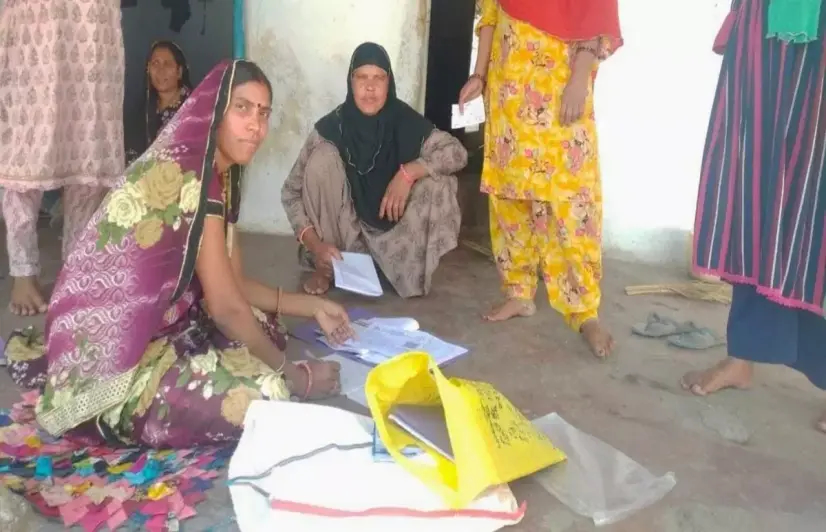
Cover photo - Sonam and Rani, tax sakhis who collect tax from the local households (Photo - Sanavver Shafi, 101Reporters)
Would you like to Support us
101 Stories Around The Web
Explore All NewsAbout the Reporter
Write For 101Reporters
Would you like to Support us
Follow Us On