A new law against protesting with bodies meets old habits in Rajasthan

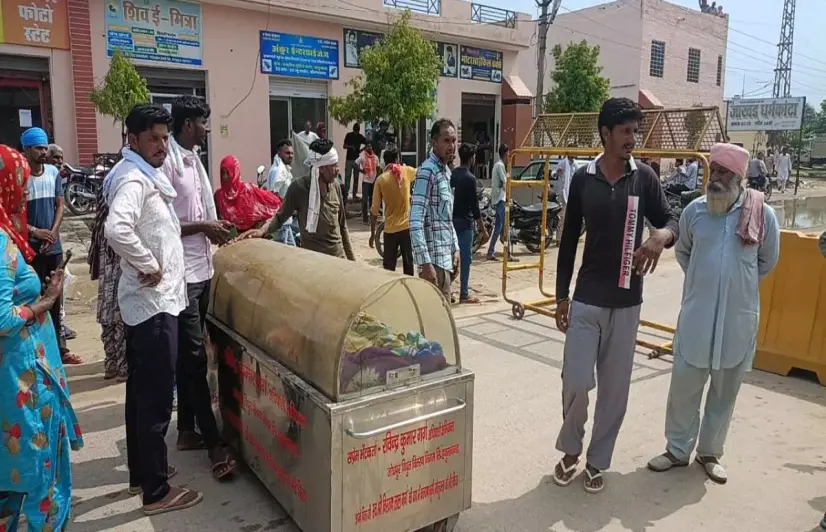
A new law against protesting with bodies meets old habits in Rajasthan
Families continue to delay funerals and hold protest with bodies to seek relief, despite a 2023 law criminalising the practice.
Hanumangarh, Rajasthan: On December 7, the Rajasthan government notified the Respect for Deceased Bodies Act, criminalising the use of a corpse as a tool of protest. The law makes it mandatory to conduct a funeral within 24 hours of death, barring limited exceptions such as a pending post-mortem or close relatives being outside the state.
Blocking roads, holding on to a body to exert pressure, or delaying last rites can now invite one to five years of imprisonment and fines.
The move targets a practice that has become routine in Rajasthan. After unnatural deaths, mourning is increasingly being followed by protest. Families often place bodies on roads or outside police stations and collectorate offices, refusing cremation until compensation or action is assured.
Take for example a recent case in Sri Ganganagar. After a farmer died from electrocution caused by a snapped power line, villagers staged a two-day protest with the body. The funeral took place only after assurances of Rs 18 lakh in compensation from multiple agencies. Protest leaders openly said the family would have received nothing without agitation. Similar scenes played out in Hanumangarh after the death of a four-year-old at an anganwadi, where last rites were delayed until compensation and a job were promised.
Such protests, seen after road accidents, electrocutions, medical negligence and workplace deaths, have become a familiar pressure tactic. The new law seeks to curb them, arguing that they disrupt public order and strip the dead of dignity.
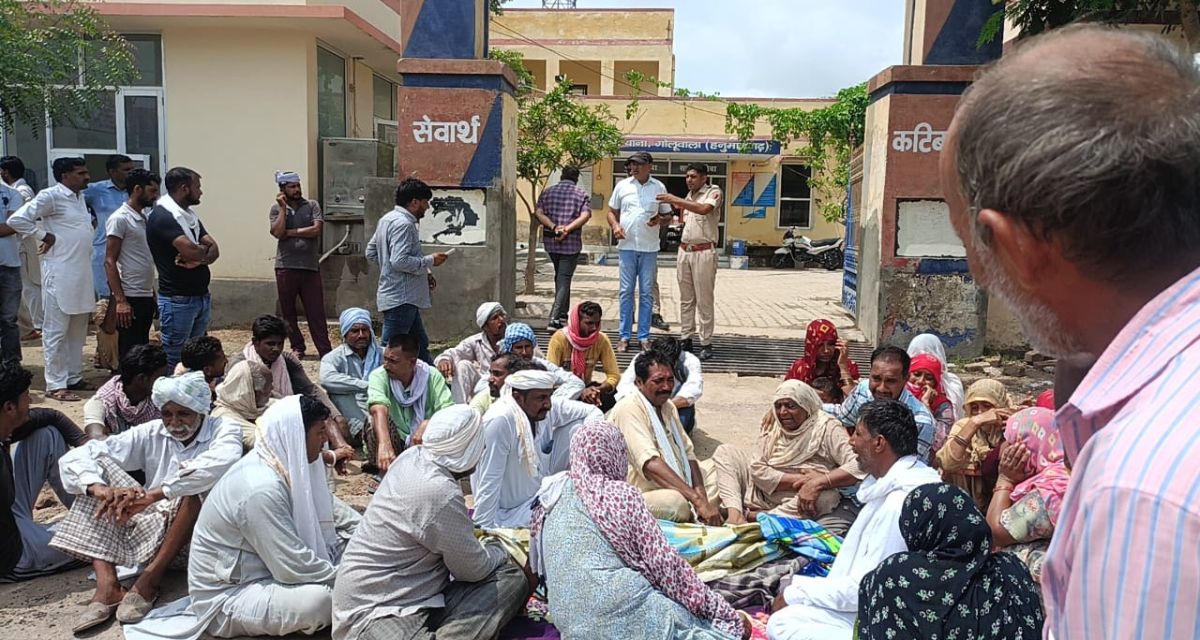 Villagers sit on a protest with the body of an accident victim in front of the police station in Goluwala, Hanumangarh district. (Photo: Balwinder Kharoliya)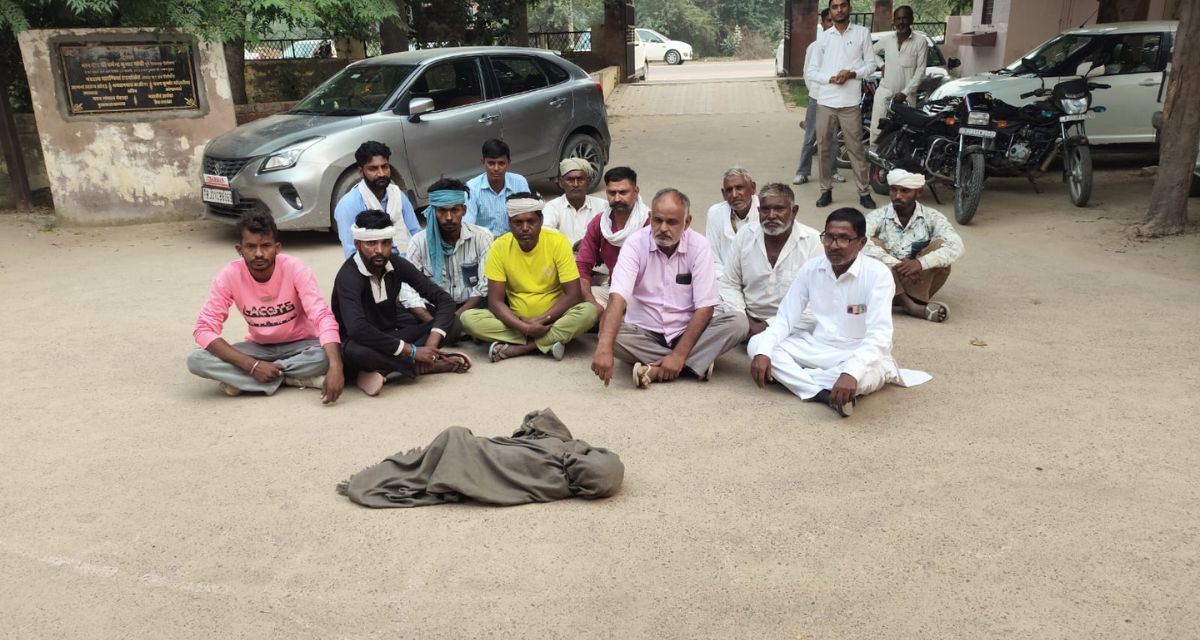
A protest with a precedent
In 2017, then Rajasthan Human Rights Commission chairperson Justice Prakash Tatia had ruled that using a dead body as a form of protest violates the dignity of the deceased.
The observation came after the family of gangster Anandpal Singh, killed in a police encounter, refused to cremate his body for 19 days. In his order, Tatia had said a deceased person retains limited human rights, including the right to a dignified funeral. That right vests first with the immediate family and cannot be withheld for any other purpose, he had noted.
Retired Indian Police Service officer Dilip Jakhar echoed this view. Preventing a funeral, he said, amounts to a violation of human dignity and human rights. Under the law, a dead body is not the property of anyone and the relatives may take custody only to perform the last rites. If they refuse to do so after a post-mortem examination, the police are empowered to carry out the cremation themselves. In practice, Jakhar said, this provision is rarely used. Large crowds often gather around the body, making enforcement difficult and raising the risk of law-and-order breakdowns.
It was to address such situations that the Ashok Gehlot government passed the Rajasthan Bill on Respect for Deceased Bodies in July 2023. The law, which came into force in August that year, also penalises family members, organisations and political leaders who delay funerals due to social or political pressure, prescribing jail terms of up to five years.
Although the Bharatiya Janata Party (BJP) opposed the Bill while in opposition, it did not amend it since coming to power and the long-pending rules were finally notified in December, 2025.
Yet, the law – which came into force in 2023 – has done little to alter ground realities.
Government data showed that between 2014 and 2018 alone, there were 82 instances of bodies being placed on roads as part of protests.
Even after the Act came into force it has not yet disrupted a familiar pattern on ground.
On November 26, 2025, after the murder of an elderly man in Harwani Sansarpur in Dungarpur district, villagers placed the body on the road in protest. The same day, the body of saint Purushottam Das Maharaj, found under suspicious circumstances at a temple in Jaipur’s Nimbi village, was kept at the premises during a day-long agitation.
In Chittorgarh, the body of courier businessman and BJP leader Rameshchandra Inani was placed inside the district collectorate a day after he was shot dead on September 28, 2025.
A month earlier, in Bundi district, the family of Sonu Singh Hada and members of the Karni Sena blocked the Kota-Udaipur highway with his body following his murder.
Similar protests followed the deaths of a vegetable vendor in Beawar, accident victims in Tonk and Dausa, and a young man whose family kept his body outside a government hospital in Lalsot.
Jakhar said that just the existence of law would not bring about a change.
“If the Act exists, the police must implement it,” he told 101Reporters. “That is not happening.”
Meanwhile, retired IAS officer SP Singh claimed that compensation is at the heart of these protests.
“State assistance for accidental deaths is often as low as Rs 50,000,” he said. “Families are desperate, regardless of how the death occurred. Compensation should be need-based, and responsibility must be fixed on the department or agency at fault. Without accountability, these protests will continue.”
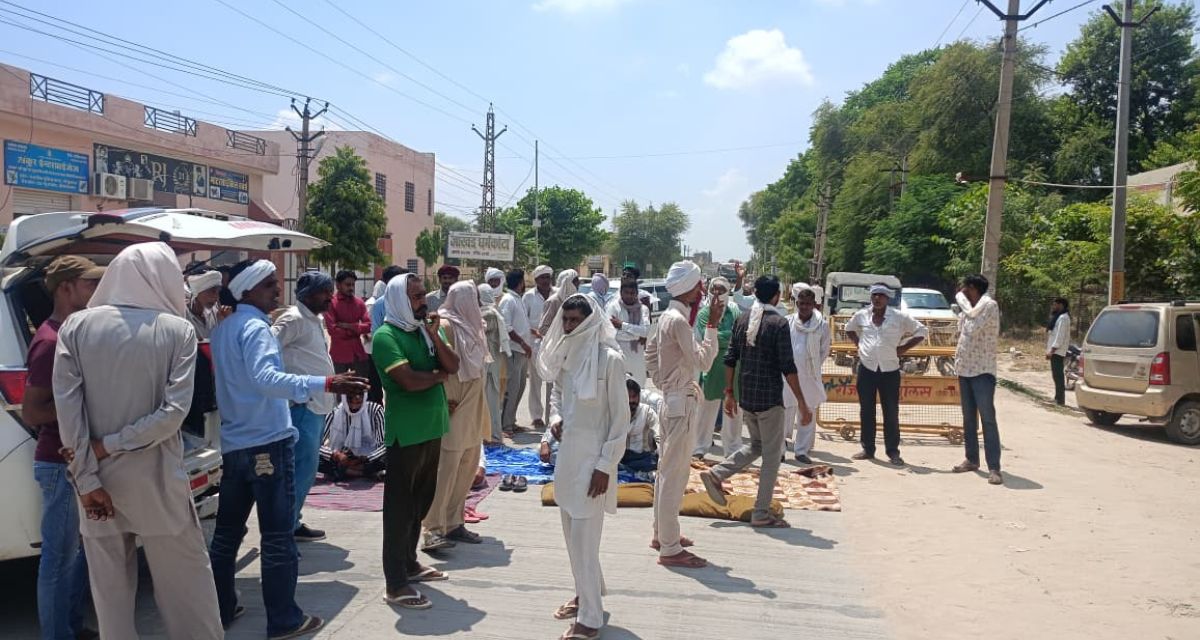 Families continue to delay funerals and hold protest with bodies to seek relief (Photo - Balwinder Kharoliya)
When protest brings no relief
Protesting with a body does not always lead to compensation or justice. In several cases, it ends with assurances that never materialise.
On August 21, the family of Hansraj (35), a brick-kiln worker from Hardayalpur in Hanumangarh district, staged a protest outside the local police station after he died in a road accident. They demanded compensation and the arrest of the driver. After officials assured them of help, the family cremated the body the same evening.
Nothing followed.
Hansraj’s father, Gopiram Nayak (61), said his son had remained in a coma for two months, during which the family spent nearly Rs 15 lakh on treatment, borrowing money and mortgaging land. “We have not received a single penny yet,” he said. His brother Rahul Nayak added that Hansraj’s widow now works at the brick kiln to support two children. “We protested because influential people told us it was the only way. Once the body was cremated, no one listened.”
Former officials say such assurances are often aimed at ending the protest rather than ensuring relief. The administration’s immediate priority is to have the body removed and last rites performed. Compensation, where applicable, follows a slow bureaucratic process in which district officials write to the state government, which sanctions funds in its own time. Whether a protest occurred or not makes little difference in what is ultimately paid.
A similar story played out in Sri Ganganagar’s Rawla area. In October 2024, Jasveer Singh Raisikh (38) died a day after being released on bail, following his arrest for disturbing the peace. His family alleged custodial violence and demanded a murder case, Rs 25 lakh compensation and a government job for his son. They placed the body outside the police station for two days before cremating it after assurances.
More than a year later, nothing has moved. “The viscera report has still not come,” Jasveer’s brother Boota Singh said. “Villagers collected about Rs 2 lakh for us but we have received nothing from the government.”
Why the practice survives
The use of bodies as protest is not a recent phenomenon. In 1962, Communist Party of India leader and Hanumangarh MLA Shopat Singh famously brought the body of Kurdaram Dhanak to Jaipur and placed it at the gates of the Rajasthan Assembly, alleging custodial killing. The episode is documented in Jan Nayak of Struggles, written by former CPI(Marxist) MLA Hetram Beniwal.
What has changed is the frequency.
Psychologist Dr Manish Baghla of Tantia University sees the trend as rooted in social anxiety rather than strategy alone. “This is not just about death,” he said. “Unnatural deaths heighten fear and uncertainty. Families bargain with grief because they fear what comes next…medical debt, loss of income, social pressure to ‘secure something’ before the moment passes.”
Jakhar is less sympathetic. “Disrespecting a body is wrong from every perspective, be it moral, legal or religious,” he said.
Since 2023, the Rajasthan Respect for Deceased Bodies Act has been invoked only in a handful of cases.
In September 2023, around 200 people were booked under the Act in Sri Ganganagar’s Mahiyanwali village for blocking traffic with a body after a road accident. More than two years later, the investigation is still incomplete.
A police officer, speaking on condition of anonymity, said such cases often stall due to political pressure. “On paper, investigations remain ‘ongoing’. In reality, they are frozen or withdrawn.”
Caught between grief, desperation and a slow-moving system, families continue to use the only leverage they believe works. The law exists. What is missing is the will to enforce it and a system that offers relief without forcing the dead to become instruments of negotiation.
Cover photo - Villagers sit on a dharna with a dead body in front of the police station in Goluwala, Hanumangarh district (Photo: Balwinder Kharoliya)
Would you like to Support us
101 Stories Around The Web
Explore All News