How the women behind makhana’s global rise remain its lowest-paid workers

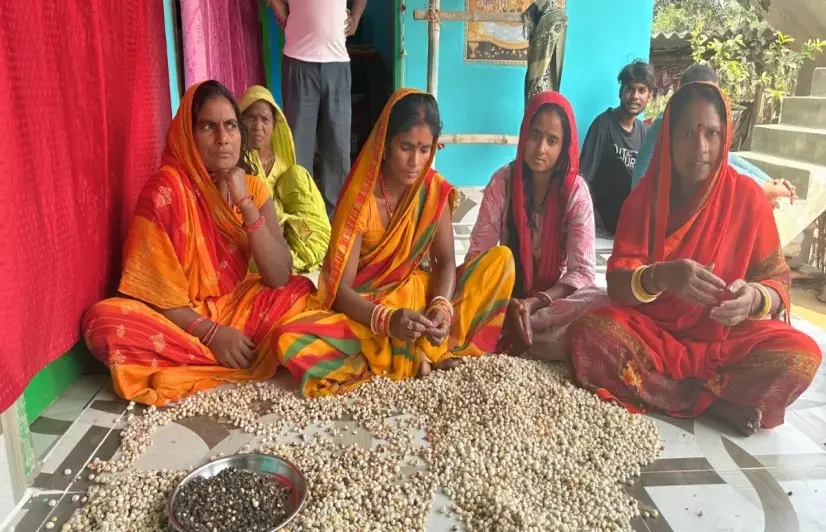
How the women behind makhana’s global rise remain its lowest-paid workers
By Bina Kumari and Shruti Venkatesh
Madhubani, Bihar: The sun has not yet risen. But at 4 am, Manju Devi’s day is already underway. She lights the stove, prepares breakfast, packs food for the family and gets her children ready for school. There is little time to spare. Before sunrise, she must reach the village pond.
Every morning by 6 am, she is waist-deep in muddy water, tending to Bihar’s most celebrated crop – makhana (foxnut).
For the next several hours, she toils in the pond. Some days she transplants saplings. On others, she removes weeds or harvests seeds hidden beneath the water's surface.
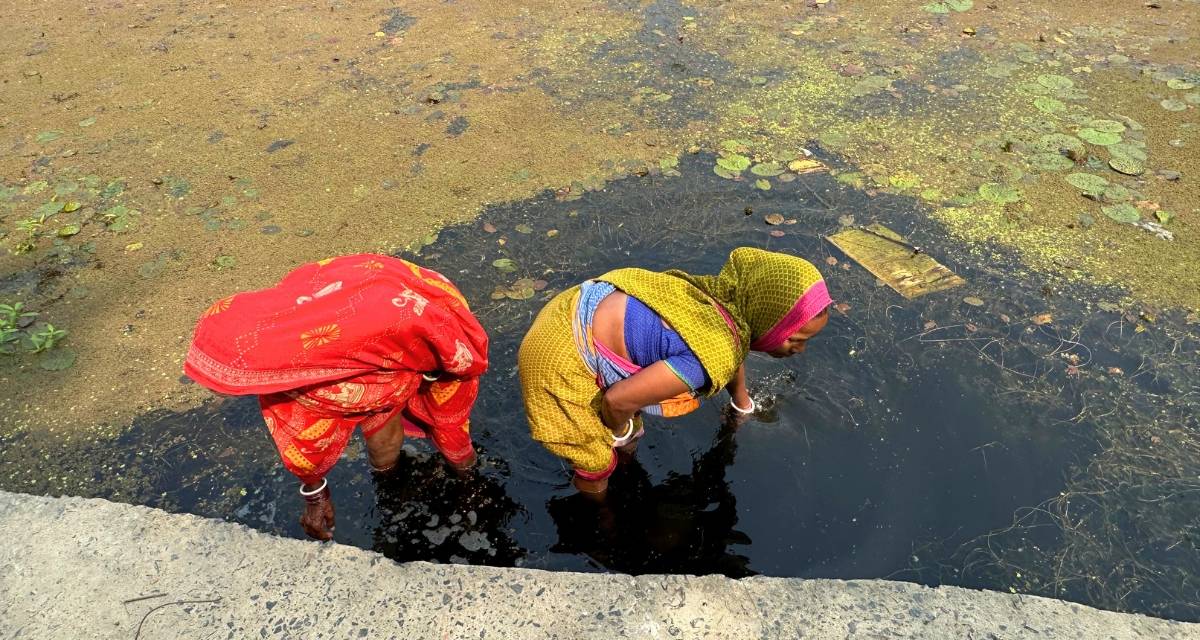 A woman laborer cleaning a makhana pond. Regular cleaning of the pond is considered essential for makhana farming (Photo - Bina Kumari, 101Reporters)
The work is tough and extremely demanding. Not only does it require long hours of bending and working in the water, but is also risky. The pond’s surface is choked with massive floating leaves, while sharp hidden needles guard the underwater stalks. As it is not easy to see through the murky water, workers have to move carefully and randomly feel along the muddy floor to find the seeds. This perilous labour frequently results in deep scratches on their arms and legs, or clothing trapped or torn by the thorns.
After enduring this for hours, her day is not yet over. She has to again take care of domestic chores and children.
Each day she goes through this grind – all for a meagre daily wage of just Rs 250-300. In comparison, it costs anywhere between Rs 750-1200 to purchase a 1-kg packet of makhana in a retail shop.
It is this paradox that sits at the centre of Bihar’s booming makhana economy. Driven by growing health-consciousness and export opportunities, the demand for makhana has surged in recent years. The premium crop even received a Geographical Indication (GI) tag in 2022. Yet the women, whose labour sustains its most labour-intensive and skill-intensive stages, remain among its lowest-paid participants.
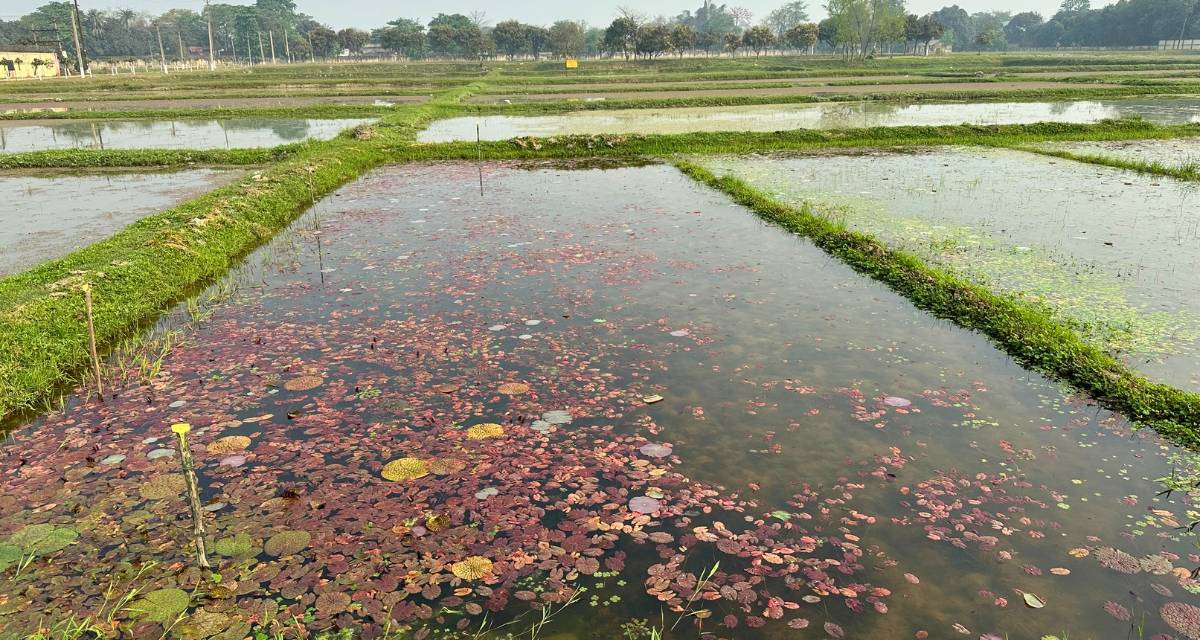 A pond in Madhubani district where makhana is cultivated. The Mithila region is considered the primary hub of makhana production in the country. (Photo - Bina Kumari, 101Reporters)
Cultivating disparity
According to Dr Manoj Kumar, scientist at the National Research Centre for Makhana in Darbhanga, Bihar produces nearly 85% of India's makhana, cultivating the crop across roughly 15,000 hectares and producing around 10,000 tonnes of popped makhana annually.
Thousands of families across north Bihar depend on the aquatic crop for their livelihoods. Historically, makhana cultivation has been concentrated among the Mallah (fishing) community and related sub-groups such as the Kol, Chaain and Vanpar, who have passed down specialised cultivation and processing skills for generations. Yet many of these communities remain economically vulnerable.
Dr. Sukhpal Singh, Professor and Former Chairperson, Centre for Management in Agriculture (CMA), IIM Ahmedabad, said that the inequality runs deeper than income alone. For women from traditionally marginalised fishing communities, it becomes what Dr. Singh calls a "double disadvantage", with caste and gender dynamics limiting their access to jobs, income, and decision-making.
The Makhana cultivation itself occurs in two ways. The older and more traditional system involves cultivating makhana in ponds, many of which are leased from cooperatives, the state government or private owners. Another, relatively newer, system involves cultivating makhana in shallow agricultural fields. The harvesting is generally done in 2 to 3 rounds.
Traditionally, women were concentrated in field-based cultivation, where shallow water made the work more accessible, and in the second harvest from ponds, when receding water levels made seed collection easier. Men generally handled the first pond harvest, which involves working in deeper water. But those distinctions are increasingly disappearing. As male migration rises and rural employment opportunities shrink, women are taking on almost every stage of makhana cultivation and processing.
“When men go outside, we have to handle everything – the pond as well as the home,” said Sunita Devi, another woman worker.
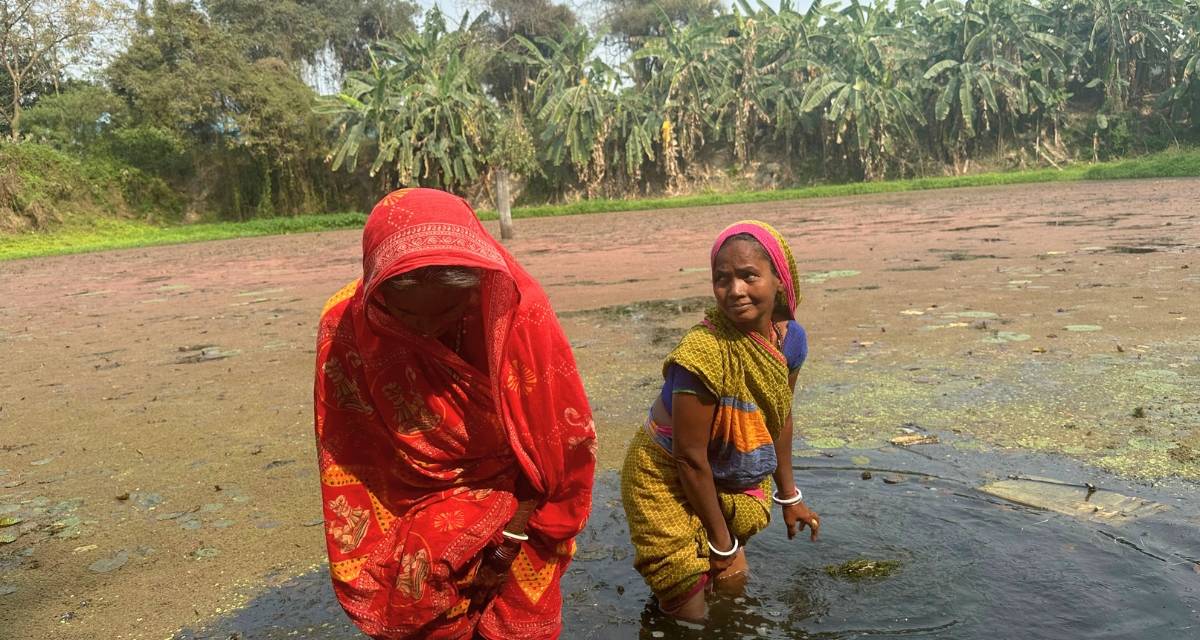 A woman laborer stepping into the pond to perform makhana-related work (Photo - Bina Kumari, 101Reporters)
The women who keep the supply chain moving
If harvesting is tough, what follows is even tougher. After extraction, the seeds must be dried under the sun before being roasted and popped.
Dayi Ji Devi, a worker in Madhubani, explains the painstaking process. “The seeds must dry under strong sunlight for nearly five hours. They have to be turned continuously, otherwise they won't dry properly. They also have to be roasted the same day.”
It is exhausting work. Seeds are repeatedly heated inside clay furnaces before being popped within seconds. A moment's delay can ruin the batch.
“Our hands often get burnt,” said Daya ji Devi, “But we continue working.”
Dr Manoj Kumar explains that roasting temperatures can reach 250°C to 320°C. “Even a delay of a few seconds can affect quality,” he says. “This is a highly skilled process and women play a very important role in it.”
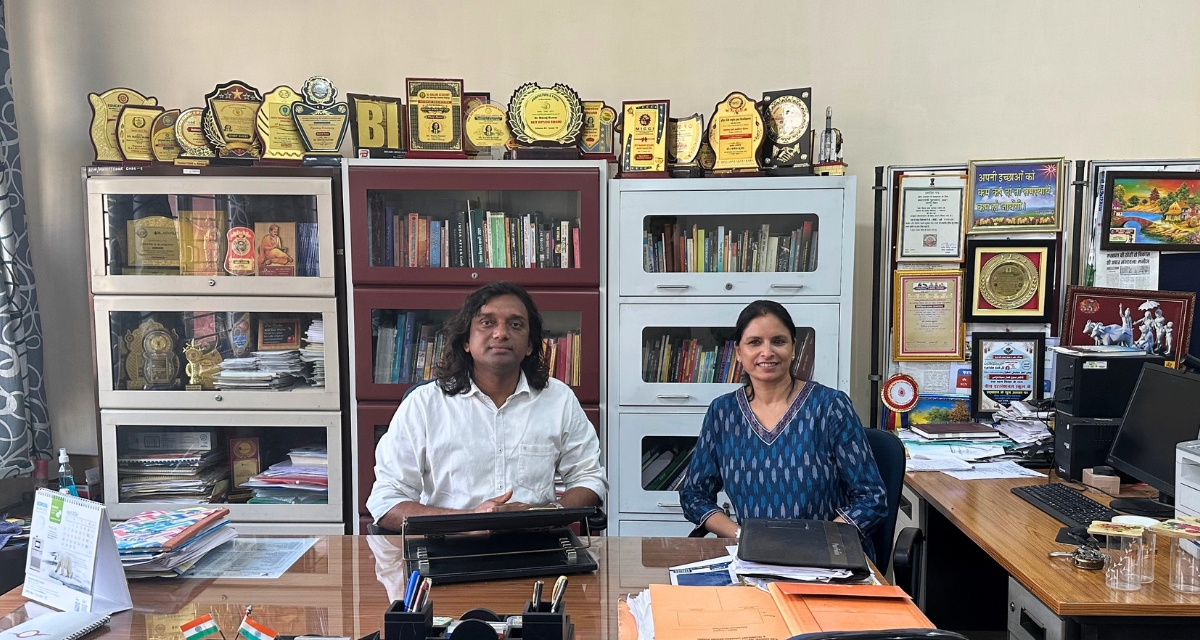 The reporter speaking with Senior Scientist Dr. Manoj Kumar at the Makhana Research Centre in Darbhanga (Photo - Bina Kumari, 101Reporters)
Researchers on makhana cultivation note that women contribute substantially to quality-sensitive activities such as processing, grading and post-harvest handling, but remain largely invisible within formal value chains.
The economic recognition of their skill remains limited.
Women workers consistently report earning Rs 250-300 per day, while men receive Rs 500-600. "The owners say men work more, so they get more money," said Manju. "But we also do all the work, from the pond to the furnace."
According to Dr Singh, such disparities are common across Indian agriculture wherever labour is paid on a daily wage basis. "Minimum wages are notified, but enforcement is weak," he said.
The challenge is compounded by limited alternatives. “There is no other work here apart from makhana,” said Manju, adding, “If we leave this also, how will we run our homes?” Ghudni Devi, another farmer, said, “We got work, and that itself is a big thing. If you ask for more money, the owner will simply remove you.”
Makhana is one of Bihar's more profitable diversification crops, particularly in flood-prone regions. Firstly, it generates nearly three times more employment per hectare compared to staple crops like paddy. Plus, it averages a Benefit-Cost Ratio (BCR) of 1.89, which means for every rupee invested, the farmer earns an additional Rs. 0.89 in profit. This too is higher than traditional cereal crops like paddy or maize.
But those returns are distributed unevenly across the value chain. Not just women, but small farmers too miss out on improving their incomes.
Pappu Shahani, a farmer, said contractors often buy their produce at Rs 300-400, while the same product reaches markets at much higher prices of around Rs 1,400–1,800. “The middlemen benefit the most from this system,” he said.
Another farmer, Rajesh Sahni, from Makranda, said, “We have neither market access nor the benefits of government schemes. Most benefits go only to bigger farmers and traders.”
Their troubles are exacerbated by the fact that they need to spend higher on leasing the land, which a larger farmer doesn’t need to. According to a local farmer Bindeshwari Malah, leasing a one-acre pond can cost between Rs 30,000 and Rs 50,000, while total cultivation expenses can rise to Rs 60,000–80,000. After nearly eight months of labour, the profit is barely Rs 25,000–Rs 30,000.
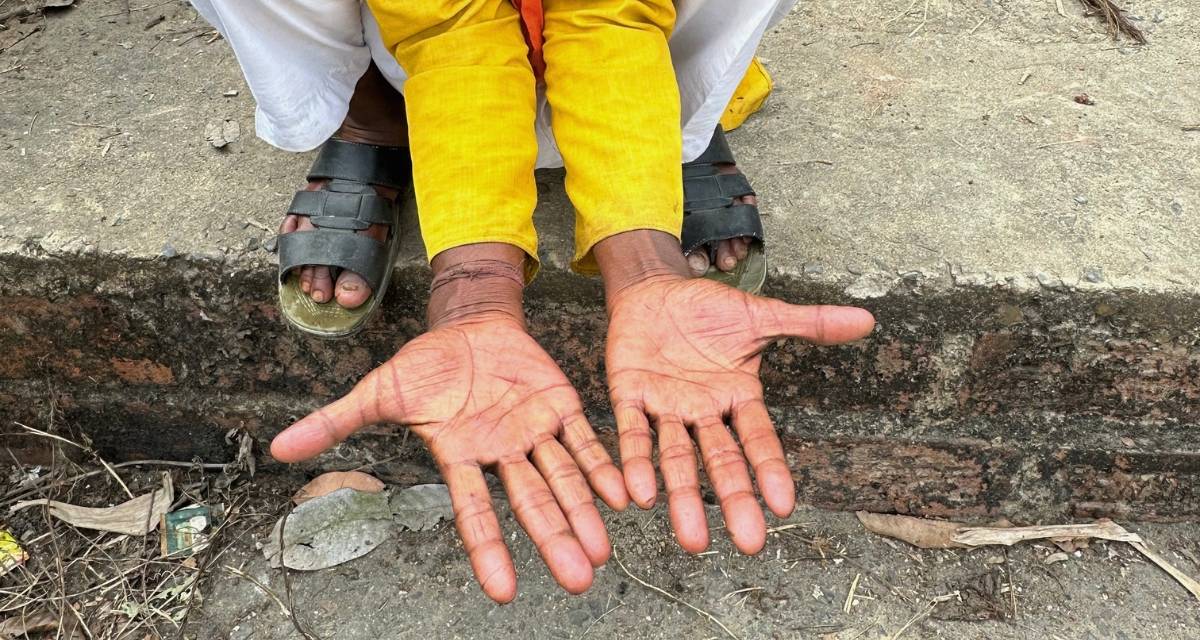 Farmer Bindeshwari Malah in Madhubani shows cuts and wound marks on his hands sustained during makhana (fox nut) cultivation. Due to working in ponds for extended hours, laborers frequently suffer such injuries (Photo - Bina Kumari, 101Reporters)
Meanwhile, Sahni said larger farmers with better access to land, capital, modern farming technology, and direct access to markets earn profits of at least Rs 2-3 lakh per acre.
Notably, despite this difference in earnings, the wages paid to women workers remain largely uniform across villages. “There is no significant difference in wage rates between small and large farmers. The daily wages of women and men workers in the village are fixed first and all farmers have to pay the same rate,” explained Sahni.
So, in both models, women are predominantly engaged in wage labour where their earnings are the lowest.
“The money is in the market, not the field," said Dr Singh. “The real value lies in branding, processing, packaging, distribution and retail. You may produce excellent quality, but unless you control the market, you capture very little of the value created.”
That imbalance is particularly striking in makhana. “While this problem persists across the agri value chain, the magnitude of the problem is higher here as it is such a high value crop. Despite companies minting money, the actual heroes and sheroes of the sector are not benefiting,” said Dr. Singh.
From workers to stakeholders
Research shows that limited market access, dependence on intermediaries and lack of processing infrastructure continue to restrict farmers’ ability to capture higher value.
Several farmers believe MSP could reduce dependence on traders. But Dr. Singh argued that announcing an MSP alone will achieve little unless it is backed by procurement.
He pointed to procurement models used for certain non-timber forest produce, where government agencies procure directly from producers at a fixed MSP before marketing the produce further. Likewise, he said, unless a public agency actually purchases makhana at the declared price, private traders have little reason to follow it.
Many women involved in makhana cultivation are members of Self-Help Groups (SHGs), originally designed to improve financial independence and collective bargaining.
“When labour is needed, the farmers and contractors approach the SHG directly and hire all of us together,” said Sunita Devi. This has made it easy for farmers and contractors to secure a large workforce at once. However, it is not always beneficial for the women.
But women say that being part of an SHG has not significantly improved their bargaining power. “We work together, but we cannot decide the wages,” Sunita said. “We accept whatever is offered.”
Others said they know little about the government schemes or opportunities available to registered SHGs. Chandrakala Devi, a member of a Self-Help Group (SHG), echoes the frustration. "We don't get any special benefit from government schemes. If the government was really helping us, our situation would not be like this."
The problem is not with SHGs themselves, said Dr Singh, but with what happens after they are formed.
Most groups receive little handholding to evolve into enterprises capable of processing, branding or marketing makhana. Without that support, they remain labour collectives rather than business collectives.
From workers to stakeholders
For Dr Singh, the solution lies in ownership rather than employment. He points to successful models such as Mahagrapes, Maharashtra's farmer-owned grape export cooperative, and Amul, where producers collectively own brands, processing facilities and marketing networks.
“The surplus generated by those organisations goes back to the producers because they own the institution.” That, Dr. Singh said, is fundamentally different from remaining wage labourers within someone else's business.
Likewise, by establishing and supporting SHGs, Farmer Producer Organisations (FPOs) and women-led cooperatives, it is possible to transform the role of women from mere workers to stakeholders. SHGs too can form federations, establish processing units, create wholesale brands and undertake packaging and marketing themselves. That is where the real value lies.
Would you like to Support us
101 Stories Around The Web
Explore All NewsAbout the Reporter
Write For 101Reporters
Would you like to Support us
Follow Us On