Why Madhya Pradesh's milk still flows outside the cooperative system

Why Madhya Pradesh's milk still flows outside the cooperative system
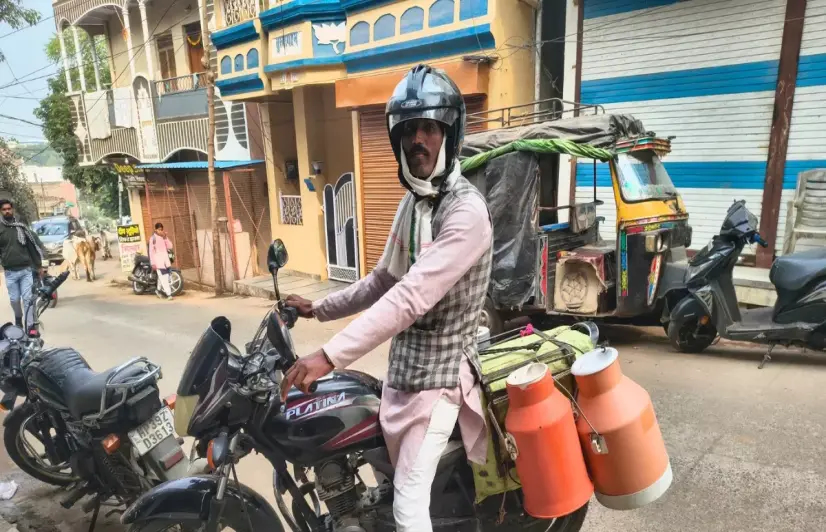
By Abdul Wasim Ansari and Shruti Venkatesh Rajgarh, Madhya Pradesh: Every morning for the past 35 years, Bapulal (60) has bypassed a government-run milk collection centre located barely 10 steps from his home in Khandipur village of Rajgarh district. Instead, he travels 15 km to Biaora town to sell milk directly to customers at their doorstep. "I have four buffaloes that yield around 20 litres of milk each day. If I sell here (local collection centre), I get paid according to fat content and earn around Rs 40-45 a litre. But in town, I can sell directly to customers for Rs 60-70," he said. This choice is mirrored by thousands of farmers across Madhya Pradesh. For Madhya Pradesh Cooperative Dairy Federation (MPCDF), this everyday economics is one of the biggest hurdles in its next phase of growth. Established in 1980, MPCDF is the apex cooperative dairy body in the state and markets its products under the Sanchi brand. It oversees six regional milk unions based in Bhopal, Indore, Ujjain, Gwalior, Jabalpur and Bundelkhand. The state produces over 6 crore litres of milk every day, making it one of India's largest milk-producing regions. However, only a small fraction of that milk moves through organised procurement channels. Most continues to flow through a sprawling ecosystem of direct-to-consumer sales and private processors. According to MPCDF, packaged milk accounts for only around 10 percent of total consumption in the state. That is precisely what Sanchi wants to change. Under a five-year roadmap being implemented in partnership with the National Dairy Development Board (NDDB), the cooperative has planned a major expansion of procurement, sales and village-level presence by 2030. The federation aims to increase daily milk procurement from 10 lakh kg to 46 lakh kg and daily milk sales from 7.5 lakh litres to more than 32 lakh litres. It also plans to expand the number of dairy cooperative societies from 6,989 to 21,000, increase village coverage from 7,000 to 21,000 villages and grow producer membership from 2.5 lakh to 5.7 lakh farmers. "The partnership between the Government of Madhya Pradesh and NDDB is aimed at strengthening the state's dairy cooperative ecosystem over a five-year period," says Dr Sanjay Govani, Managing Director of MPCDF. The partnership initially triggered concerns that Amul, which is closely associated with NDDB, could eventually overshadow the Sanchi brand. Govani dismisses those concerns. "Initially, there were certain apprehensions regarding the future direction of the federation and the Sanchi brand. However, over time, it has become clear that the objective of the partnership is to strengthen, not replace, the existing cooperative structure," he says. But before it can grow, Sanchi must overcome deeply entrenched habits among both farmers and consumers.
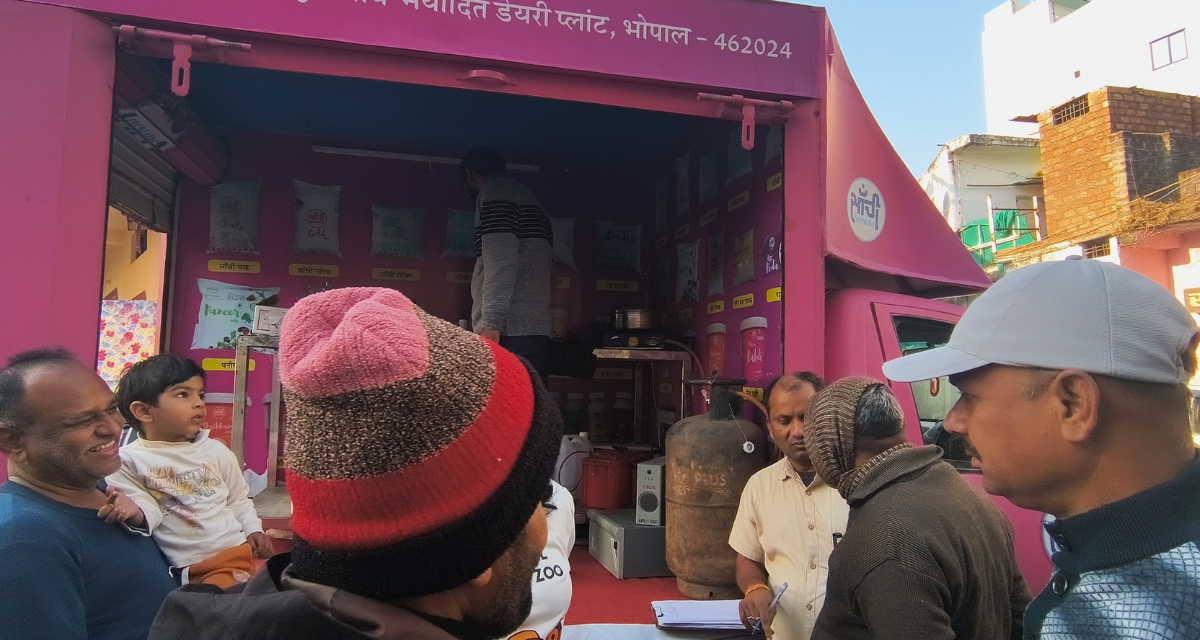 Consumers gather around a Sanchi mobile vehicle (Photo - Abdul Wasim Ansari, 101Reporters)
Rural India Conundrum
Across India, organised dairy markets tend to expand faster in highly urbanised regions where consumers prioritise convenience and consistency. In more agrarian states, local milk networks remain deeply embedded.
Since Madhya Pradesh is primarily an agrarian economy (60% employed in agriculture and allied sectors) with around 65% rural population, the addressable market for packet milk gets smaller. Limited cold-storage infrastructure in many regions has also favoured fresh milk consumption.
"There are a lot of pastoral communities in Madhya Pradesh," says Ankur Bisen, Senior Partner, The Knowledge Company. Dairy contributes roughly 20-25 percent of farm income in many rural households. “Farmers typically rear animals for their own consumption and for the local community. It is a circular arrangement, and packaged milk is often seen as an unwelcome disruptor to that arrangement,” he adds.
So, in the rural regions, milk is sourced through local networks because it is often the cheapest and most accessible option.
Preference for Raw Milk
The dominance of raw milk is not limited to rural regions. For many households in small towns like Rajgarh, the first knock on the door each morning still comes from the local milkman. Others walk to neighbourhood dairies to buy fresh milk for the day's tea. Processed and packaged milk remains unfamiliar to many consumers, particularly outside larger cities.
Rajgarh resident Shabnam Ansari is among them. The 49-year-old says that her family has used raw milk for years. “I prefer to buy directly from farmers,” she says, adding that the processing that packaged milk undergoes ends up affecting its taste.
Govani explains that this preference for raw milk is rooted in long-standing consumer habits and perceptions that freshly procured milk is superior in quality and nutritional value.
Interestingly, the cost of raw milk tends to vary between Rs 40-80/litre and packaged milk ranges between Rs 50-70/litre. The price on packaged milk is based on its fat content, while pricing on raw milk isn’t standardised (not based on scientific milk testing).
Yet raw milk is preferred as it is purchased directly from a known supplier.
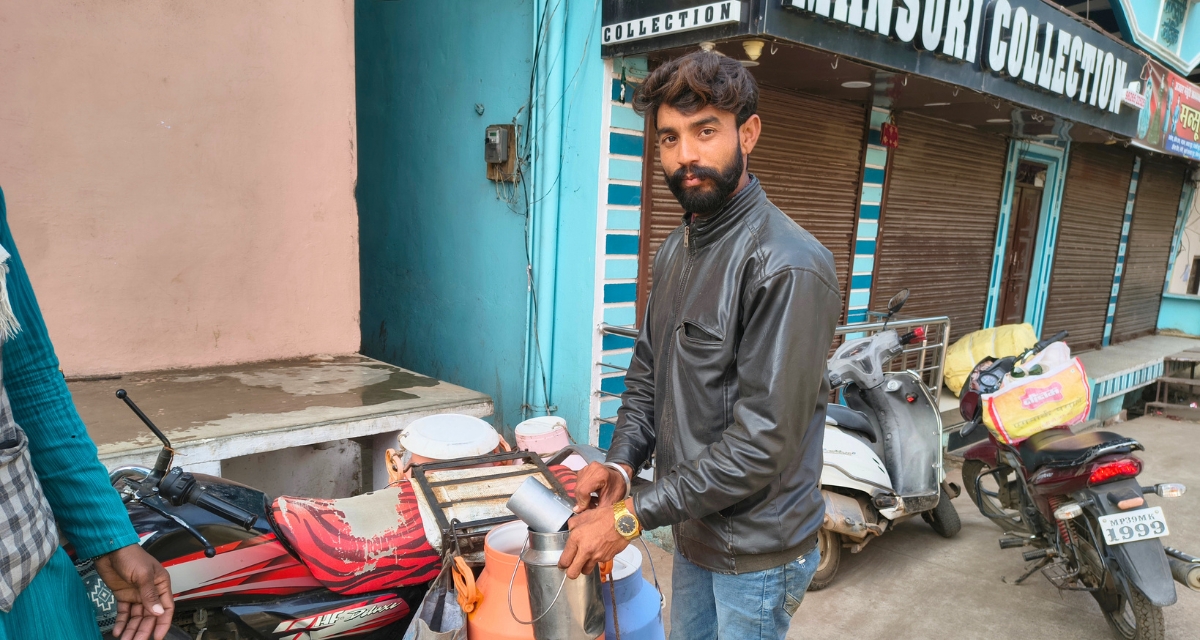 A worker preparing cans on his motorcycle for morning doorstep deliveries in town (Photo - Abdul Wasim Ansari, 101Reporters)
Farmers like Bapulal are happy to travel to nearby towns to meet this consumer demand as it offers them a ready-market and better prices. Ramkrishna, a dairy farmer in Khajla village travels 15 km to sell ~40 litres of milk to his customers in Rajgarh. He prefers to sell directly to homes because he has cultivated relationships with customers over the years and earns a better price.
Besides selling directly to consumers, farmers also sell to local private dairies. Khajla village resident Mukesh Sondhiya splits his milk sales between his regular customers and a private dairy. "I get instant cash payment from the private dairy, which allows me to buy supplies for my family and livestock," he says.
Private dairies often offer marginally higher procurement rates as well. Mukesh says he receives Rs 9.10 per fat unit from a private dairy. In comparison, cooperative rates stand at Rs 8.50 per fat unit, shares a district-level official associated with the milk union who requested anonymity. One dairy owner in Rajgarh, who requested anonymity, says he can offer higher rates because he operates his own facility. He sells fresh milk to consumers and the remaining milk is chilled and supplied to private processing plants at a premium rate.
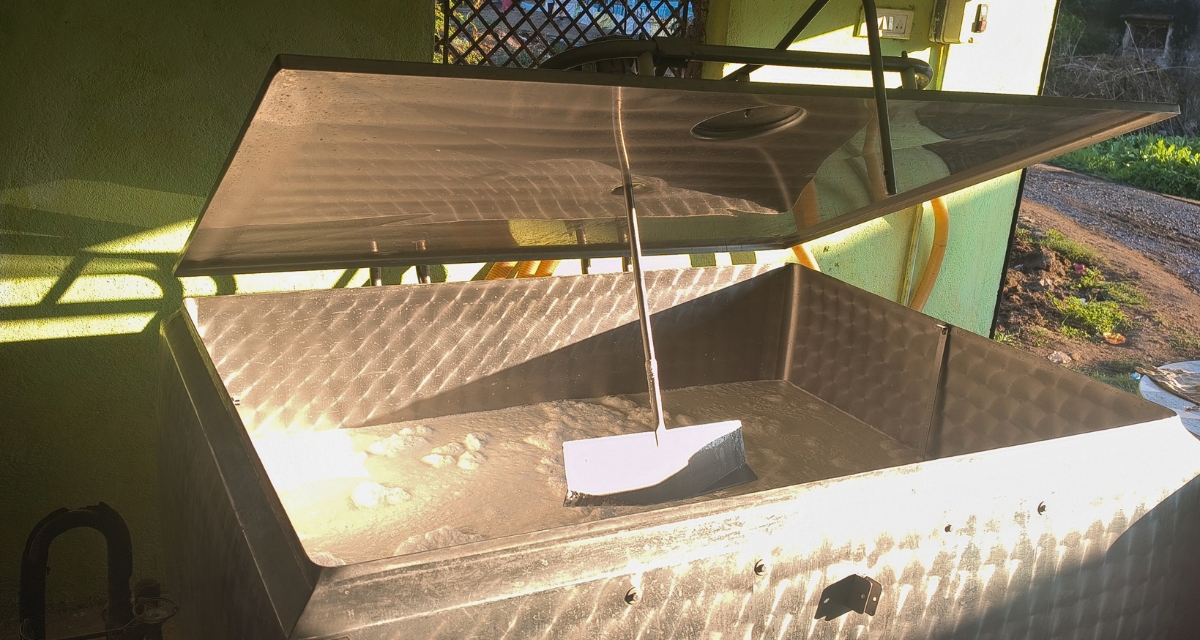 Milk being processed at a local facility (Photo - Abdul Wasim Ansari, 101Reporters)
Cooperative Value Proposition
For small farmers operating on thin margins, even modest differences in pricing or payment cycles can influence where milk is sold. But cooperative officials believe that comparing procurement rates alone misses the larger picture. In many cases, private dairies have no alternative but to offer higher rates – as there is no other incentive they can offer. "Procurement pricing should not be viewed solely through the lens of the per-unit rate," says Govani. "The cooperative model operates on principles of long-term sustainability, assured procurement and farmer welfare."
Unlike private buyers, cooperatives guarantee year-round procurement, regardless of seasonal fluctuations. Farmers also gain access to veterinary services, cattle-health programmes, artificial insemination, subsidised cattle feed, insurance support, training initiatives, and govt-led welfare schemes.
Nidhi Singh, Rural Marketing Officer at the Bhopal Milk Union [the largest dairy cooperative union under the MPCDF], points to initiatives such as the Mayra Yojana, which provides financial assistance for a farmer's daughter's marriage. "Farmers are also being offered some of the highest milk procurement prices compared to previous years," she says. Payments are made on a fixed 10-day cycle (3rd, 13th, and 23rd of every month), ensuring transparency and predictability of income.
The official says that the cooperative structure creates a unique incentive system. While private dairies ultimately benefit individual owners, cooperatives are owned by producers, and profits generated by the system are redistributed among member farmers. Pricing too is standardised – linked to measurable quality parameters such as fat and solids-not-fat (SNF) content – and uniform across regions, unlike private operators whose rates often vary with local competition.
Some argue that apart from farmers, the benefits of organised milk procurement reach consumers too. Retired veterinary officer Mahipal Singh Kushwah points out that while decentralised milk systems provide flexibility, they also carry risks. "Adulteration is a concern in many commodities, including milk," he says. "Consumers need to remain aware."
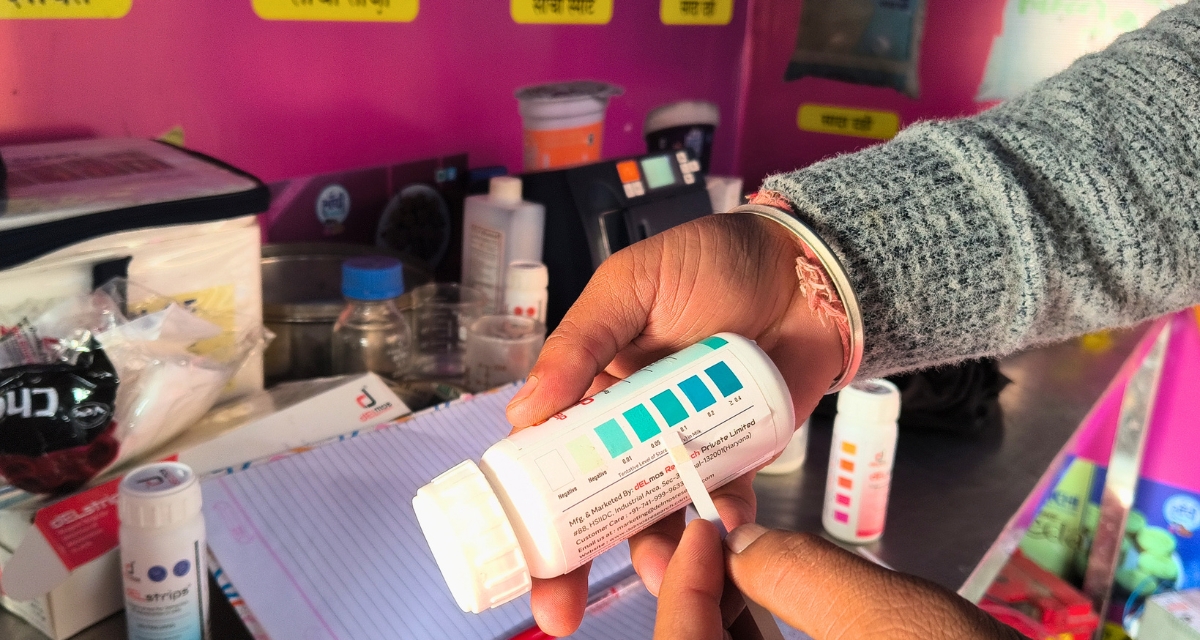 A technician demonstrates the use of a strip test for checking milk quality parameters (Photo - Abdul Wasim Ansari, 101Reporters)
The official adds that often, farmers themselves aren’t sure of the fat content or may misrepresent it while selling directly to consumers. Lack of standardisation and quality checks could impact health.
In comparison, milk supplied through organised channels undergoes multiple rounds of testing before reaching consumers, says Govani, adding pasteurisation improves safety and consistency while extending shelf life without significantly affecting nutritional value.
Building Scale
To achieve its ambitious targets, Sanchi is rapidly strengthening the cold chain infrastructure and improving village-level collection systems. The federation is also digitising operations across the value chain, from milk collection and testing to processing and distribution. Mobile-based procurement systems have also been introduced, while new cooperative societies are being established in high milk-producing villages.
Alongside strengthening procurement infrastructure, Sanchi is also trying to build consumer trust. In November 2025, Bhopal Milk Union launched its "Doodh Ka Doodh, Pani Ka Pani" campaign, aimed to increase consumer awareness about scientific milk testing and to reinforce confidence in quality-assured packaged milk. According to Singh, milk sales in several campaign areas increased after the initiative.
Singh adds that the collaboration between NDDB and MPCDF has contributed significantly to the growth of both milk procurement and sales within the Bhopal Milk Union. During FY25-26, milk procurement increased by approximately 20% year-on-year and number of active Dairy Cooperative Societies increased ~28%.
"Consumers today are demanding greater assurance on quality, hygiene, traceability and food safety," says Govani. "At the same time, farmers are seeking stable markets, transparent pricing and access to support services." He believes that organised dairy systems are well positioned to meet both requirements.
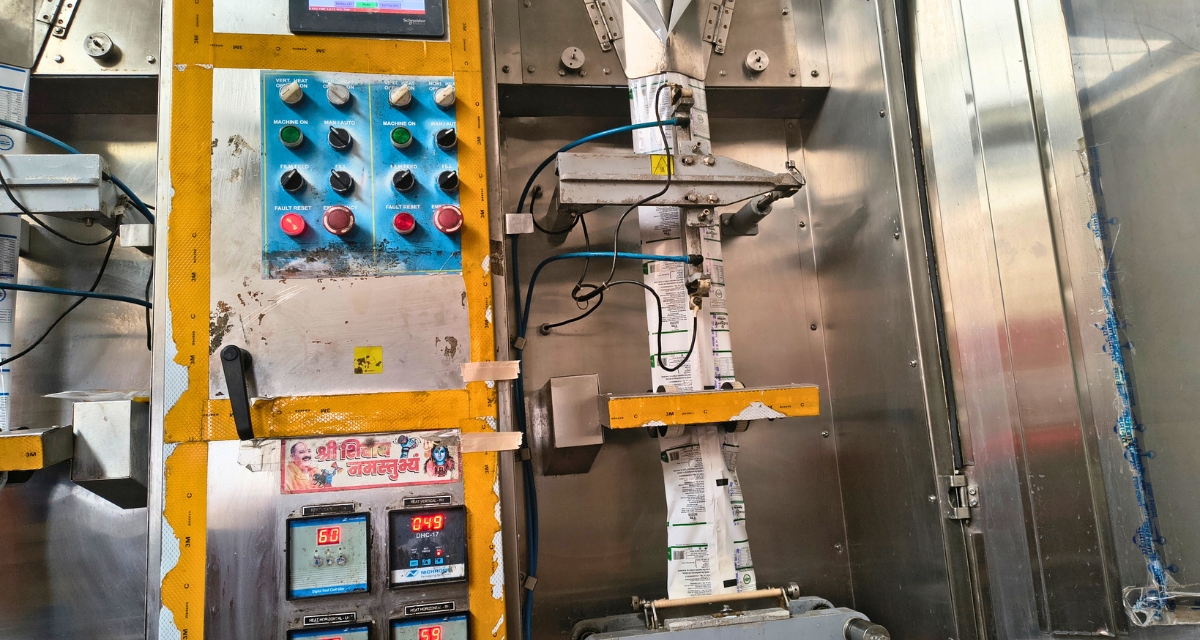 Packaging machinery forming and sealing milk pouches inside a processing plant (Photo - Abdul Wasim Ansari, 101Reporters)
Coexistence and Growth
Experts caution against viewing the future as a choice between packaged milk and loose milk. "Why should package milk necessarily replace loose milk?" asks Bisen. "If inspection systems improve and quality standards are enforced, decentralised milk networks can continue to coexist." The real objective, he says, should be improving quality and farmer incomes regardless of whether milk ultimately flows through cooperatives, private processors, or local networks.
That coexistence may ultimately define the future of dairy in Madhya Pradesh. Govani concurs, saying that informal milk networks will continue to play an important role, particularly in rural areas, but “we expect an increasing shift towards organised procurement and professionally managed supply chains.” He adds that Sanchi is one of Madhya Pradesh's most respected brands, and MPCDF remains fully committed to preserving and enhancing its legacy.
Evidently, for Sanchi, the real challenge is not just collecting more milk or entering into a price war. To accelerate growth and hit its 2030 targets, Sanchi needs to convince farmers and consumers that formalisation of milk economy creates value that they are otherwise missing out on. It requires changing long-established habits. And we all know how hard that can be.
Cover Image - A worker transporting milk cans by motorcycle to local buyers (Photo - Abdul Wasim Ansari, 101Reporters)
Would you like to Support us
101 Stories Around The Web
Explore All News