The mental toll of climate change on Rajasthan’s farmers

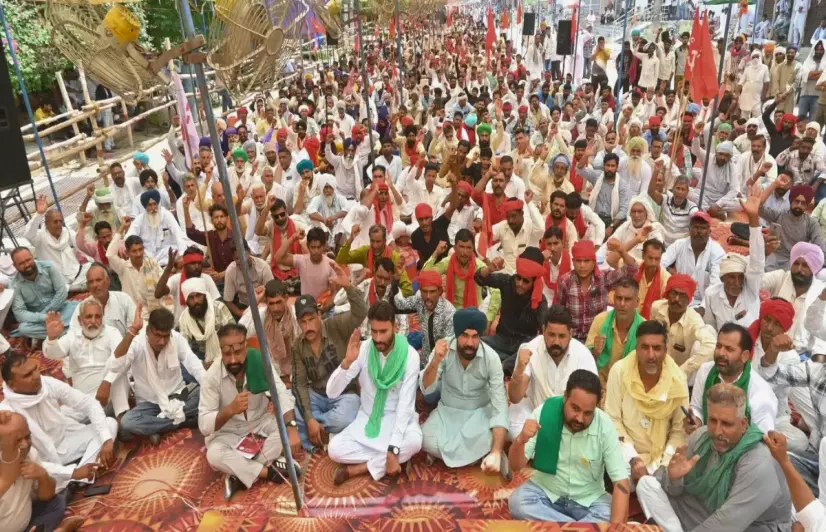
The mental toll of climate change on Rajasthan’s farmers
Hanumangarh, Rajasthan: Dilbag Singh, a farmer from village 3 LL in Gram Panchayat 5 LL of Rajasthan's Sriganganagar district, was once known as someone who never lost his dil or heart, even in difficult times. Farming 12 bighas of land, he managed to support his family comfortably. Agriculture covered household expenses, met the children's needs and left little reason to worry about the future.
But in the past five or six years, things began to change. Sometimes the rains arrived late, sometimes in excess. Heat damaged crops. Yields fell short of expectations. Risk has always been a part of farming, but Dilbag felt it was no longer the ordinary kind.
Dalveer Singh, the village's former sarpanch, told 101Reporters Dilbag had taken a bank loan of around Rs 6 lakh. As crop yields declined, he struggled to repay the installments. The debt eventually rose to nearly Rs 9 lakh.
"He would remain worried and spend sleepless nights," said Dalveer. The family sought treatment for him from a psychiatrist in Hanumangarh, but the financial pressure and uncertainty about the future persisted. Over time, the stress deepened into depression. He later developed heart disease and died.
Dilbag's story reflects a change that many farmers across Rajasthan's canal-irrigated belt say they are increasingly experiencing. As erratic rainfall, extreme heat and repeated crop losses become more common, farmers describe a growing sense of worry about their livelihoods and the future of agriculture. Mental health experts identify such climate-related distress as a form of “eco-anxiety”.
Dalveer said, "There are many farmers in our area who are distressed by repeated crop losses and weather uncertainty. Some are seeking treatment too, but mental illness is rarely discussed openly in villages."
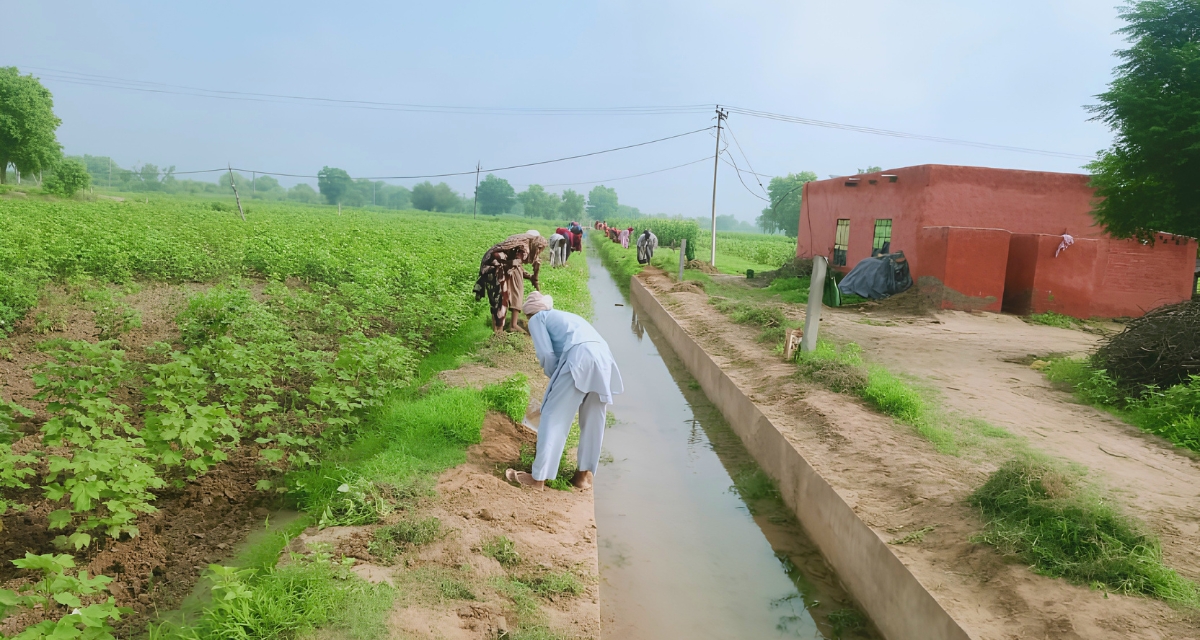 Agricultural labourers working in a field in Hanumangarh district ( Photo - Amarpal Singh Verma, 101Reporters )
A new name
The districts of Sriganganagar and Hanumangarh have long been seen as symbols of the Green Revolution's success. Canal irrigation transformed this region bordering Punjab and Haryana, helping farmers achieve high yields of wheat, cotton, mustard and moong.
In recent years, however, conversations among farmers have changed. Surendra Singh, a farmer from village 11 G, says the confidence that once accompanied farming has steadily eroded.
"Earlier, if there was a loss, we felt the next crop would make up for it. Now the fear is: what will happen to the next crop? Cotton used to be our most dependable crop. Now farmers are afraid even to sow it," he said.
According to him, cotton is no longer as reliable as it once was. Moong cultivation has become less profitable, production risks have increased and market prices remain uncertain.
Dr OP Solanki, senior psychiatrist at Hanumangarh District Hospital, said that between 150 and 200 people visit the hospital every day for mental health consultations. Among them are several farmers struggling with worries related to weather, crop losses and financial pressure. "Farmers don't come saying they have eco-anxiety," he said. "They complain of sleeplessness, restlessness, irritability or a constant feeling of heaviness. It often becomes clear that their concerns revolve around farming and economic uncertainty."
Dr Dhanesh Kumar Gupta, a psychiatrist based in Singapore who has been running a mental health campaign in the Sangaria area for more than a decade, said uncertainty is among the most difficult conditions for mental wellbeing. "As long as things are going well, there is no problem. When disruption arrives, anxiety naturally rises," he said.
Dr Roop Sidana, a psychiatrist in Sriganganagar, said weather-related worries are not new among farmers, but their intensity has increased. "Earlier, farmers got time to recover from a setback. Now losses are occurring repeatedly," he said. According to Sidana, eco-anxiety is a natural response to environmental change and uncertainty about the future. If it persists for a long period, however, it can contribute to conditions such as depression.
The local face of climate change
Farmers' concerns are not merely matters of perception. Scientific assessments have identified Hanumangarh and Sriganganagar among India's most climate-vulnerable agricultural districts.
In 2023, the National Innovations on Climate Resilient Agriculture (NICRA) project of the Indian Council of Agricultural Research assessed 651 agricultural districts across the country for climate risk. Of these, 310 districts were classified as either "extremely climate sensitive" or "highly climate sensitive". Hanumangarh and Sriganganagar were placed in the "extremely climate sensitive" category.
Dr Anoop Kumar, principal scientist at the Krishi Vigyan Kendra in Sangaria, said work is already underway to help farmers adapt.
For the past two years, climate risks have been assessed in Hirnavali village under the NICRA project, and efforts are being made to connect farmers with technologies and practices that can improve resilience. The project is encouraging the use of climate-resilient crop varieties and promoting measures to protect wheat from sudden heat spikes and mustard from frost. Farmers are also receiving technical guidance on crop management and protection. The project's scope has recently been expanded to Chishtiya village as well. According to Kumar, the objective is to understand how far risk-reduction technologies can help protect farmers' production and incomes.
"Climate change cannot be stopped, but its effects can be reduced and farming can be adapted. We are trying to connect farmers with technologies and crop-management practices that reduce vulnerability," he said.
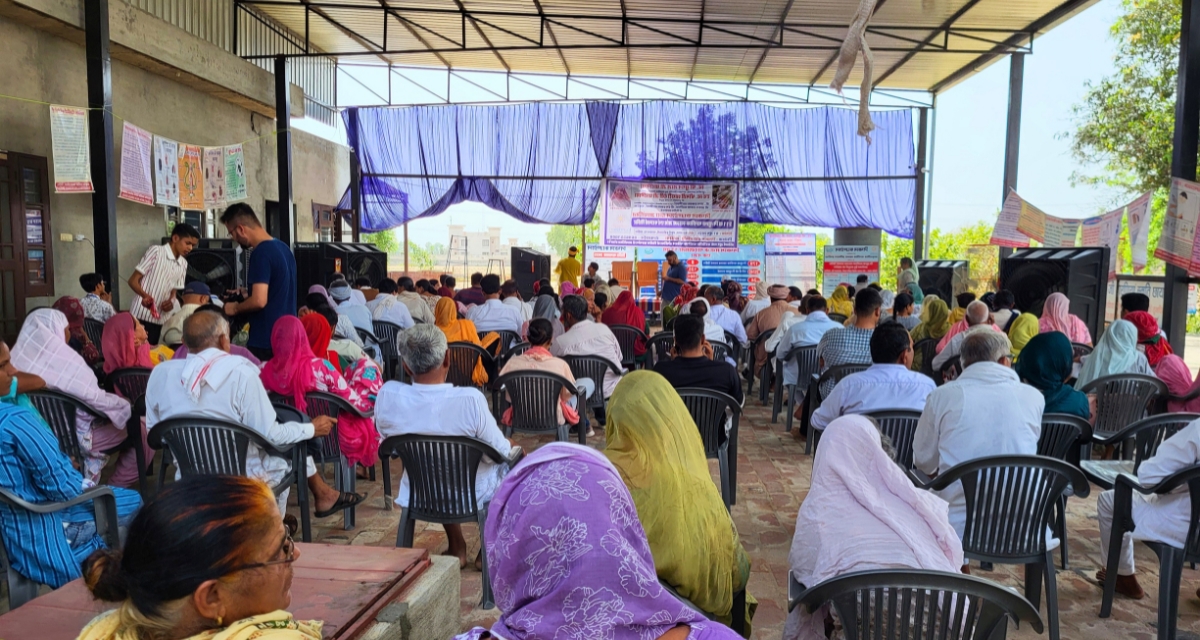 People present at a mental health camp in Sangaria, Hanumangarh district
Why farmers are more vulnerable
Dr Manish Baghla, a psychologist at Tantia University, said eco-anxiety is more pronounced for people whose livelihoods depend directly on nature. "When a farmer goes to the field, questions about rainfall, heat and crop survival are always present. When these uncertainties continue without relief, mental pressure builds," he said.
For some families, that pressure has had devastating consequences.
Among them was Shamsher Singh, a relative of Surendra Singh, who had suffered crop losses for three consecutive years. The situation worsened in September 2023 when heavy rains damaged more than 16 acres of cotton. Part of the land was leased, increasing the financial burden.
The family hoped some of the crop could still be salvaged, but a pink bollworm attack followed shortly afterwards. Similar pest attacks had damaged crops in previous years as well.
Three consecutive years of losses left the family with debt of around Rs 8 lakh. "Each time we thought they would recover, but both the losses and the debt kept increasing," said Surendra.
On September 25, 2023, Shamsher died by suicide on his farm.
Several similar incidents have been reported across the region over the years. Family members, villagers and farmer organisations have often linked them to crop losses, debt and financial stress.
Mental health experts caution against attributing any suicide to a single cause. Personal, familial, social and economic factors often intersect in complex ways. However, they say that a common thread in many cases is economic uncertainty linked to farming, mounting pressure and anxiety about the future.
Studies on eco-anxiety in India have similarly found that extreme heat, floods and the loss of natural resources can contribute to feelings of helplessness, anxiety and fear about the future. Research has also shown that climate change can affect multiple dimensions of farmers' wellbeing, including stress and anxiety levels.
In search of solutions
Experts believe greater attention needs to be paid to farmers' mental health. Dr Sidana said the first step is recognising that mental stress is a health issue and that seeking help should not be seen as a sign of weakness. Dr Kumar believes climate-resilient farming practices, weather-based advisory services and risk-reduction technologies can help reduce uncertainty and, in turn, ease anxiety among farmers. "We are trying to raise awareness about these measures as well," he said.
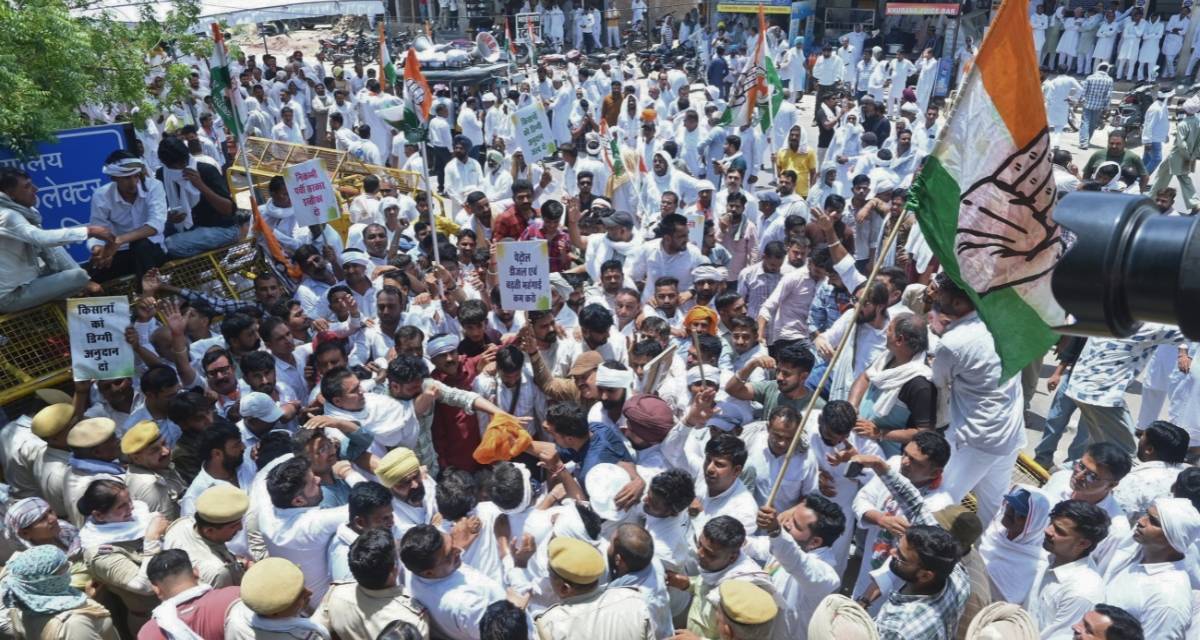 Farmers protesting outside the District Collectorate in Hanumangarh over various issues ( Photo sources - Amarpal Singh Verma, 101Reporters )
Dr Baghla said families and communities also have an important role to play. "If farmers are able to speak openly about their worries, support can reach them before the situation deteriorates," he added.
Cover Image - Farmers protesting outside the District Collectorate in Hanumangarh over various issues ( Photo sources - Vijay Midha, 101Reporters )
Would you like to Support us
101 Stories Around The Web
Explore All News