How drug use is taking hold among Darjeeling’s young

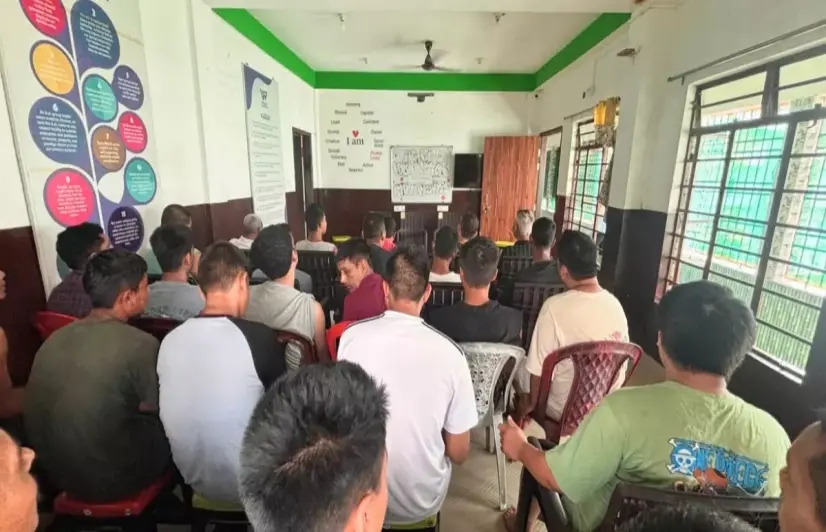
How drug use is taking hold among Darjeeling’s young
Darjeeling, West Bengal. It started with a cigarette when Pranay Pal was 12. A school senior offered him a drag and he could not say no. Marijuana came at 13, as part of a high school hazing ritual. Before he turned 16, he was using smack, a street term for heroin.
Eleven years later, Pranay, 27, has been free of addiction for a year. He runs a small shop on the outskirts of Darjeeling town, selling cakes, biscuits, snacks and daily essentials. He says he will never sell cigarettes, which he calls “the gateway drug”.
Pointing to his arms and legs, Pranay says years of drug use have left him with lasting health problems.
“Just see how skinny my limbs are,” he says. “I have trouble breathing. The doctors tell me that I have a hole in my lungs. My desire to get high has taken everything from me. My body is ruined! It’s turned society against me — even my own family can’t stand me!”
His mother, Pema, is the only family member still in touch with him. She describes more than a decade of struggle.
“He began stealing from me when he was 13. Then it just kept escalating — tutors would complain about missing payments. He even stole from his school fees. It was becoming an embarrassment,” she says.
Pema and her husband admitted him to several rehabilitation facilities over the years, but none could keep him for long.
“We were socially ostracised in our own locality,” she says. “Our friends and neighbours had caught Pranay so many times smoking smack, just days after coming out of rehab, that it became a joke in the neighbourhood.”
A problem that starts young
Pranay’s experience is not isolated. An internal survey by the Darjeeling Police District found that more than 15% of those aged 15 to 18 were abusing alcohol, marijuana or smack. Among those aged 18 to 35, the figure was 20%. The survey defines “abuse” as regular or repeated use.
In a separate survey of 100 teenagers aged 14 to 18 across eight public and private schools, 37 said they had been exposed to tobacco and alcohol, while 18 said they had been exposed to marijuana and harder drugs. All said peer pressure played a role in their introduction to substances.
Chewang Bhutia, district intelligence officer of Darjeeling Police, says substance abuse has become a persistent problem in the Darjeeling-Kalimpong corridor.
“This substance abuse issue in this Darjeeling-Kalimpong corridor has woven itself into the social fabric,” he says.
Darjeeling’s location is one factor, he says.
“Darjeeling is a famous tourist spot, but we have seen regular political upheavals here since the ’80s. As such, this region faces one of the most severe job crises in India. Add to that, we are a borderland region that just happens to be a crossroads on the opioid route to mainland India — and you have both demand and supply for mind-alleviating substances.”
Between the hills and the plains
Darjeeling is connected to the plains through the Terai, while its proximity to Nepal and other parts of the Himalayan region places it near established cross-border routes.
Darjeeling Police registered 118 cases under the Narcotic Drugs and Psychotropic Substances Act in 2025, according to district police. Over the past five years, the district has averaged 82 cases a year, while Kalimpong has averaged 34.
A local political figure who identified himself as Golu alleges that marijuana and opium are cultivated in parts of the hills.
“There are hundreds of weed and opium farms in the hills,” he says. “The stuff is suited for the hilly climate — like tea. Many locals grow marijuana as side income. And these farms are located in such remote corners that the police cannot raid them without the locals seeing them from far ahead.”
Students, he says, are among the easiest customers.
“If anyone wants to make a quick thousand bucks, all they have to do is stand outside one of the boarding schools with some weed and the kids will flock to them like flies.”
Golu alleges that police paid less attention to marijuana until smack became more widespread.
“Drug abuse has become a law and order issue in the last few years,” he says.
What drives young people towards drugs?
The availability of drugs is only one part of the problem. Young people in Darjeeling also describe loneliness, peer pressure and a lack of opportunities.
North Bengal depends heavily on sectors such as tea, tourism and agriculture, which provide significant informal employment. A study has put youth unemployment in the region at 20%.
For Dan, 23, a residential patient at the WeRise Foundation, a de-addiction centre in Siliguri, isolation was part of the problem.
“When you have nothing to do and all your friends have moved away to other cities, that’s when loneliness hits you,” he says. “Out of that loneliness, jealousy and feeling of uselessness, I began my journey into psychedelics. I needed something to forget that dark mental space.”
He began using ganja, or marijuana, to cope.
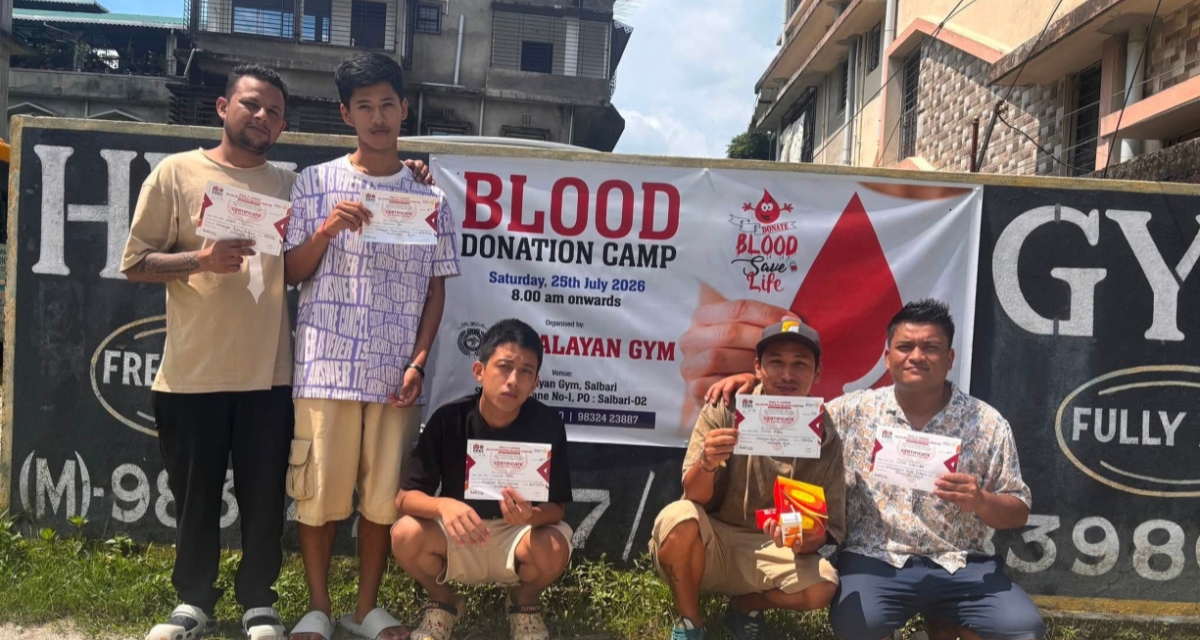 The WeRise Siliguri Blood Donation Camp (Photo sources by - Sashwata Saha, 101Reporters)
“I thought ganja was helping me deal with it, but all it did was turn me into an addict who had no thoughts other than when and how to get his next hit.”
Mathew, whose full name has been withheld at his request, is another patient at the centre. He had worked at a tea plantation before his drug use began affecting his job.
“I had a decent desk job at a tea plantation,” he says. “Once I started doing BS, I got sloppy at work — just trying to wait out my shift so I could get high again. My bosses found out soon enough. I was fired. Haven’t been able to hold down a steady job ever since.”
He says his addiction also led him to steal to fund his habit.
“From shops and businesses. Even from friends, family, even from my girlfriend. I don’t know if I can make amends.”
When addiction becomes a community problem
As drug use has become more visible, some residents have turned to community groups for help, while others have resorted to public shaming.
Saroj Sherpa, a former panchayat-samiti member of the Bharatiya Gorkha Prajatantrik Morcha, runs a Kurseong-based group that identifies people with addiction and tries to connect them with professional help.
He defends public shaming, but says it does not work in every case.
“The problem with addicts is that usually they are beyond shame when high,” he says. “When you parade someone around as an addict, you’re not embarrassing the addict, you’re humiliating their entire family. Sometimes, that is the impetus a family needs to keep an addict in control. Other times, this just worsens the situation at home. Then, we help the families admit the addict to a medical facility.”
What treatment looks like
For people who want to stop using drugs, treatment options in the hills remain limited.
There are four de-addiction centres across Darjeeling and Kalimpong districts. The region’s major hospitals also have rehabilitation facilities, but none of the three centres visited by this reporter employed psychiatrists and they relied on visiting experts.
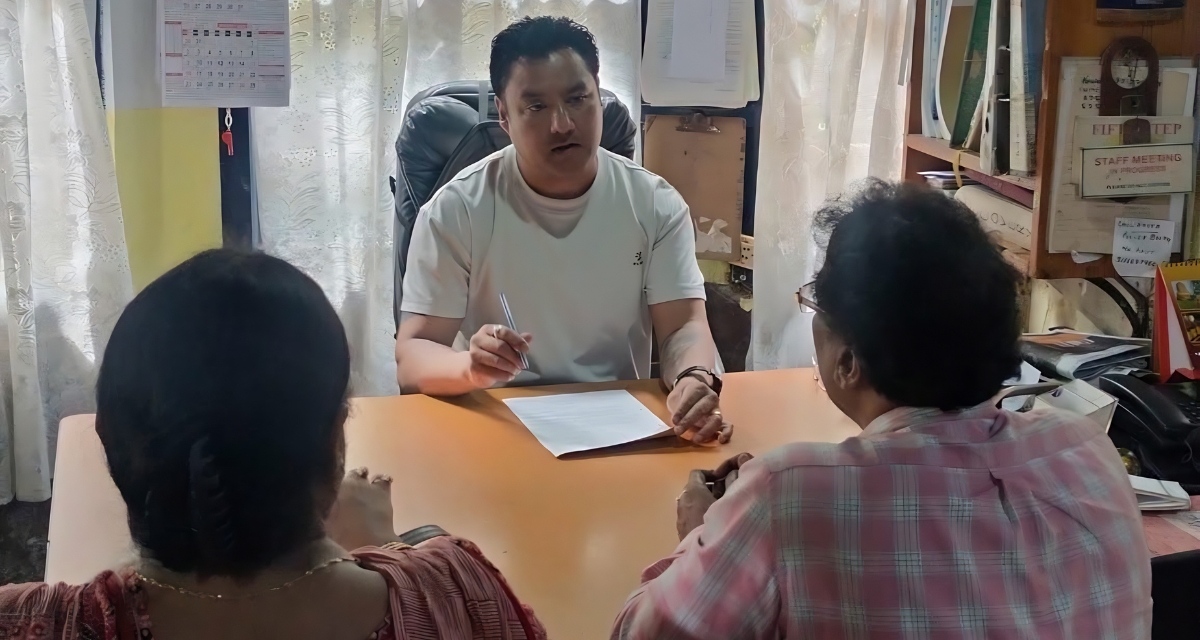 Parents at the Kripa Foundation (Photo - Sashwata Saha, 101Reporters)
Dr Sayari Kamilya, a Siliguri psychiatrist who specialises in rehabilitating teenagers, says treatment needs to account for how adolescents’ brains develop.
“The reward-seeking centre of the brain matures much faster than the impulse-control centre,” she says. “This maturity lag is the highest among teenagers and is responsible for high novelty-seeking behaviour combined with a reduced capacity to calculate long-term risks.”
Kamilya is associated with four rehabilitation centres in Siliguri and Darjeeling. She says she has seen what she describes as “cruel and violent techniques” being used to treat people with addiction.
“Beatings, forced fasts, taunts with narcotics — I have seen all sorts of methods at these centres,” she says. “Most centres treat their patients unscientifically and inhumanely. This is why people, in general, do not trust rehab centres. And as long as centres can’t get rid of this stigma by being humane in their work, that image won’t clean up.”
Some centres are trying different approaches.
Dheeraj Pradhan, a researcher at the WeRise Foundation, says it treats addiction as a mental health condition.
“Therapy and learning how to be honest to one’s own self are foundational steps of narcotics rehabilitation,” he says.
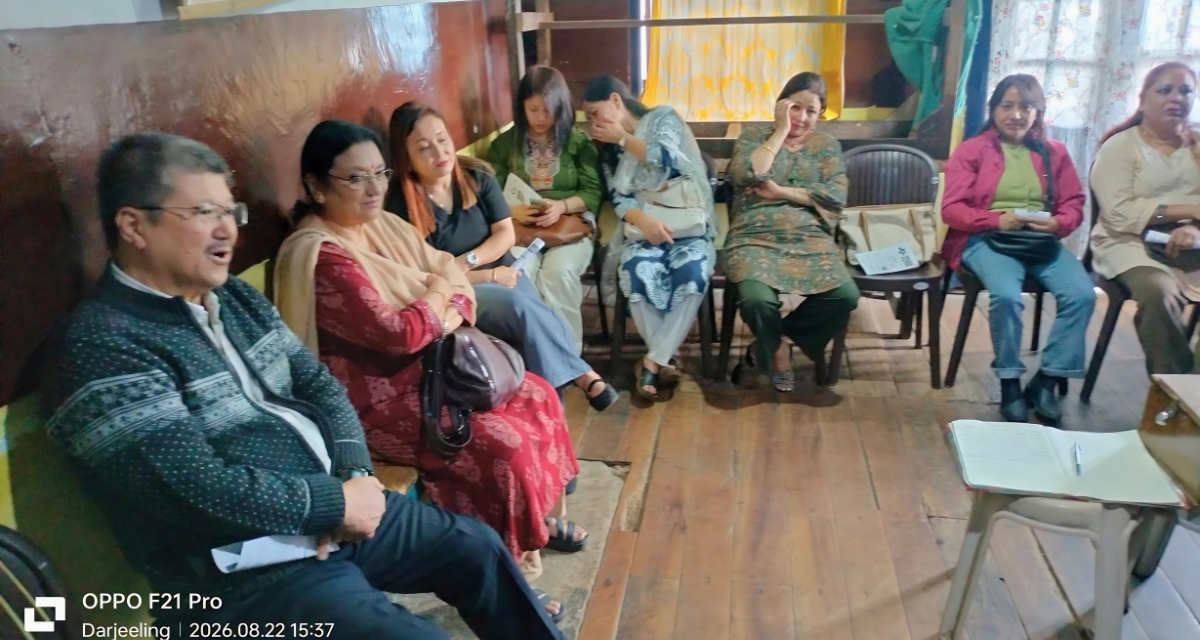 Parent counselling session at Kripa Foundation (Photo - Sashwata Saha, 101Reporters)
The Kripa Foundation, funded by the Diocese of Bombay, runs three small centres in the district and uses spiritual guidance as part of its treatment.
“We try to make our patients understand the consequences of their drug abuse — on their friends, their families and on society,” says Thinley Cho, head of its Darjeeling campus. “If we can get through to their guilt, then we help them forgive themselves. We find them a community that they can relate to, that they can find support in on their journey to sobriety.”
Cover Image - The Kripa Foundation De-addiction Camp in Darjeeling (Photo - Sashwata Saha, 101Reporters)
Would you like to Support us
101 Stories Around The Web
Explore All News