Breathing in stone: How heat and silica dust are wearing down workers in Jodhpur’s sandstone mines

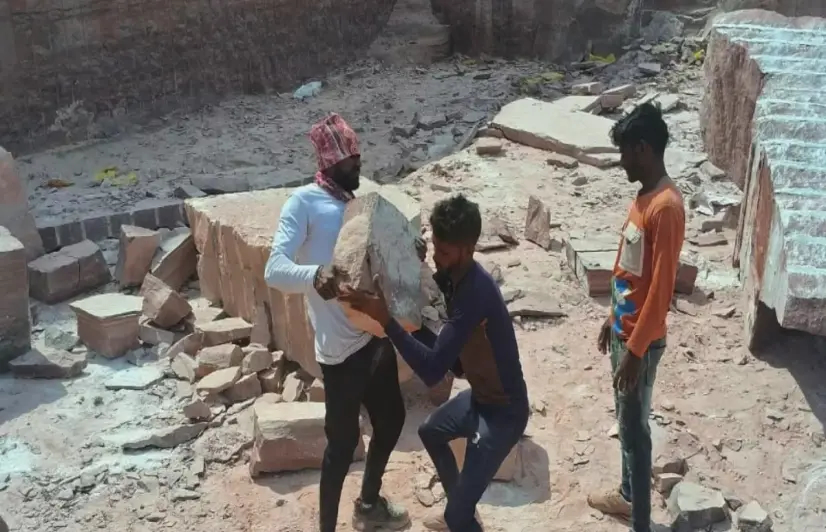
Breathing in stone: How heat and silica dust are wearing down workers in Jodhpur’s sandstone mines
As temperatures soar across western Rajasthan, sandstone miners in Jodhpur continue working through extreme heat, silica dust exposure and chronic neglect, with little access to water, safety gear, healthcare or compensation.
Jodhpur, Rajasthan: The drilling of sandstone can be heard from a distance. A visible blanket of white stone dust hangs over the dry air of the mines near Gandero Ki Dhani, a village in Jodhpur. Close to 3,000 operating mines in Jodhpur tehsil brace for punishing summers and heatwaves that arrive by the last week of April.
On April 27, temperatures soared to 44 degrees Celsius, marking the onset of the intense summer season. The India Meteorological Department issued a yellow alert for heatwave conditions in Jodhpur and other parts of Rajasthan, accompanied by warnings of strong, dry winds. According to IMD data, western Rajasthan experienced 58, three, 29 and 33 heatwave days between 2022 and 2025 respectively. Through all of it, the mine labourers of Jodhpur, surrounded by heat-radiating sandstone, continued to toil, confronting extreme temperatures alongside persistent poverty in their daily struggle to survive.
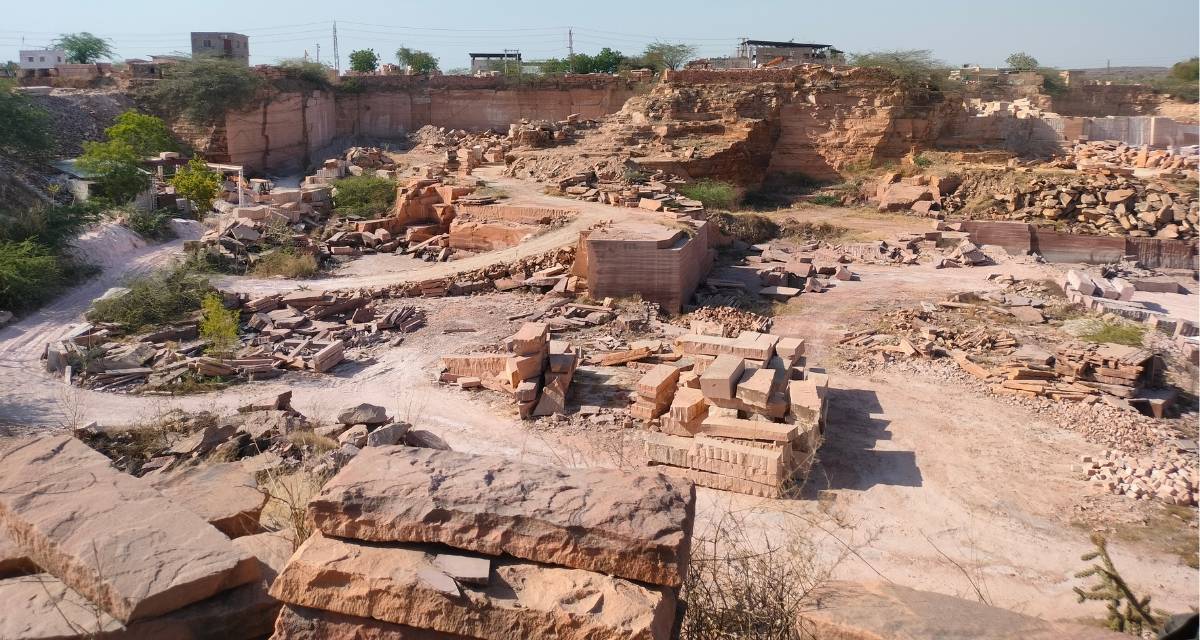 A mine in Jodhpur Tehsil (Photo - Joymala Bagchi, 101Reporters)
‘Who will feed my family’
Pochi Devi, 65, sips from a green two-litre PET bottle, the water inside long warmed by the rising temperature. The tips of her fingers are burnt from picking up heated stone debris. She finds no relief.
"I have lost one of my sons to silicosis he was only 40 years old. My other two sons, who are 37 and 32, are also suffering from silicosis. Who will take care of my family if I do not work?" she said.
Filling a tractor trolley — work done almost exclusively by women — fetches Rs 350 per load. Most manage two loads a day, earning Rs 700. But in summer, even that becomes harder.
"I try to come to the site early in the morning and stay till 3:30 or 4 pm, depending on the work," said Pochi Devi. "On heatwave days it gets terribly windy. I cannot manage to load the cart more than once. A few days ago I suffered from excessive sweating. Water hardly quenches the thirst. Walking 1.5 kilometres back home around 1 pm to eat lunch and returning in this scorching heat… at my age, it has become impossible."
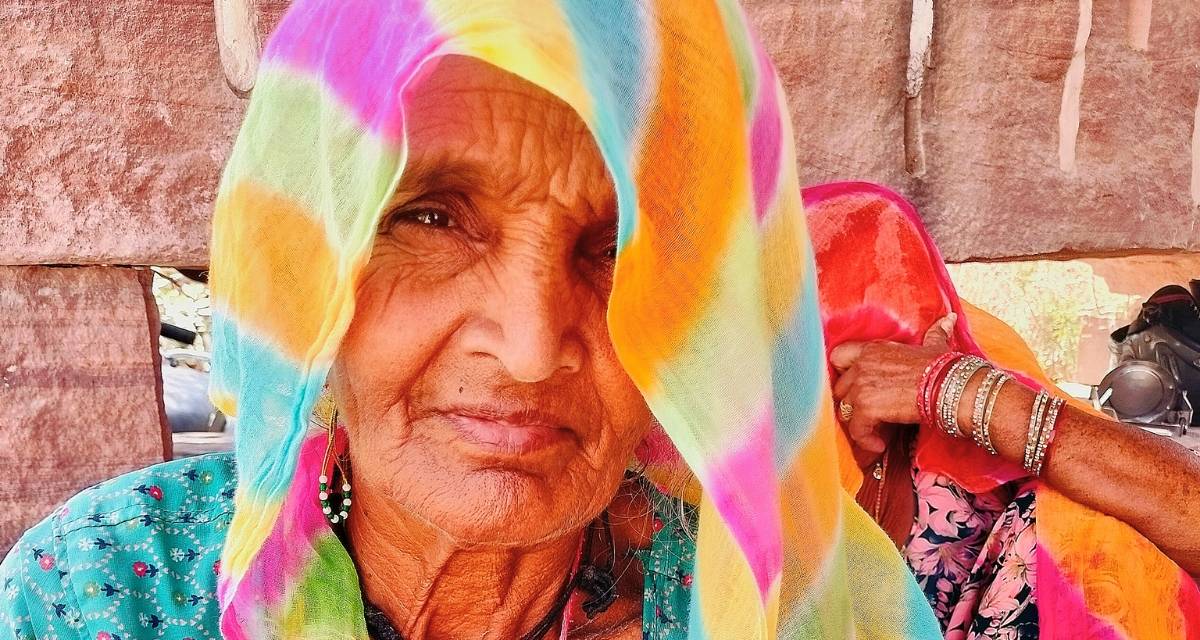 65 years old Pochi Devi lost one of her son to silicosis. Other two are suffering from the same (Photo - Joymala Bagchi, 101Reporters)
To date, Pochi Devi has not consulted a doctor for her rapidly declining health, fearing that a diagnosis of silicosis would force her to stop working entirely.
Dust everywhere
In most mines in Jodhpur, there are no drinking water facilities. Workers carry water in plastic jars or two-litre PET bottles alongside their lunch.
"We know that once we open our tiffin box, stone dust gets into the food. We can feel it in our mouths, but we have to eat it as it is. It is not possible to walk home in the scorching afternoon sun and come back within an hour. There are CCTVs monitoring us," said women workers resting in a stone shade in front of a small tea stall near a mine.
Most women labourers avoid going home for lunch because many feel dizzy in the afternoon heat.
There are no toilet facilities in the mines for workers of any gender. For women, the problem is acute.
"It is not possible to go to our village, which is 1.5 kilometres away. We drink less water to manage. But in summer, drinking less water causes dehydration. Some men and women I know have developed kidney problems at a very young age," says Abu, 50, who works in the mines to support her grandchildren after losing her son and daughter-in-law.
Sarita Devi, 37, from Kheru, lost her husband to silicosis and now works in the mines herself.
"Toilets are a major problem, and so is menstruation. Dehydration increases and several women faint during that time, but not coming to work is never an option," she says.
She added: "The nights remain so warm that I cannot sleep properly many days. It affects me in so many ways. I lose my temper."
A study published in the journal Frontiers in Psychiatry found that chronic heat stress sustained over long periods can have profound effects on mental health, increasing stress and anxiety while impairing cognitive function through persistent sleep disruption.
The marks of bare-handed labour
Yudhistir Gander, 40, now operates mobile cranes on site.
"The cranes have plastic roofs. On most days, once we start operating, it takes two to three hours to remove the stones. Sitting inside the crane in summer can only be compared to a gas chamber. We cannot even drink water while operating — shifting attention can cause a major accident."
Earlier, Yudhistir drilled holes in the rock and poured crack powder mixed with water into them to break the stone. Once, the highly alkaline chemical splashed into his eyes. It did not take his sight, but turned the sclera of both eyes permanently red.
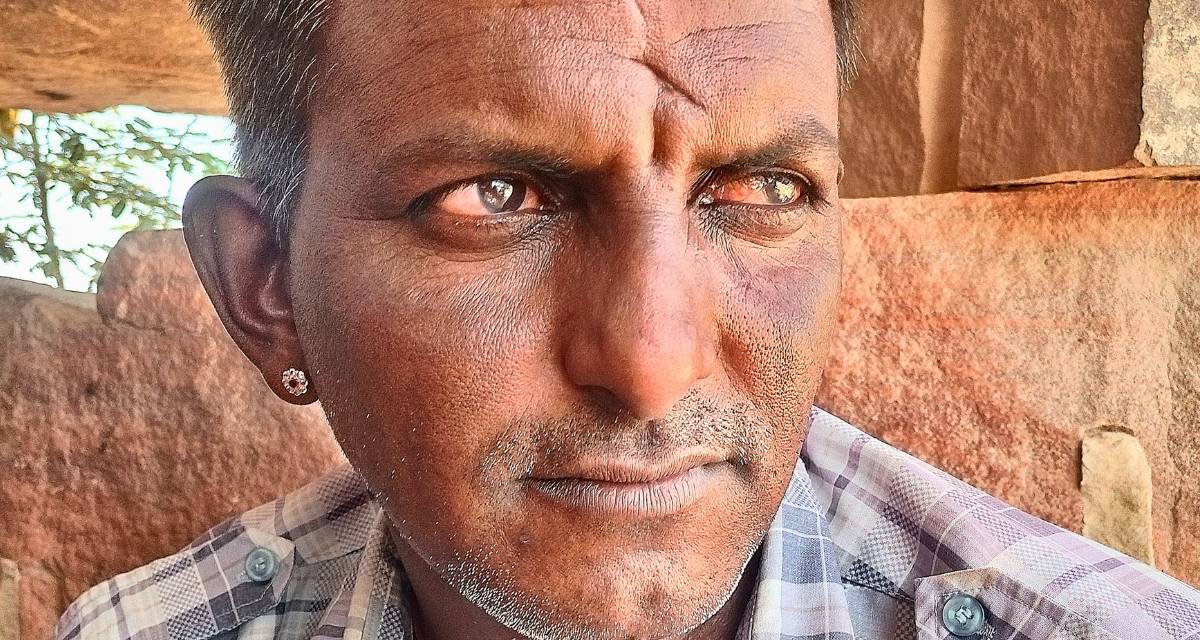 Yudhistir Gander's eyes turned red after coming in contact with crack powder (Photo - Joymala Bagchi, 101Reporters)
"Almost 15 people have lost their eyes due to this chemical in Jodhpur, but my eyes are fine. It just itches," he said casually, before heading back to the crane at 3 pm in 44-degree heat.
The chemical, composed mainly of calcium oxide, silica and aluminium compounds, swells and exerts tremendous pressure that fractures rock over four to twelve hours. Studies note that in very high temperatures the powder can expand too fast and eject from the hole. Goggles and rubber gloves are strongly recommended, but neither was visible at the site.
Vidyami Devi, 40, described another hazard: "During summer we sweat heavily, and the chemical powder left on debris after rocks are broken sticks to our clothes. As we sweat, it reacts with the moisture and begins to burn our skin almost immediately. Wherever it touches, the skin turns black and hard."
There is no mandatory instruction to wear masks. Some workers cover their faces with the same cloth they are wearing, already coated in stone dust.
"If we are not provided safety gear, how will we have access to it? Mines are full of dust. How long will one mask last? During drilling we do not even have boots," says Krishna, 27, who has worked in the mines for seven years and earns Rs 700 a day.
Poonaram, 21, said the drilling machines themselves become dangerous in the heat.
"The machine becomes so hot that holding it gives a burning sensation. We do it with bare hands. A slight negligence can cause serious accidents, the upper part of the machine can enter our legs if our pants are loose. In summer, wearing tight pants is its own discomfort."
Abu's left hand has developed a persistent infection she cannot afford to treat. She works wearing a torn yellow-and-black glove she found discarded on the road. The sweat is worsening the wound.
Her son died of silicosis, but she never received a death certificate and so could not apply for compensation. Her daughter-in-law died shortly after. Another son does not live with her. She works to raise her grandchildren.
"I do not know if I have silicosis or not. I never went to get examined. I cannot afford to. How will I raise my grandchildren otherwise?"
 Abu continues working despite infection in her hand (Photo - Joymala Bagchi, 101Reporters)
No safeguards
Khivraj Lakhotia, 40, a graduate who has worked in the mines for nearly two decades after falling into extreme poverty, is himself a silicosis patient.
"The big iron chains used to tie slabs of rock become extremely hot. The sandstone stays hot, burning the skin on contact. But the miner has to work," he said.
"Heatwave warnings never reach mine workers here. The system is no-work-no-pay. Poverty is such that workers cannot afford to lose even one day's wage. There is no insurance policy for most."
Insurance coverage is limited to labourers registered under a Labour Identification Number, and the vast majority are unregistered.
Rana Sengupta, managing trustee of the Mine Labour Protection Campaign Trust, says the structural neglect is straightforward to name, and at least partially fix.
"Mining areas are the worst-exposed in terms of heat. Every mine should have a shade. Cooling stations over clusters are possible. The money can come from the District Mineral Foundation Trust."
He adds that a maximum of only two percent of mine workers are formally registered.
"LIN registration should be made part of the environmental clearance process. As heatwaves grow more frequent and intense, those on the margins continue to bear the heaviest burden."
Dr Saurabh Mittal, Assistant Professor in Pulmonary Critical Care and Sleep Medicine at AIIMS Delhi, said silicosis patients from stone cutters in Rajasthan remain a significant share of the cases they see, even as the frequency has somewhat decreased.
On the specific interaction between heat and dust, he explained: "When there is too high heat, dust particles do not settle and remain suspended in the air, which likely increases inhalation exposure and may injure the lungs more severely, though this has not yet been scientifically proven or fully studied. In a dry, heated environment one inhales more, and heated particles are more likely to injure a larger portion of the lungs than particles at normal temperature."
He added that silica exposure is also a known contributor to autoimmune diseases including Systemic Sclerosis, Rheumatoid Arthritis and Mixed Connective Tissue Disease.
"Occupational safety masks exist for this kind of work," he said, "but they are costly."
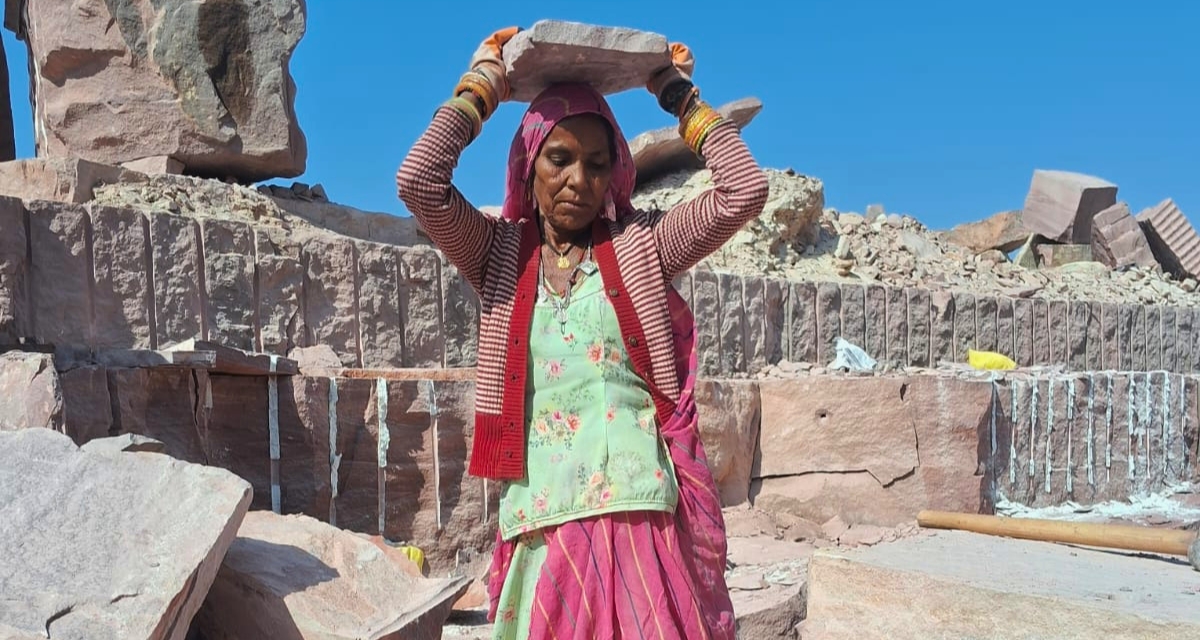
Cover Image - Mine labours carrying a heated stone (Photo - Joymala Bagchi, 101Reporters)
Would you like to Support us
101 Stories Around The Web
Explore All NewsAbout the Reporter
Write For 101Reporters
Would you like to Support us
Follow Us On