Women rise along Gujarat’s coast wherever mangroves take root

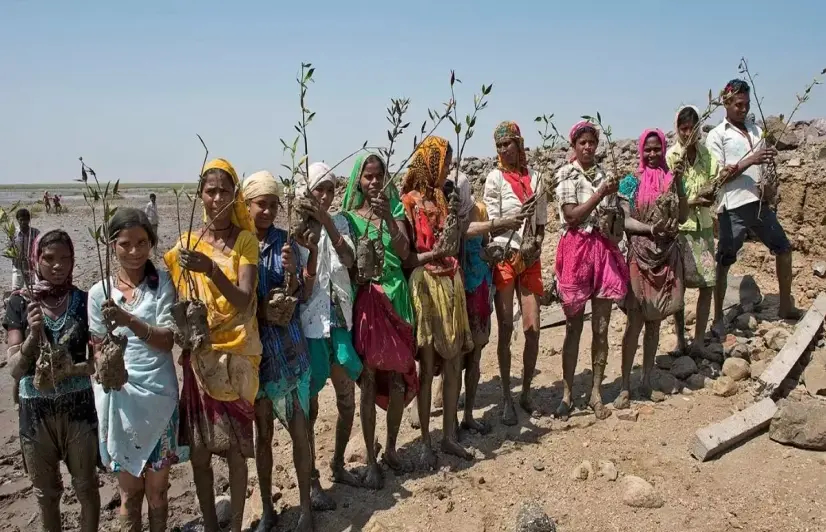
Women rise along Gujarat’s coast wherever mangroves take root
As women in coastal villages lead mangrove restoration, the effort is generating wages, strengthening local governance, and offering a community-driven response to climate change and industrial pressure.
Bharuch, Gujarat: For Jaya Ben (40) of Suva village
in Gujarat’s Bharuch district, life near the rapidly expanding industrial hub
of Dahej comes with unease. Pollution
from factories, shrinking agricultural opportunities, and rising salinity near
the mouth of the Narmada River have steadily altered her environment and
livelihood.
“There is no farming left here,” she said. “The river meets the sea nearby, and the water has become saline. Only during the monsoon does fresh water flow.”
Amid these changes, one development gives her some reassurance: mangrove plantations growing along the coast, about one-and-a-half to two kilometres from her village. Jaya Ben is not just a beneficiary of this effort; she is part of it. Like dozens of women in Suva, she works on planting mangrove saplings, maintaining them, and preparing nurseries.
“Considering the sea waves and the pollution around us, this work is necessary,” she says. “Mangroves help protect the coast. If we plant trees, the air will also become cleaner to some extent.”
Mangroves are among the most effective natural carbon sinks. According to the World Wildlife Fund, they store three to four times more carbon per acre than tropical forests. For coastal communities like Suva, however, their value is not abstract or global-it is closely tied to daily survival.
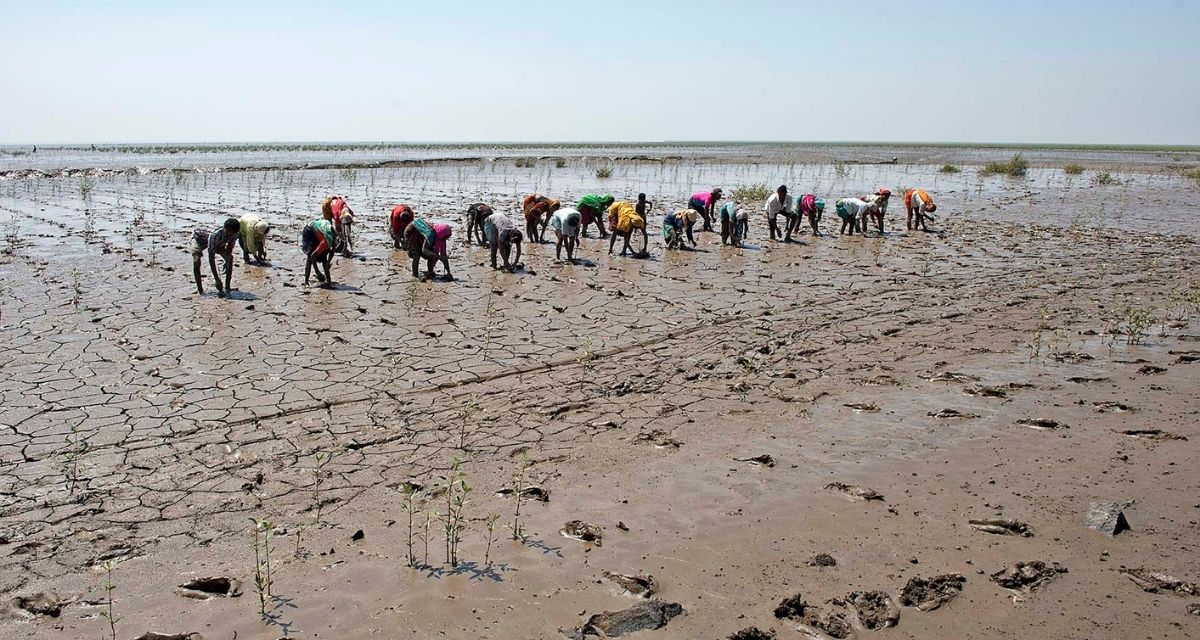 Locals working in the field to grow mangrove plantations (Photo - Rahul Singh, 101Reporters)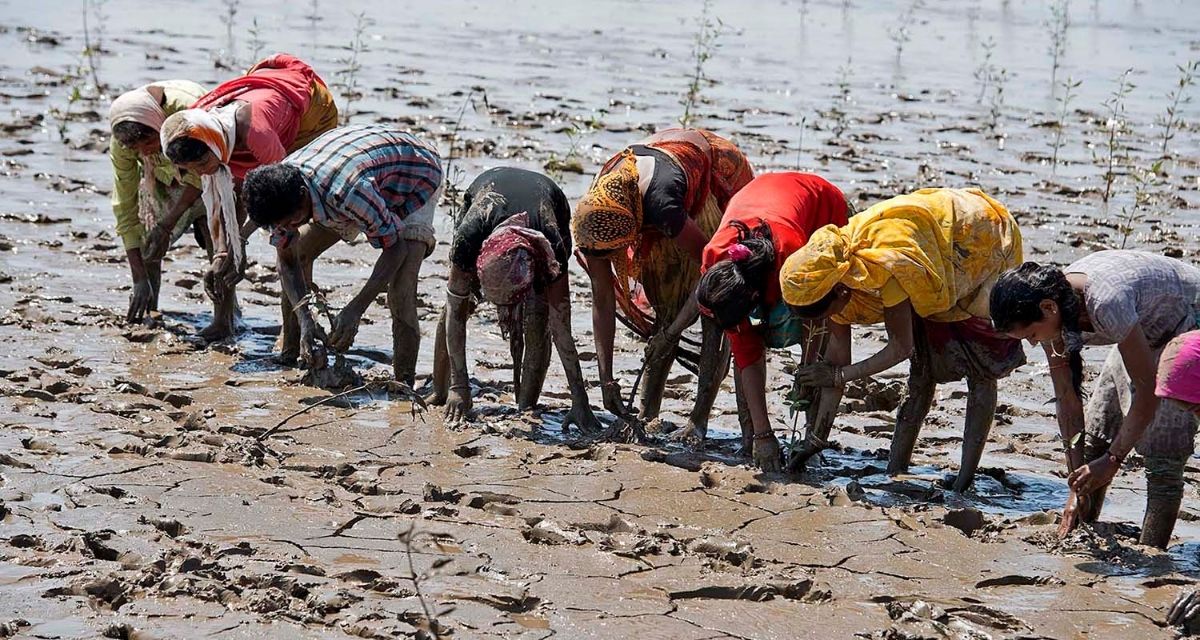
Women at
the centre of restoration
Around 40 to 50 women from Suva village (Vagra block, Bharuch district) are actively involved in mangrove restoration. Women such as Jaya Ben, Amrat Ben, Asha Ben, Meenakshi Ben, Rekha Ben, Sharda Ben, and Lipika Ben work collectively on plantation, gap-filling, nursery preparation, and protection of young saplings.
“We planted these mangroves with hard work, and we do not let anyone harm them,” said Meenakshi Ben (50).
Asha Ben (19) said the work opened new pathways. “We received training for plantation and were connected to self-help groups for savings and self-employment.”
For Amrat Ben (55), the ecological changes are already visible. “The environment has improved,” she says. “Fish like hilsa, sold for around Rs 1,000 per kg, are found here again. People also catch crabs. This supports our livelihoods.”
Women involved in the plantation are paid daily wages, not honoraria or incentives. In rural areas like Suva, women earn Rs 300 per day, while those working closer to urban areas receive Rs 400 per day. Plantation work runs from mid-December to the end of March, while nursery preparation takes place during the monsoon. Most women find employment for about six months a year, and wages are transferred directly into their bank accounts. Women and other workers are paid by the NGO or implementing agency that provides the work, with the funds coming from companies’ Corporate Social Responsibility (CSR) allocations.
This wage-based model ensures immediate income while tying livelihoods to long-term ecological stewardship.
The mangrove plantation in Suva village began in 2018. Since then, about 90 hectares have been restored within the village (50 hectares in the first phase and 40 in the second), while total plantation across the surrounding region stands at 280 hectares.
Trees planted during the first phase have grown substantially. The second phase is now in its third year, with gap-filling work underway - an essential process to replace saplings that did not survive earlier cycles.
“The first three years are the most critical,” said Purshottam Sonagra, Lead–Natural Resource Development at Vikas-Centre for Development, the organisation facilitating the work. “Once mangroves reach around three years of age, they begin producing seeds. These fall naturally and regenerate new plants.”
After this stage, mangrove forests largely sustain themselves, reducing dependence on external funding. The model follows a clear cycle: plantation in the first year, gap-filling in the second and third years, and protection until natural regeneration takes over.
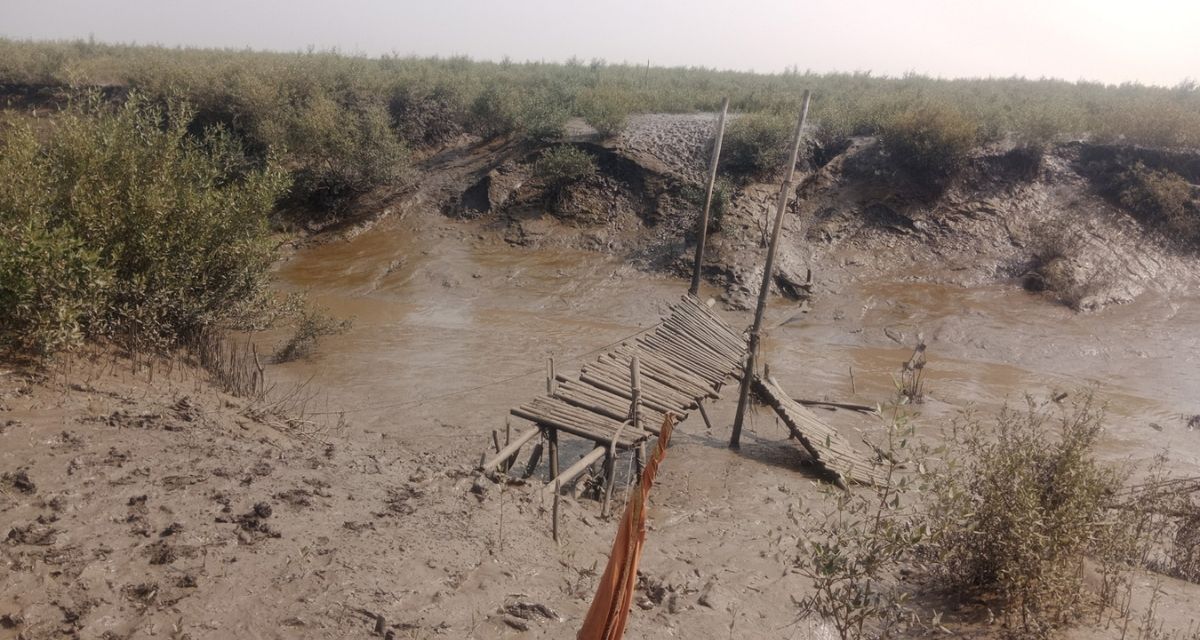 Mangrove restoration has an impact on the soil and water salinity levels (Photo - Rahul Singh, 101Reporters)
Many villagers believe mangrove restoration has reduced soil and water salinity. Farmers said cotton plants now grow taller than before, and grass has begun growing in areas where it previously did not.
“These are community observations,” Sonagra acknowledged. “After the plantation, grass started growing on coastal land where it hadn’t earlier. For the community, this is an indicator of reduced salinity…but scientifically, this still needs validation.”
The distinction matters. While lived experience shapes local trust in restoration, experts caution against overstating environmental outcomes without empirical evidence.
More importantly, mangrove restoration here is not driven by NGOs alone. Written consent from the gram panchayat is mandatory before work begins. Once approval is obtained, a Village Eco Development Committee is formed.
Budgeting and planning are carried out collectively, based on rates agreed upon by the committee. Panchayat representatives attend meetings from the planning stage through implementation.
Deputy Sarpanch of Suva panchayat, Rajesh J Gohil, said the change is visible. “Earlier, mangrove plants were small. Now they have grown taller, and the green cover around the village has increased. This helps reduce erosion and slow the impact of sea storms.”
Mangroves also strengthen biodiversity. “They create a favourable ecosystem for crabs,” Gohil explained. “Crabs make burrows and decompose leaf litter, releasing nutrients for mangroves and serving as food for birds and other animals.”
A research study supports this observation, showing that crab populations increase rapidly with mangrove restoration, and that tree height and density improve as forests mature.
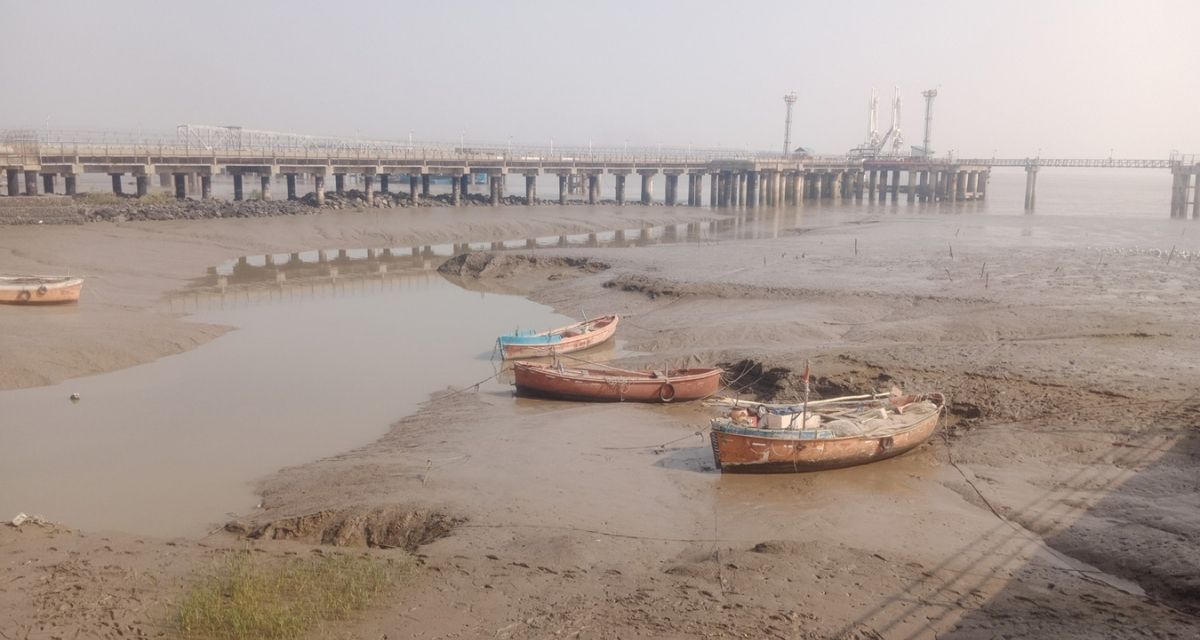 After the plantation, grass started growing on coastal land where it hadn’t earlier (Photo - Rahul Singh, 101Reporters)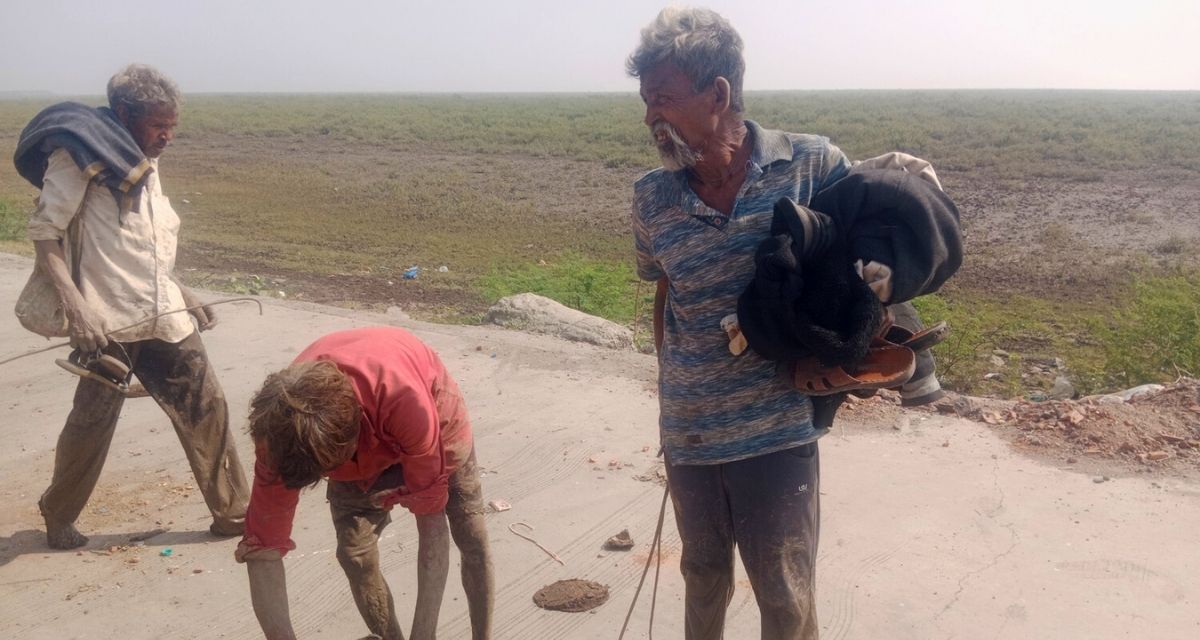
Livelihoods beyond wages
Women involved in the plantation are also linked to self-help groups (SHGs) known locally as Bachat Mandals. In Suva, these include Maa Shakti, Jasma Bachat Mandal, and Singnath Mahadev groups.
“Our objective is not just plantation,” Sonagra said. “It is to create income, ownership, and long-term stewardship.”
According to Rajesh Shah, founder trustee of Vikas-Centre for Development, mangrove loss in Gujarat during the 1980s led to deepening poverty. “As mangroves declined, fish and crabs disappeared. Livelihoods collapsed,” he said.
Since 1999, plantation efforts facilitated by community participation have covered nearly 5,000 hectares across Gujarat’s coastal districts, supported by CSR mandates, state climate programmes, and international funding.
Gujarat has India’s second-largest mangrove cover after West Bengal, accounting for over 23% of the country’s total. Yet it also has the longest coastline, and faces severe pressures from ports, dams, and industrial development.
Singh, now a member of the National Board for Wildlife, says community participation was essential to reversing the trend. “People were told mangroves offer dual benefits - income and improved fisheries. They could fish during high tide and plant during low tide.”
Road ahead
Mangrove expert and oceanographer Abhijit Mitra explained why restoration matters globally. “Mangroves are highly resilient. They absorb carbon, protect against erosion and storms, and serve as breeding grounds for fish and crabs.”
But Gujarat’s mangroves face limitations, lower rainfall, higher salinity, and less muddy terrain compared to regions like the Sundarbans.
A GIS-based analysis conducted in April 2025 found an overall plantation success rate of 57% in Bharuch district between 2000 and 2025. However, plantations from earlier phases show success rates exceeding 76%, indicating long-term viability.
When asked what happens if funding stops, the answer lies not in budgets but biology and governance. Once mangroves mature, regeneration continues naturally. What remains critical is protection.
“The real infrastructure,” said Sonagra, “is community ownership.”
Panchayats already play a role through consent, monitoring, and participation - but experts say this can be strengthened further through targeted programmes and regular engagement.
For women like Jaya Ben, the stakes are clear. “We may not stop the industries,” she said, “but we can protect what is left.”
In Gujarat’s changing coastal landscape, mangrove restoration is not just an environmental project. It is a livelihood strategy, a climate buffer, and, above all, a community-led assertion of resilience.
Would you like to Support us
101 Stories Around The Web
Explore All News