Why the culture of ice skating in Himachal Pradesh is melting

Why the culture of ice skating in Himachal Pradesh is melting
From Shimla’s ice rinks to Solang’s ski slopes, Himachal’s athletes and communities grapple with the loss of winter sports to climate change.
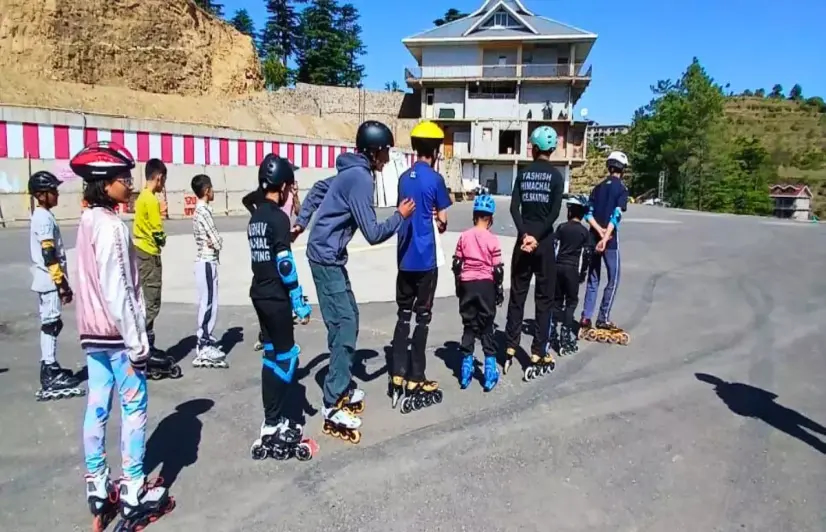
Shimla, Himachal Pradesh: The grating scratch of metal skates against concrete pierces the cold Theog morning in Shimla district, Himachal Pradesh. Fifty young athletes glide across the bare courtyard, their blades tracing invisible patterns where frozen ponds once sparkled. Pradeep Kanwar (40) vice president and coach of ice skating in the state, watches them, recalling winters when ice formed naturally and the rink rang with the sound of blades on ice.
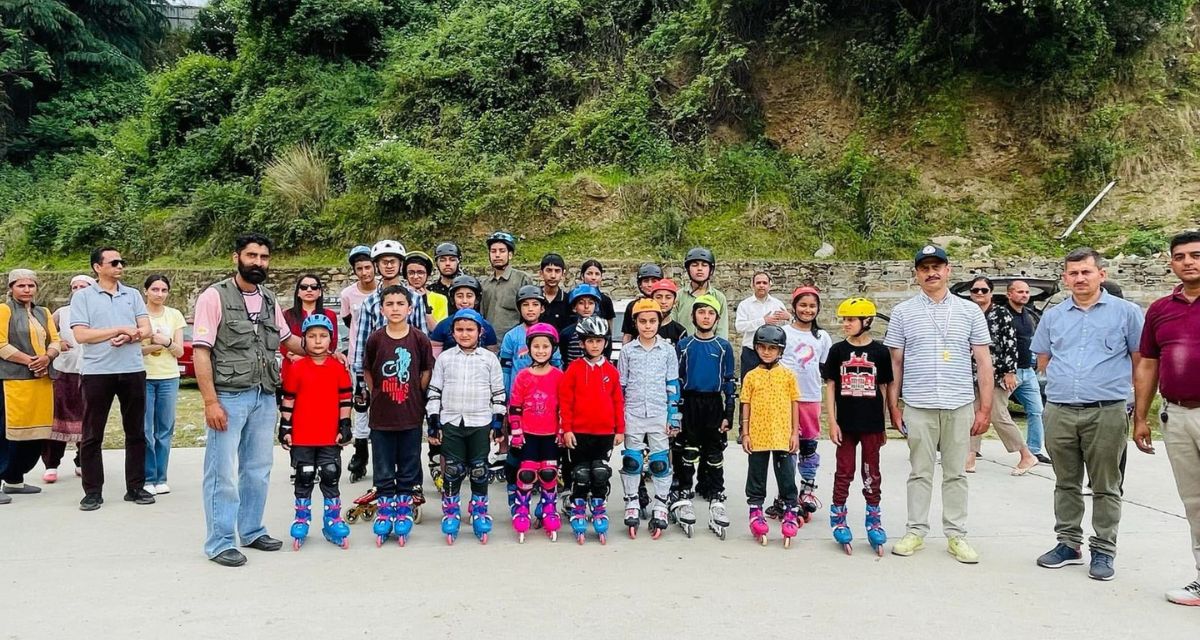 Pradeep Thakur continues to coach young skaters on bare cemented ground (Photo - Rachna Verma, 101Reporters)
“I learned to skate on this same ground,” Kanwar said, adjusting a student’s posture. “For the past two decades, I have taught students hoping one day one of them will become a world champion. But rising temperatures have added to my stress over the past two years.”
For more than two years, Thakur has been conducting workshops on bare concrete, as rising temperatures prevent natural ice skating rings from freezing properly. Lakkar Bazar in Shimla, once Asia’s largest and oldest natural rink, failed to form ice this winter.
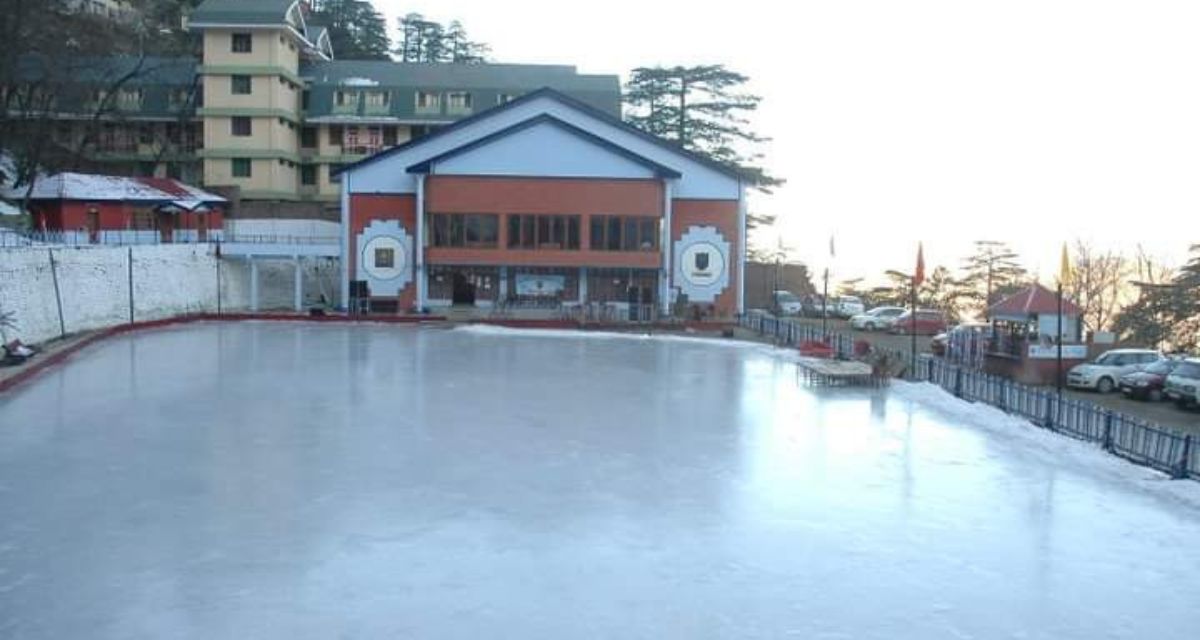 Known as the oldest natural ice skating rink in Asia, at Lakkar Bazar in Shimla and it is no longer frozen (Photo - Rachna Verma, 101Reporters)
In 2024, the association tried wind barriers, reflective shade panels, and frequent nighttime water sprays to thicken ice but could maintain it for only 21-22 days.
“The temperatures aren’t cold enough anymore. Our players get only 100 hours of practice a year far below the 600-800 hours common internationally,” says Chetan Sood (60) a member of the Ice Skating Club, Shimla. The reduced practice time is widening skill gaps and affecting confidence. The association is now demanding an artificial refrigerated rink to allow year-round training.
Once blanketed in snow and a hub for winter sports, Himachal Pradesh is seeing its culture and hobbies shift. Snow, once part of daily life and play, is disappearing. Data from the Meteorological Department, Shimla, collected by 101Reporters, showed snow cover has dropped sharply: 18.5% between 2022-23, 14.05% in 2021-22, and 12.72% in 2020-21. Shimla’s average snowfall has fallen from 129 cm in the 1990s to just 6-9.5 cm in recent winters, affecting major river basins: Chenab, Beas, Ravi, and Satluj.
Vanishing snow
In Solang Valley, skiing was more than a sport, it was woven into daily life, local culture, and even survival. Solang Valley is a picturesque side-valley in Himachal Pradesh, India, located about 14 km from Manali and known for its natural beauty.
Vikas Thakur (26), a state-level ski player, from Koti village in Manali learned to ski before he could properly walk. “My father strapped wooden planks to my feet when I was three, not for fun, but to reach our animals trapped in high pastures during heavy snowfall.”
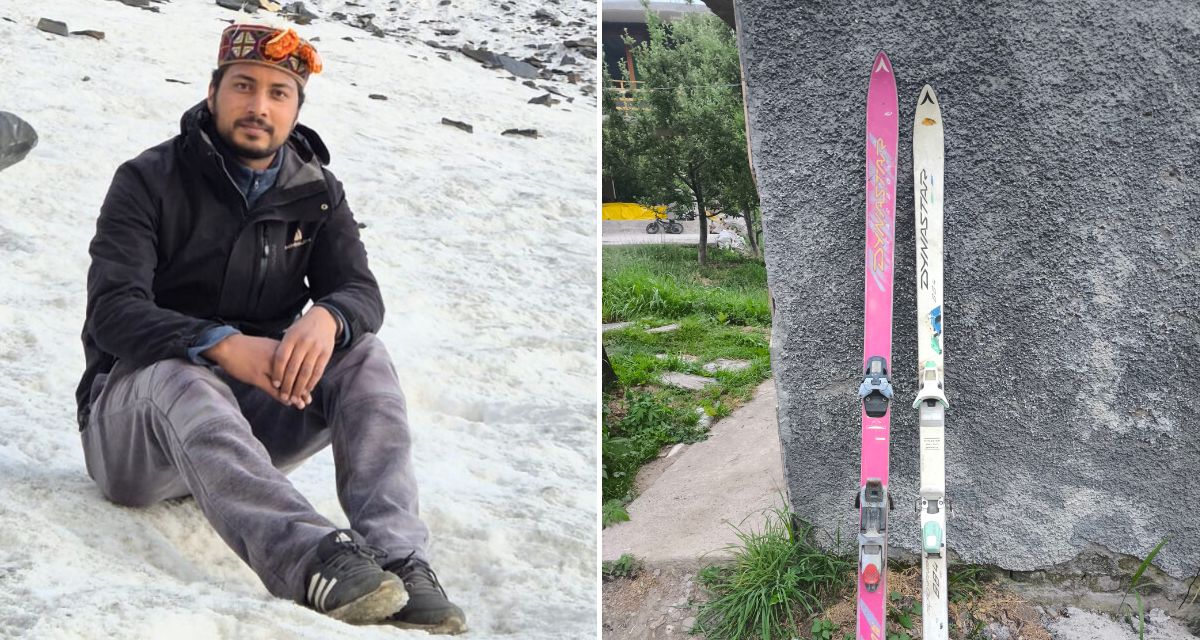 Vikas Thakur and his two mismatched ice skates left in the house (Photo - Rachna Verma, 101Reporters)
“People here didn’t even know skiing could be done professionally. For our community, it was a source of entertainment and sometimes a means of transport during heavy snowfall. I remember children would make small wooden box-like sleds, climb up the valley, and slide down for fun.”
But the snow that once defined the valley is vanishing. Changing weather patterns, rising temperatures, and declining snowfall are eroding both the practice and the culture of skiing.
Thakur is one of the many who quit skiing.
The northwestern Himalayas have been heavily impacted by climate change, according to Dr HS Negi of the Snow and Avalanche Study Establishment (SASE). From 1991 to 2015, the region experienced an average winter temperature increase of 0.65°C, with the Greater Himalaya region seeing an even higher rise of 0.87°C and the Karakoram range an increase of 0.56°C. Chief Scientist Suresh Atri of the Department of Environment Science & Climate Change, Himachal Pradesh, stated that a recent joint analysis by the Intergovernmental Panel on Climate Change and the Indian Institute of Tropical Meteorology of around 100 years of Himachal Pradesh weather data found a 0.9°C temperature increase in the Himalayas.
This warming has increased total winter precipitation, but the proportion falling as snow is declining, being replaced by rain, which disrupts snowpack cycles. Between 1993 and 2010, the Greater Himalayas saw a decrease in snow albedo (reflectivity) of 0.011 per year.
Avinash Negi, director of the Mountaineering Institute, explained the effect of this on winter sports: “The best snow used to come in December and last until February. But now, the snow that falls holds a lot of water. We have to climb much higher just to practice even basic skills.”
For winter sports, powdery, dry snow is ideal. It stays longer, provides better grip for crampons, allows secure placements of ice axes, and creates more predictable avalanche conditions. Wet, heavy snow is dangerous as it can slide unexpectedly, fails to hold climbing equipment securely, and makes movement more difficult and exhausting. As a result, mountaineers must seek higher, colder elevations to find the dry snow necessary for safe training.
Melting Economy
According to Luddar Thakur, president of the Himachal Pradesh Winter Games Association, the state’s winter sports and tourism sector has suffered a sharp economic decline due to the changing weather patterns.
The winter sports industry and tourism, which once employed over 1,000 people directly across the state, has shrunk by 60% in the last five years. Equipment rental shops have closed, coaching academies shut down, and event organizers have moved to other states or abandoned the sector entirely. Tourism contributes 7.78% of Himachal’s Gross State Domestic Product, yet Thakur said the government has largely ignored the crisis.
LR Thakur, President of the Winter Sports Association of Himachal Pradesh, admits the crisis is unprecedented. “This is the first time in my six-year tenure that we haven’t been able to organize a single winter competition,” he says. “We even tried using artificial freezing machines, but they couldn’t maintain the ice.”
Artificial snow machines work by spraying tiny water droplets mixed with cold air into the atmosphere. These droplets freeze and fall as snow, covering ski slopes when natural snowfall is insufficient. The association experimented with this method in 2023-24 but failed to achieve usable results. As a consequence, the annual state winter games have been canceled for three consecutive years.
“We’re looking at organizing events in Ladakh or even sending our athletes abroad for training,” Thakur reveals. “But that’s not sustainable for most families.” Athletes are losing hope without regular competitions, and the motivation to continue in a sport that is already seasonal and uncertain is waning. Many invest years of training, but without proper opportunities and support, their passion risks fading, and the future of winter sports in the state becomes increasingly fragile.
A ski coach at the Atal Bihari Vajpayee Institute of Mountaineering and Allied Sports (ABVIMAS), Manali, requested anonymity, stating that global warming has severely impacted winter sports over the past two years. “In 2024, only one elementary course was conducted in Narkanda, and in 2025, no courses were held at all. Admissions have dropped drastically. We once trained 500 students at a time; now, the maximum is 50. The sport has lost its charm—parents and young people are no longer enrolling their children.”
Director Avinash Negi of ABVIMAS confirmed that climate change has reduced both the quantity and quality of snow. “The snow now is wet, inconsistent, and melts quickly. For safe training, we must go to higher, colder elevations where powdery, dry snow still forms, conditions that are increasingly rare.”
According to the Himachal Pradesh Council for Science, Technology and Environment, snow cover in Himachal during December-January 2023-24 fell by 12.72%. Glacier melt has accelerated. In 2007, there were around 196 glacial lakes and by 2023 the number had reached over 2,200. Even though these glacial lakes are mostly small they are capable of causing flash floods if their banks collapse. Snow that used to last into summer now melts earlier, exposing ice and further degrading snow quality.
Places like Kufri, Narkanda, Spiti, Kullu, and Manali are experiencing unreliable snowfall. Shimla recorded just 67 cm in 2020-21, far below historical averages. Winter sports are being forced to shift to higher-altitude regions like Lahaul-Spiti and Solang, where conditions are harsher and unpredictable.
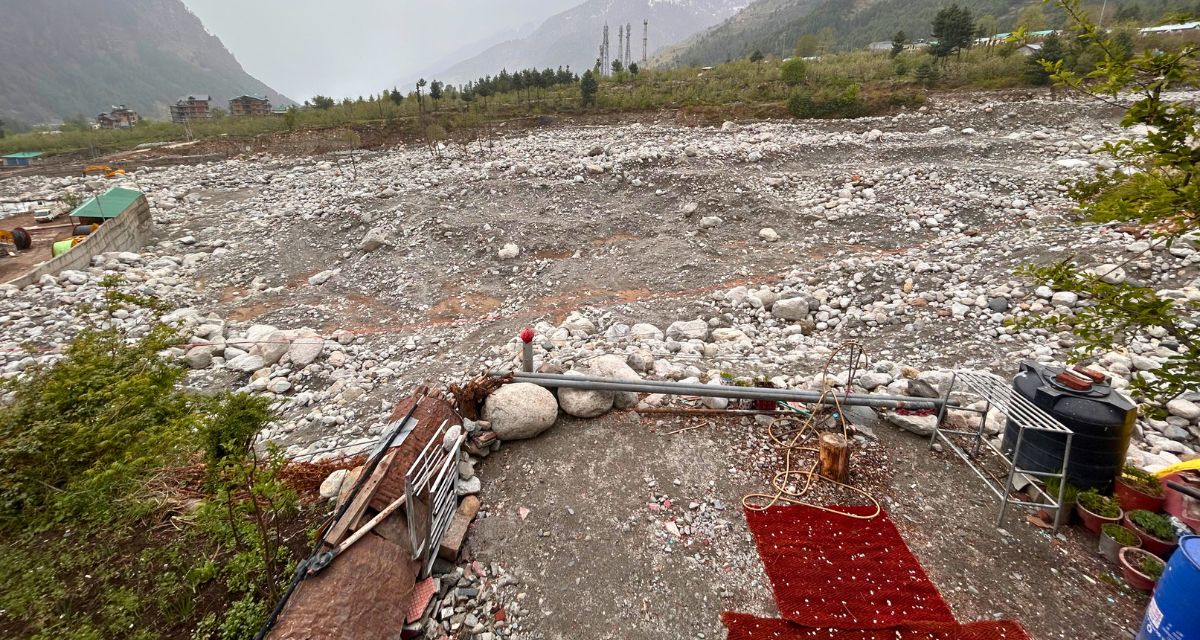 Devastation now lies in front of Sandhya's house where they once used to skate (Photo - Rachna Verma, 101Reporters)
Loss of Culture
Sports were not just for entertainment value but also formed the social fabric in the winter season. Village competitions once determined marriages, with families noting which young men showed courage on steep slopes. Noor Ram, 80, a village elder of Kothi village, Kullu, told 101Reporters: “Snowfall was a blessing. There’d be 5 to 8 feet of snow. The mountains were never bare, even in June or July. Now, January and February pass by without it.”
Skiing also shaped personal lives. Sandhya Thakur, 27, a national champion with 20 medals, recalls her childhood: “The first snowfall was like a festival. Families would race on slopes, and winners got the best spot by the fire and extra siddu [steamed bread].” Today, with no snow, she is pursuing a PhD.and seeking sponsors to train abroad.
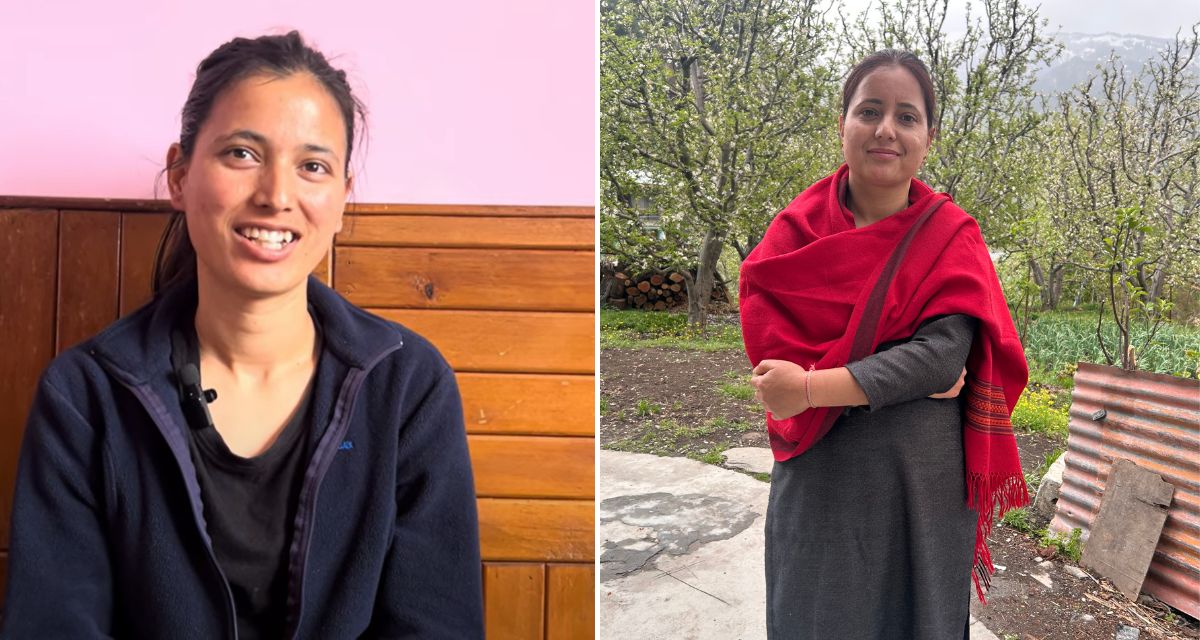 (Left) Sandhya Thakur and (right) Maya Thakur talking about skiing and their lives (Photo - Rachna Verma, 101Reporters)
Maya Thakur, who lost her husband in 2017, turned to cross-country skiing to cope with grief. “Skiing didn’t just give me a sport; it gave me back my life,” she says. She now manages ice-skating programs, taking 50 students annually to higher altitudes, “chasing the snow that used to be right outside our doors.”
This project is supported by the Internews Earth Journalism Network with funding from the Swedish International Development Cooperation Agency (Sida)
Cover photo - Pradeep Thakur continues to coach young skaters on bare cemented ground while adapting to winters (Photo - Rachna Verma, 101Reporters)
Would you like to Support us
101 Stories Around The Web
Explore All News