The local songs are disappearing as Pulicat’s fishing life changes

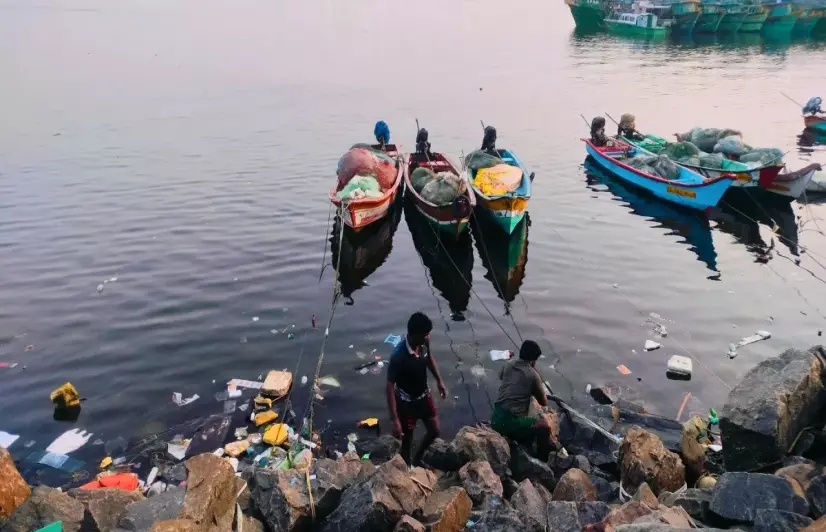
The local songs are disappearing as Pulicat’s fishing life changes
Chennai, Tamil Nadu: Around 10 am, draped in a pink cotton saree, Muniyammal (81) sits at the fish market in Pulicat, north Tamil Nadu, cutting Keecha Meen, or tiger perch, with a traditional chopper. As she works, she hums “Yelelo Ailasa”, a Tamil folk song she learnt from her father.
Among the 23 fish cutters at the market, Muniyammal is the only one who can partially remember the lyrics of the song, which belongs to the tradition of “Amba Paatu” — maritime work songs passed down orally through generations. “I learnt the song from my father. I used to hear him sing this while he used to prepare the boat for fishing,” she told 101Reporters.
The song is surviving even as the world that produced it is disappearing.
Pulicat, a major fishing centre on the Bay of Bengal, is surrounded by around 50 fishing villages, or kuppams, and supports about 30,000 fishers. But fishing is becoming increasingly difficult for small-scale fishers as catches decline, fishers venture further into the sea and younger members of fishing families look for other livelihoods.
As families move away from fishing, traditional fishing knowledge, community institutions and the songs, rituals and practices built around life by the sea are disappearing with it.
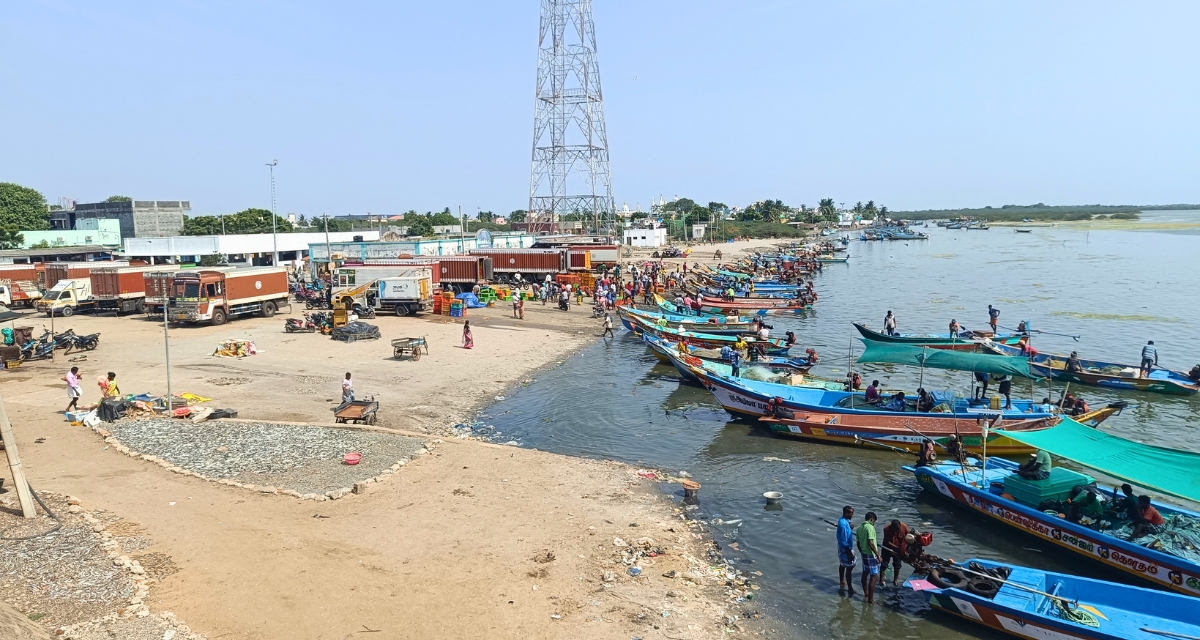 Fish landing and auction centre at Pulicat Lake (Pazhaverkadu), Thiruvallur district, Tamil Nadu, where local catches are sorted and traded (Photo - Manivannan Govindarajan, 101Reporters)
Fishing is not enough
For women in these fishing villages, the sea has never meant only catching fish. While men went out to sea, women sold and processed the catch and found other ways to supplement household incomes. Self-help groups that emerged in villages around Pulicat gave them another source of livelihood and a space to come together.
Anjali Pakiriswamy (55) was a member of one such group in Lighthouse Kuppam. She recalled that the groups began emerging in her village and nearby villages around the mid-to-late 1990s and became more active after the 2004 tsunami. Since women rarely went fishing, they made products from dry fish and other materials to earn an income.
“The older women used to sing songs, and a few of us learnt them. Later, I started teaching those songs during the meetings, but gradually the meetings became fewer, eventually the union closed and there was no time to sing those songs,” she said.
The groups also gave women opportunities to make pickles, papad, masala powders and other food products, process fish, learn embroidery and tailoring, and make products from palm leaves.
But in parts of Pulicat, the groups have weakened as families have migrated to cities. Some women who were active in them have also died or stopped participating because of old age.
Migration is not simply a search for better jobs. It is also a response to the growing uncertainty of fishing.
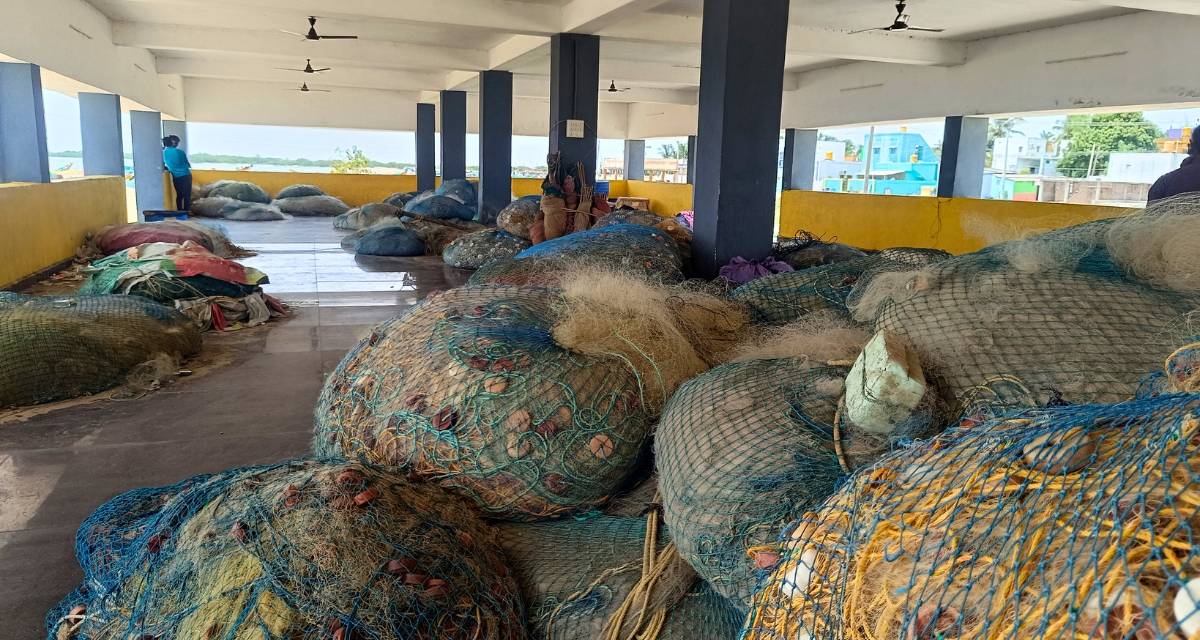 Piles of fishing nets inside a fishermen's shelter at Lighthouse Kuppam, Pulicat (Photo - Manivannan Govindarajan, 101Reporters)
Selva Kumar (39), whose ancestors were fishermen, worked as a fisher in Pulicat before moving to Chennai nine years ago to give his daughter and son better educational opportunities. He initially worked as a contractual labourer but lost his job during the Covid-19 pandemic. He now works as a daily-wage labourer.
“Fishing has decreased, and the size of the fish has decreased too. It does not bring in enough money to run a family smoothly. The scenario was different even 15 years ago,” says Selva.
He did not want his children to remain tied to the same uncertain livelihood. “I never wanted my daughter to sell dried fish, as many women in these villages do. Nor did I want my son to take up fishing. I will bear all the struggles for them. I want to see them get good jobs.”
Like Selva, Gangan (57) never encouraged his two sons to take up fishing. One now works for a private firm in Chennai and the other in Delhi.
“Fishermen do not encourage their sons who study and have potential to take up fishing. Many people from different parts of Pulicat are giving up fishing. It is no longer sustainable, especially for small-scale fishermen like us. A job offers security, while this profession involves a lot of risks,” Gangan says.
For those who remain, livelihoods are increasingly pieced together. Younger people who leave fishing have started driving autorickshaws, Gangan says, while some families have opened small grocery shops, mostly operated by women.
Fishing does not pay anymore
The plight of Bhaskar (48) a Pulicat fisher, explains why some families are looking elsewhere for work. After hours spent fishing, he has returned with a catch worth no more than Rs 4,000.
Aila, Spanish mackerel or seer fish (Vanjiram), trevally (Paarai), Indian mackerel (Kaanangkeluthi), prawns or shrimp (Eraal), mud crabs (Nandu) and catfish (Keluthi) are still found in abundance. But high-value catches such as shark (Sura), baby sharks (Sura Kutty), anchovy trevally (Nethili Paarai) and butterfish or false trevally (Sutumbu), once more common in Pulicat, are now rarely seen, Bhaskar says.
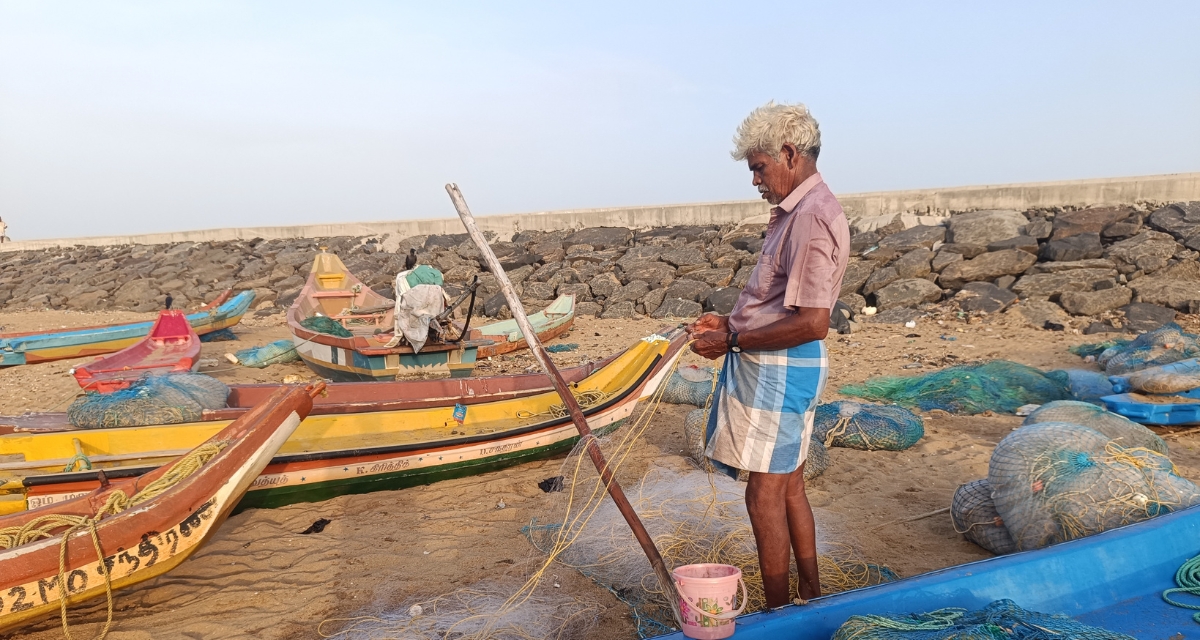 A fisherman preparing his gear before sailing in hopes of a good catch in Ennore (Photo - Manivannan Govindarajan, 101Reporters)
He remembers a different kind of fishing.
“Earlier, when we were young, I have seen my grandfather going fishing in Chinnamaram (small Kattamaran/wooden boats) for inshore fishing and Periamaram (large Kattamaran) for fishing farther offshore with larger nets. My grandfather knew specifically which timber to select [for the boat] in which season. Oddavi families (hereditary boat builders) used to build the boats. I have no knowledge of that.”
Bhaskar attributes the decline of some fish to increased salinity, mangrove loss, reduced freshwater inflow and pollution, which he says are forcing fishers further into the sea.
The relationship between freshwater and salinity is particularly important in Pulicat because the lagoon’s backwaters serve as breeding grounds for prawns, crabs and various fish species. Bhagat Singh, an associate researcher at the French Institute of Pondicherry who studies the history of fishing communities in Tamil Nadu, says Pulicat receives freshwater from the Poondi Reservoir through the Arani River. But the reservoir is also a major source of drinking water for Chennai and Tiruvallur district, leaving less scope for releasing freshwater into the lagoon.
Freshwater flows into the lagoon mainly for a few months during the northeast monsoon, particularly in November and December, Singh says. “As the freshwater inflow into the lagoon decreases, its productivity is affected. The same condition applies to the nearshore waters as well for which fishers are increasingly forced to venture into deeper waters in search of fish.”
Environmental activist and retired professor Fatima Babu also links changes in salinity to industrial activity. She says desalination plants discharge highly saline waste into the sea, which can damage marine life and force fishers further into the deep sea.
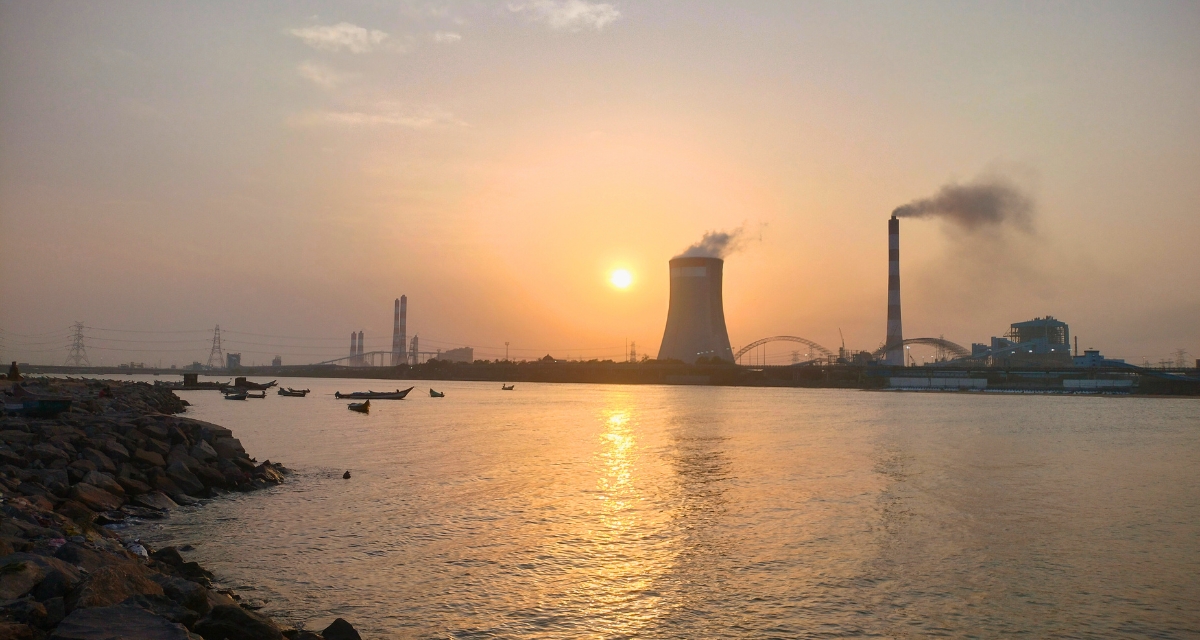 Sunset over the Ennore Kosasthalaiyar region, an area with documented pollution from industrial waste, sewage, and coal fly ash (Photo - Joymala Bagchi, 101Reporters)
“Moreover, in the last 10 years the rainfall has become more erratic,” Bhaskar says. Older fishers, he says, could read waves and winds to predict where and when to fish. His friend’s grandfather could read the phases of the moon and use them to anticipate the monsoon.
Moon phases, star constellations, wind directions, the halo around the sun and other observations once helped guide fishing communities. But this traditional knowledge is becoming less reliable as weather patterns change. The monsoon rainfall has increased by more than 10% in the last decade in approximately 80% of tehsils in Tamil Nadu, according to the information available to this study.
Climate change is not the only force altering fishing. Government policy and the expansion of mechanised fishing have also changed how fishing is carried out along the Tamil Nadu coast.
The race to fish
By the 1980s, Tamil Nadu’s fisheries sector was increasingly oriented towards mechanisation, higher productivity and commercially valuable species such as shrimp, whose strong export demand was drawing private investment into fish processing and trade.
A study by the Central Marine Fisheries Research Institute noted that between 1980 and 1989, Tamil Nadu contributed an estimated annual average of 2.6 lakh tonnes of marine fish, or 16% of India’s total marine fish production. Alongside traditional craft and gear used in inshore waters, the expansion of mechanised vessels, particularly trawlers, significantly increased the scale at which fish resources could be exploited.
The shift has continued. In 2018, the Ministry of Agriculture and Farmers Welfare introduced “Assistance for Deep Sea Fishing” under the Blue Revolution scheme to provide deep-sea fishing vessels to traditional fishers. The scheme cited an estimated potential yield of 216,500 tonnes from oceanic resources that could be targeted by such vessels.
For fishers, this has created a race to reach fish before someone else does. Traditional boats increasingly compete with mechanised vessels that can travel farther, stay at sea longer and bring in larger catches.
Balachandran (38), who has been in the fishing business for almost two decades, owns four trawlers. His boats venture into deeper offshore waters and can remain at sea for several days at a time. They typically go out every three to five days, depending on the catch.
For him, newer technology is not simply a choice. It is a way of staying competitive.
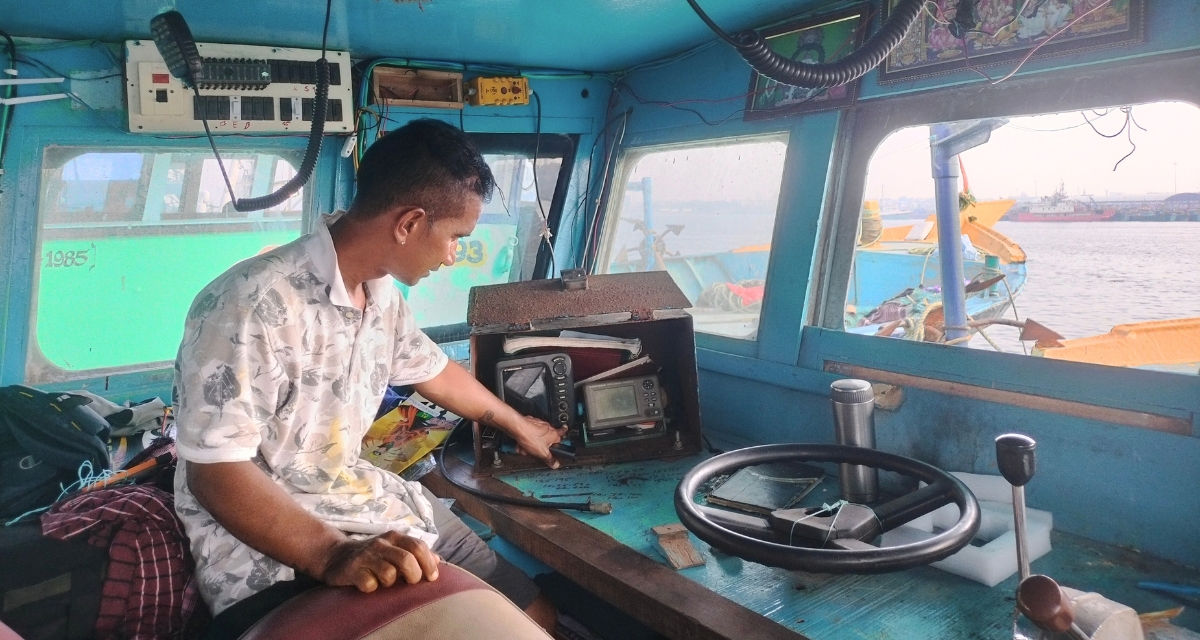 Fisherman Sivaraj displaying a GPS unit, satellite phone, and echo sounder, which he describes as "the need of the hour" (Photo - Joymala Bagchi, 101Reporters)
“Fishing technology has developed significantly, but the number of fish has declined. Earlier, our ancestors and grandparents used different methods to catch fish. Those traditional techniques are no longer practised here but I have heard few foreign countries have adopted it for sustainable fishing. Here in India everyone is adopting newer methods. If I continue using the older methods, I will be the only one doing so and will end up catching much less fish,” he says.
But what allows one fisher to catch more can make fishing harder for another. Small-scale fishers in Ennore and Pulicat say larger boats interfere with their fishing grounds and sometimes damage their nets. A study of fishing communities around Pulicat found conflicts between big and small boats among the problems reported by local fishers, including instances of trawlers damaging nets laid by smaller boats.
“For older fishing communities in Ennore and Pulicat, the issue is therefore not simply about which technology catches more fish. It is also about who gets access to the sea and its resources in the middle of increasing trawler race,” says Kamlesh, a fisherman-turned-tourist guide in Ennore.
The question of access becomes even more complicated in Ennore, where industrialisation has transformed the fishing landscape itself.
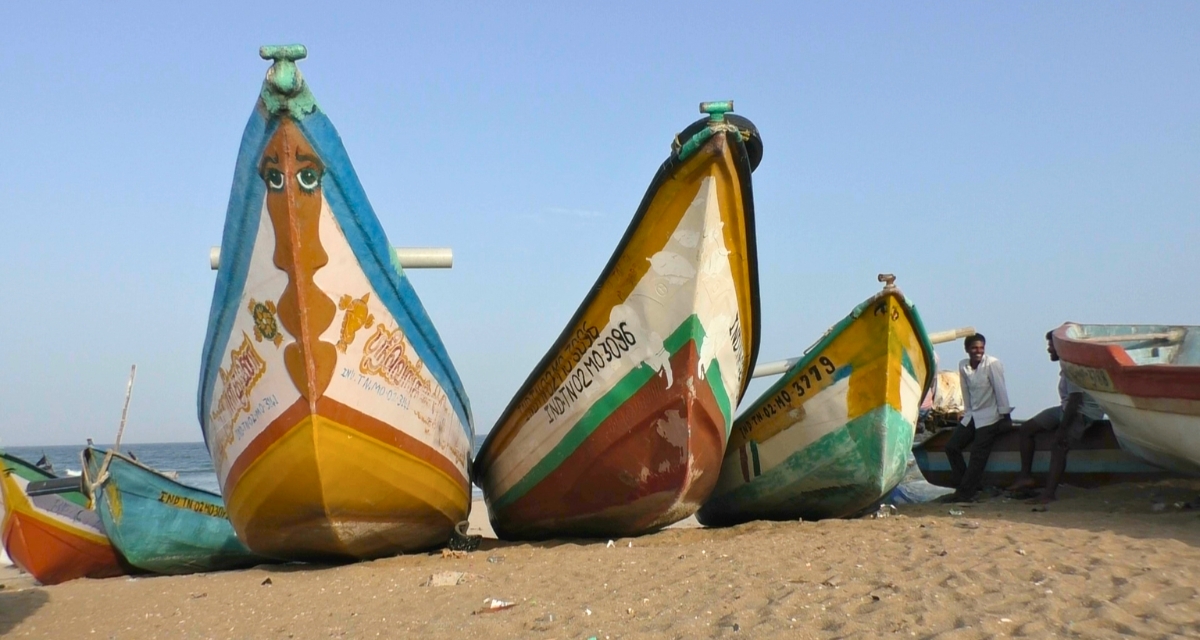 Two fishermen conversing on an Ennore beach after completing the day's catch (Photo - Manivannan Govindarajan, 101Reporters)
Losing the commons
The mouth of the Ennore creek, about halfway between Pulicat and Chennai, offers a more intensive example of pressures also affecting Pulicat: mechanisation, industrialisation, pollution and the degradation of fishing spaces.
The creek was once a rich fishing ground. Fishers would worship the local deities Pokkali Amman and Vellai Amman before setting out in their boats. Periya Kuppam Kumar (65), has been fishing near the mouth of the creek for 50 years.
But for Kumar, it is not only the catch that has changed. The seasons themselves have become harder to read.
“Earlier, an early monsoon would arrive between June and July. We had proper seasons, and specific types of fish would arrive with each season. Even storms and high winds followed a predictable cycle. Now, all those seasonal shifts are gone. We can no longer predict when a storm will hit or what kind of fish we will catch on any given day. We too have started depending on weather forecasts that young fishermen tell us,” he says.
The uncertainty has disrupted the transmission of knowledge between generations.
“Whatever our father and grandfather taught us as traditional knowledge of the sea, I could not pass it down to the younger fishers. I go wrong in predictions as I do not understand weather like I did 30 years ago,” Kumar says.
He also blames mechanised fishing for the decline in his catch. “Due to these mechanised trawlers the sea is bare now. By the time we cast our nets, there’s nothing left. The effort that used to earn us Rs 1,000 now barely brings in Rs 500, if we are lucky.”
Balachandran, however, also points to industrial activity. He supports the annual 61-day fishing ban in Tamil Nadu, which is intended to give fish time to breed.
“Fish lay lakhs of eggs, and we depend on their reproduction for future catches. To give them space and time to breed, fishing is banned for 61 days across the state,” he says.
But he does not believe the ban alone explains the decline in fish availability. Asked what is driving the fall in fish numbers, he identifies three factors: “Too much fishing, industrial waste and climate change.”
He points particularly to industrial activity along the coast. “The hot water, the recycled water and coal ash are all getting mixed with the sea. This creates a threat to fish and marine life as a whole,” he says.
For communities around Ennore creek, the loss is also one of control over the spaces where they fish.
The creek was traditionally governed through a system known as Paadu, under which fishers collectively allocated and rotated access to 53 fishing grounds according to unwritten community rules. Researchers Nityanand Jayaraman and others wrote in 2024 that the system depended on a detailed understanding of the creek’s tides, seasons and changing fishing spaces — knowledge communicated through everyday interactions among fishers.
Paadu began to decline in the 1970s as industrialisation, environmental degradation and mechanised fishing expanded and traditional community institutions weakened. Fishers have consequently lost not only access to some fishing grounds, but also a centuries-old system of governing the creek through customary rules.
This is why Ennore matters to the story of Pulicat. In both places, the problem is not simply that fishing is becoming less profitable. The occupation is being separated from the landscape, knowledge and community institutions that once made it possible.
And when those systems weaken, the effects reach beyond fishing itself.
Periya Kuppam Kumar remembers that until about 30 years ago, when fishers returned late from the sea, their wives would wait for them with a plate of rice and a glass of water. The ritual was observed in almost every fisher household, he says. Few families continue it now.
The songs that accompanied fishing are disappearing too
When the songs disappear
“Yelelo Ailasa” was not simply a song for entertainment. Hariharan (70), a retired fisher, remembers it as a work song, sung while fishers pulled heavy nets from the sea or rowed together in rhythm.
“Yelelo Ailasa was a specific type of song that fishers used to sing while pulling the long heavy nets from the sea that require energy, or while rowing in sync,” he says. “There are songs on sailing and fishing, on work before sailing and on sacrifice of the fishers. Now with the domination of movie songs, our songs are lost.”
For Hariharan, the disappearance of the songs is part of a broader transformation of Ennore. His grandson now works with a trawler, while the coastline around the creek has become increasingly industrialised.
“There are so many industries in Ennore. It's increasing and many of these industries are built near the sea. The sea sound is lost and birds rarely come here,” he said.
This story was produced with the support of Internews’ Earth Journalism Network.
Cover Image - Two fishermen docking their boats at Kasimedu Fishing Harbour, adjacent to the N4 Beach shoreline (Photo - Joymala Bagchi, 101Reporters)
Would you like to Support us
101 Stories Around The Web
Explore All News