Odisha’s ‘Kashmir’ is warming, and the land is changing with it

Odisha’s ‘Kashmir’ is warming, and the land is changing with it
From turmeric fields to forest slopes, shifts in farming and land use are amplifying the effects of erratic rainfall and rising temperatures in Daringbadi Kandhamal, Odisha: Fog still drifts over the green hills of Daringbadi on a January dawn, and the air still carries the earthy scent of damp sal leaves. For decades, this hill block in Odisha’s Kandhamal district earned the nickname “Kashmir of Odisha” for its biting winters and the rare thrill of snowfall. Elders recall frost settling on turmeric leaves, water in aluminium pots turning icy overnight. But the cold no longer holds the way it once did, and residents say the change is not only in the sky, but in the land beneath their feet. “The winter feels shorter now,” said Prabhasini Pradhan (54), a woman from the Kutia Kondh community, one of India’s Particularly Vulnerable Tribal Groups. Seated outside her mud-walled home in Sasigada village, she recalls fog that once stayed until February, heavy dew, and streams that ran well into summer. “Now, by the end of February, the sun turns harsh. Even the streams dry early.” Two decades ago, she said, winter arrived in November and lingered until mid-March. Snowfall would blanket the ground and hold until mid-morning. Today, the chill recedes by early February. Summer, once a brief interlude between March and April, now begins in mid-February and stretches to the first week of June. “The heat has become intense,” said Ramakanta Pradhan (64), a farmer from Dipumaha village. “Children sit behind the table fan to cool off.” The data confirms what residents feel. Temperature records from 2011 to 2025 show a steady rise in winter minimum temperatures across Daringbadi, from minus 1°C, with snowfall and cold waves, to 11°C. Snowfall, once a defining feature of the region, has become rare.
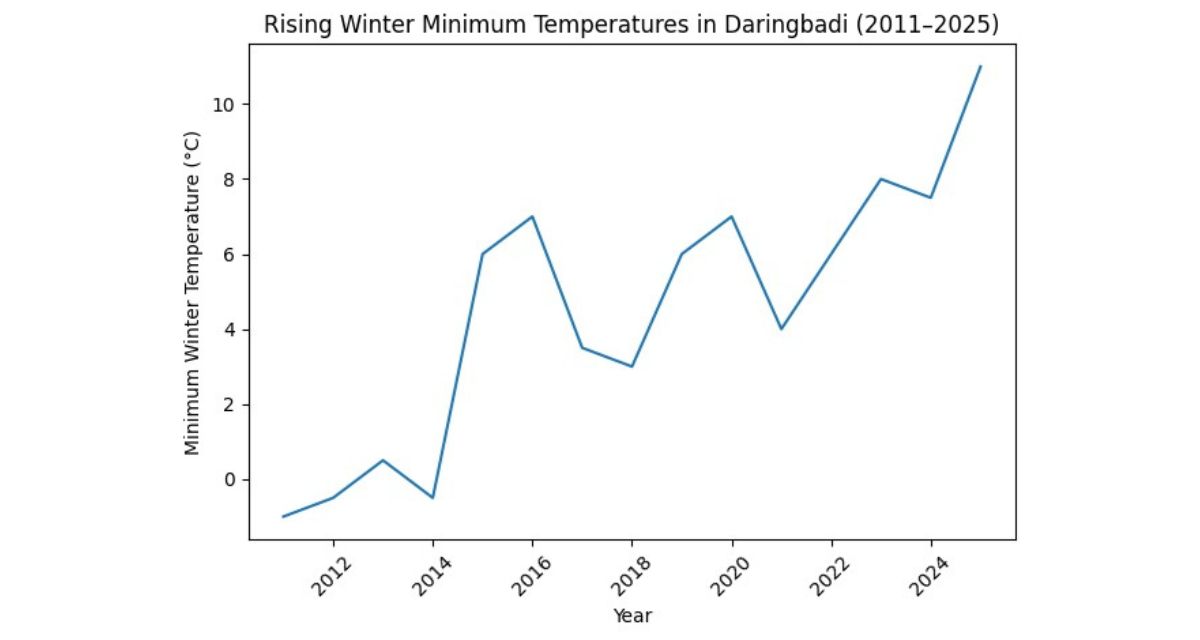 Rising minimum temperatures data (Photo sourced by Abhijit Mohanty, 101Reporters)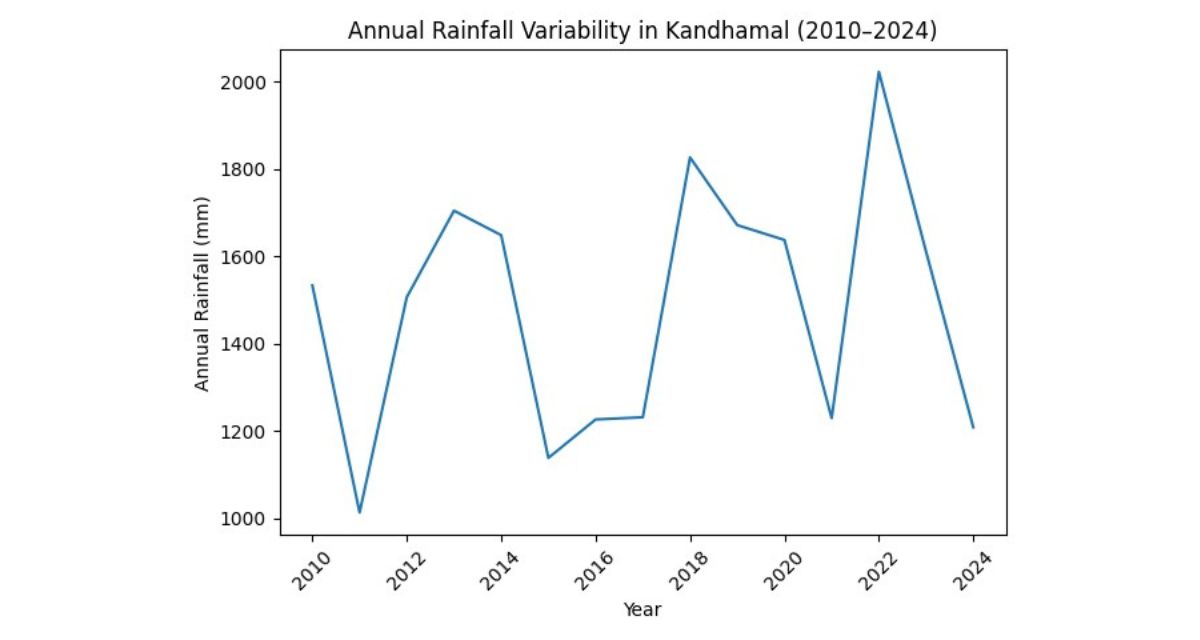
The rainfall patterns have also shifted and are not just declining; they are also becoming erratic. Annual totals in Kandhamal swung from 1,013 mm in 2011 to 1,826 mm in 2018, before dropping again to 1,208 mm in 2024, well below the district average of 1,620 mm. Rain now arrives in bursts, absent when needed, destructive when it does come. “The rains used to arrive in mid-April and last through July,” said Ramakanta Pradhan. “Now they begin only in late May. And in August, when the crop is three weeks from harvest, a single violent downpour can destroy everything.”
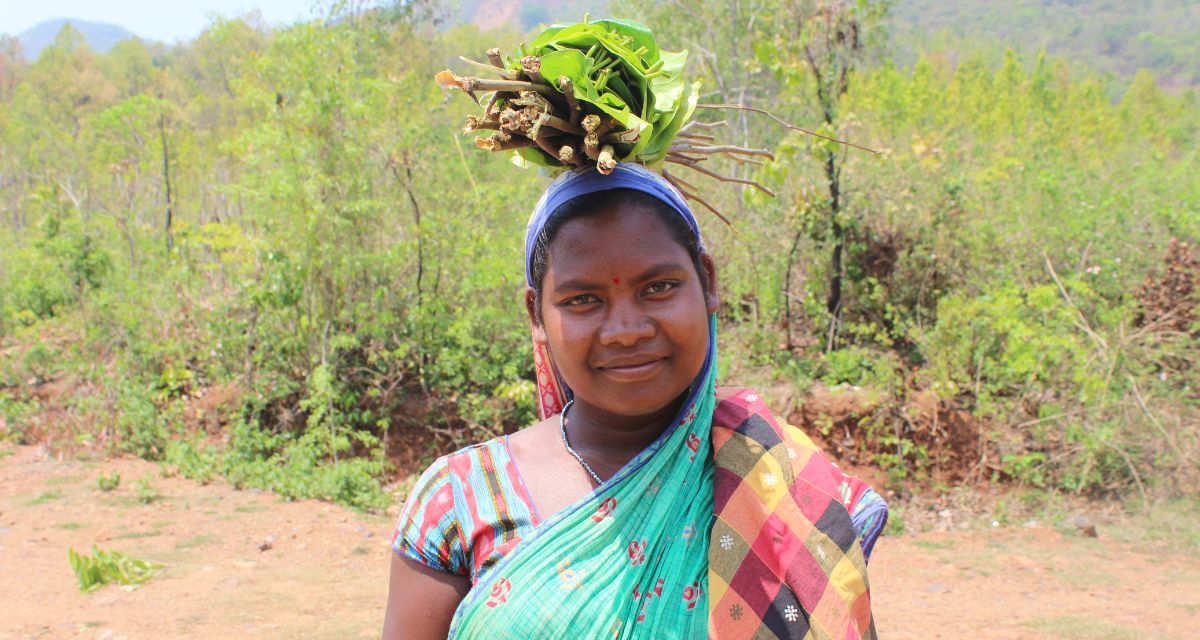 A Kutia Kondh woman carrying sal leaves and twigs (Photo - Abhijit Mohanty, 101Reporters)
The land that is changing To understand what is driving this warming, residents said, you have to look at what has happened to the land. For generations, tribal communities in Kandhamal practised mixed cultivation on their hill slopes: turmeric, finger millet, foxtail millet, little millet, sorghum, pigeon pea, tubers, and vegetables grown together in the same field. The diversity was not incidental. It was structural. Multiple canopy layers retained soil moisture, reduced surface temperatures, and built organic carbon into the soil. The land held water longer, stayed cooler, and buffered crops against variability. If one crop failed, others survived. Kandhamal turmeric was the anchor of this system. Renowned for its deep golden colour, strong aroma, and high curcumin content, it received a Geographical Indication tag in 2019. The crop follows a ten-month cycle, requiring steady moisture and cool soil, conditions that the mixed-farming system was well suited to provide. That system has been coming apart, under pressure from changing weather, but also in ways that are now reinforcing that change. Rising temperatures and erratic rainfall have disrupted turmeric’s delicate cycle. “Earlier, we knew exactly when to sow,” said Abila Nayak (61) of Partaamaha village. “Now, heavy rain arrives without warning and washes away the rhizomes, followed by long dry spells.” Farmers who once harvested five quintals per acre are getting two to three. Traders pay as little as Rs 13,000 per quintal, a price that does not cover labour. Turmeric farming, Nayak says, is no longer remunerative. As yields fall and uncertainty rises, farmers are shifting crops, and with that shift, the land itself is changing. Into the space left by declining turmeric has come hybrid maize, promoted under the Odisha government’s Mukhya Mantri Makka Mission, launched in 2023. In the 2025-26 fiscal year alone, around 400 acres in Daringbadi have been brought under hybrid maize cultivation. “Now everyone is growing this,” said Sabita Pradhan (41) of Sitalkupda village, gesturing across a wide stretch of hybrid maize. “It requires expensive chemicals. Within three months, it is ready. But after three to four years, the land turns dry, lifeless.” The shift offers short-term certainty, a quicker crop cycle, and more predictable returns in a climate that no longer follows familiar rhythms. But it comes at a cost that is now visible on the land. Unlike the traditional mixed system with its layered canopy, hybrid maize fields offer little shade or ground cover. After the three-month harvest, large tracts of land are left completely bare. “Nearly 75 per cent of traditional maize varieties have been replaced by hybrids,” said Kailash Chandra Dandapat, Executive Secretary of Jagruti, an NGO working with tribal communities in Kandhamal for over four decades. “Mixed cropping systems helped retain soil moisture and organic carbon. Now monocropping leaves the land exposed. Soil carbon is declining, and the surface heats up faster.” The change can also be seen physically. Bare soil absorbs and radiates heat differently from a mixed canopy. It dries faster, heats faster, and retains less moisture. In a region already experiencing rising temperatures and erratic rainfall, the loss of ground cover accelerates surface warming — intensifying the very climate stress that pushed farmers to change crops in the first place.
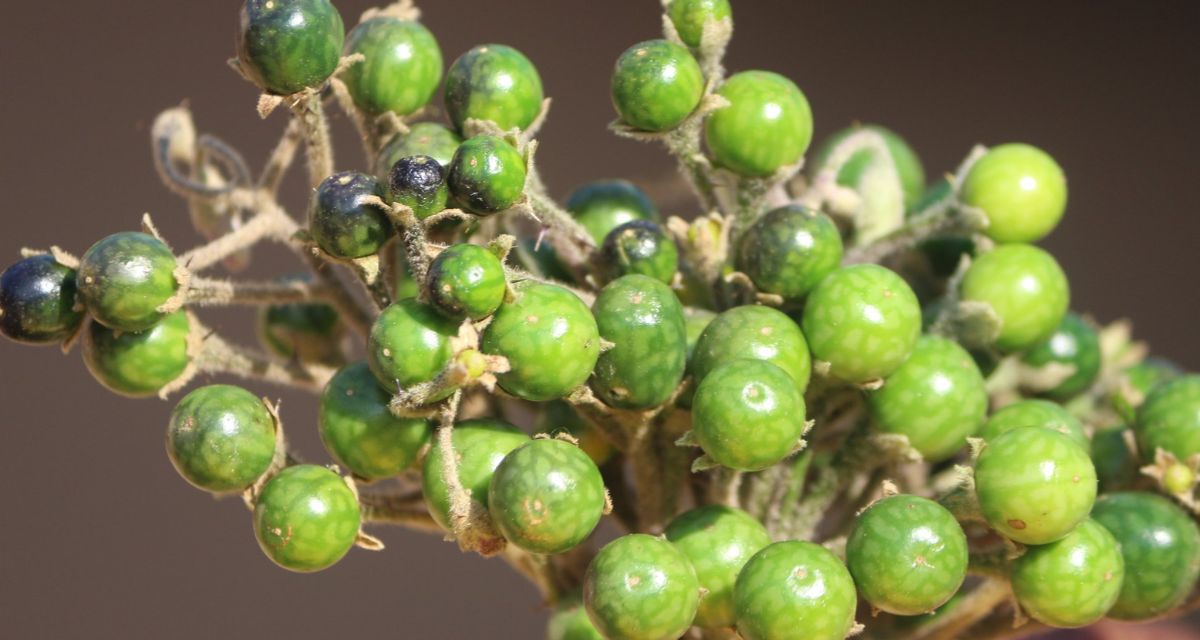 A documented cause of thinning forests is the commercial extraction of forest produce (Photo - Abhijit Mohanty, 101Reporters)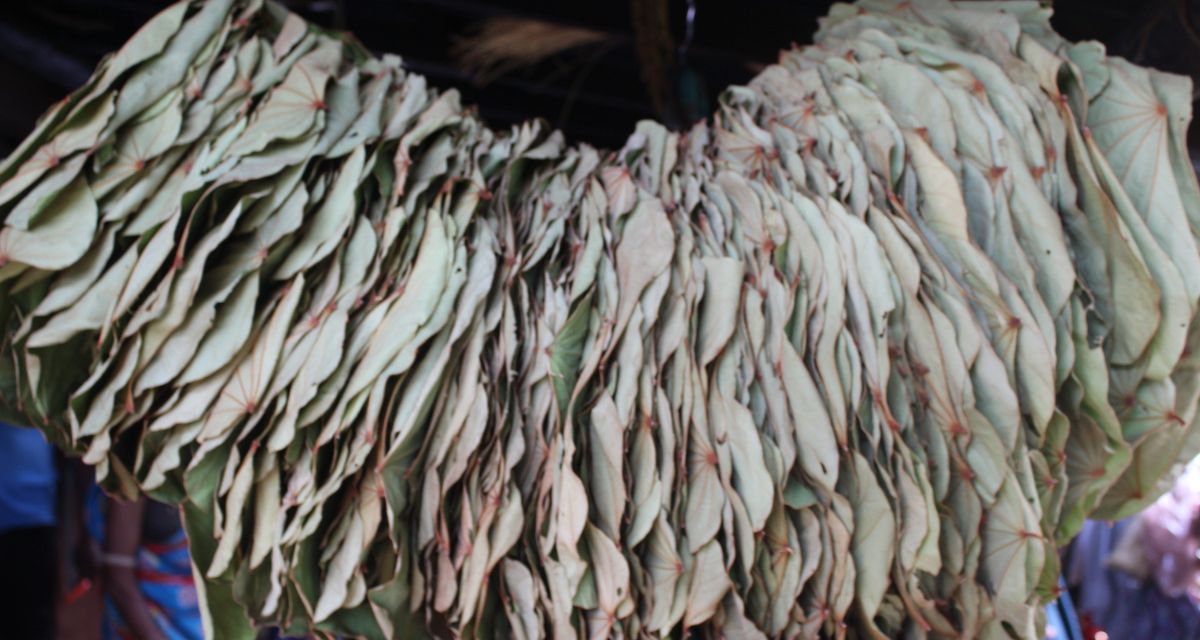
Thinning forests The same is visible beyond farms. Kandhamal’s slopes carry sal, pine, bamboo, mahua, kendu and medicinal shrubs. According to the India State of Forest Report 2021, the district has about 5,403.8 sq km of forest cover, 67.4 per cent of its geographical area, the highest proportion among all districts in Odisha. The trend also shows a loss. A 2022 study found that Kandhamal lost 459.94 sq km of forest cover between 2001 and 2019, the highest in the state during that period. Data from Global Forest Watch show that between 2020 and 2024 alone, the district lost nearly 3,900 hectares of natural forest. One documented cause is the commercial extraction of forest produce. “Traders from other states often engage labourers to harvest forest produce at scale,” said Dhaneswar Sahu, Technical Expert on the Forest Rights Act at Jagruti. “Between 2015 and 2018, a large number of amla trees were felled across villages such as Bhamarbadi, Mundanaju, Danaibadi and Sonepur. Traders seeking higher harvest with less labour cut down entire trees rather than selectively picking fruit.” For an eco-sensitive region like Daringbadi, this alters how the land holds water and stability. And this is leading to disasters. Landslides, once virtually unknown in Kandhamal, have begun to occur. In September 2025, days of incessant rain triggered a massive landslide at Kalinga Ghat. In October 2022, nearly 400 residents of Kumbharipadar village were evacuated amid fears of slope collapse. “I have lived here all my life,” said Jyotiraj Pradhan (62), former sarpanch of Partamaha panchayat. “I had never seen hills collapse like this.” “These climate extremes are driven by intense rainfall events and slope destabilisation, often aggravated by deforestation and inappropriate land use,” said Debabrata Panda, Assistant Professor at the Central University of Odisha. Here, too, the pattern is not linear. Intense rainfall events, already becoming more erratic, are hitting landscapes that are less able to absorb and hold water. Forest loss reduces root binding and soil stability. When rain comes in concentrated bursts, slopes give way. “Daringbadi’s climate stress cannot be seen in isolation,” said Susanta Kumar Dalai, Programme Officer at Vasundhara, an organisation working with forest-dwelling communities. “Global climate change is one part of it. But local land-use changes, monocropping, and forest loss, are interacting with it. These processes are reinforcing each other on the ground.” This interaction is further complicated by the limits of forest governance under the Forest Rights Act 2006, which recognises the rights of forest-dwelling communities over land and resources. In Kandhamal, while thousands of individual and community forest rights titles have been distributed, gaps remain. Many community titles lack clear boundary demarcation, and a significant share of land continues to remain under Forest Department control. As a result, communities that depend on these forests often have limited authority to regulate extraction, prevent degradation or manage changing ecological pressures.
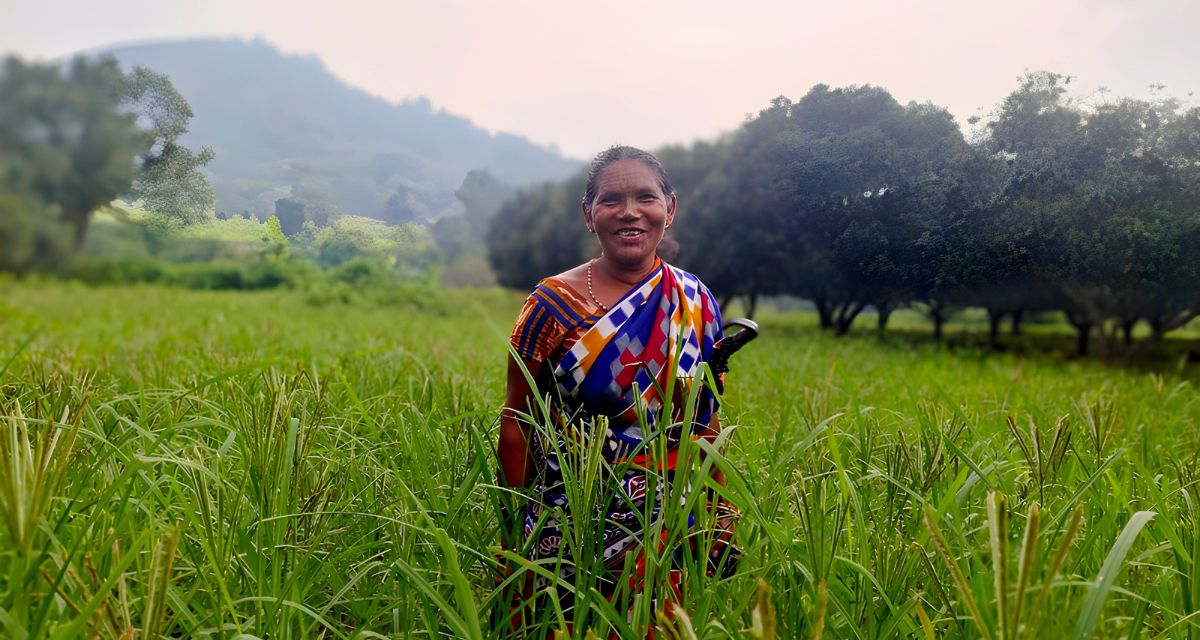 Prabhasini Pradhan in her ragi field in Sasigada village in Daringbadi (Photo - Abhijit Mohanty, 101Reporters)
Livelihoods at the edge The people most immediately exposed to these compounding changes are tribal women, particularly from the Kutia Kondh community. In Kandhamal, women rely heavily on non-timber forest produce for both nutrition and supplementary income, earning an estimated Rs 15,000 to 18,000 a year from surplus sales. As forests thin and rainfall patterns shift, this safety net is weakening. Chiti saag, a wild leafy green that grows along forest streams and waterholes, was once gathered near the village. “Now the streams dry up by February,” said Basanti Digal (45). “We walk two to three kilometres. The heat is harsher. By afternoon, we feel dizzy.” Wild mushrooms, patra kutka, meda kutka, dado kutka, once fruited abundantly after the first rains, when decomposing leaf litter turned the forest floor soft and moist. “Now, wildfires burn the leaf litter before it can decompose,” said Dipiya Padhan (52) of Padami village. “Erratic rainfall is also reducing the yield.” Mahua flowers dry faster than they can be collected. “The forest was our safety net,” said Manati Pradhan (62) of Katabadi village. “If our crops failed, it fed us. But this last resort does not work the way it once did.” Migration adds another layer of strain. A Jagruti study estimates that nearly 21 per cent of people from each village in Daringbadi migrate seasonally to other states. As men leave after the November harvest, women are left to manage farms, livestock and households. “In my husband’s absence, I manage our fields, children, cattle,” said Kabita Pradhan (42) of Brahaselka village. “When the rains fail, all my hard work in the field fails too.”
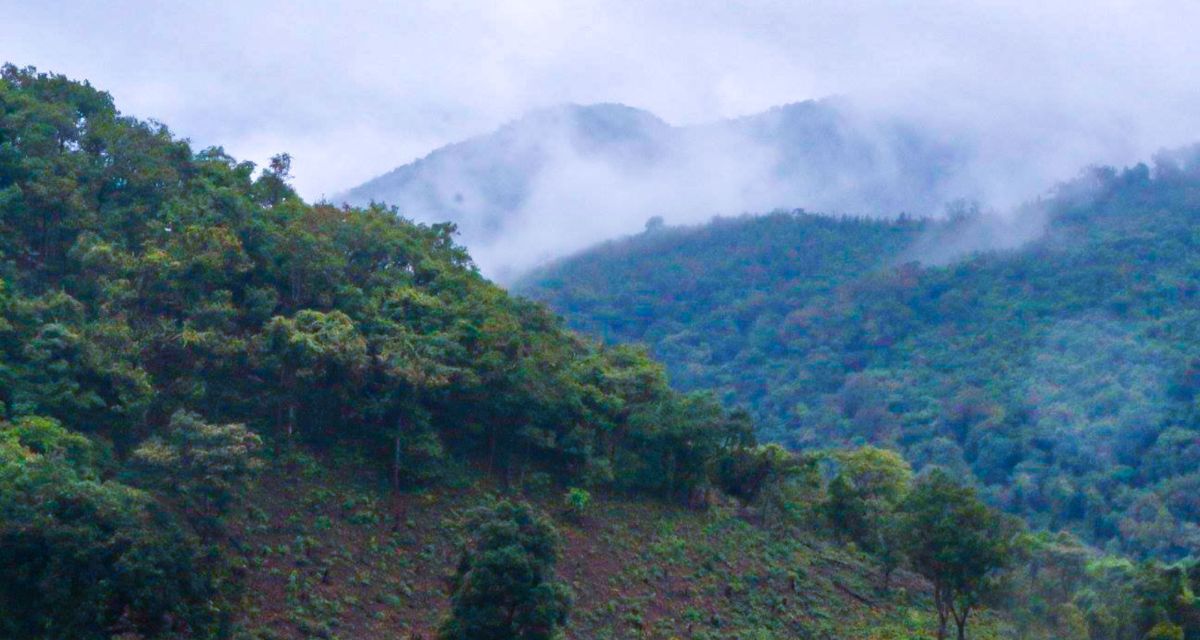 Fog still drifts over the green hills of Daringbadi (Photo - Abhijit Mohanty, 101Reporters)
Unbalanced As night falls over Daringbadi, cold still creeps back into the valley. The block still wakes to fog in December. Prabhasini Pradhan still burns sal wood through the winter nights, though not for as long as she once did. But beneath the mist, the ground has changed. The turmeric fields are narrower. The mixed crops that once held the soil together are giving way to hybrid maize. The forests are thinner. The streams dry sooner. The mushrooms come less reliably. The hills, twice in recent years, have collapsed. “Rain used to arrive gently,” said Jyotiraj Pradhan, looking out at the slope above Partamaha panchayat. “Now it comes in one violent burst. We depend entirely on rainfed farming. One wrong reading of the sky, one mistimed decision, sowing or harvesting, and the whole season is lost.” This story was produced as a part of 101Reporters Climate Change Reporting Grant.
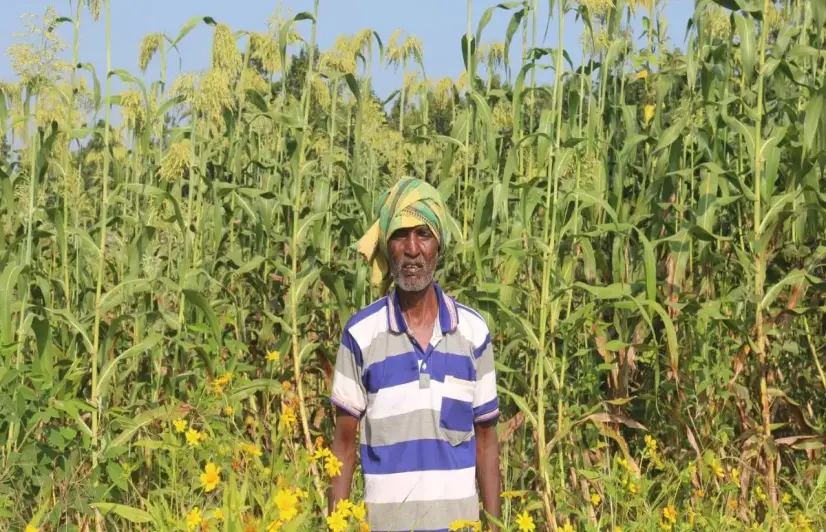
Cover photo - Abila Nayak, a farmer in his sorghum field in Partamaha village in Daringbadi (Photo - Abhijit Mohanty, 101Reporters)
Would you like to Support us
101 Stories Around The Web
Explore All News