Odisha Has the Cattle. Why Doesn't It Have More Biogas Plants?

Odisha Has the Cattle. Why Doesn't It Have More Biogas Plants?
Sambalpur, Odisha: When LPG ran short in India amid the US-Iran war, millions of households were impacted. But some, like Suresh Sahu, stayed insulated. The 52-year-old, a resident of Bagada village in Odisha’s coastal Kendrapara district, had to simply walk out to his backyard barn to power his family's kitchen. Sahu’s family has cooked on biogas for nearly four decades. He owns three cows. Their dung runs his plant, and the leftover slurry goes to his fields as manure. Consequently, his family has to buy just one 14.2-kg LPG cylinder a year, which is kept on the upper floor.
“Biogas cannot reach the first floor through the pipeline, and our guest room is on the upper floor. So, we keep an LPG stove there to welcome our guests,” he says. With a hint of humour, he adds that if biogas could be compressed into cylinders and sold, he would do that too.
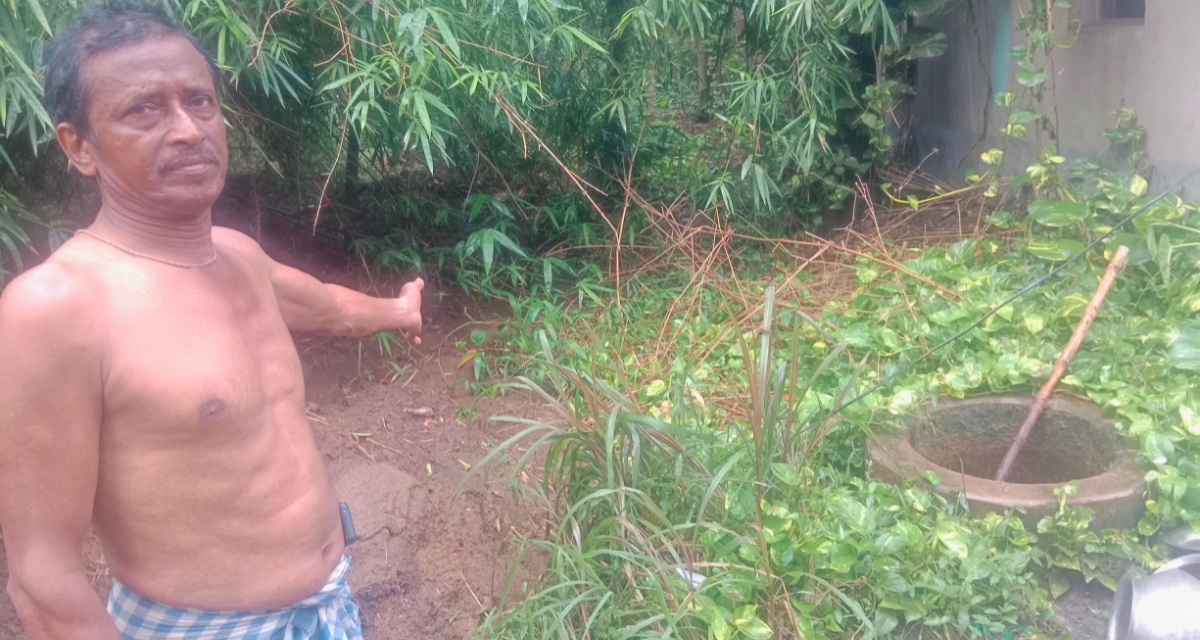 A biogas tank installed at Suresh Sahu’s home (Photo - Rahul Singh, 101Reporters)
Like Sahu, Nivedita Das, 36, of Kuranga Sasan village in Cuttack, has experienced the merits of relying on biogas. “We did not face any problem during the LPG crisis because we had biogas and our dependence on LPG had reduced,” she says. Her family owns four cows and has used its plant for ten years. They cook on biogas during the day and switch to LPG at night, so the family needs a new cylinder only once in two months.
Going by their accounts, it is easy to assume that biogas adoption in Odisha’s villages would be far and wide. However, these are the exceptions, not the norm.
Despite its advantages, the penetration of biogas is far from uniform.
Less than a kilometre from Sahu’s house, the same US-Iran war had a very different impact. Bhabagrahi Das, 37, a resident of Bhuinpur village, says, “We had to buy a domestic LPG cylinder on the black market for as much as ₹1,600, even though its regular price is between ₹940 and ₹965.” He has four cows, but no biogas plant. Down the lane, Deepak Das, 47, owns 15 cows, and their dung still goes into cakes, manure or the market. “No scheme for installing a biogas plant has reached us,” he says.
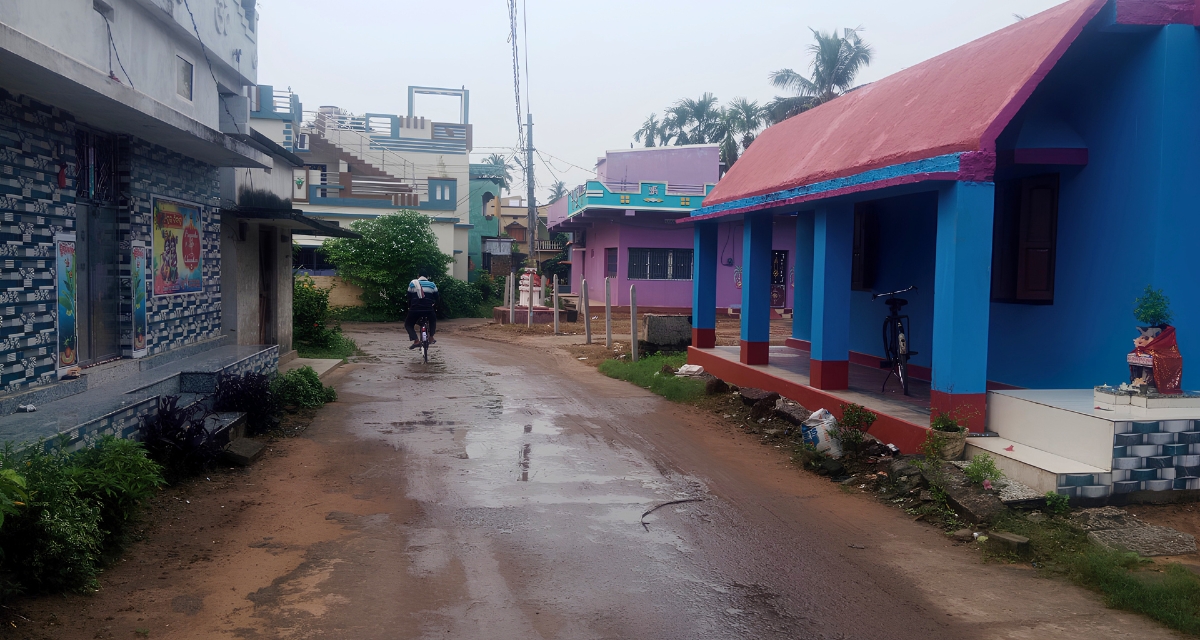 A view of Bhuinpur village in Kendrapara district; a village inhabited by cattle rearers (Photo - Rahul Singh, 101Reporters)
Note that Bhuinpur is a village of cattle rearers, where almost every household keeps animals and some own 15 to 20 cows for commercial milk, sold through cooperatives in nearby Kendrapara town. None, however, have installed a biogas plant.
This gap is the troubling reality of biogas adoption in India. The country produces 554.8 million tonnes of dung a year, and only 0.03 to 0.04 per cent of it is used in biogas plants, as per government data released on August 6, 2025.
Odisha alone has about 10 million cattle and 4.5 million buffaloes, according to the 2019 Livestock Census. Yet under Phase I of the National Biogas Programme (2021 to 2026), Parliament was told on April 1, 2026 that just 216 plants had been installed in the state. An RTI reply to this correspondent put the number at 249. Across India, 34,913 small plants were installed in the same period.
The numbers reveal the potential that remains untapped in this sustainable alternative fuel. We travelled through villages in Cuttack, Sambalpur and Kendrapara districts to understand why.
An alternative fuel within reach
For a family that keeps cattle, biogas asks very little that they are not already doing. A 2-cubic-metre household plant needs about 50 kg of dung a day, roughly what three or four animals produce. A 3-cubic-metre plant needs 75 to 100 kg, from five or six animals. The dung is mixed with water in a 60:40 or 70:30 ratio and sealed in an air-tight tank, where it breaks down into methane that is piped to the kitchen. What remains is slurry, a ready fertiliser that can be used in the fields.
In households where it is used, the benefits are evident. Subhashini Rai, 44, a resident of Amkuni village of Sambalpur’s Dhama block, says biogas meets 60-70% of her household’s cooking needs. “Biogas is of tremendous value to women,” she adds. In Harianta village near Cuttack, Mohit Kumar Samantara has gone one step further. Rooftop solar panels and a plant fed by his eight cows and two bulls mean he uses neither grid electricity nor LPG. Biogas is used for household cooking needs as well as to cook his livestock’s food. “If the government properly implements biogas schemes in villages, rural communities can become self-reliant and reduce their dependence on external fuel sources,” he says.
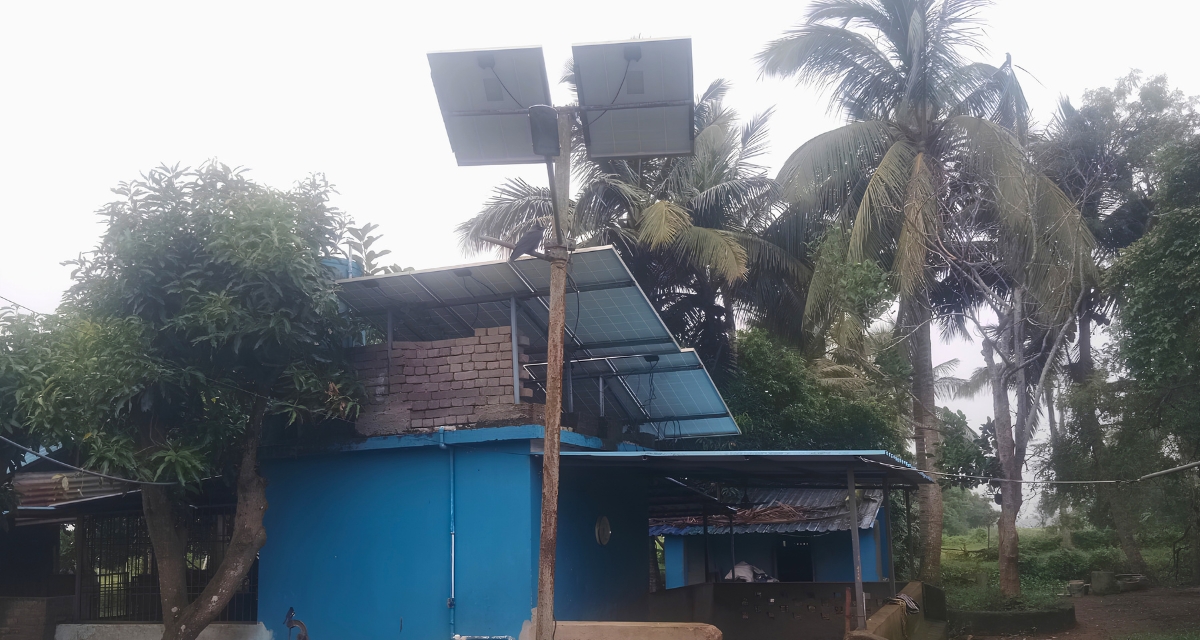 A solar power system installed at the home of Mohit Kumar Samantara, a resident of Hariyanta village in Cuttack district. He relies exclusively on this solar system for his electricity needs (Photo - Rahul Singh, 101Reporters)
The national case for biogas is just as strong. According to the Ministry of Petroleum and Natural Gas’s LPG Profile 2025-26, India’s LPG consumers rose from 14.9 crore in 2014 to 33 crore in 2025. A study by the International Institute for Sustainable Development (IISD), based on field research in five states including Punjab and Karnataka, warns that this growth ties households to an imported fuel, exposes them to price swings and adds to a heavy subsidy bill.
In order to avoid this over-dependence, Sunil Mani, the study’s lead author, says that India should adopt multiple clean cooking options. “The right solution would depend on the household and local circumstances. Electric cooking has considerable potential in urban and peri-urban areas, while biogas holds greater promise in rural areas, where households can easily access feedstock,” he explains.
Getting a plant installed is meant to be easy, at least on paper. Soumyaranjan Aich, Director (Technical) at the Odisha Renewable Energy Development Agency (OREDA), says that the process is demand-driven. OREDA passes funds from the Ministry of New and Renewable Energy to the District Rural Development Agencies (DRDAs), which run the scheme in each district. A household applies, and after processing, a self-employed worker (SEW) builds the plant. The family pays upfront, ₹30,000 to ₹40,000 for a 2-cubic-metre unit, and a ₹12,000 subsidy is credited to its bank account afterwards, provided its documents are complete.
This household scheme should not be confused with the bigger bioenergy push now taking shape. Plants of about 6 cubic metres can generate electricity, and those of 12 to 14 cubic metres can produce compressed biogas (CBG), says Snehasish Mishra, a bioenergy expert at Kalinga Institute of Industrial Technology (KIIT) in Bhubaneswar. In contrast, a household plant is typically one to two cubic metres. Mahesh Prasad Dash, Chief Project Manager (RE) of GRIDCO says a draft CBG policy has gone to the state government to attract investors, and a 2025 report by the Council on Energy, Environment and Water (CEEW) estimates that Odisha’s biogas sector could create 21,000 jobs and attract ₹200 crore in investment by 2030.
But these are investment-led projections for the sector. They say little about a village kitchen and its fuel concerns.
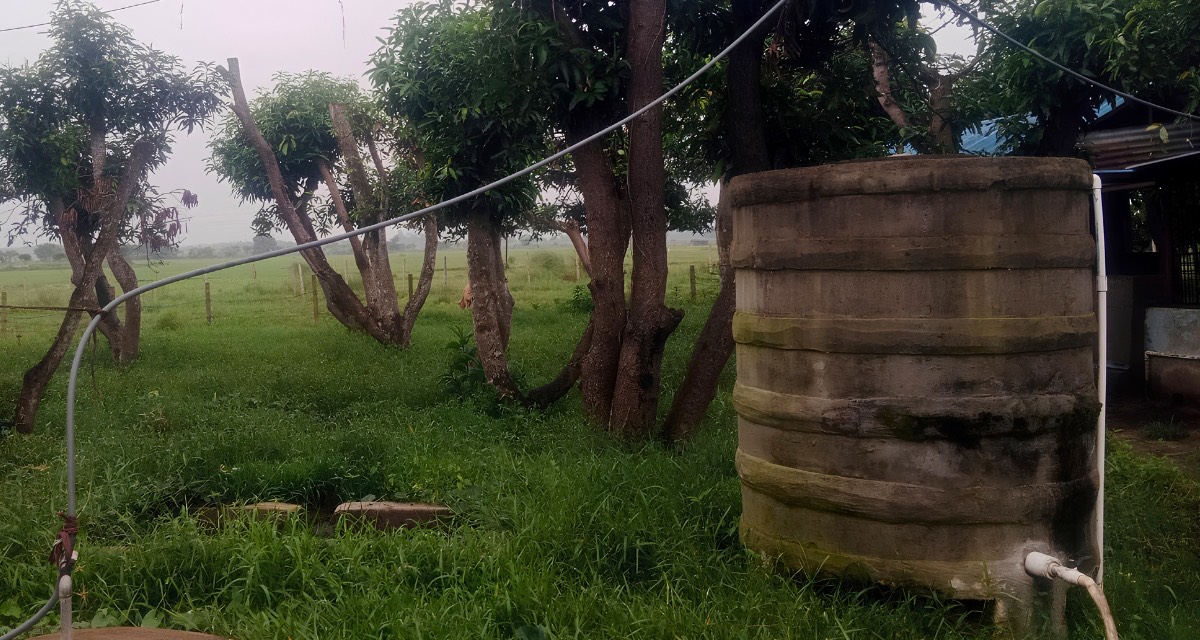 A biogas plant installed at the home of Mohit Kumar Samantara (Photo - Rahul Singh, 101Reporters)
The missing link: Maintenance
In Bhuinpur, Bhabagrahi Das remembers that around 20 years ago a few villagers installed plants, but they failed because no one was available to repair and maintain them. That memory has outlasted the plants themselves and still shapes how the village thinks of biogas.
He raises an issue that is echoed by residents across multiple villages – shortage of manpower to build, fix, and maintain plants. “There are only two people in Sambalpur district, myself and another, who install biogas plants and have the requisite skills,” says Birendra Kumar Sahu, an SEW. “We stopped working after 2015-16 because no incentive was given to us.” Until 2013, he says, the subsidy went to vendors like him. Now it goes to beneficiaries, who in his experience use it “to repay their existing debts or pay the wages of their servants, not us.” Repair costs have also risen, he adds, so fewer people bother to fix a broken plant. He believes the state should recruit technicians directly or pay for repairs from its own budget.
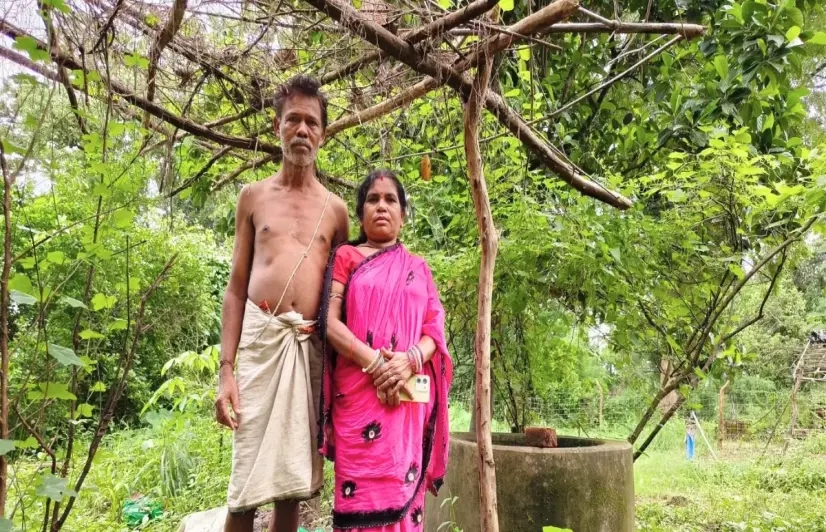
In the absence of such measures, the plants lie defunct, sometimes for years. In Amkuni village of Sambalpur district, eight families received 2-cubic-metre plants under the 2020-21 programme. Most developed tanks have problems, and only a few can use theirs. Raghubira Pandey says about ₹12,000 reached his account, but his plant has been idle with a faulty tank, and the stove never came. “We approached many contractors, but none could repair it,” he says. He paid a Sambalpur contractor ₹3,000, then ₹2,000 more as advance, on a promise that the work would be done by month-end. His sister-in-law Sukanti’s tank, meanwhile, burst a year ago, “but the tank has still not been repaired,” she says. Nearby, Faguram Raut and his wife Jyotsnajali went back to firewood and LPG after a pipe broke. Even Rai, who praises biogas, has had a leaking tank for a year, and no official has visited to fix it.
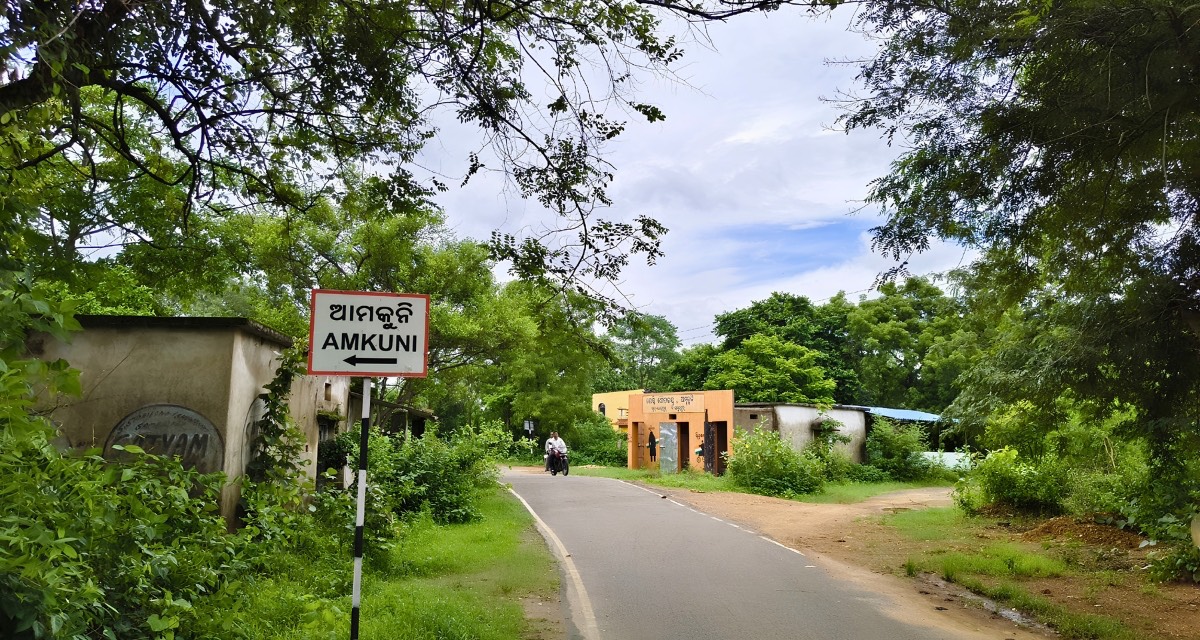 A view of Amakuni village in Sambalpur district, where biogas systems have been installed in the homes of at least eight families; however, many of these systems are currently faulty (Photo - Rahul Singh, 101Reporters)
Amkuni falls under Dakara Gram Panchayat. Its Gram Panchayat Head, Sachin Pujari, 36, says that they have no involvement in any renewable energy project. “We have no information about it and are unable to intervene in any way,” he says, adding that they can’t do anything except raise the issue at the DRDA meetings held at the block level.
These families have approached the administration and say they are willing to pay extra to get their plants working again. They just do not know who will actually provide a resolution.
Caught between paperwork and officials
If the tank is one broken link, the subsidy is another. Samantara’s experience shows how loose the process can be. Someone introduced him to an installer, he paid for the plant himself, and the installer took his bank details and Aadhaar card and photographed him beside it. That was about two and a half years ago. The subsidy has still not arrived.
And, he does not know whom to ask. Panchayats often act as a go-between for village schemes, but several beneficiaries, installers and officials told 101Reporters they had no role here.
Pujari says that it would have been better if the panchayat's participation had been ensured in implementing biogas systems and other renewable energy projects on the ground. “If this had been done through the panchayat, accountability could have been fixed at the local level,” he says.
For marginal farmers and economically weaker sections, such delays in repairs and subsidies erode their trust, opines Mishra. “This also undermines the credibility of field workers like us. People sometimes question us and become suspicious of our intentions,” he says.
The official numbers reflect these delays. Phase I was allocated ₹998 crore, according to a Lok Sabha reply of March 18, 2026. By March 31, only ₹466.4 crore, less than half, had been spent, and the deadline was extended to September 30, 2026. Aich acknowledges that progress has been slow and blames beneficiaries for not submitting the required documents. “We are trying to formulate a new policy on biogas,” he says.
But Mishra, who has worked on plants in Odisha, Bihar, Jharkhand, Andhra Pradesh and Telangana, is blunter. “China has made significant progress in the biogas sector, while India has not advanced at the same pace, despite having skilled people and abundant biowaste resources,” he says.
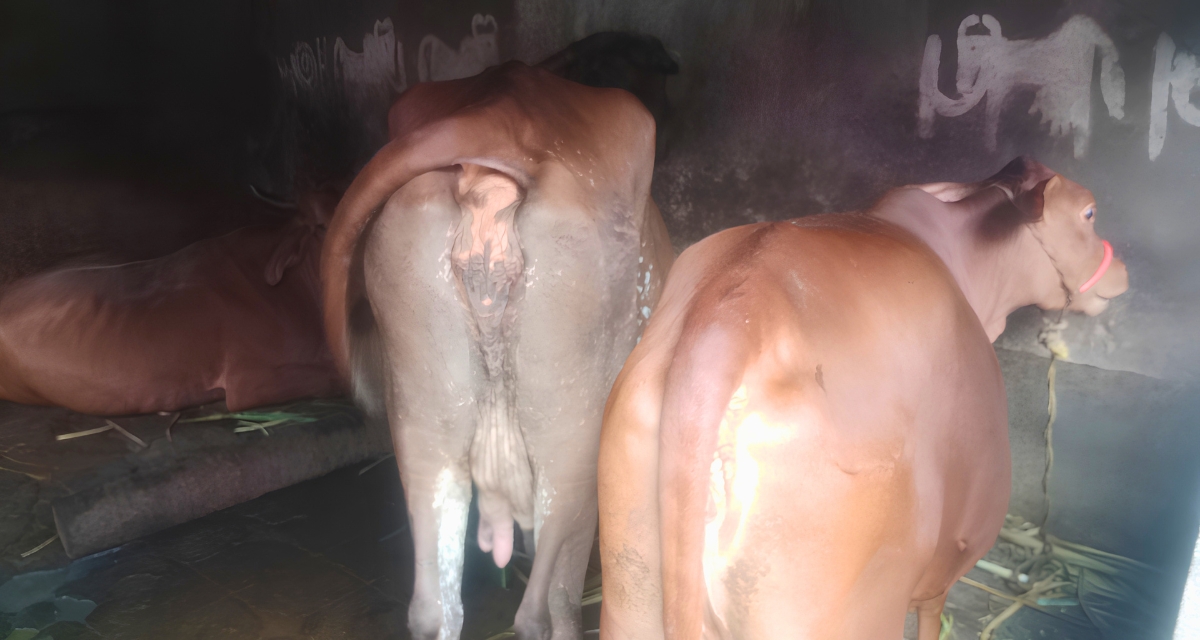 Suresh Sahu’s livestock (Photo - Rahul Singh, 101Reporters)
Setting up accountability
A household that wants a biogas plant must find out about the scheme, find an installer, pay the full cost, gather its documents, wait for a subsidy and, years later, find someone to repair the tank. At no point does one person or office in the village appear to be responsible for helping. OREDA passes on the funds, the DRDA implements, an installer builds, and the family is left to follow up on its own. The panchayat too is kept out of the loop.
The confluence of these factors has resulted in inordinate delays. According to Mani, the next phase of this policy must do three things necessarily: cut the upfront cost through affordable finance and, where possible, carbon credits; strengthen local delivery and after-sales service; and hold someone accountable for plants that keep working, not just for plants installed.
The success of the programme should not be measured solely by the number of plants installed. “We need to assess whether these plants are still functioning after one, two or three years, whether families continue to use them for cooking, how much they reduce the consumption of traditional fuels or LPG, and what factors determine whether people continue using them or discontinue their use,” says Mani.
Simply put, the fundamentals of the policy are fine, but the execution requires a significant fix. One that provides a clearer route from application to payment, keeps technicians in the trade, and embeds a local authority to guide families through the paperwork. Until the system shifts its focus from merely installing plants to ensuring they actually keep burning, Sahu’s joke about bottling biogas may only ever come true at an industrial scale. For villagers like Bhabagrahi Das, the question remains smaller, nearer, and far more urgent: will anyone ever come to his village to show him how the waste from the cows outside his door could fuel his kitchen, and will anyone still be there when the tank needs mending?
This story is supported by The Earth Journalism Network.
Cover Image - Fagu Ram Raut and Jyotsna Raut, from Amkuni village in Sambalpur district, reported a malfunction in the tank of their biogas system (Photo - Rahul Singh, 101Reporters)
Would you like to Support us
101 Stories Around The Web
Explore All News