Maharashtra’s floating-solar push leaves fishing communities uncertain


Maharashtra’s floating-solar push leaves fishing communities uncertain
Solapur, Maharashtra: At around 4 AM each morning, Anita Nagare and her husband push their 16-foot fishing boat into Ujani reservoir on the Bhima River. On a good day, they return with 15 to 20 kilograms of fish, earning Rs 2,000 to Rs 3,000. But on bad days, they return home empty-handed. For the family of four, those days are becoming more frequent as the reservoir grows increasingly polluted and the fish they catch begin to change.
The Nagare family in Khanota village in Maharashtra’s Solapur district has depended on the reservoir for generations. Now, she and hundreds of other fisherfolk are protesting a proposed floating-solar project on the same waters.
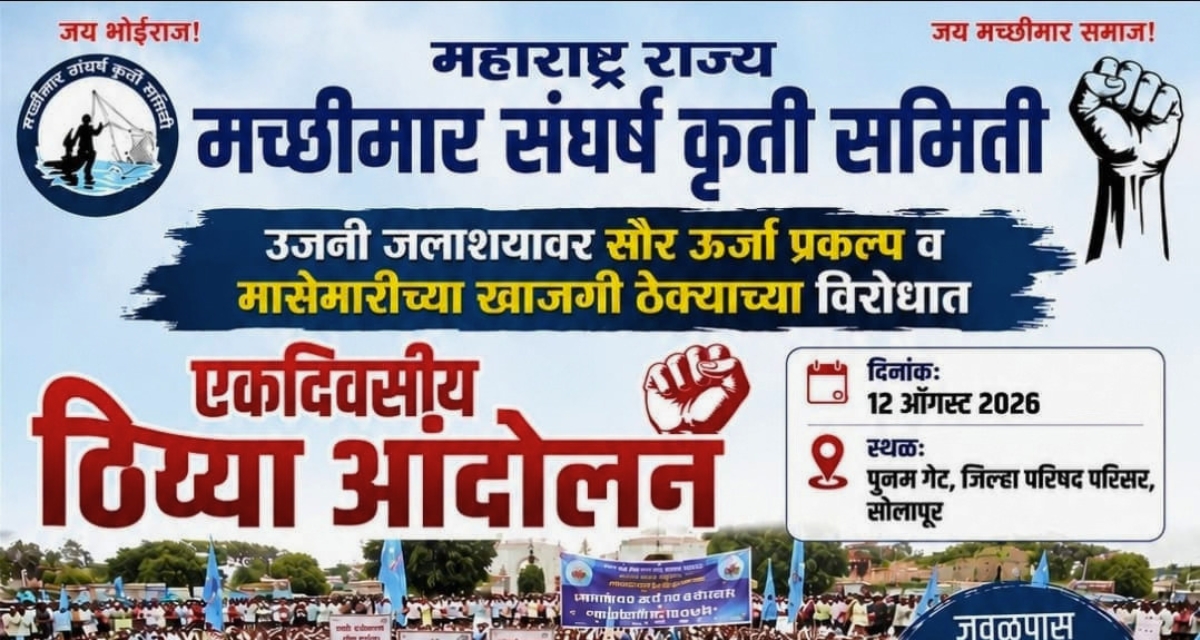 An image of the protest poster organised to voice their concerns over threats to their traditional livelihoods. (Photo sourced by - Naila Khan, 101Reporters)
On August 12, Nagare joined a protest at Solapur’s Sinchan Bhawan demanding cancellation of the project. Their concern is straightforward: they still do not know how much of the reservoir will be covered, where the panels will be placed, what access to fishing grounds will remain, or how their livelihoods will be protected.
“We need to understand all aspects of the project before making a decision. If it turns out to be harmful for our fishing community, we will oppose it. But first, the government must openly explain the project to us so that we can understand its benefits and drawbacks. Any discussion should also be based on scientific evidence and expert knowledge,” says Bharat Mallav, a member of the Maharashtra Machhimar Sangharsh Kruti Samiti.
Ujani is not an empty water body waiting to be put to another use. Built across the Bhima River on the border of Pune and Solapur districts, the reservoir supports irrigation, drinking-water supplies and an inland fishing economy. Locals estimate that 1-1.5 lakh fisherfolk are directly involved in fishing around Ujani. Families depend on species including tilapia, rohu, catla, maral and shingta, which are auctioned in markets such as Bhigwan and Indapur before reaching consumers across Maharashtra.
That makes the question facing Maharashtra larger than whether floating solar can work technically. It is whether the state can add a new use to a working reservoir without pushing the cost of the transition onto people who already depend on it.
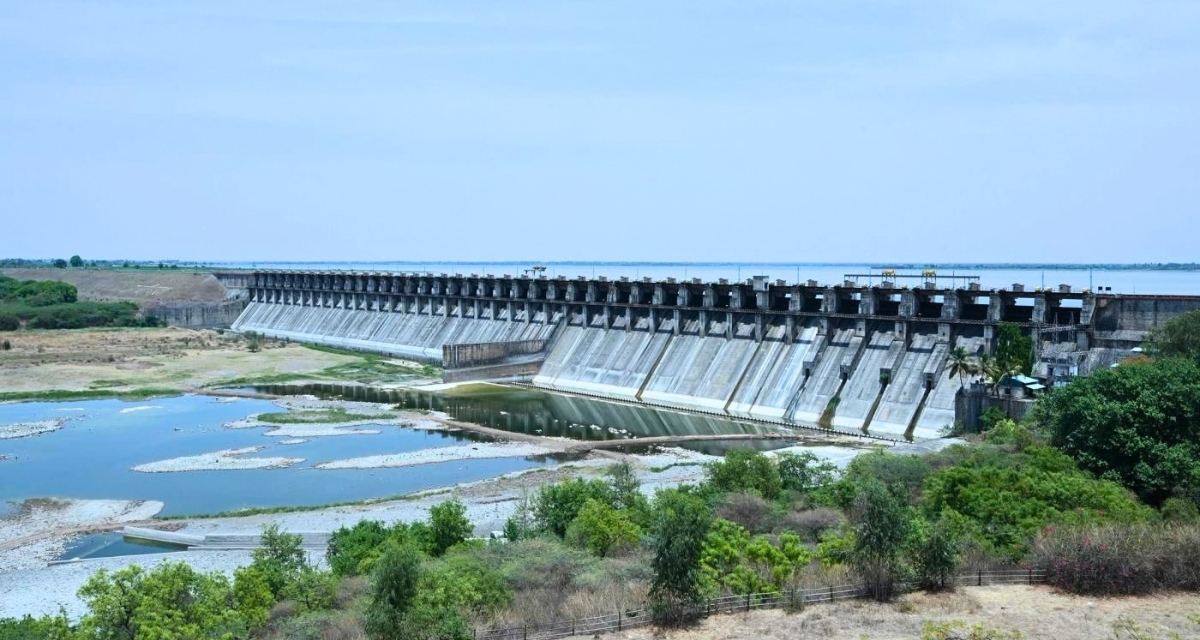 The vast expanse of the Ujani Dam on the Bhima River, which supports irrigation, drinking water, and an inland fishing economy. (Photo sourced by - Naila Khan, 101Reporters)
Maharashtra’s ambition
Maharashtra’s plans for floating solar have been years in the making.
In 2018, the Maharashtra State Electricity Distribution Company proposed a 1,000 MW floating-solar project at Ujani, then among the largest proposals of its kind in India. Concerns from fishing communities led the state government to appoint a committee to examine environmental impacts, including effects on aquatic ecosystems, reservoir users and water levels.
But the committee’s findings have not been made public, and no project-specific assessment appears to be publicly available showing what a development of this scale could mean for Ujani’s fisheries and ecology.
MSEDCL invited bids later that year, but the project never reached construction. In 2025, after years of little progress, it was revived under a public-private partnership model, with the Water Resources Department taking over and inviting bids for floating solar on up to 15% of the reservoir.
Then, in 2026, the proposal changed scale again.
The Maharashtra government signed an investment memorandum with JW Global Group and partners for a 2 GW floating-solar project at Ujani, alongside a battery energy storage system. The broader ₹1.65 lakh crore proposal also includes a hyperscale AI data centre and a green-hydrogen facility.
The MoU, however, is not construction. The April 2026 announcement said required studies would begin after the agreement. Water-use permissions, environmental and ecological assessments, grid connectivity, power-evacuation arrangements and commercial agreements still have to be established. The first phase is expected to cover more than 680 acres around the reservoir.
For fisherfolk, the repeated announcements have produced an odd kind of uncertainty: the project keeps returning, while basic answers about how it will coexist with fishing remain unanswered.
The same pattern appears elsewhere in Maharashtra. The state has announced floating-solar projects on reservoirs including Jayakwadi, Tansa and Modak Sagar, Morbe and Erai. Many have struggled to move beyond planning.
At Jayakwadi, the proposed project has faced delays amid community opposition, environmental litigation and, more recently, the absence of a Power Purchase Agreement.
For Kishor Pathak, a former honorary wildlife warden of Sambhajinagar, the PPA is not the whole story. He says concerns have repeatedly been raised with the PMO and other authorities about Jayakwadi’s wetland, Eco-Sensitive Zone, wildlife sanctuary and biodiversity, as well as possible pollution risks to drinking and industrial water.
Fishing communities there have a longer memory of development around the reservoir.
Bajrang Limbore, a member of the fishing community, says his community lost agricultural land when Jayakwadi was built and turned to fishing.
“Our farming went into the dam, and we became landless. After becoming landless, we thought there would be progress, but there was no progress. And now, solar has come.”
In August 2026, the Ministry of New and Renewable Energy told the Lok Sabha that preliminary activities to evaluate the Jayakwadi project were still underway and that no final decision had been taken on the proposal or its environmental clearance.
The economics
There is, meanwhile, another explanation for why projects such as these have stalled: the economics.
Floating solar can be more expensive and logistically complex than conventional ground-mounted solar, particularly because generating equipment is located on water and electricity still has to be evacuated to the nearest grid. Developers may need underwater or shoreline cables, substations, transformers and transmission lines.
Horlicks Udyar of DHA Core, which submitted a proposal for Ujani in 2018, estimates that power-evacuation infrastructure can add 15% to 25% to project costs. The electricity tariff, however, is fixed through long-term PPAs.
If that tariff does not account for the additional cost of building and connecting a floating plant, developers may struggle to recover their investment and banks may be reluctant to finance it.
So community opposition may not be the reason projects stall. But that does not make community opposition incidental. A project can be financially viable on paper and still fail to work for the people who use the water if they are treated as an afterthought.
And for fishing communities, the concern is not only ecological. It is access.
Amul Pature, from the Bhoi community, says fisherfolk currently have the freedom to cast their nets whenever conditions are favourable, during the day or at night. A large floating-solar installation, he says, could restrict access to fishing grounds.
Anil Nagare of Palasdeo says fish production has already declined. Recent surveys have linked the decline in native fish at Ujani to deteriorating water quality caused by sewage and industrial pollution, as well as the spread of invasive species such as tilapia, African catfish and suckermouth catfish.
“Fish production has gone down over the years. If a floating solar project is built here, we're afraid it will make things even harder for us,” he says.
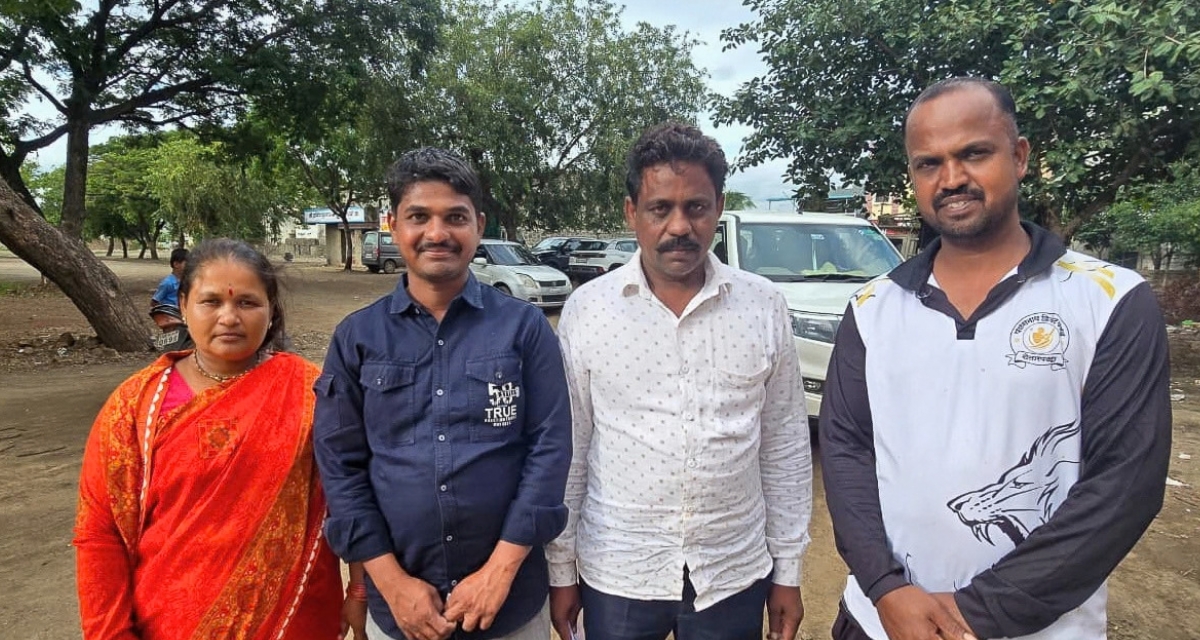 Fisherfolk community members, including Anita Nagare, Anil Nagare and Atul Pature. (Photo - Naila Khan, 101Reporters)
Fishery’s future
The ecological questions are substantial, but they need to be answered through evidence rather than assumption.
Ujani’s fish populations depend on plankton and other aquatic organisms at the base of the food web. Scientists say the effects of floating solar depend on how much of a water body is covered and where installations are placed. Depending on the extent and location of coverage, floating solar can reduce sunlight reaching the water, alter temperature and dissolved oxygen levels, and affect aquatic habitats and food webs. Installation may also disturb shallow littoral areas that serve as breeding and nursery grounds.
Dr Ranjit More, head and assistant professor of zoology at Pratapsinh Mohite Patil Mahavidyalaya, has studied Ujani’s fish diversity since 2018 and documented 56 freshwater fish species. He says a project of this scale needs careful assessment because Ujani is a shallow, productive wetland rather than a deep reservoir.
“If a large floating-solar project covers a significant part of the water surface, it will block sunlight, which will directly reduce phytoplankton,” More says.
He points to possible effects on zooplankton, fish food and oxygen levels, particularly in summer, as well as reduced wind mixing and lower oxygen near the bottom. Installation could also disturb breeding and nursery areas.
Ujani is also a potential Ramsar site and an important wetland for resident and migratory waterbirds. More says it supports more than 300 water and other bird species.
Before construction, he calls for at least a year of baseline monitoring covering seasonal water quality, phytoplankton and zooplankton, fish breeding and migration, benthic organisms and monthly migratory-bird counts from October to March, along with an assessment by an independent institution such as NEERI or IIT and public consultation with fisherfolk.
Arun Kumar, from IIT Roorkee’s Hydro and Renewable Energy Department, similarly says not every water body can sustain the same level of coverage.
“The percentage of the surface that can be covered needs to be considered,” he says.
But for communities whose income depends on the reservoir today, “build and monitor” is not a reassuring starting point.
The question is what safeguards can be designed before the first panel enters the water.
Warning from Omkareshwar
At Omkareshwar in Madhya Pradesh, India’s largest floating-solar project, fisherfolk say they lost access to traditional fishing grounds after the project came up, affecting livelihoods.
At Ujani, that experience has become part of what fisherfolk fear: not opposition to renewable energy in the abstract, but loss of access without adequate protection or compensation.
Ujani fisherfolk do not appear to have strong legal rights over the waters themselves. Access to fishing is largely governed through cooperatives and a licensing system, making their position vulnerable to changes in how the reservoir is managed. That vulnerability has sharpened with the proposed privatisation of fishing contracts.
More argues that Ujani should not repeat the problems reported at Omkareshwar. He calls for clear boat lanes and protection of fishing rights before construction begins.
The question, then, is not whether Maharashtra should choose fishing or clean energy.
It is whether it can design projects that recognise the reservoir’s existing users before adding a new, large-scale use.
What next?
The economics of floating solar may also change. The Union government’s Pradhan Mantri Surya Sarovar Yojana, approved in July 2026, could change the economics.
The ₹5,070 crore scheme is meant to support 5,000 MW of floating-solar projects nationwide. Udyar says it provides central financial assistance of ₹1 crore/MW after commissioning and up to ₹50 lakh for feasibility studies — support that was unavailable when DHA Core pursued Ujani in 2018.
He argues that future projects will need environmental and water-use clearances before tenders are issued, Water Resources Department land allotments and No Objection Certificates in advance, and tariffs that reflect floating-solar costs. He also says tariff benchmarks should account for newer projects such as Omkareshwar, where tariffs have been in the range of ₹3.2-3.9 per kWh.
But better economics alone does not answer the fisherfolk’s questions.
At Ujani, their engagement with the state has largely been through RTI applications and letters to the Irrigation Department seeking information about the project and fishing rights.
Executive Engineer Sucheta Dumbre wrote that a meeting with the fishing community would be arranged and that details would be communicated by September 15. Community members say no such meeting has taken place. Dumbre did not respond to multiple calls and messages seeking comment. JW Global Group also did not respond.
At Jayakwadi, fisherfolk say they raised their concerns through Gram Panchayats, several of which passed resolutions opposing the floating-solar project in 2023, but they received no response from the state.
For floating solar to expand in Maharashtra, those questions cannot remain at the edge of the project-development process.
Communities need to know what is being built, where access will change, how fishing grounds will be protected, who will monitor ecological impacts, what happens if livelihoods are harmed and which institution is accountable when safeguards fail.
Because for Anita Nagare, the reservoir is not a future opportunity. It is already her workplace.
Before dawn tomorrow, she will again push her boat into Ujani, hoping to bring back enough fish to sell in Bhigwan market.
“Water is our moolbhoot adhikar (fundamental right),” she says. “If we lose these waters, where will we go?”
This story was produced with the support of Earth Journalism Network.
Cover Image - A sunrise over the Ujani reservoir (Photo - Bharat Mallav, 101Reporters)
Would you like to Support us
101 Stories Around The Web
Explore All NewsAbout the Reporter
Write For 101Reporters
Would you like to Support us
Follow Us On