Ladakh's microgrids, running on diesel and dwindling hydropower, need solar safety net

Ladakh's microgrids, running on diesel and dwindling hydropower, need solar safety net
Melting ice, failing micro-hydro projects and fragile solar systems are pushing Zanskar into deeper energy vulnerability.
Leh, Ladakh: As you climb the slope towards upper Kumik, the oldest village in Zanskar Valley of Ladakh, about 250 kilometres from Kargil, a low stone wall runs along the path for nearly three kilometres. Legend says it was built overnight, centuries ago, by a protective bear spirit who guarded homes and fields.
“Elders say we had plenty of water and food, until the bear spirit turned against us,” said Kharfa Largyal, a man in his 20s from Kumik.
Residents now use the story to make sense of the changes around them — a glacier slowly pulling back and a stream that no longer reaches their homes, both signs of the effect of climate change.
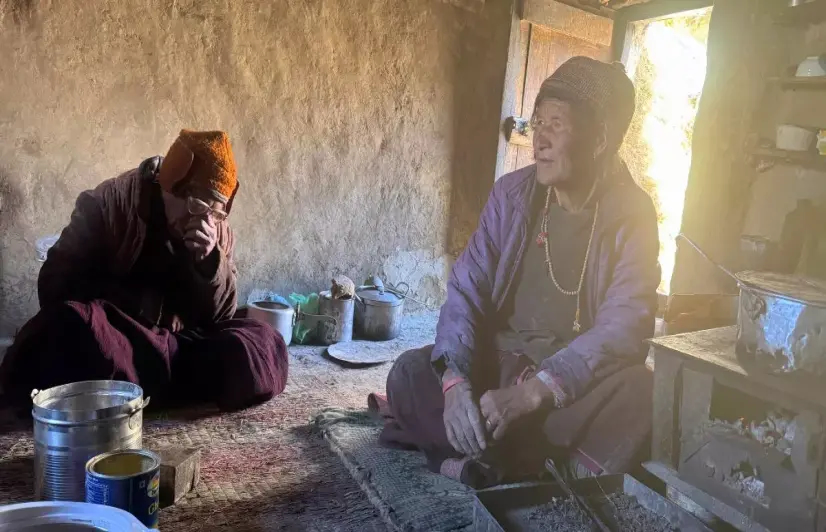
In Kumik, the meltwater from the Sheila Kumik glacier, once the village’s lifeline, has shifted to the other side of the ridge. As the flow dried up, many families moved downhill towards more reliable water.Yet Stanzin Yangzing (85) still lives in upper Kumik with her niece.
One morning in mid-October when this reporter met Yangzing, she knelt beside her traditional stove, feeding twigs into a small fire to brew tea and warm the room. Sunlight lit up Zanskar’s peaks outside and inside, smoke clung to the timber walls. By then, daytime temperatures had dropped to minus 3°C and nights to minus 7°C.
“I’ve been doing this since childhood,” she said, pushing in more firewood as a harsh cough escaped.
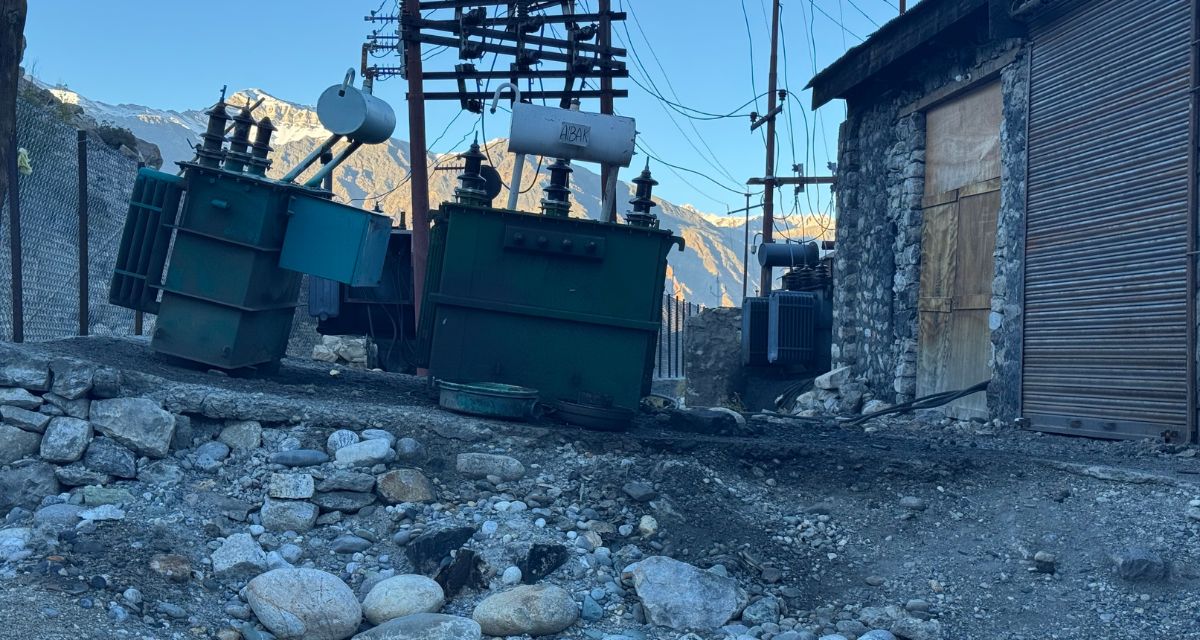 A diesel generator station in Zanskar valley in Ladakh serves as the primary source of electricity for local households during winters (Photo - Safeena Wani, 101Reporters)
Power adds another layer of difficulty. Electricity in Zanskar remains unreliable, powered by diesel generators and a handful of mini-hydel plants. Demand has grown as households adopt more electric appliances, but hydropower works only in summer. In winter, when temperatures fall to minus 30°C, roads shut, canals freeze and power lines fall silent, residents fall back on firewood and three to four hours of electricity, barely enough to keep one bulb on.
Two mini-hydel projects serve Zanskar: Haftal Sani and Raru. Haftal Sani has been under renovation since 2022 following mudslides and leakages in its canal, leaving the region dependent almost entirely on Raru. A few villages have installed solar lights with battery backups, but most still rely on the micro-hydel plant; when streams freeze, they turn to diesel.
In Ladakh, the Power Development Department operates around 55 diesel generators producing about 8.23 million units of electricity annually. Eight of these are stationed in Zanskar.
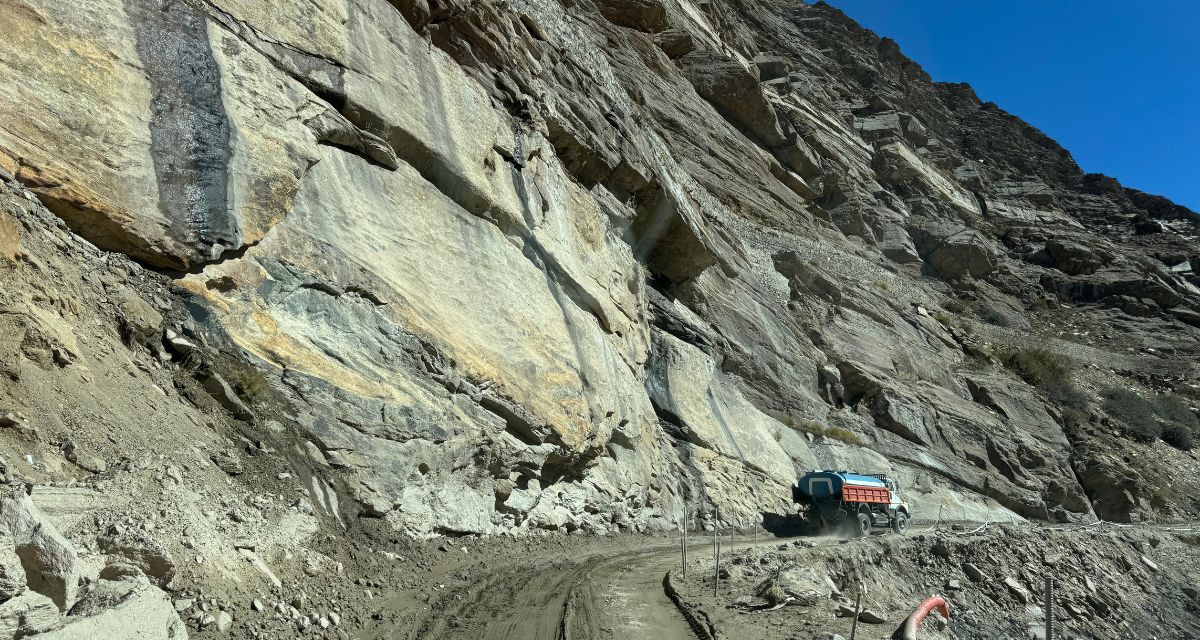 A narrow mud road carved through the mountains marks the tough and isolated route in Zanskar (Photo - Safeena Wani, 101Reporters)
The melting power
As of now, eight micro-hydropower projects in Ladakh are managed by the Power Development Corporation, Ladakh. Four are operational, the rest under renovation or defunct Only half are operational, others remain defunct or under repair. The National Hydroelectric Power Corporation runs two major hydro projects, 45 MW in Leh and 44 MW in Kargil.
Ladakh’s summer demand is about 45 MW, while winter demand touches 80 MW. In summer, hydropower peaks and much of the surplus is exported outside Ladakh. But in winter, when rivers freeze, production drops to 15 MW, forcing the region to depend on the Northern Grid via the 220 KV Srinagar–Leh line.
“In future, we’re not planning more micro-hydro projects because climate change has reduced water flow to canals,” said Sajad Kacho, Assistant Executive Engineer at the Power Development Corporation (PDC) in Kargil. “Flash floods have damaged several micro-hydro structures. The focus is shifting to larger hydro plants on the Suru and Indus rivers.”
According to the World Small Hydropower Development Report 2022 by the International Centre on Small Hydropower (ICSHP), small hydropower projects depend heavily on consistent runoff, and even slight changes in river flow can significantly affect electricity generation. Despite this vulnerability, the report notes that existing small hydropower systems worldwide help reduce around 248 million tonnes of carbon emissions each year, highlighting their climate value when supported by stable water sources.
These winter shortages affect not just households but also local businesses.
Padum has seen a rise in guesthouses catering to tourists, but owners say they are limited by electricity constraints. Abdul Aziz, who runs one such guesthouse, is waiting for the 220 KV transmission line from Drass, nearly 300 kilometres away.
“It is difficult to have a long tourist season,” he says. “Winter starts in September. Tourists want warm water and heaters, but we don’t have enough voltage from diesel or hydro. Electricity means lighting one bulb only.”
Officials say this gap between growing demand and limited winter supply has shaped planning decisions.
Another PDC official adds that once Ladakh received the 220 KV line, budget approvals for mini-hydro became difficult. “We proposed new micro-hydro projects, but Delhi asked why we need them when we have grid connectivity,” he says. This leaves villages dependent on seasonal infrastructure.
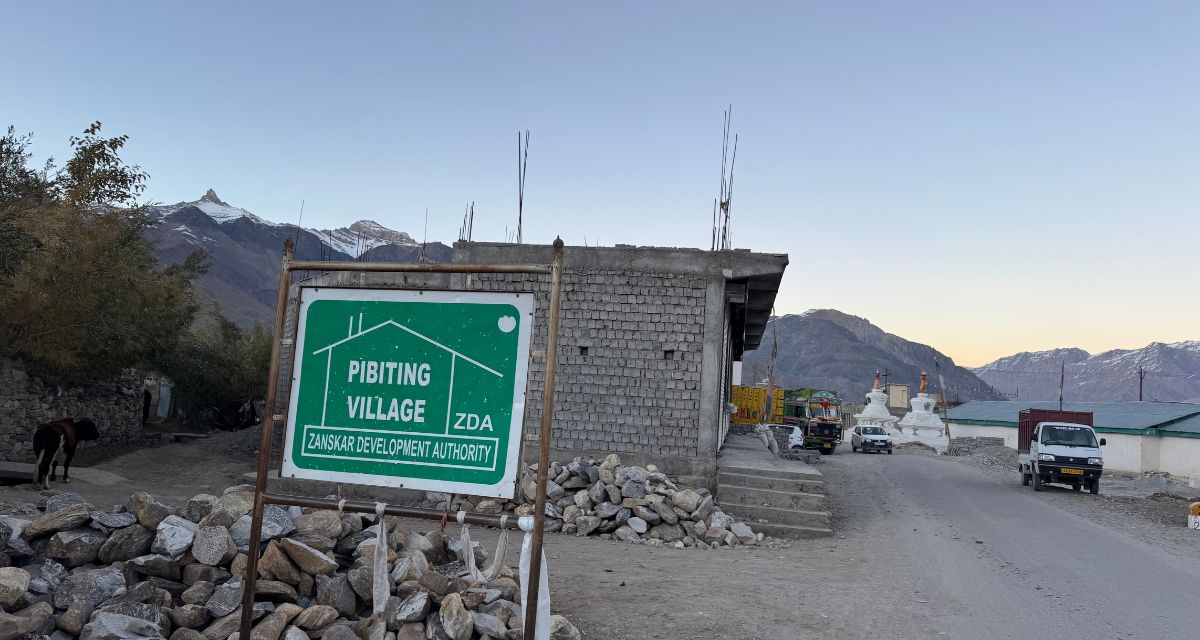 A road in Pibiting village in Zanskar (Photo - Safeena Wani, 101Reporters)
Gaps remain
To fill the growing energy gap, Kargil Renewable Energy Development Agency (KREDA), set up under the Ministry of New and Renewable Energy, has pushed small-scale solar solutions. In 2010, it began installing micro-hydro and solar-based systems in remote villages.
In Latoo village along the Line of Control, a solar water-lifting pump changed lives.
“We had enough water once,” says Talib Hussain. “But with declining springs and canals, it became a drought. Our apricot and almond orchards dried up. Then in 2021, the solar water pump came, and we could irrigate again.”
But the pump has its limits. “When the motor or pipes fail, it takes two weeks for a technician to reach us,” Hussain says. “During that gap, orchards suffer.”
KREDA has installed around 28 solar water-lifting pumps in Kargil, but demand is rising as glacial meltwater stops reaching irrigation canals. Over 70 villages have requested pumps to tackle drought-like conditions.
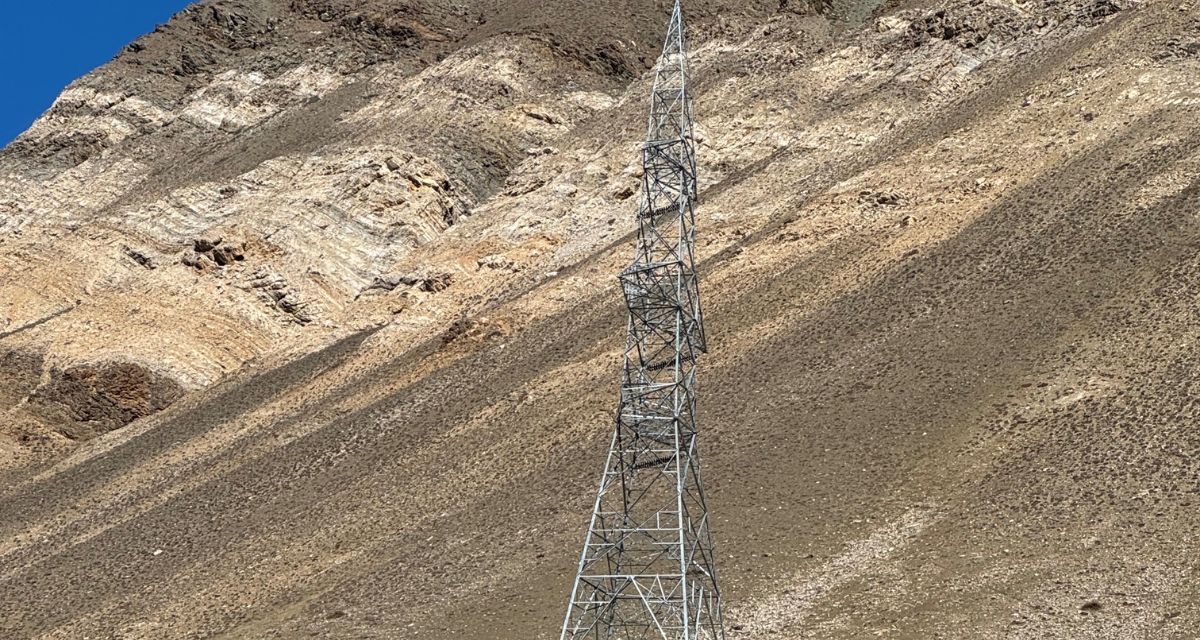 A PGCIL transmission tower in Rangdom, stands bare without power lines, as Zanskar residents await the long-promised electricity relief for their long harsh winters (Photo - Safeena Wani, 101Reporters)
Ladakh is also emerging on the national renewable energy map with 13 GW of proposed solar and wind capacity under the Green Energy Corridor-II. But villages say they have long relied on solar at a local scale.
In Rangdum, a 26-year-old tea stall owner, Shafee, says: “Our village gets electricity from a community off-grid solar plant.”
But in Kumik, a 57 KW off-grid plant lies defunct after snowfall damaged its panels. “It worked only for two years,” says Tresing Motup, a lineman. “It was damaged in April 2025. We’re about to issue a tender for repairs,” confirms KREDA project director Kacho Ahmad Khan.
Rooftop solar systems face similar challenges. Although subsidies under PM Surya Muft Bijli Yojna and Ladakh’s own scheme encourage adoption, heavy snowfall damages poles, wires and connections.
“People prefer off-grid battery systems that don’t rely on long transmission lines,” says Wahab Ali, Executive Engineer, PDC Kargil. “We’ve installed rooftop panels in 60 houses; 300 more have registered.”
A report by the Council on Energy, Environment and Water (CEEW) notes that rooftop solar systems can significantly strengthen household-level access to clean energy. According to the Ministry of New and Renewable Energy (MNRE), 17.02 GW of rooftop solar capacity has been installed across India as of 2025, contributing substantially to the country’s energy transition. In 2024, the Ladakh Union Territory administration also rolled out an additional subsidy for 1 kW and 2 kW rooftop systems under the PM Surya Muft Bijli Yojana to boost adoption in the region.
Punchok Tashi, Executive Councillor at Ladakh Autonomous Hill Development Council, Kargil- LAHDCK, says policies often fail because administrators are outsiders. “Officials from other states don’t understand Ladakh’s terrain and climate,” he says. “Hill Council members earlier ensured decisions suited local conditions.”
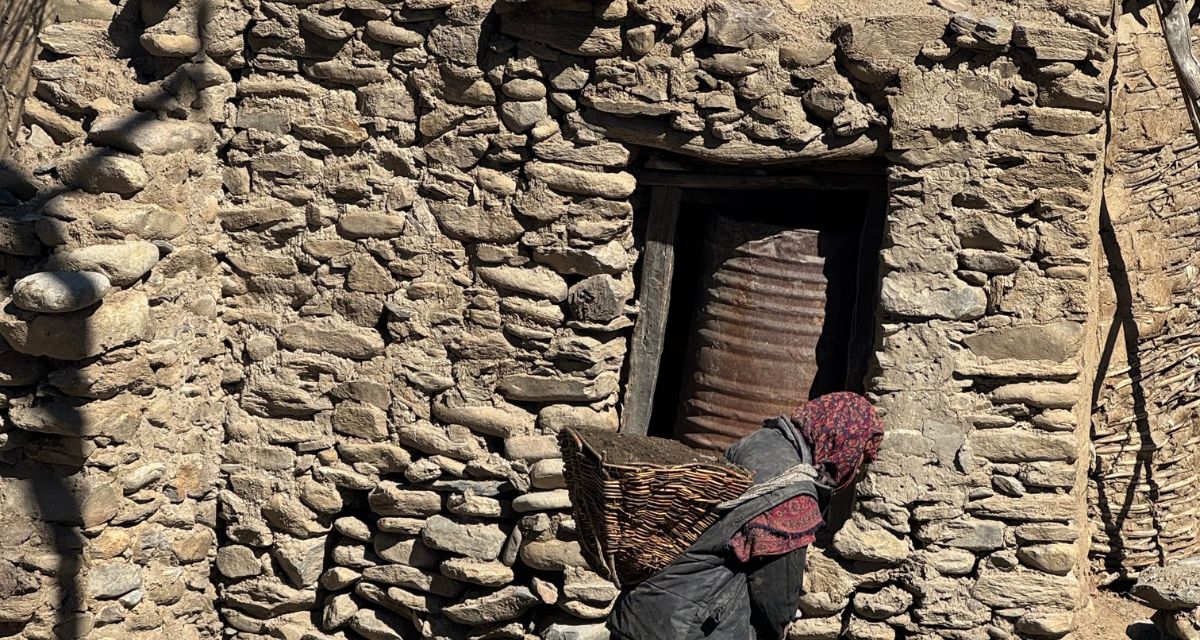 A woman in Zanskar region of Ladakh carrying a basket filled with top soil (Photo - Safeena Wani, 101Reporters)
Solutions
KREDA has repeatedly told the UT administration that the current maintenance fee of Rs 60-100 per household is inadequate. The agency must pay for skilled workers, transport to remote sites and long-distance logistics. “Population is low and scattered. Collecting tiny amounts doesn’t even cover fuel,” says project director Ali.
“The only solution is a separate operations and maintenance budget for these projects whether solar or micro-hydro,” he says.
India’s broader push for renewable energy, 484.82 GW of installed capacity, with 242.78 GW from non-fossil sources, has not solved the reliability problem in the Himalayas.
Energy expert Soumya Dutta argued that depending on long-distance grid connections is risky.
“Landslides, heavy rain, or weather events anywhere along a 1,000-kilometre chain can cut off electricity,” he said. “Decentralised micro-hydro and off-grid solar reduce that vulnerability.”
Debajit Palit from the Centre for Chintan Research Foundation agreed that generating electricity locally ensures energy security. “Smart hybrid grids can switch from on-grid to off-grid mode during storms,” he says. “And surplus power can be sold, giving revenue to locals.”
But former ambassador and Ladakh author P Stobdan argued that Ladakh must adapt to India’s emerging energy systems. “Ladakhis contribute little to national GDP,” he says. “Large renewable projects can make Ladakh a revenue-generating region. Much of Ladakh is unpopulated and suitable for these projects.”
In Kumik, the stone wall built by the bear spirit still stands though its protection feels increasingly symbolic. The glaciers retreat a little more each year. Streams disappear. Summers bring hope; winters bring darkness.
Next morning, Stanzin lights her stove. Kharfa tends to his thinning fields. Life continues despite the uncertainty. And across Zanskar, villagers hope the mountains will someday forgive them, and the bear spirit will guard their homes again.
This work is supported by the Just Transition Research Centre-JTRC fellowship offered by IIT Kanpur, Climate Trends and Earth Journalism Network.
Cover photo - Stanzing Yanzing and her niece prepare a meal on their traditional stove in upper Kumik, where water shortages have pushed many households to migrate (Photo - Safeena Wani, 101Reporters)
Would you like to Support us
101 Stories Around The Web
Explore All News