Keoladeo’s water lifeline is running into trouble


Keoladeo’s water lifeline is running into trouble
“Now managing water in Keoladeo has become very difficult,” said the former director of the Bombay Natural History Society. He recalled that even 50 years ago, when he first saw the park, its biodiversity was much richer than it was today. “There has been considerable and rapid degradation,” he said.
Spread across 28.73 square km in Rajasthan’s Bharatpur district, Keoladeo is one of India’s most important habitats for birds. It was declared a Ramsar site and a national park in 1981, and UNESCO declared it a World Heritage Site in 1985.
But the wetlands that make the park an important habitat depend heavily on a steady supply of water brought from outside. A large part of the water supplied to Keoladeo comes from the Panchana Dam. Farmers in the surrounding areas also depend on the same water for agriculture, creating a conflict over its use. The park therefore faces a difficult situation: it needs water to sustain its ecosystem, while people living around the same river and dam depend on it for agriculture.
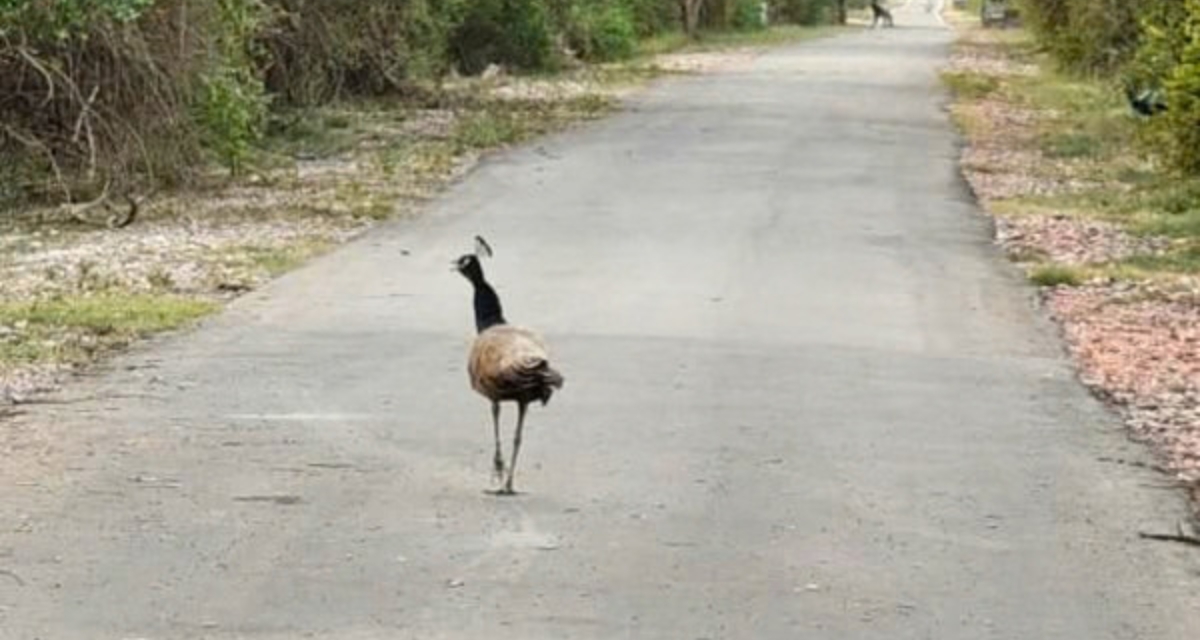
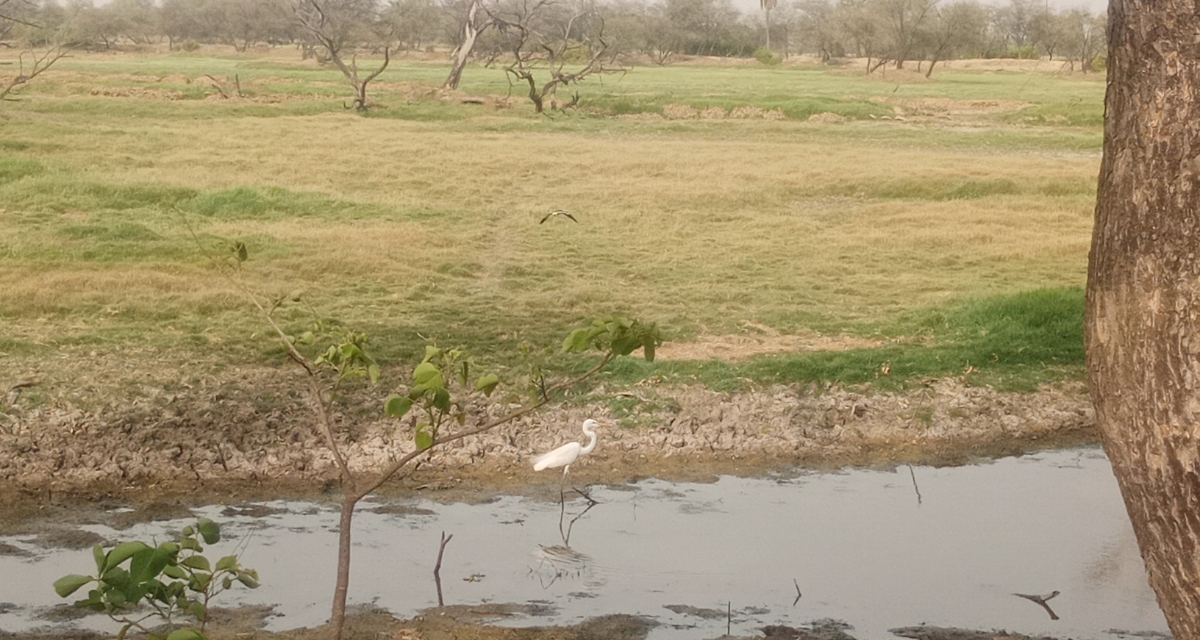 Various bird species spotted inside Keoladeo National Park during the summer months, offering a glimpse of the vast avian diversity that arrives here in winter (Photo - Rahul Singh, 101Reporters)
Sourcing water
According to Assistant Conservator of Forests Bharatlal Sharma, Keoladeo National Park requires about 550 million cubic feet of water each year.
But the park has little natural water of its own. “There are small rivers here and their catchment areas are also small,” said Chetan Kumar BV, Deputy Conservator of Forests at the park.
The Chambal supplies about 62 million cubic feet – roughly one-tenth of the park’s annual requirement. “But it isn’t enough,” Sharma said. Most of the park’s water therefore reaches it through the nearby Ajan Dam, which is fed by Panchana.
When Panchana does not supply enough water, the park turns to the Govardhan Drain near the Haryana-Uttar Pradesh border. But this is not considered a suitable alternative: the drain passes through agricultural areas where pesticides are used extensively, and Kumar BV said the water could carry these pollutants into the park.
Kumar BV said the capacity of Panchana Dam was tripled in 2003-04, allowing it to hold and regulate much more water. The park has since become more dependent on how water is stored and released from the dam.
Fight over water
The Panchana Dam is in Karauli district, around 100 km from Bharatpur, and was built at the confluence of five small rivers, giving it its name.
Over the years, it has become the centre of a long-running dispute over access to its water.
As the monsoon began this year, residents of 39 villages around the dam surrounded it to prevent water from being released into the command area. They argued that since their land had been acquired to build the dam, they should have the first right to its water. Farmers in the command area, meanwhile, demanded the release of water for agriculture. The dispute reached the High Court, which directed the government to release water from the dam.
Local residents and officials attributed the region’s water problems to several factors, including the construction and subsequent expansion of Panchana Dam and local politics around water. Disputes over the resource have at times led to road and rail blockades and required intervention from political leaders and government ministers.
The consequences of inadequate water extend into the park. Kumar BV said, “If there is not enough water in the park’s wetlands, weeds grow. This has resulted in an increase in vilayati babul...prolonged submergence prevents the invasive tree’s seeds from germinating, while falling water levels allow them to emerge and spread rapidly.”
This, he said, had contributed to the decline of kadamba trees, native flowering trees, and fish species.
Keoladeo is divided into 15 blocks, six of them wetlands and the rest grassland or woodland. Mud mounds have been created in the wetland blocks to provide places for migratory birds to perch and breed.
Gajendra Singh (40), a resident of Jat Toli Ghana village and a Van Mitra at the park, said resident birds began arriving around July-August, while migratory birds arrived around October-November and formed breeding colonies. “There are 26 satellite wetlands on the outskirts of the park, and the forest department also monitors their management,” he said.
Park officials have recorded 375 bird species in Keoladeo, including 200 migratory, 100 local migratory and 75 resident species. The park also has seven species of turtles, 75 species of butterflies, 13 types of snakes, eight species of frogs and 27 species of mammals. An earlier survey recorded 57 fish species, but that number has since fallen to 35, officials said.
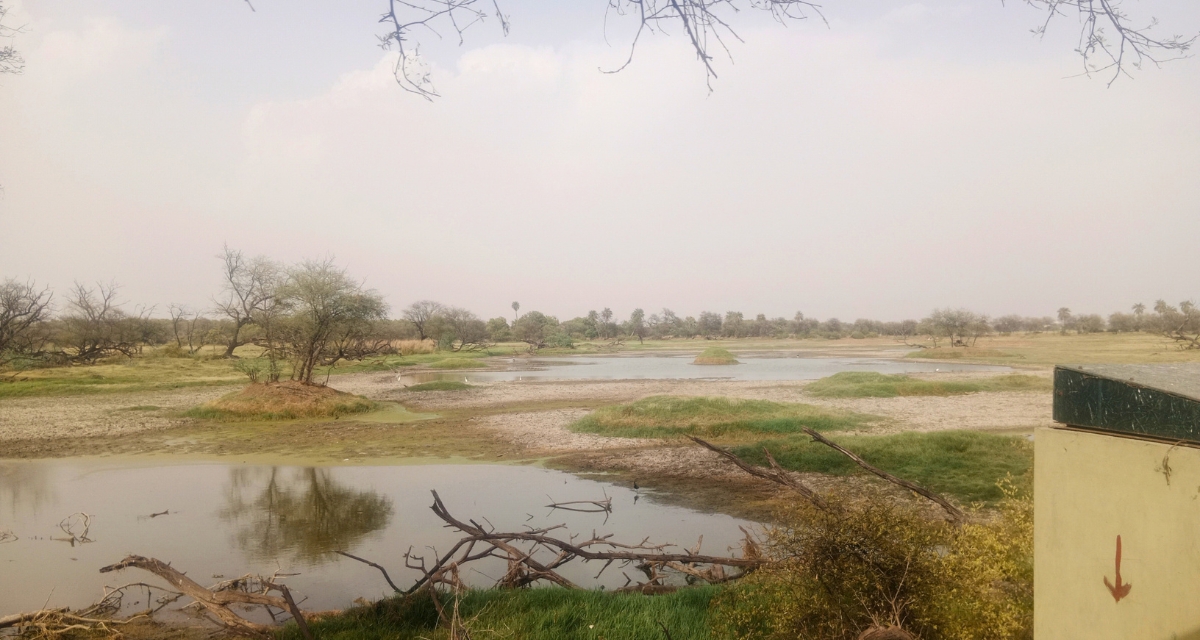 Wetlands inside Keoladeo National Park, crucial for maintaining local biodiversity and sustaining groundwater levels in surrounding areas (Photo - Rahul Singh, 101Reporters)
Through history’s lens
Between 1726 and 1763, the then Maharaja of Bharatpur, Suraj Mal, had the Ajan Dam built on the Gambhir river. The dam, located a short distance from the rear portion of the park, remains an important source of water.
Between 1850 and 1899, the low-lying area that became the park was developed as a protected area for deer hunting. In 1899, the administrator Harbhanji had dams and embankments constructed in the area to increase its capacity to store water.
In 1902, the area was converted into a duck-hunting reserve. Officials and people familiar with the park’s history said the idea of a hunting reserve had been influenced by similar reserves that the rulers of Bharatpur had seen during visits to Europe.
Many governors general also visited the area. Lord Curzon, the then Viceroy, was invited when the duck-hunting centre was inaugurated in 1902, according to an official. The area was declared a reserve forest in 1967, while hunting rights were withdrawn from the rulers in 1972. It was declared a Ramsar site and given national park status in the early 1980s, after which grazing was prohibited. UNESCO declared it a World Heritage Site in 1985.
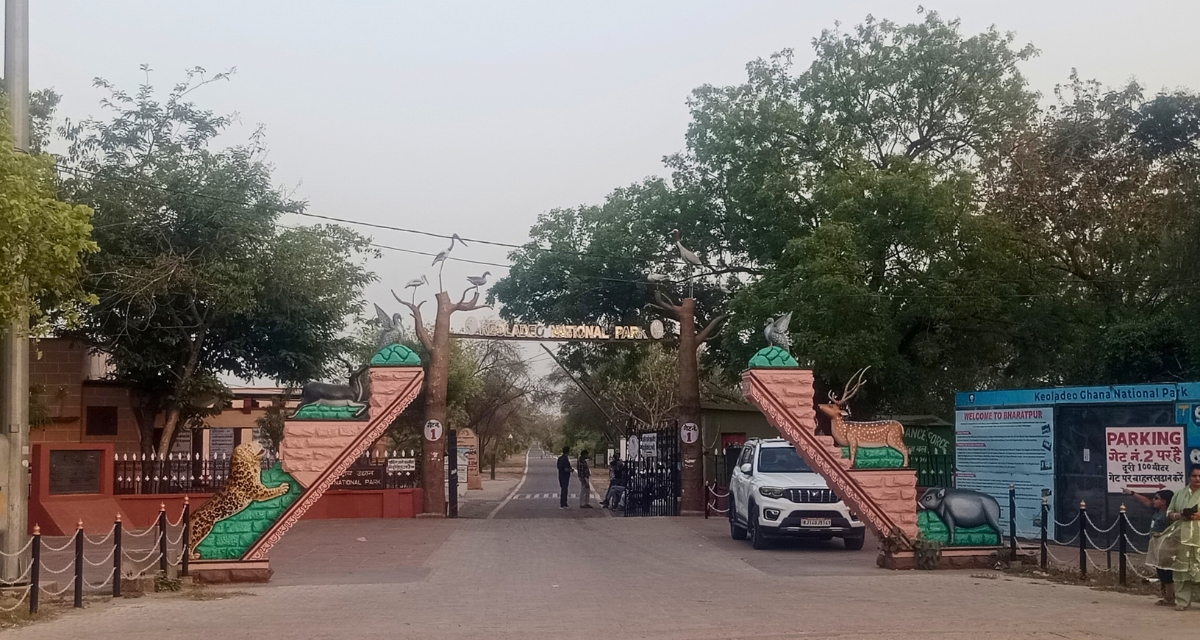 The main entrance gate to Keoladeo National Park (Photo - Rahul Singh, 101Reporters)
Beyond the boundaries
For people living around Keoladeo, however, the park is not only a bird habitat. Amit Kumar (28), a resident of Jat Toli Ghana village on the outskirts of Bharatpur, said wells in his village remained relatively reliable and that the water table around the village was suitable for agriculture. “The well water in my village does not dry up and the water table remains good for agriculture in the surrounding areas,” he said. He attributed this, in part, to the presence of wetlands in the adjoining park.
“There is Ghana Park next to us, which has several wetlands. Because of these wetlands, the water table remains good even outside the park, and farmers do not face difficulties in agriculture,” he said.
Amit said there were some difficulties during kharif cultivation, but wheat and mustard performed well during the rabi season. Ghana Park is the name commonly used by local residents for what is officially Keoladeo National Park. The word “ghana” in Hindi refers to something dense or thick.
Gajendra, whose home is close to the park, said his attachment to Keoladeo had developed from childhood through repeated visits with older members of his family. “Keoladeo National Park is the pride of Bharatpur and Rajasthan. Because of it, bird lovers from across the world know our city,” he said. “It is important that not only the government takes serious steps to protect the park and its biodiversity, but that people living in the surrounding villages are also sensitive towards it.”
Kumar BV said around 250 people from villages around the park received direct employment through it, while around 2,500 others benefited indirectly.
The park also supported the tourism economy, he said. Around 10 to 15 hotels depended on the park for a significant share of their income from domestic and foreign tourists.
In 2025-26, the park generated 47,000 person-days of human labour, according to forest department data shared with 101Reporters.
Deeply entwined
The dependence of local communities on the park’s ecosystem is now also being examined through a study by the Indian Institute of Science, Bengaluru. According to information accessed by 101Reporters, the study is assessing Keoladeo’s impact on local communities, their lives and livelihoods, as well as its value to the local economy and its environmental and climate benefits.
It will also examine how much the park’s wetlands contribute to groundwater recharge and what this means for the surrounding area, including what the loss of these wetlands could mean for Bharatpur’s water availability.
Forest officials have long said the wetlands contribute to maintaining the city’s water table. The IISc study is expected to provide a scientific assessment of this relationship.
The park’s management also focuses on habitat improvement, scientific research and monitoring. Kumar BV said another bird census would be conducted and that there was a need for weed removal and planting kadamba trees.
Officials said good monsoons in 2024 and 2025 helped maintain water levels and supported biodiversity.
But concerns remained this year because of rainfall uncertainty. After five decades of watching Keoladeo, Rahmani said the extent of biodiversity loss in the park was difficult to quantify.
Cover Image - Wetlands inside Keoladeo National Park, crucial for maintaining local biodiversity and sustaining groundwater levels in surrounding areas (Photo - Rahul Singh, 101Reporters)
Would you like to Support us
101 Stories Around The Web
Explore All News