In Tosamaidan, a traditional knowledge of plants is fading with landscape changes


In Tosamaidan, a traditional knowledge of plants is fading with landscape changes
Budgam, Jammu and Kashmir: For Bashir Ahmad Sheikh (42) the mountains of Tosamaidan are both a seasonal home and a source of livelihood. A resident of Sitaharan village in Budgam district, Sheikh migrates to Hafas Bahek every year, where he stays from May to October with his livestock, grazing animals and gathering wild plants.
Sheikh knows these pastures like the back of his hand. He knows which plants grow where, where different animals can be found and which routes are safest. He knows when to travel, where to stop and how to navigate the vast pastures that have been part of his life for years.
By mid-August, he begins a more demanding trek into the upper reaches of Tosamaidan to harvest Jogi Badshah (Saussurea simpsoniana), a plant traditionally used to treat asthma and gynaecological ailments. From his bahek, the journey to the snow-capped peaks where it grows takes nearly six hours. Sheikh says the plant is ready for harvest only from mid-August.
Despite harvesting Jogi Badshah for nearly three decades, Sheikh says he has little idea of its market value.
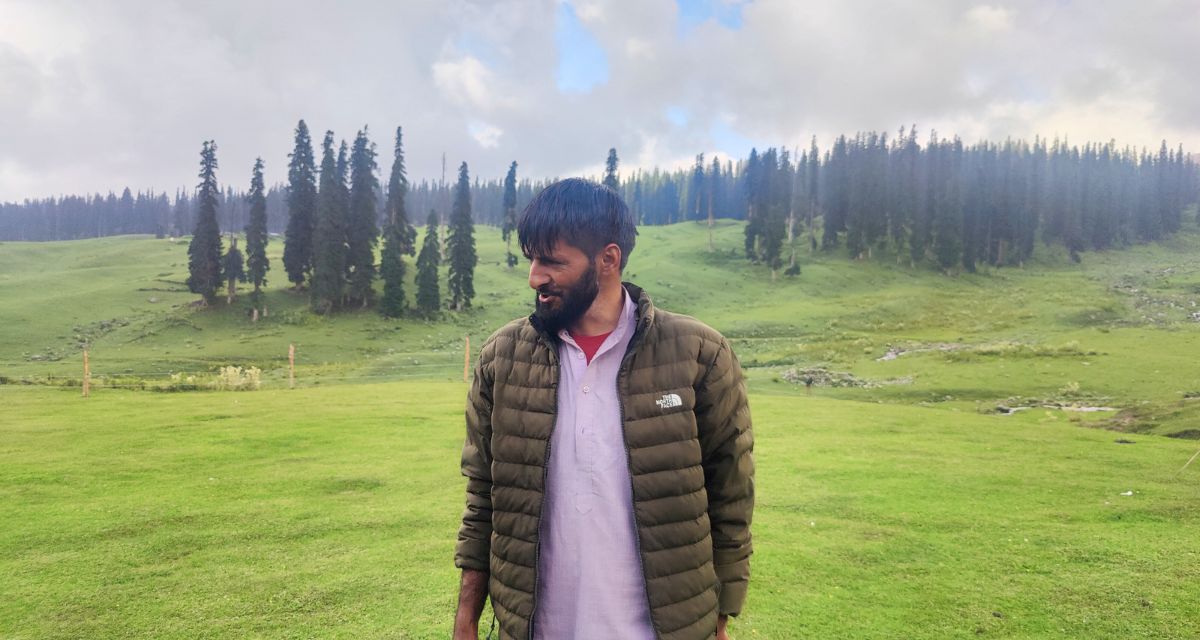 Bashir Ahmad Sheikh of Sunglipora village (Photo - Mukhtar Dar, 101Reporters)
“I have been harvesting these flowers for the last three decades. When we trek back to our villages, we give them to those who need them. Some pay, while others take them for free,” he says.
He knows where the plant grows and how and when to harvest it. What he does not know is what it is worth once it leaves his hands.
Jogi Badshah is one of many plants Sheikh collects during his months in Tosamaidan. Some are valued for their medicinal properties, while others are wild vegetables that his family stores and uses through the winter. Some are sold to supplement his income.
For Sheikh, these plants are part of a larger system of migration, knowledge and practices passed down through generations of Gujjar-Bakerwal communities living in and around these mountains.
Shaped by pastoral knowledge
Tosamaidan is a high-altitude landscape spread across around 65 square kilometres and surrounded by dense deodar, fir and pine forests. The area remains covered in snow during winter. As the snow melts, hundreds of forest-dwelling villagers from the foothills of Tosamaidan and the Chopans of Budgam district, along with Bakerwal families from Poonch, begin their seasonal migration to its meadows.
From wild vegetables to medicinal plants, and from pine forests to deodar stands, the landscape supports a rich variety of life. Its undulating pastures are crossed by streams inhabited by snow trout, while diverse wildlife thrives in the surrounding forests.
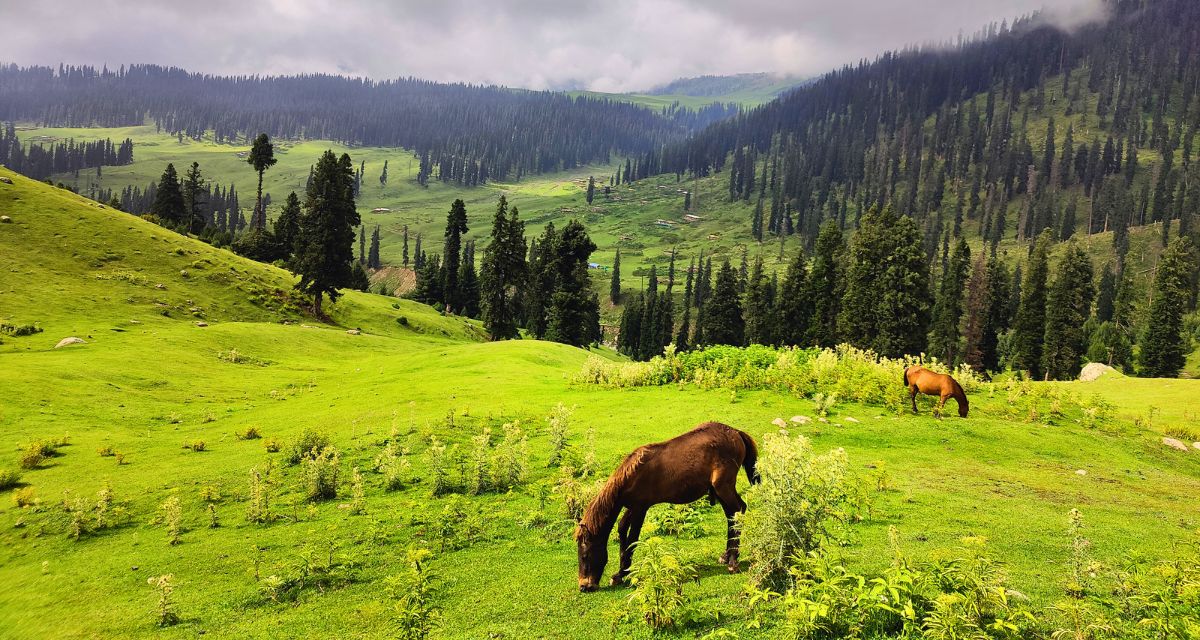 Tosamaidan pastures and the Forest (Photo - Mukhtar Dar, 101Reporters)
“Traditional forest-dwelling communities have lived here for generations, closely connected to the landscape and its resources,” says Sheikh Ghulam Mohideen of Sitaharan village, who lives in Kadlabal Bahek during summer.
Tosamaidan also plays a role in Budgam’s economy, he says. Sheep from across the district and livestock belonging to forest-dwelling communities and Bakarwal families from Poonch are brought here in summer.
Each Chopan, Gujjar and Bakarwal traditionally has a designated bahek, or grazing area, where livestock are kept during the summer. These areas are generally associated with particular herders or families as part of the traditional pastoral system.
Mohideen says the baheks were traditionally distributed in a way that allowed herders to graze livestock without disturbing areas used by wild animals.
In pastoral terminology, a bahek is a settlement or grazing camp. Since Tosamaidan is vast, herders often identify themselves by their bahek. Mohideen names Kadlabal, Hafas, Pahal Pathri, Nun Wan, Badi Pathri and Gujar Maidan among them.
A living knowledge of plants
Mohammad Gaffar Malik of Sunglipora says the forests, mountain peaks and pastures are home to medicinal plants and other vegetation that were once widely used by local communities. When connectivity was poor, people harvested what they needed from the forests.
One example is Machrin Chia, a traditional Kashmiri herbal tea made from Bistorta amplexicaulis.
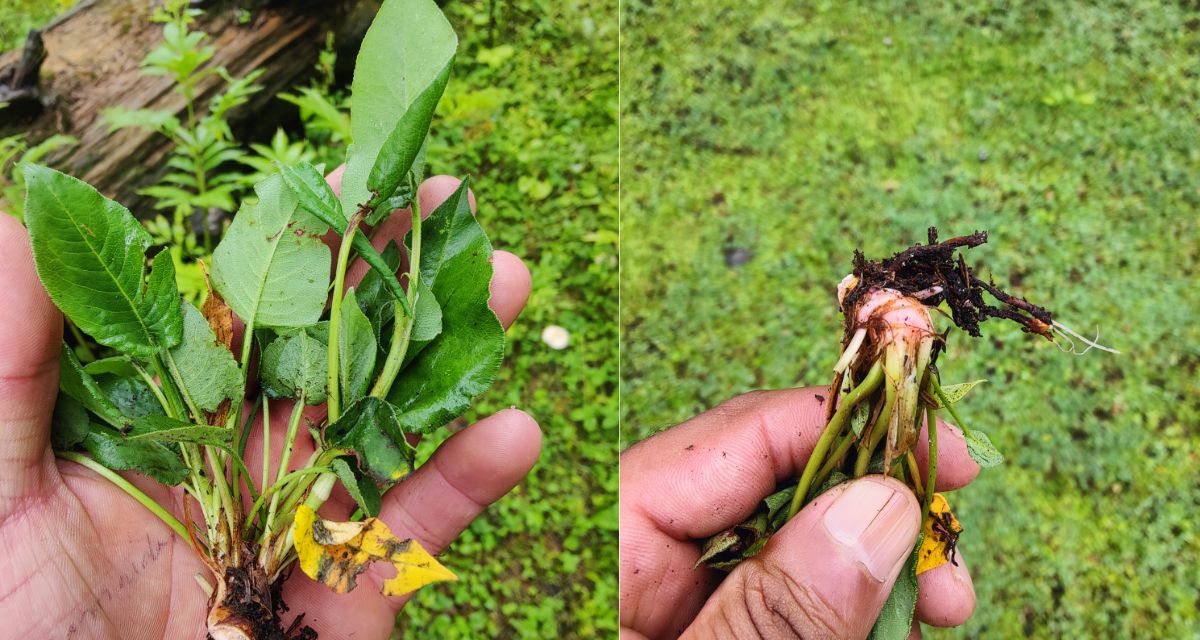 The Machirn Chia plant and it's roots (Photo - Mukhtar Dar, 101Reporters)
“We would collect it from the forest and make tea from it,” he says.
Although it is less common now, Malik says people still use it occasionally. Cultivated tea is more common.
People also used many of these plants as traditional medicines. Pumb Chalan (Himalayan rhubarb), for instance, was used to treat wounds, while Wan Wangun (Podophyllum hexandrum) was used for fever and Drub (Cynodon dactylon) for skin problems.
“I can name dozens of plants that are used as medicinal plants here,” Malik says.
A 2019 study in the Journal of Herbal Medicine documented 1,123 plant species with ethnomedicinal uses in Jammu and Kashmir, traditionally used to treat 266 types of diseases. The study was authored by Bilal A. Tali, Anzar A. Khuroo, Aijaz H. Ganie and Irshad A. Nawchoo. Study: Diversity, distribution and traditional uses of medicinal plants in Jammu and Kashmir
A 2021 ethnobotanical study in Khag tehsil, in the foothills of Tosamaidan, documented 25 medicinal plants used by local communities to treat diarrhoea and dysentery. The study was authored by Tawseef Ahmad Mir, Rakesh Kumar Khare and Muatasim Jan. Study: Medicinal plants used for diarrhoea and dysentery in Khag
Malik also recalls collecting wild vegetation from Tosamaidan to preserve and use throughout the year.
“We were collecting wild vegetation from Tosamaidan and using it throughout the year for vegetables, such as Hend, Sutal, Jangli Palak, Pumb Haakh, Koker Nej, Nadan Noer, Kov Khoir, and others,” he says.
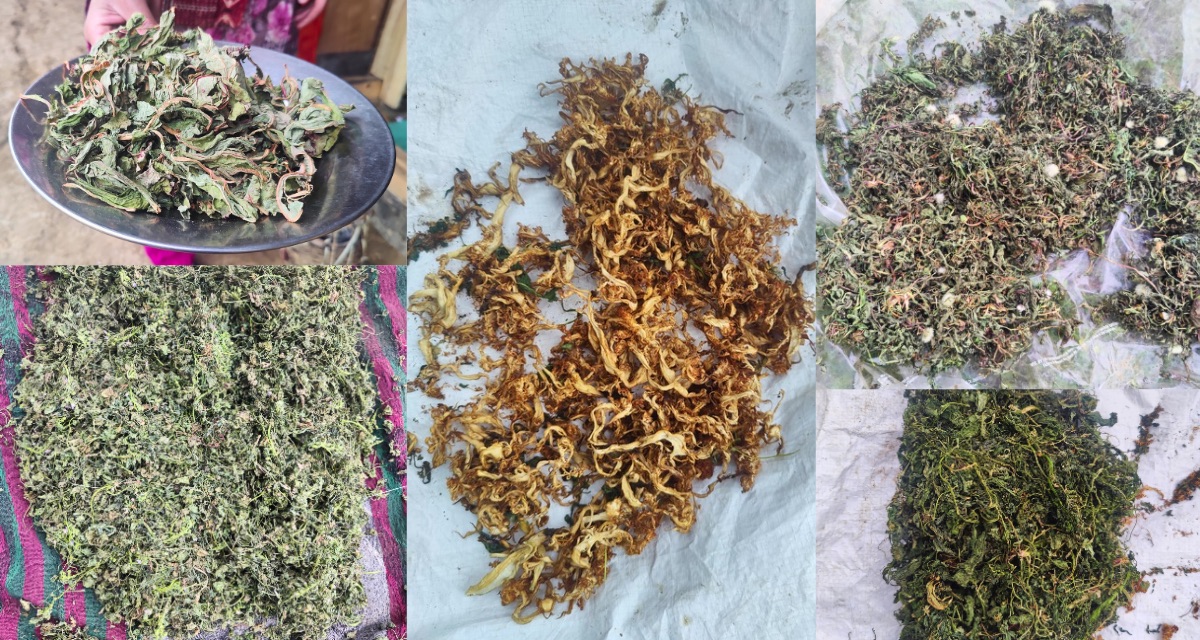 Pumb Hakh (top left), Jungli Sutal (bottom left), Dried Kov Khoir (middle), Jungli Hend (top left) and Jungli Palak (bottom left) (Photo - Mukhtar Dar, 101Reporters)
What changed?
Rafiq Ahmad Chauhan, 28, from Khairyan, has grazed his animals at Kadlabal Bahek since childhood as part of the summer migration tradition. He says he is continuing a practice passed down by his ancestors, but many young people have moved to other professions.
As connectivity improves and urban culture increasingly influences forest-dwelling communities, their dependence on forest products has also declined, Rafiq says. The easy availability of commercial medicines has reduced reliance on traditional medicinal plants, while cultivated vegetables have replaced some wild foods.
Ab Rashid Lone, former sarpanch of Sitaharan village, says the availability of around 70% of the plants has declined over the past two decades.
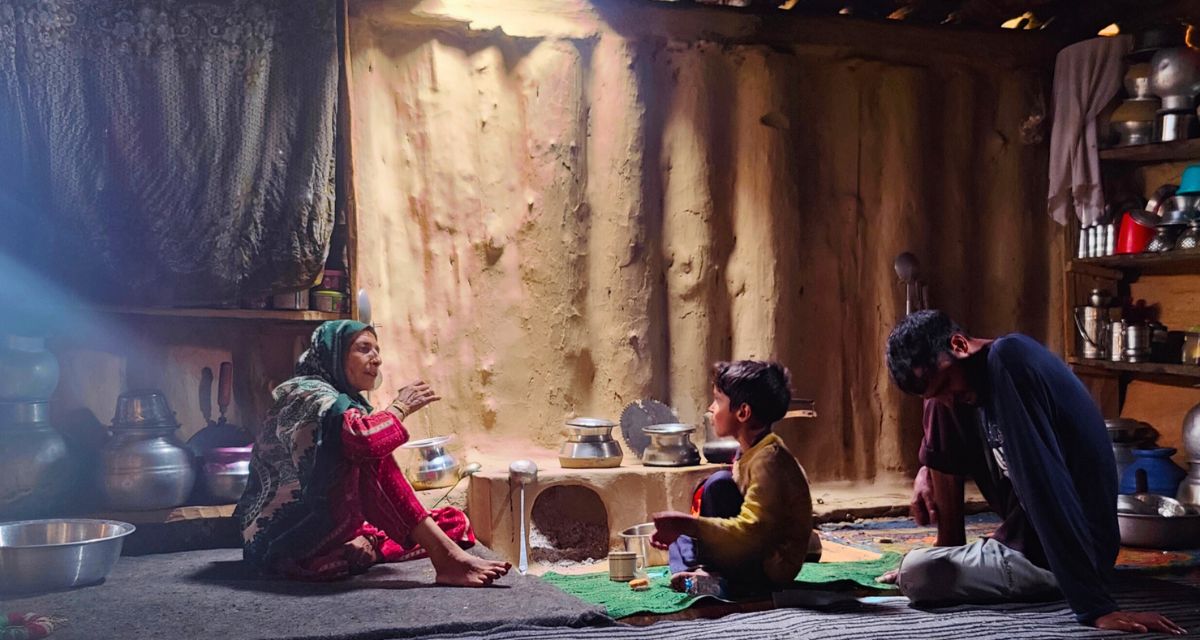 Rafiq with his Mother at his Kotha in Kadlabal (Photo - Mukhtar Dar, 101Reporters)
“Earlier, these plants were abundantly available,” he says. He names Dupee and Kah Zabaan among plants that can now be found only after a lot of searching.
Dr Bilal Ahmad Rasray, a botany research scholar from Brass village in the foothills of Tosamaidan, has studied these wild plants and published research on them.
“Several wild plant species appear to show changes in their distribution, abundance, and seasonal occurrence. These changes are happening due to a combination of climate variability, habitat disturbance, grazing pressure, land-use changes, and unsustainable harvesting,” he says.
Climate change is altering “the timing of germination, flowering, and fruiting”, shifting species’ elevational ranges and changing plant-environment relationships, he says.
Over the past decade, snowfall has decreased, affecting alpine ecosystems such as Tosamaidan because snow duration influences soil moisture, the growing season and plant survival, Rasray adds.
A market they cannot see
The decline in availability is happening alongside a largely informal trade in some of these plants.
Last year, Sheikh harvested around 4 kg of Sheetkhar (Fritillaria cirrhosa), which fetched him Rs 1,000 after drying. He also collected about 10 kg of Kangich (Morchella esculenta), a prized wild mushroom that sold for Rs 7,000 a kg.
Sheikh counts more than two dozen plants he regularly collects in Tosamaidan, including Drub (Bermuda grass), Kov Khoir (unidentified), Wan Wangun (Himalayan Mayapple), Dupee (unidentified), Kuth (Costus), Pumb Chalan (Himalayan rhubarb) and Kah Zaban (Himalayan Arnebia).
“We do not know the exact market rate. A trader from Srinagar, whom we call ‘Raja’, comes here and buys the plants from us. Whatever price he offers, we accept it,” Sheikh says.
The gap between what harvesters receive and what these plants can be worth further along the supply chain is difficult to quantify locally.
Mohideen says medicinal plants collected from forests can have a high market value, but traditional forest-dwelling communities receive only a small share of the returns. Some medicinal plants, he says, fetch prices running into lakhs of rupees in international markets.
Section 41(3) of the Biological Diversity Act, 2002, provides that Biodiversity Management Committees can levy collection fees on persons accessing or collecting biological resources for commercial purposes within their territorial jurisdiction. The Act was amended in 2023, with Section 41 also explicitly assigning BMCs functions related to the conservation, sustainable use and documentation of biodiversity and traditional knowledge.
A 2024 study titled “Quantification of trade in medicinal and aromatic plants: In and from Kashmir Valley of India” surveyed traders and quantified the trade. Using 2021-22 data, it found that about 79.33 tonnes of medicinal and aromatic plants were traded annually. The study covered 20 species and recorded trade worth Rs 8.88 crore, with 12 traders identified and trade concentrated in Srinagar and Anantnag.
Mohideen says traditional forest dwellers should be able to benefit from the collection and use of medicinal plants, but a lack of awareness and weak implementation of the biodiversity framework have pushed much of the trade into informal channels.
BMCs, he says, could help make collection and trade more sustainable through “conservation, sustainable use and documentation of biological diversity”.
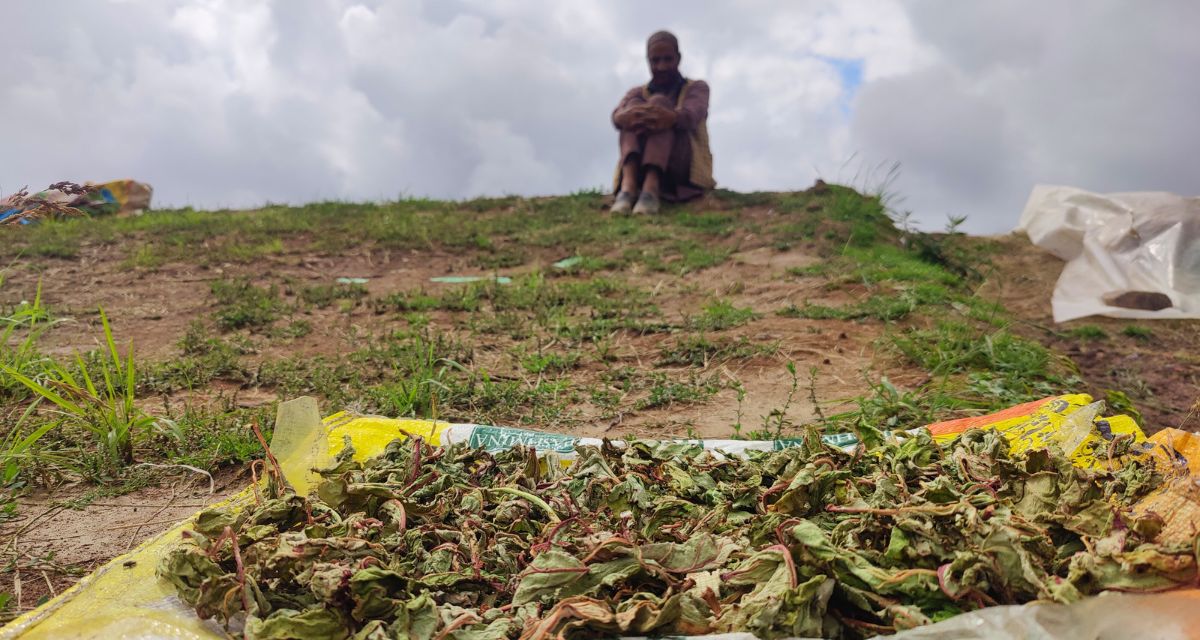 Man sits on top of his Kotha while drying wild plants (Photo - Mukhtar Dar, 101Reporters)
What do BMCs do
In 2021, the Jammu and Kashmir government announced the formation of BMCs in 276 intermediate block-level panchayats, 4,290 village panchayats and 71 urban local bodies. The government also said People’s Biodiversity Registers had been completed in 4,290 village panchayats and 71 urban local bodies.
On the ground, however, Mohideen said a BMC was formed in Sitaharan four or five years ago, with seven local members including him, but little was done beyond its formation.
Abdul Rashid Lone, who was appointed chairman, said the members were unaware of their roles.
“We did not know what we had to do or what work we were supposed to carry out,” he says.
Lone said he also had no knowledge of the People’s Biodiversity Register — what it was or why it was to be prepared.
Village-level workers from Sitaharan, Sunglipora and Kokernag villages of Khag confirmed that BMCs had been formed but said little had been done since. They said no meetings had been held in the past three or four years and no funds had been allocated to the committees.
Lone said the government should have provided financial support.
“If the government had supported us financially, these committees could have functioned properly,” he says.
The problem, he says, is not a lack of knowledge but a lack of resources and institutional support.
“People tell us that these changes are happening because of climate change, but we don’t know how to tackle them,” he says.
“I don’t know why this has happened,” he says. “Our elders knew every plant and its uses. Even today, if a young man is collecting a plant from Tosamaidan area, he consults the elders about its identification and usage.”
Rasray says traditional knowledge is ecological and ethnobotanical information accumulated over generations. Preserving it, he says, could support biodiversity conservation, sustainable resource use and research on food and medicinal plants.
Would you like to Support us
101 Stories Around The Web
Explore All News