How Ambujwadi wrote its own climate plan, and why that wasn't enough
Naila Khan
18 May, 2026
|
Mumbai, Maharashtra
|
9mins read
|
How Ambujwadi wrote its own climate plan, and why that wasn't enough
Naila Khan
18 May, 2026
|
Mumbai, Maharashtra
|
9mins read
|
Residents of a flood-prone informal settlement in Mumbai mapped climate risks and pushed for basic infrastructure, but much of their community-led adaptation plan remains stalled without stronger state support.
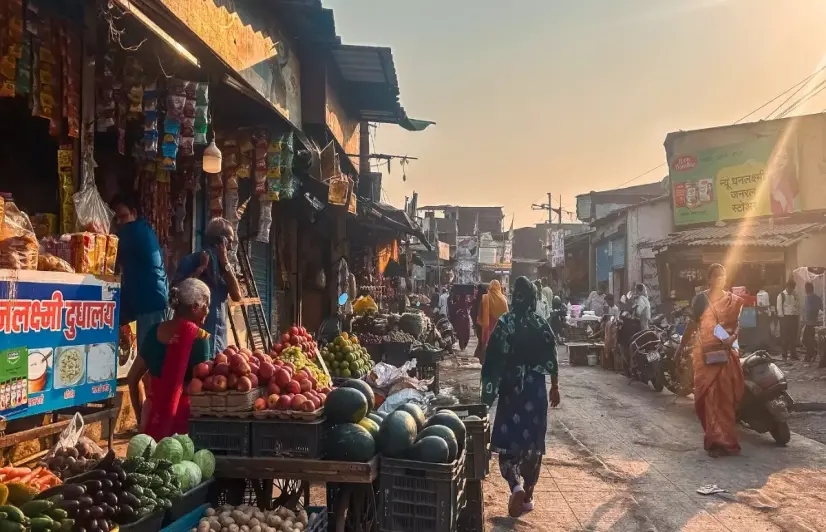
Mumbai, Maharashtra: Ambujwadi's lanes twist into each other like a maze. On a typical day, fisherwomen and fruit vendors sit side by side, women stop to buy daily groceries, and children return from school. The roads are uneven. A streetlight stands in one corner, a stormwater drain cuts through another, a public toilet sits between two chawls. Located in the western suburbs of Mumbai, close to wetlands, mangroves, and the Arabian coastline, Ambujwadi is a low-lying informal settlement home to around 57,000 people, acutely vulnerable to flooding, cyclones, and heat stress.
For the past 12 years, Anita Chauhan, 37, a migrant from Uttar Pradesh, has seen the worst of it. During the monsoon, she says, sleep is rare. "The water fills our home. Taking the children to school becomes difficult because the lane outside floods," she told 101Reporters. "It takes two to three days for the water to subside. Two years ago, my neighbour's one-and-a-half-year-old daughter fell into the flooded water outside her house, so we had to rescue her."
Anita Chauhan a resident in Ambujwadi (Photo - Naila Khan, 101Reporters)
‘The water fills our home’ For Sonam Govind Kumar, who has lived in Ambujwadi for the past 10 years, the monsoon means living with constant distress and uncertainty. "Flooding, sewage overflow and mosquitoes make illnesses common during this season," she says. "We spend hours trying to clear water entering our rooms." Flooding and poor drainage affect nearly every aspect of life in the settlement, residents miss work during heavy rains, spend days repairing homes, and watch their children's education slip as health crises pile up.
These experiences are backed by numbers. According to ananalysis shared by the World Resources Institute India during consultations for Mumbai's Climate Action Plan, the city experienced around four extremely heavy rainfall events annually between 2010 and 2020. A 2025 study published inNature found that over 80% of deaths linked to extreme rainfall in Mumbai occurred in informal settlements. According to Archana Patankar, a climate change economist and co-author of the study, the impacts are closely tied to existing infrastructure gaps. "Clogged or inadequate drainage networks lead to the accumulation of water, and stagnant water creates conditions conducive to rainy season illnesses," she says. As Mumbai's rainfall becomes more intense, settlements like Ambujwadi face greater risks because heavy rains combine with overcrowded housing, poor drainage, inadequate sanitation, contaminated water, and years of infrastructural neglect.
It was this accumulation of risk and the grinding weight of every monsoon that pushed residents to act collectively.
An open, broken drain filled with plastic waste along a street in Ambujwadi (Photo - Naila Khan, 101Reporters)
Incomplete climate action plan
In 2022, Mumbai rolled out its Climate Action Plan. Developed by the Brihanmumbai Municipal Corporation (BMC) with technical support from the World Resources Institute and in collaboration with the C40 Cities Group, the Mumbai Climate Action Plan (MCAP) outlines a long-term roadmap to make the city climate-resilient and net-zero by 2050. But when Youth for Unity and Voluntary Action (YUVA), an organisation working on social and climate issues, examined the plan, the gaps became immediately visible. Shahenshah Ansari, a resident of Ambujwadi and senior community organiser with YUVA, put it plainly. "When we looked at the Mumbai Climate Action Plan, there were a lot of gaps, especially around inclusion. It focused more on renewable energy and transport, but it didn't really talk about informal settlements. We kept asking, how are these communities going to be linked to the plan?"
YUVA selected Ambujwadi for an in-depth study because of its overlapping vulnerabilities, climate risk, difficult socio-economic conditions, and severe everyday impacts of flooding and poor infrastructure. With support from Misereor, a Germany-based partner, and in collaboration with over 500 residents, YUVA began in September 2022 to develop a Community Climate Action Plan (CCAP).
The process was deliberately grassroots. YUVA worked with residents to form mohalla committees of around 25 to 30 people each, with a smaller core group of six to eight members trained through sessions on climate change — learning to use basic digital tools, understanding how climate risks affect different groups, especially women and children, and leading discussions within the community. Then came the mapping.
Mapping risks
For Janardan Singh, who has been living in Ambujwadi since 2010, the process was simple and hands-on. Residents went lane by lane, documenting problem areas. "We went to every gali and mapped it. Some lanes were five feet lower, so water would collect there. Children would fall into the water," he said. "We started taking photos and noting where flooding happens." The findings were then compiled and taken to municipal authorities. "We would sit and talk — this area floods more, that drain is blocked, this needs to be fixed first — then we took it to the BMC."
Over time, some of the community's proposals began to take shape, slowly, and never completely, but visibly enough to matter. At Buddha Vihar, what was once a waterlogged patch has been turned into a small green space. When a reporter visited, children were playing there. Shankar Vakale, a resident, says the difference is visible. "Earlier, during the monsoon, children would fall into dirty water here. Now they can play safely," he said. "In the summer, it used to feel very hot, but now it's cooler." The space is now used for community gatherings, and residents have planted fruit trees — jamun, mango, fig, and banana — turning it into a shared, usable area.
Janardan Singh a resident in Ambujwadi since 2010 (Photo - Naila Khan, 101Reporters)
In other areas, the community prioritised the installation of stormwater drains, resulting in funds being assigned for the work. Sunita Jaiswar, a migrant from Azamgarh, lives next to a public toilet whose drainage outlet discharged directly into her lane, worsening flooding every monsoon. She used to place stones just to walk through the water. "Water would enter our homes, and there were always flies and mosquitoes. People would fall sick," she said. After residents pushed for change, a sewer pipeline was installed. "For the past two years, it has been much better," she added.
Shahenshah sees these changes as proof that micro-level planning works. "Earlier, during heavy rains, people had to leave their homes. Now they don't have to, and they are not losing their livelihoods," he said. The initiative has also drawn interest at the state level, with the State Climate Action Cell exploring whether community climate action plans like the one developed in Ambujwadi can be replicated in other vulnerable settlements and cities across Maharashtra. But residents are clear that a greened patch and one functioning sewer pipeline do not constitute climate resilience.
Stalled process Access to water, sanitation, and transport remains inadequate. The settlement remains unnotified, making it difficult for authorities to formally allocate funds. Frequent transfers of officials have also slowed progress, often forcing community members to restart conversations with new officers. Municipal elections were only conducted in 2025, meaning for much of the period when this work was happening, there were no elected representatives to anchor accountability.
Muskan Ansari, 26, who was part of the climate mapping process, says progress has been painfully slow. She has visited the BMC's P/North ward office multiple times. "There should have been more done," she said, describing the constant back-and-forth as exhausting. "Only those who keep pressuring officials get their work done. You have to visit the ward office six to ten times. Even one thing takes at least a year. I'm tired."
Muskan Ansari a resident who part of the climate mapping process (Photo - Naila Khan, 101Reporters)
Several planned interventions remain stuck, suspended in approvals or delayed execution, hampered in part by a lack of open space that makes drainage expansion or greening physically difficult to carry out. These gaps reflect a deeper structural problem. As Dulari Parmar, YUVA's climate justice lead, explained, city climate action plans carry no legal weight. "City climate action plans are not statutory in nature. Unlike development plans, they don't have a legal mandate. If local adaptation frameworks like community climate action plans were integrated into city-level planning, it would change the kind of funding, support, and scale these solutions can achieve." The contradiction runs deeper still. Janardan Singh points to the constant threat of evictions and demolitions — an issue that directly undermines any idea of inclusive climate planning. "When we negotiate with municipal officials, we tell them that our basic facilities do not need a fund. This is our fundamental right given by the Constitution." Parmar is direct: "City climate plans talk about inclusion and identifying the most vulnerable. But these are the same communities where evictions continue to take place due to 'green projects'."
The gaps What Ambujwadi needs, Parmar argued, is safe, climate-resilient, and affordable housing. Without formal recognition, the settlement does not fully exist within planning systems, limiting access to water, sanitation, roads, and other essential services. "Recognition is the first step. Without it, communities remain locked in cycles of risk." Professor Subimal Ghosh, Institute Chair Professor at IIT Bombay's Department of Civil Engineering and Convener of its Interdisciplinary Program in Climate Studies, points to the structural distance between planning and execution. "In cities like Mumbai, informal settlements are shaped by a combination of land constraints, ecology, and migration patterns. Because of this, you cannot apply uniform solutions such as adaptation strategies have to be hyper-local and flexible," he said. "Policies and action plans exist, but their effectiveness depends on how well they actually reach and involve vulnerable communities on the ground."
Shahenshah Ansari a resident in Ambujwadi (Photo - Naila Khan, 101Reporters)
Shahenshah believes community climate action plans need far stronger engagement from the state. "Officials need training in how climate change is actually playing out on the ground," he said. "When we go with residents, they often dismiss it, saying this is a low-lying area so flooding will happen. But they don't recognise how changing rainfall patterns are making it worse." These gaps reflect a broader disconnect at the city level: the Mumbai Climate Action Plan had proposed setting up a Climate Action Cell as an official mechanism to drive implementation, but this has yet to be fully realised, leaving communities like Ambujwadi to navigate worsening climate impacts with limited institutional support.
This story was produced as part of the 101Reporters Climate Change Reporting Grant. Cover Image - A street in Ambujwadi (Photo - Naila Khan, 101Reporters)
Based between Mumbai and Delhi, they are a multimedia journalist whose work has been broadcast by international organisations including Bloomberg and France 24. They report on human rights, gender, migration, and environmental issues, with a focus on marginalised communities and systemic injustice.

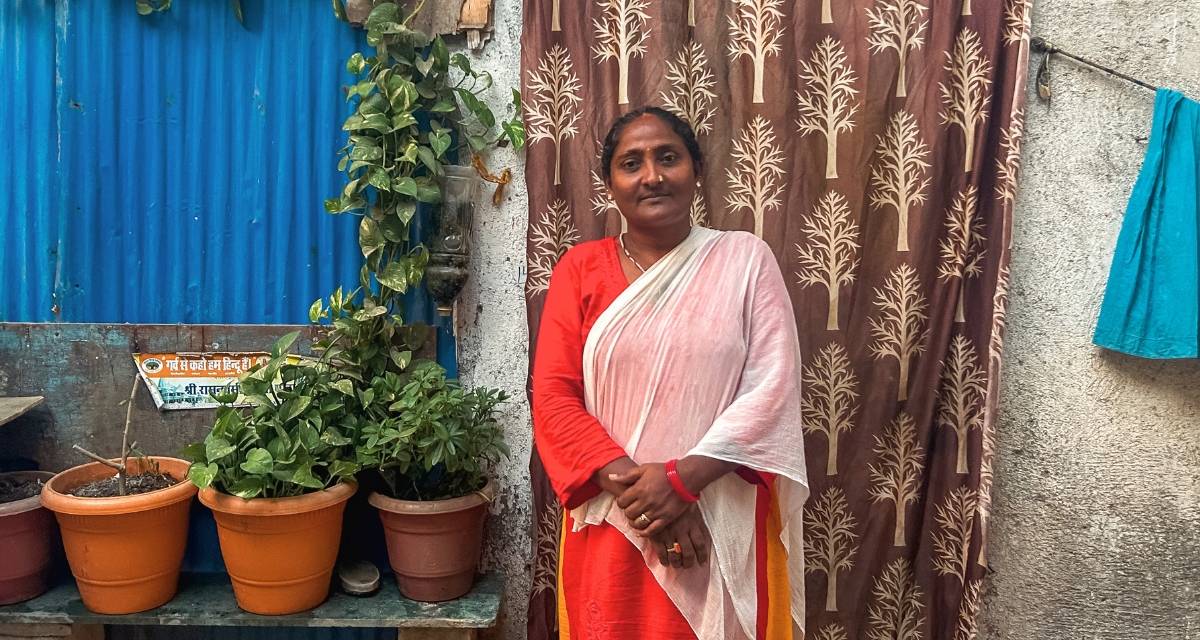 Anita Chauhan a resident in Ambujwadi (Photo - Naila Khan, 101Reporters)
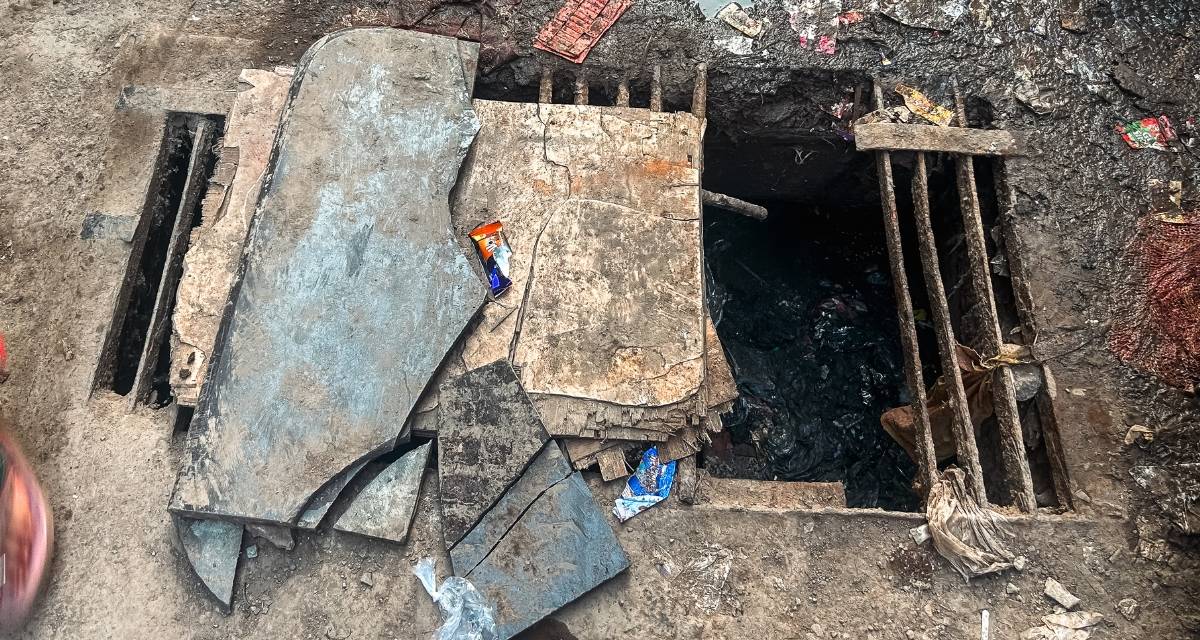 An open, broken drain filled with plastic waste along a street in Ambujwadi (Photo - Naila Khan, 101Reporters)
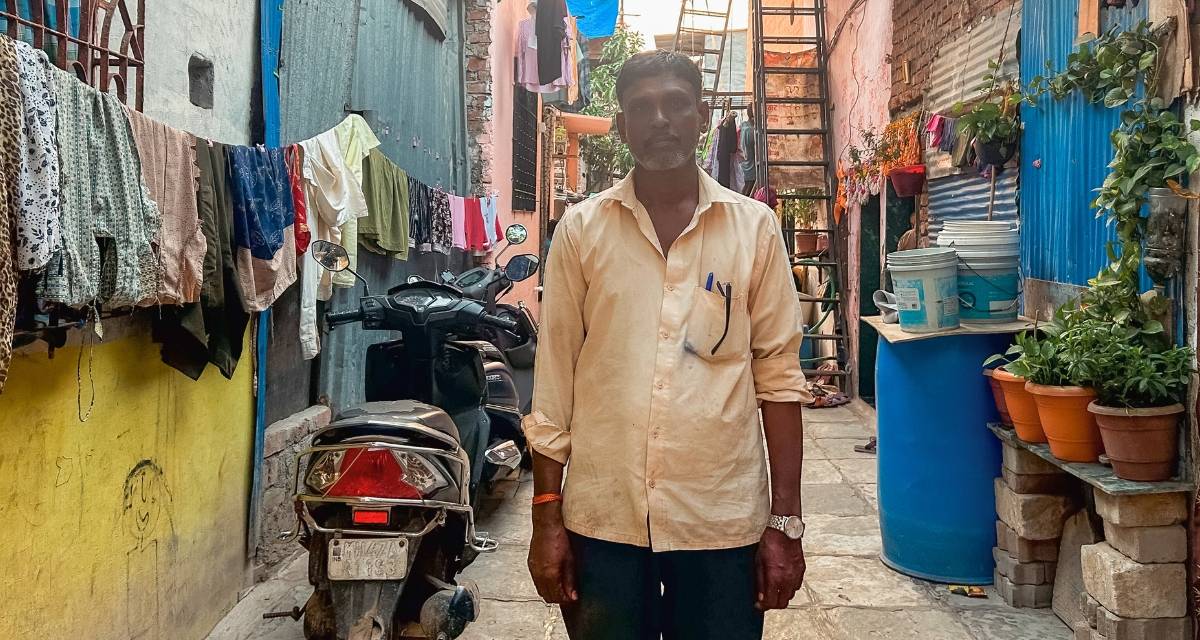
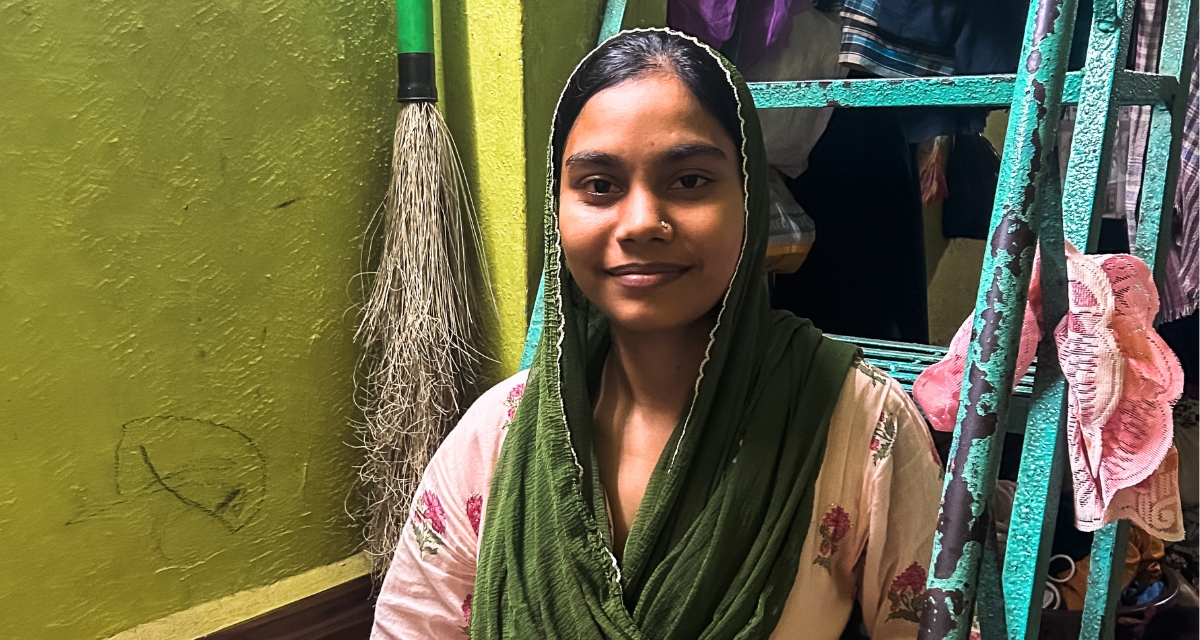 Muskan Ansari a resident who part of the climate mapping process (Photo - Naila Khan, 101Reporters)
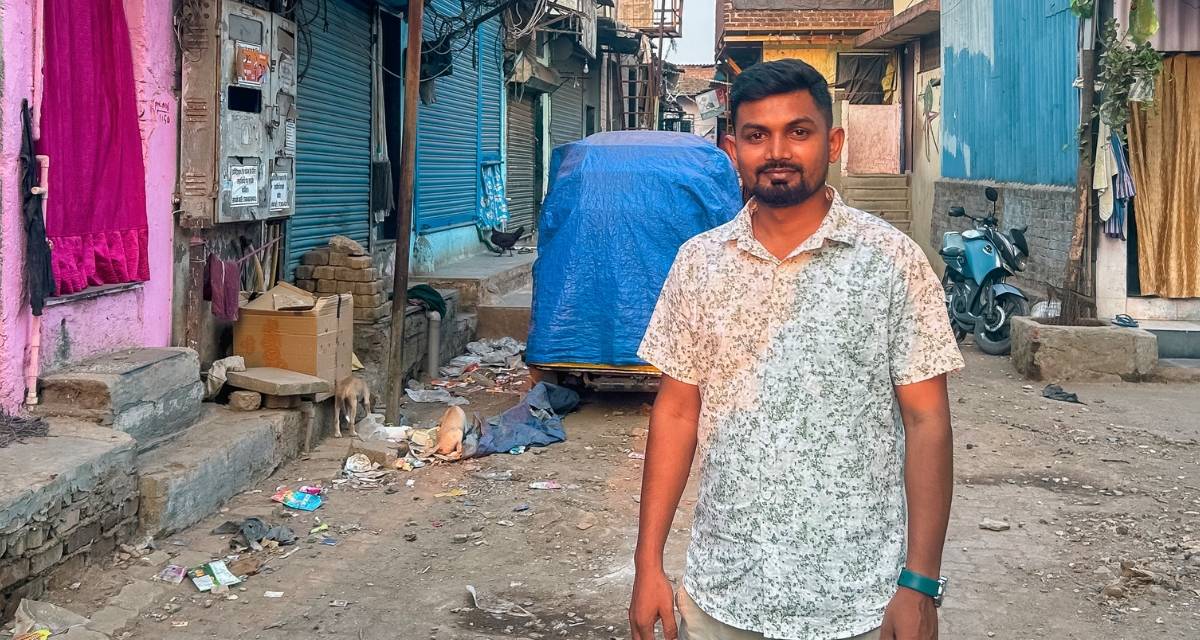 Shahenshah Ansari a resident in Ambujwadi (Photo - Naila Khan, 101Reporters)