Climate shifts, changing pest patterns drive up costs for Maharashtra’s farmers

Climate shifts, changing pest patterns drive up costs for Maharashtra’s farmers
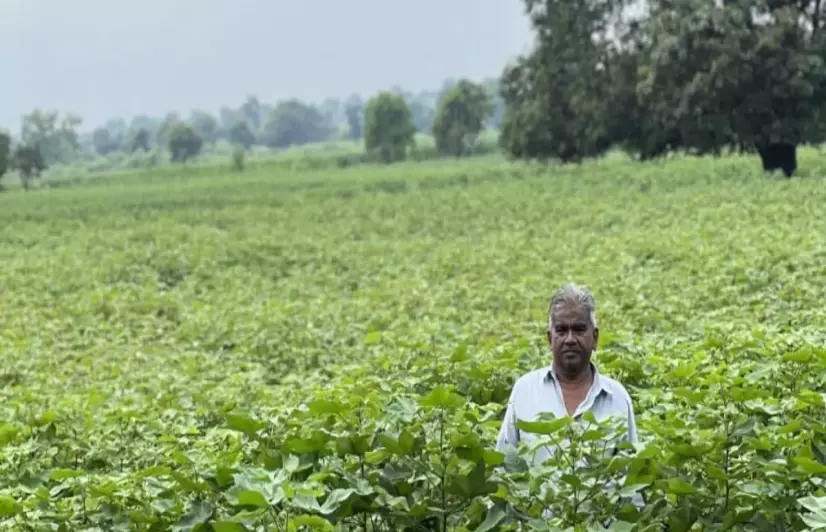
Across Maharashtra, growers of cotton, cane and horticulture crops report rising infestations, higher pesticide costs and shrinking margins Pune, Maharashtra: “Pests here have nine lives,” Ganesh Nanote (55), a farmer from Nimbara village in Maharashtra’s Akola district, told 101Reporters. “Only repeated application of pesticides can bring them under control,” Nanote said, adding that this has increased the cost of cultivation on his 20 acres of cotton. He grows soyabean on the remaining 10 acres of his holding. He added that the problem has become acute over the last five to ten years. “Pink bollworm (Pectinophora gossypiella), the dreaded pest of cotton, has made a comeback since 2017 — but what concerns me the most are sucking pests such as thrips (Thrips tabaci) and jassids (Amrasca biguttula biguttula). Infestation seems to be increasing year on year,” he said.
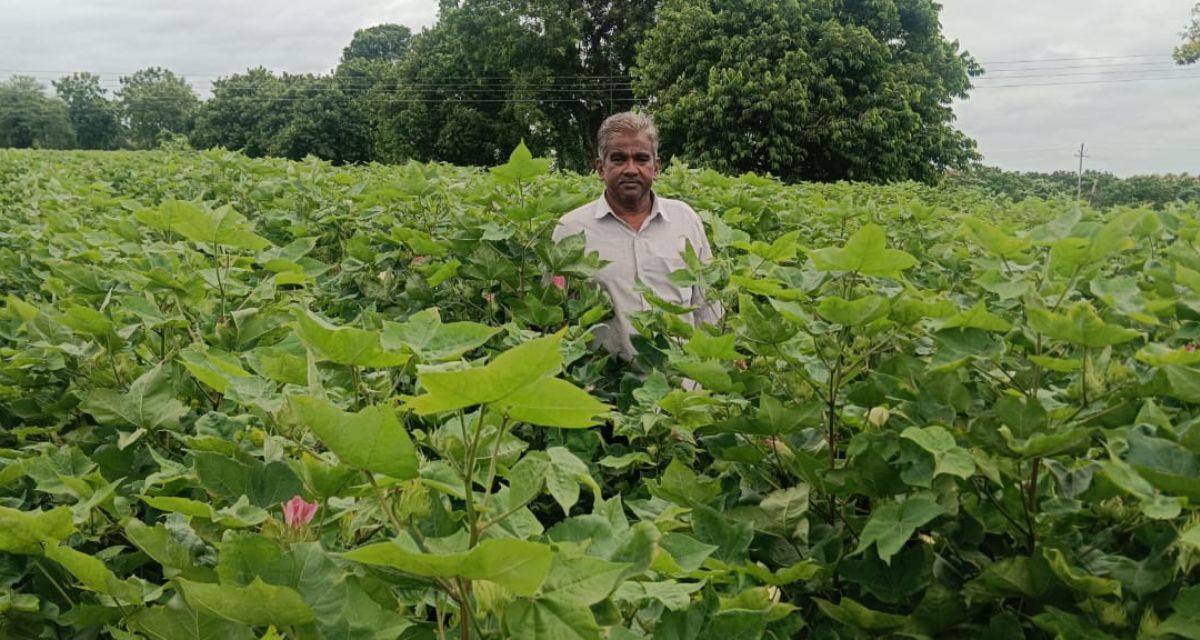 Pink bollworm has made a reappearance in cotton since 2017, said Ganesh Nanote (Photo - Partha Sarathi Biswas, 101Reporters)
Nanote’s agricultural practices are well known in the area, with many farmers trying to emulate them for better yields. Over the years, he has developed a set of practices that allows him to achieve high yields at relatively lower costs. For local farmers, Nanote is a “subject matter expert”, and they often turn to him for advice on improving yields.
“It’s my habit to keep a notebook from the day I start land preparation till the last bale of cotton is sold. It helps me calculate my cost of cultivation and assess the economics of farming. Just a few days back, when I was finalising my costs for the 2025-26 season, I saw that my spending on pesticides had come to Rs 5,000 per acre. This is almost double what I spent on pest control 10 years ago. If I do the maths, my returns are not that high,” he said.
This re-emergence of pests, Nanote said, is largely due to erratic monsoon patterns and climate change. Pink bollworm has returned after nearly 12 years, adding to farmers’ distress.
“I have noticed that in years when rainfall is timely, pest attacks are lower, but that has become rare. The monsoon now has a new pattern every year. Pest attacks increase during long dry spells. Pink bollworm, which was mostly a winter pest, has now started appearing as early as July. This year, I had to use pesticides to control it as early as August, this was new for me. If this continues, I do not know how I will sustain farming,” he said.
He is not alone. Nanda Dake (45), who cultivates five acres of cotton in Kajla village in Jalna’s Badnapur taluka, has faced similar challenges.
Dake is wary of pesticide use and fears its long-term impact. “But there is no other way. To get fair yields, we need at least five to six pickings. If pesticide use is reduced, we would not get more than two,” she said.
Every year brings a new pest attack, and if not controlled in time, she risks losing her entire crop.
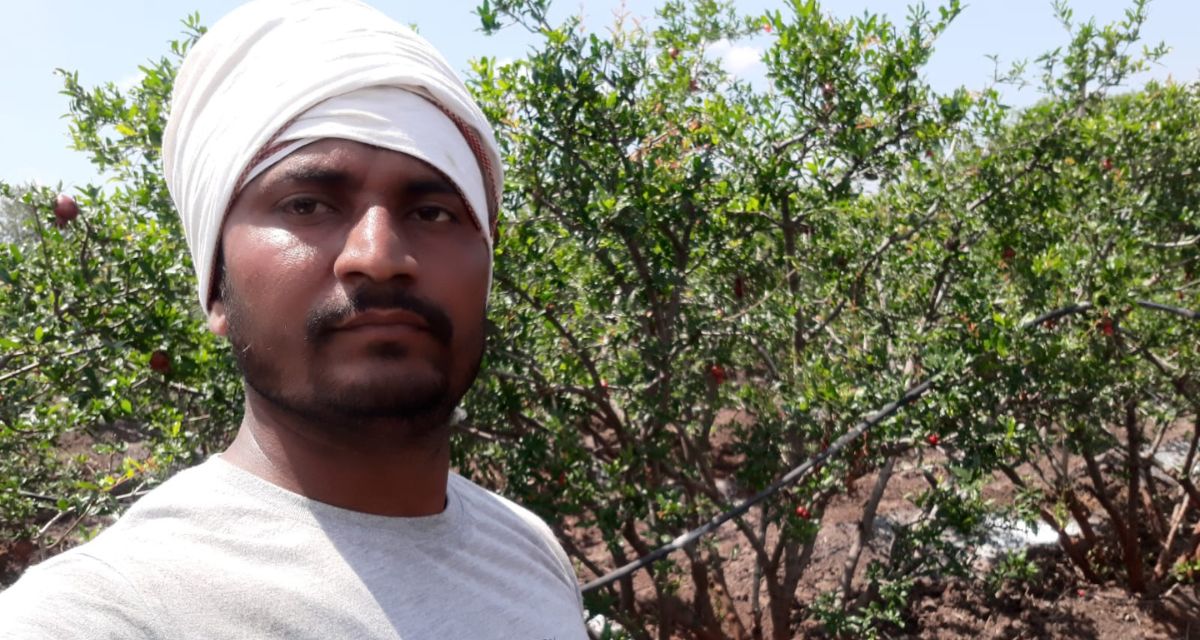 Vishal Misal says they are able to afford the high cost of production thanks to better prices but if prices drop he would have to rethink his strategy (Photo - Partha Sarathi Biswas, 101Reporters)
The bitter trouble of cane growers
Around 500 km from Akola, sugarcane farmers in Sangli are also grappling with rising pest attacks.
Dr Ankush Chormule, a plant entomologist who has been actively farming since 2017, was surprised to find sugarcane mite (Abacarus sacchari) in his eight acres of cane last year.
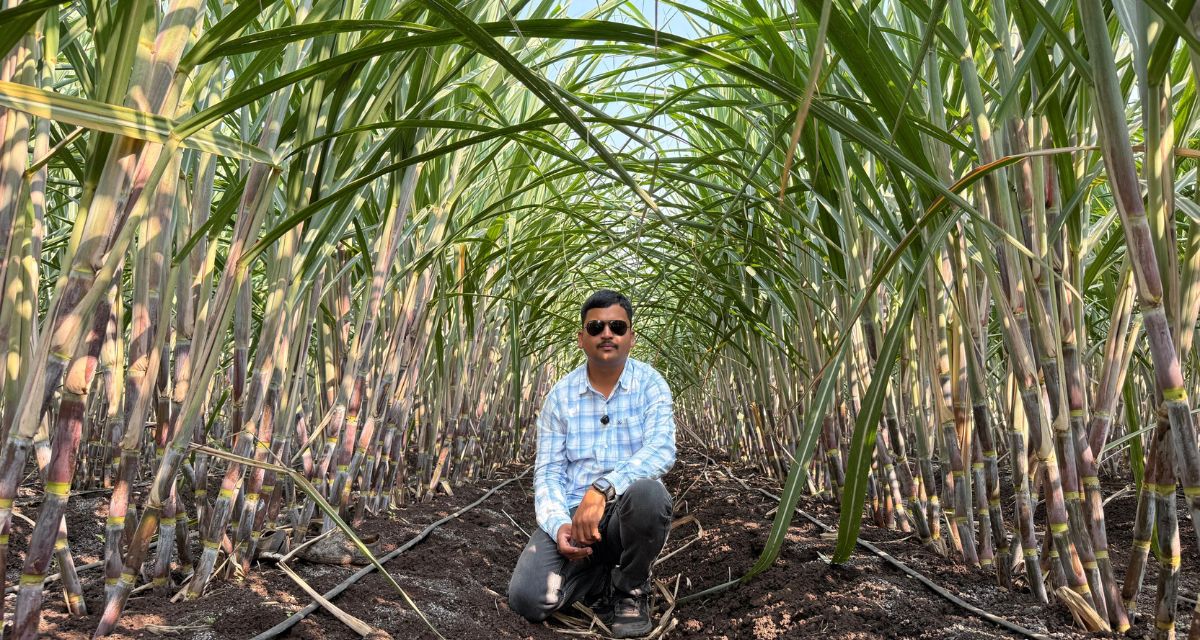 Ankush Chormule say now sugarcane is also prone to pest attacks (Photo - Partha Sarathi Biswas, 101Reporters)
“It could have caused significant damage if not controlled. Agriculture today is full of unseen risks. For farmers, unseasonal rains are not the only concern, pests and the rising cost of controlling them are equally worrying,” he said.
Chormule, who farms in Asta town in Walva taluka of Sangli district, is part of a farmers’ collective promoting improved agricultural practices.
“Changing rainfall patterns and rising temperatures are only part of the problem. The bigger issue is pests and the increasing cost of managing them,” he said.
When he began farming, pest control costs in sugarcane were negligible.
“Sugarcane is a hardy crop. Earlier, apart from minor sucking pest infestations, there were few issues. Now, every year we have to spend substantial amounts on pest control. On average, I spend Rs 4,000 per acre,” he said. Whiteflies, woolly aphids and borers have become common.
As an entomologist, Chormule said pests have either developed resistance or evolved over time. “Their life cycles have changed, making them harder to control.”
He pointed to white grub (Holotrichia consanguinea), which has now become a year-round infestation.
“This pest is like a Trojan horse. The larvae feed on roots, causing the crop to lodge. Once the damage is done, it is very difficult to control. Earlier, grubs were seen between June and August, now they are present throughout the year,” he said.
Earlier, ploughing fields before planting helped control grubs. “Now that is not enough. We have to rely on pesticides, increasing the cost of cultivation,” he added.
The cycle of change
Erratic rainfall and climate change have intensified pest attacks across crops. From newly emerging pests like sugarcane mites to the resurgence of jassids, farmers are spending more on pest control than before.
Cash and horticulture crops such as cotton, sugarcane, tomato and pomegranate are particularly affected, as their returns are closely tied to yields. Dake said that if yields fall, she risks losing her entire investment.
Data from Maharashtra’s Economic Surveys between 2009 and 2024 show pesticide usage ranging between 9,000 tonnes and 16,000 tonnes annually. The highest usage, 16,389 tonnes, was recorded in 2017-’18, coinciding with the resurgence of pink bollworm.
In 2023-’24, pesticide usage fell to 8,718 tonnes, a year officially declared as drought-affected.
Maharashtra has recorded the highest pesticide consumption in the country over the past five years, according to data from the Directorate of Plant Protection, Quarantine and Storage.
Dr Indra Mani, vice-chancellor of Vasantrao Naik Marathwada Krishi Vidyapeeth, said pest patterns have become increasingly unpredictable.
“Pest dynamics and climate change are closely linked. We have to accept this as the new normal,” he said.
Scientists at the university said pink bollworm has re-emerged as pests have developed resistance to existing genetically modified cotton varieties.
“Every technology has a lifespan. The pest has now grown resistant. While newer technologies are yet to reach farmers, integrated pest management (IPM) must be adopted. Pesticides alone are not the solution,” Mani said.
He added that erratic climate patterns favour pest growth and that farmers must carefully manage sowing timelines.
“Our approach is to minimise losses and protect farmers. Our advisories are designed accordingly,” he said.
For cotton, he said, pest cycles can be disrupted if farmers remove crop residue after December.
“Many farmers delay this to get an extra picking. That must be avoided,” he said.
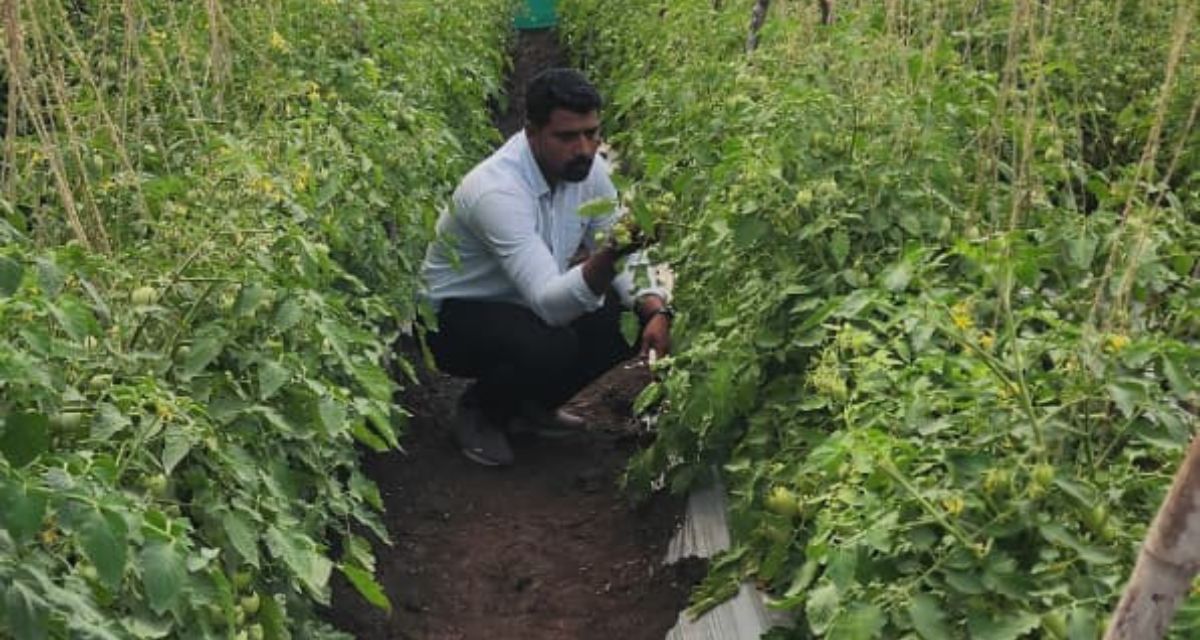 Ganesh Nazirkar says tomato growers have seen a drastic rise in pesticide usage (Photo - Partha Sarathi Biswas, 101Reporters)
Vegetables and fruits not immune
Ganesh Nazirkar (37), a tomato grower and agricultural trainer from Gokhali village in Satara’s Phaltan taluka, said pest attacks have increased sharply since 2016-17.
“Tomato has two main seasons, summer and kharif, and we are seeing pest attacks in both,” he said.
High temperatures in summer have worsened infestations.
“In regions like Junnar and Sangamner, temperatures now cross 40°C. Pests like Tuta absoluta, which were earlier uncommon, have become widespread,” he said.
There are no definitive control measures. Farmers rely on repeated sprays costing around Rs 6,000 per acre.
Meanwhile, common pests like whiteflies and thrips have developed resistance.
“Earlier, one or two sprays were enough. Now multiple applications and constant monitoring are required,” he said.
Tomato cultivation is highly input-intensive, with pesticide costs alone reaching Rs 25,000 per acre.
“During summer, my pesticide cost went up to Rs 40,000 per acre,” he said.
Crop interdependence has added new challenges. Cauliflower, once considered relatively pest-resistant, is now affected by diamondback moth (Plutella xylostella).
“Cauliflower leaves also shelter whiteflies, which then spread to tomato crops,” he said.
Whiteflies have also been linked to the spread of Tomato Mosaic Virus.
“All of this is connected to climate change. The risks are increasing,” he said.
Pomegranate farmer Vishal Misal (35) from Solapur’s Sangola taluka has seen his pesticide costs rise from Rs 20,000 per acre in 2005 to Rs 75,000 today.
“There has been a steady increase. Between 2019 and 2020, a severe attack of Fusarium solani and pinhole borer devastated orchards. I had to stop cultivation and restart in 2023,” he said.
Earlier, pesticides were applied once a month. Now, spraying is required every 8–10 days.
“Earlier, generic pesticides worked. Now pests have evolved, and newer, costlier chemicals are needed,” he said.
Pomegranate farmers largely depend on export markets, where prices range between Rs 60 and Rs 120 per kg, compared to Rs 30-50 domestically.
“At present, we can manage because returns are good. But if prices fall, it will become difficult,” he said.
This story was produced as a part of 101Reporters Climate Change Reporting Grant.
Cover photo - Ganesh Nanote says his cost of production has spiralled due to increased usage of pesticides (Photo - Partha Sarathi Biswas, 101Reporters)
Would you like to Support us
101 Stories Around The Web
Explore All NewsAbout the Reporter
Write For 101Reporters
Would you like to Support us
Follow Us On