As Gandhamardan’s climate changes, medicinal plants become harder to find

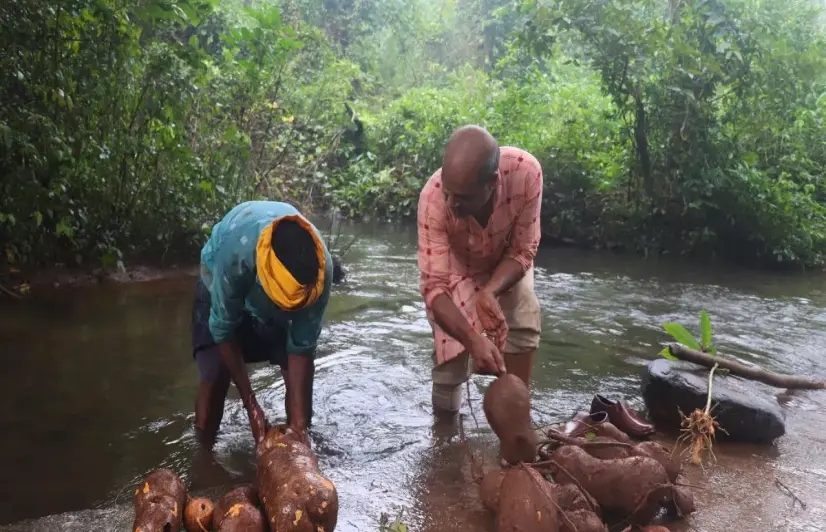
As Gandhamardan’s climate changes, medicinal plants become harder to find
Balangir, Odisha: Karna Majhi, 60, walks deeper into the forest than he used to.
The fourth-generation tribal healer from Jamunapali village in western Odisha's Balangir district knows the slopes of Gandhamardan through the plants his father taught him to recognise by their leaves and smell. But some of the medicinal herbs he once found close to the village now require longer searches.
He carries a bamboo basket as he moves through the forest, looking for plants that were once familiar parts of his daily rounds. In local tribal healing practice, the bark of the varuna tree (Crataeva nurvala) is used for kidney ailments, and the tubers of bhuin kakharu (Ipomoea mauritiana) for vitality, milk production among lactating mothers, and digestive and liver problems. Prasaruni (Paederia foetida), a creeper, is used for gout, paralysis and gastric problems, and rasna (Nelsonia canescens) for inflammation and rheumatism.
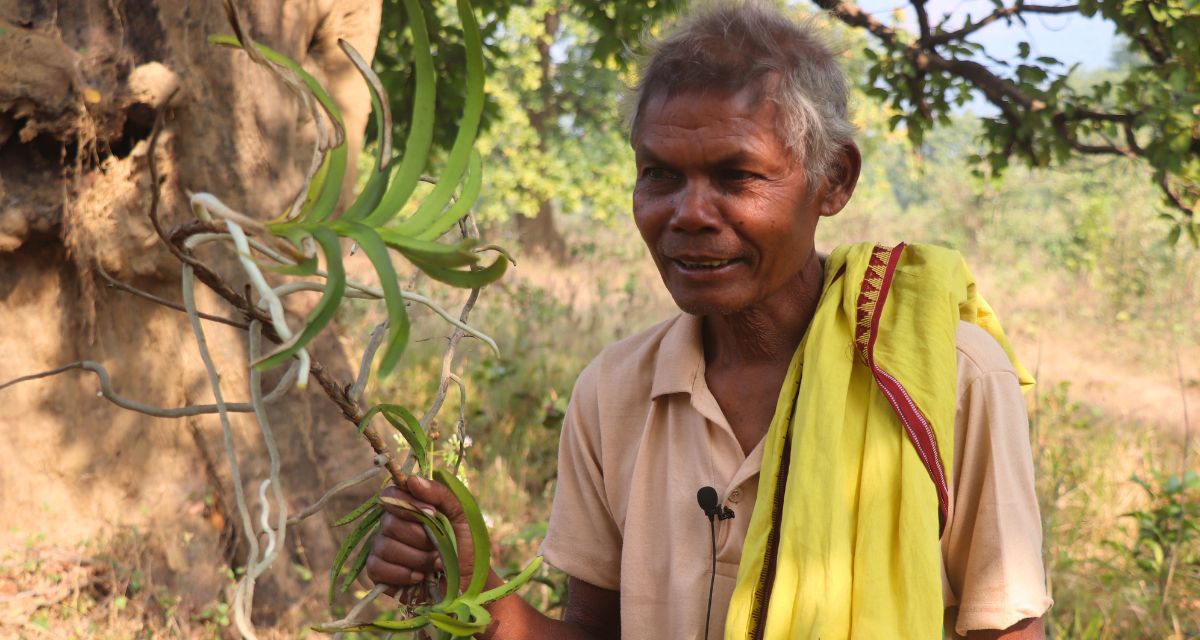 An image of a traditional healer (Photo - Abhijit Mohanty, 101Reporters)
“Around forty years ago, the forest was dense,” said Majhi. “These plants were once abundant on these hills. Now, we have to go deep into the forest to find them. They have become rare.”
Healers and local organisations across Gandhamardan point to several pressures on the forest. Changing weather is one of them, alongside fires, mining damage and unsustainable harvesting.
A less predictable climate
Gandhamardan's plants are growing in a climate that is becoming harder to predict. Western Odisha already faces intense summer heat, with temperatures reaching 47°C in Balangir and 46°C in Bargarh. A long-term study of temperature records from 1980 to 2017 found maximum temperatures rising by about 0.29°C per decade across the wider Kalahandi, Balangir and Koraput region.
Rainfall has also swung widely. According to the Special Relief Organisation of the Odisha government, annual rainfall in Balangir fell to 723 mm in 2011 and rose to 1,566 mm in 2019. Bargarh recorded 691 mm in 2011 and nearly 1,600 mm in both 2019 and 2020.
“When rainfall becomes erratic, it can disturb the natural cycle of the forest. Changes in the timing and amount of rain can alter soil moisture and the conditions under which different plants germinate, grow and reproduce,” said Ranjan Panda, a water and climate expert and convenor of Water Initiatives Odisha.
Dr Abanikanta Bhadra, an assistant professor of botany at Centurion University of Technology and Management, Gajapati, studied plant diversity and environmental conditions in the hills for his doctoral research. He said the effects of climate change on medicinal plants remain poorly documented in the region.
“Medicinal plants are sensitive to changes in temperature and moisture conditions. Such changes can alter the timing of flowering and fruiting, seed germination and the establishment of young plants. For species growing in the rocky, exposed habitats of Gandhamardan, these changes can affect their ability to complete their life cycle and maintain their populations,” he said.
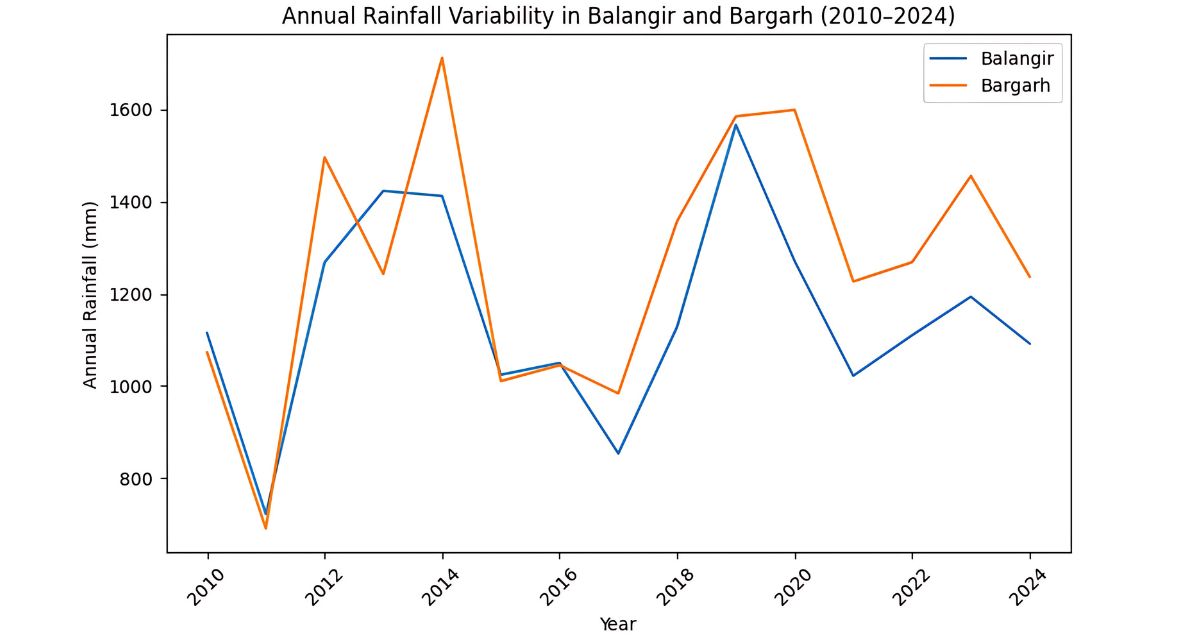 A chart on the rainfall deviation across the years (Photo - Abhijit Mohanty, 101Reporters)
The mining legacy
Gandhamardan also carries the legacy of a mining project that was abandoned decades ago.
Tekendra Jal, a 59-year-old healer from Putkelchuan village in Khaprakhol, points to the disturbance left behind. The Mineral Exploration Corporation Limited has estimated 104.78 million tonnes of bauxite reserves in the hills. Bharat Aluminium Company Limited (BALCO) secured a lease to mine them and began construction in 1983. Communities raised concerns about the effect on the hills, forests and water sources, and sustained protests eventually forced the government to abandon the project.
Blasting and excavation left deep trial pits across the hilltop. Jal recalls some being about 10 feet wide and 100 feet long, with depths of 300 to 500 feet. He said this affected the streams and that mining polluted water sources.
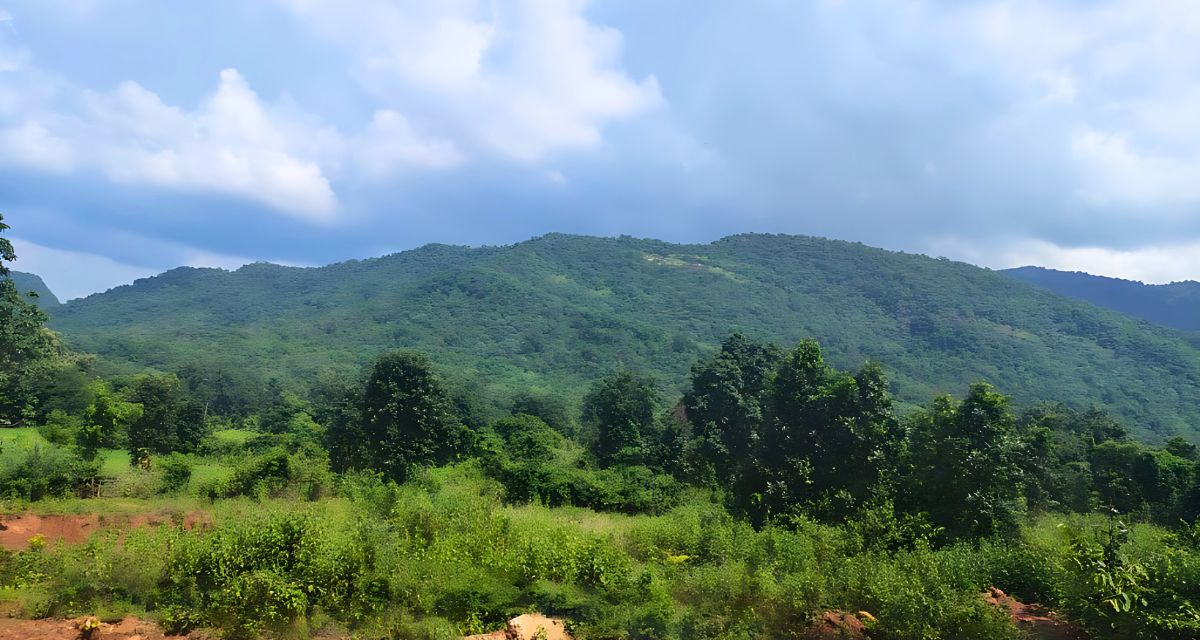 The Gandhamardan hills (Photo - Abhijit Mohanty, 101Reporters)
“Our grandparents told us that Gandhamardan once had more than 200 perennial streams. Now, only 22 continue to flow throughout the year,” he said.
Several plants healers use grow around streams. Gangamutha (Asystasia gangetica) is traditionally used for heart problems, headaches and rheumatism, and bhrungaraj (Eclipta prostrata) for liver and skin ailments and hair loss. Jal says both have become harder to find where they were once common.
Patalagaruda (Rauvolfia serpentina), whose mature fruit and bark are used for high blood pressure, skin diseases, fever and digestive problems, is particularly valued.
“It used to grow abundantly around Badjharan stream in Gandhamardan, but now it is very rare to find,” he said.
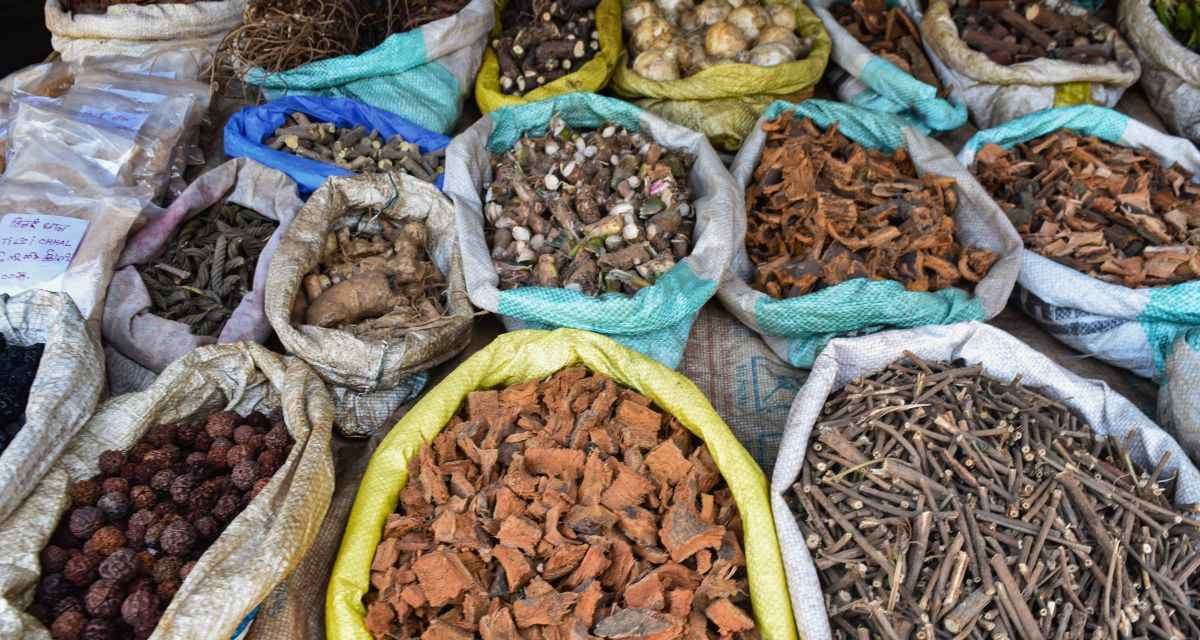 Medicinal barks, tubers, roots, fruits, and seeds collected from Gandhamardan hills (Photo - Abhijit Mohanty, 101Reporters)
Plants moving out of reach
The changes are also affecting when and where healers collect medicinal plants.
Healers said intense and erratic rain is uprooting plants that grow among the rocks and disrupting their growth and regeneration. Many now wait until January or February to harvest, giving the plants more time to mature and recover after the monsoon. Pasanbhedi has become particularly difficult to find, while bachanavi and swetakandri have also declined.
For generations, the forest has been an important source of food and medicine for communities around Gandhamardan. Healers collect roots, tubers, bark, stems, leaves, flowers and seeds to treat digestive problems, inflammation, kidney disorders and maternal health needs.
About 60 villages lie in the foothills of Gandhamardan, across Khaprakhol in Balangir and Paikmal in Bargarh district. Around 5,000 tribal households from the Munda, Saura, Kondh, Binjhal and Gond communities live in the area. The hills are also sacred. Local tradition links them to the Ramayana and the search for Sanjeevani, the herb Hanuman is believed to have carried to save Lakshman.
The hills cover 18,963.898 hectares and were recognised as a Biodiversity Heritage Site in 2023. According to the Odisha Biodiversity Board, they are home to around 1,700 species of plants and animals, including about 300 medicinal plant species. Eighteen species are listed as threatened. A 2025 review of the heritage site describes the landscape as being under pressure from human activity and climatic factors, including habitat degradation, forest fires and unsustainable use of biological resources.
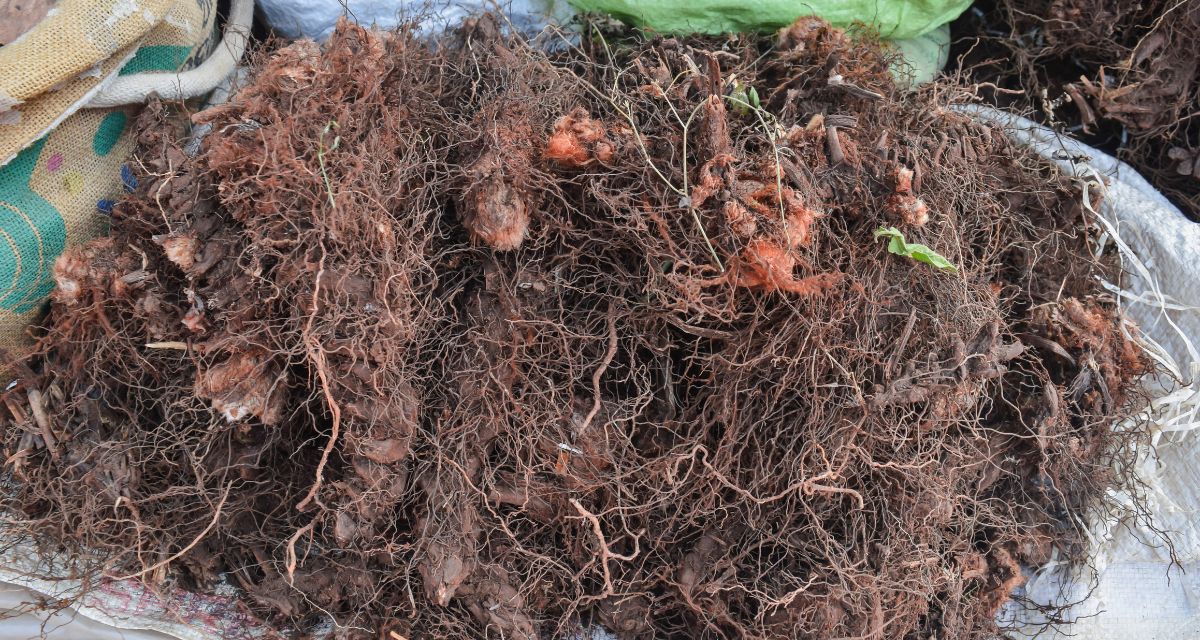 The roots of Deb Nasak (Artemisia vulgaris) are used to treat intestinal worms, menstrual disorders, relieve pain, and boost immunity (Photo - Abhijit Mohanty, 101Reporters)
Fire is another recurring pressure. Between January and June 2025, Bargarh recorded 693 forest-fire incidents affecting 175.27 hectares. Of these, 202 fire points were recorded in the Paikmal range and 57 in the Nrusinghnath range, both of which cover parts of Gandhamardan. In Balangir, 467 fire points were recorded in 2022, affecting more than 120 hectares, with Gandhamardan among the affected areas.
“Human-triggered forest fires are affecting natural regeneration in the Gandhamardan landscape. When fires occur year after year, they can damage young plants and ground vegetation, making medicinal herbs harder to find,” says Siba Prasad Sahu, secretary of Ahinsa Club, an NGO working with tribal communities in Paikmal.
Majhi said hunters sometimes burn patches of forest to drive out wild boar, barking deer, hares and jungle fowl. During mahua collection, people also burn dry leaves around trees to gather fallen flowers. At times, he said, the flames spread.
The combined effect of the three is putting pressure on the forest. For healers it means that the certainty about where to find medicinal plants is changing.
Rajkumar Seth of the Gandhamardan Yuva Surakshya Parishad in Paikmal said: “When a plant is no longer found where it used to grow, healers have to spend more time searching for it.”
Knowledge at risk
Much of the healing knowledge rests with older practitioners, while younger people increasingly leave villages for work. Jashalal Kalet (63), a healer from Cheliamal village in Paikmal, said scarcity makes the practice harder to learn and sustain.
“We need many different plants to prepare a medicine. If even one important ingredient is not available, the medicine may not work as it should,” he said.
He gave the example of dasamool, a preparation of ten plants used for body pain and fever. It draws on the bark of trees such as agnimantha (Premna serratifolia) and bela (Aegle marmelos), and the stems and leaves of shrubs and creepers such as ankaranti (Solanum virginianum) and brihati (Solanum indicum). The parts are dried, ground into a coarse powder and boiled in water to make a drink.
“These days, agnimantha and ankaranti are becoming difficult to find,” said Kalet. “Young people see these challenges. They know how difficult it is to find the plants and prepare the medicines. Therefore, many are not interested in learning the practice.”
The loss can begin long before a healer disappears. If a plant becomes scarce, a remedy becomes harder to prepare. If a remedy is used less often, the knowledge around it is practised less. And if an older healer dies without passing it on, a chain of memory can break.
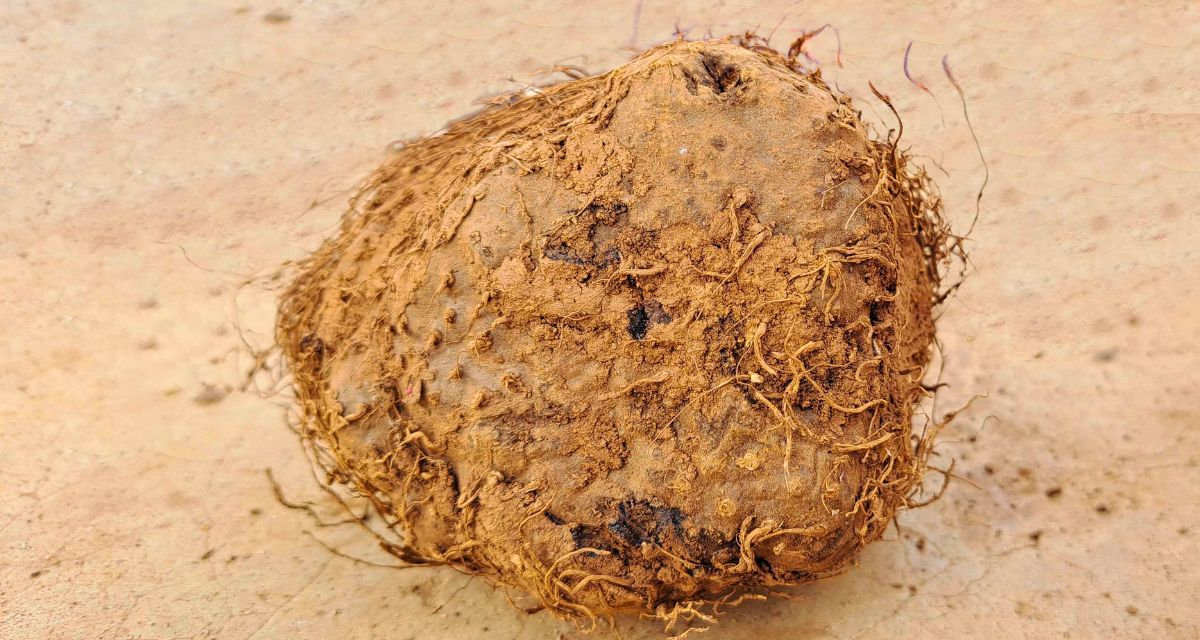 A wild edible tuber locally known as pita konda is traditionally used to aid digestion, purify blood, and treat skin diseases (Photo - Abhijit Mohanty, 101Reporters)
Trying to keep the chain intact
Jal has been growing rare medicinal plants on his own land for about seven years. With support from the NGO RCDC, he developed a medicinal garden of more than 70 varieties of herbs, grasses and root-based plants on nearly 1.5 acres dedicated to the Gandhamardan Ayurvedic Paramparika Vaidya Mahasangha. The garden includes pashanbhedi and bachanavi, and other healers collect plant material from it.
The Mahasangha, a federation of 110 traditional healers from Khaprakhol, was founded by Jal in 1999 and he is now its president.
“It was formed to bring healers together to protect Gandhamardan from mining and safeguard our rights and dignity,” he said. “Today, our responsibility is even greater. As the environment changes, protecting the forest also means protecting the knowledge that communities have developed to live with it.”
Other organisations are working on supply. Covenant Centre for Development has trained around 150 women in sustainable collection and supported village-level storage. Sabuja Biplab has promoted the cultivation of ashwagandha and bruhati among local farmers.
Official efforts are less visible. No programme aimed specifically at conserving the hills' medicinal plants against climate change could be found. The Odisha Biodiversity Board is preparing a Conservation and Management Plan for the heritage site, and agencies have carried out biodiversity inventories and medicinal plant research, but there is limited evidence that these have produced adaptation measures on the ground. The Forest Department, asked whether it had observed changes in plant availability or regeneration, declined to comment.
For Majhi, the change is measured in the distance he now travels to find plants his father once showed him nearby. For Jal, it is medicinal plants disappearing from the streams where they once grew. For Kalet, it is the younger generation deciding whether a difficult practice still has a future.
Preserving this knowledge in Gandhamardan will depend on keeping the plants available, and on giving the next generation a reason and an opportunity to learn what the older healers still remember.
This story was produced as a part of 101Reporters Climate Change Reporting Grant.
Cover Image - A farmer working in heat and humidity in a field near Sriganganagar (Photo - Vijay Midha, 101Reporters)
Would you like to Support us
101 Stories Around The Web
Explore All News