Odisha’s pension disruption leaves elderly beneficiaries in limbo

Odisha’s pension disruption leaves elderly beneficiaries in limbo
Ganjam, Odisha: For B Sabitri Dora (67), the Rs 1,000 monthly pension she had received since her husband’s death 17 years ago was her only source of income. It helped her pay for basic necessities and medicines.
But she stopped receiving the pension in March 2026. For the next three months, Sabitri repeatedly visited the gram panchayat and block offices seeking to know why her payment had stopped. Eventually, she gave up.
On June 16, she bought poison from a local shop and consumed it near the village pond, her daughter Chanda Dora, 46, told 101Reporters. She died on the way to Maharaja Krushna Chandra Gajapati Hospital in Odisha’s Berhampur.
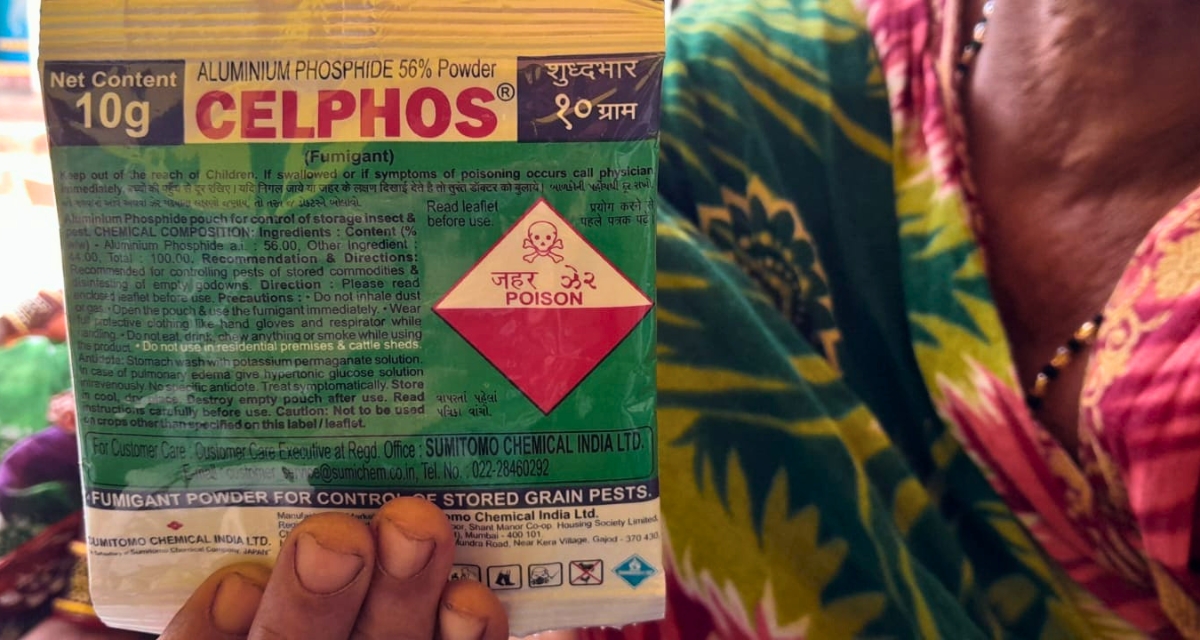 Chanda showing the poison packet her mother had consumed due to continuous harassment (Photo - Rakhi Ghosh, 101Reporters)
When Sabitri went to the panchayat office seeking an explanation for the delay, she was told that it was due to technical issues and that there was little the officials could do. She was assured that once the technical problem was resolved, the pension would be credited to the beneficiaries’ accounts.
Sabitri was a resident of Chadheiapada village under Mardakot panchayat in Ganjam district. After her husband’s death she raised and married off their three daughters by doing odd jobs and working as a daily-wage labourer. For about a decade, however, health problems and old age had kept her largely at home, her daughter said.
Sabitri was a beneficiary of the Indira Gandhi National Old Age Pension Scheme, a component of the centrally supported National Social Assistance Programme (NSAP).
Odisha has nearly 20 lakh beneficiaries under NSAP. Between April and June 2026, pension payments under NSAP were disrupted across the state.
The state government attributed the delay to technical and software-related problems in the digital payment system used to process Direct Benefit Transfer (DBT) payments, specifically the integration of the SNA-SPARSH (Single Nodal Agency) platform.
Nityananda Gond, minister for Social Security and Empowerment of Persons with Disabilities, said the delay was caused by system upgrades and integration issues. Officials were integrating the system with the Integrated Financial Management System (IFMS) to enable real-time bank transfers, he said.
Why did this happen?
On June 24, a fact-finding team comprising researchers, activists, a lawyer and a journalist from the Right to Food Campaign (RtF), Sustainable Use of Natural and Social Resources (CSNR), Civil Society Forum for Human Rights (CSFHR) and Campaign for Survival and Dignity (CSD) visited Chadheiapada village, around 170 km from Bhubaneswar.
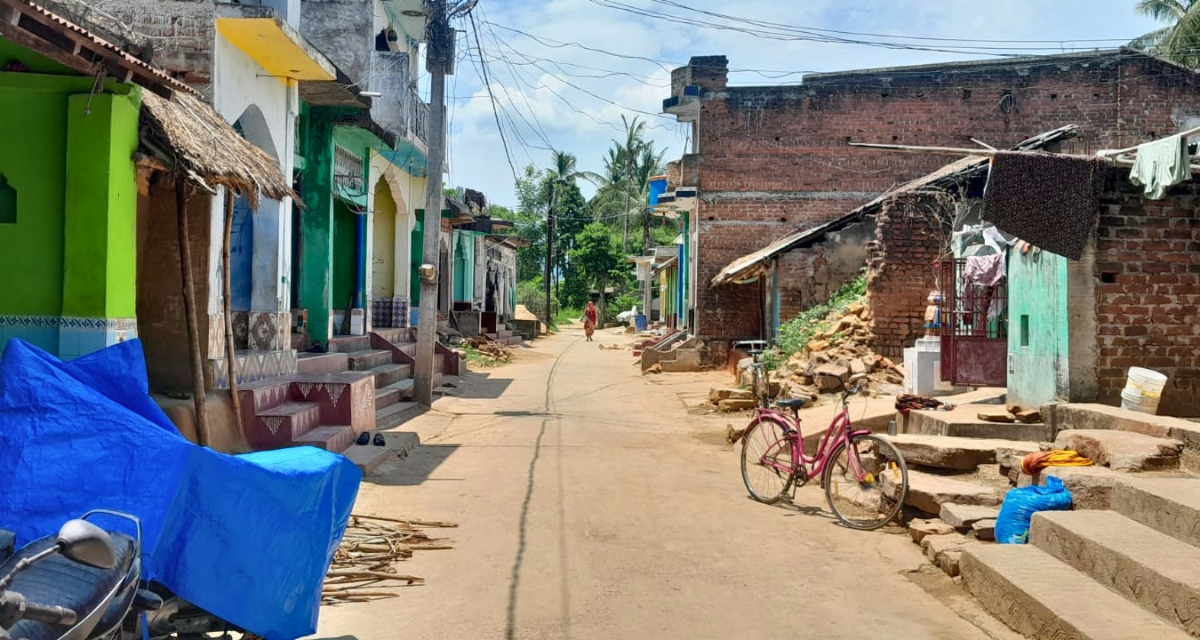 Chadeiapada village, where Sabitri had been living for years (Photo - Rakhi Ghosh, 101Reporters)
The team spoke to Sabitri's family members, community members, a ward member and the block development officer to understand the circumstances surrounding her death.
Sameet Panda, convenor of the Right to Food Campaign, who led the fact-finding team, said "During discussion we realized that the monthly pension was the only income she was getting in hand. If the disruption was purely a technical problem why government had not activated any manual or cash disbursal system as a stopgap, which was practiced earlier. How government had no interim mechanism to identify and protect such acutely vulnerable beneficiaries."
Panda called for an independent inquiry into her death and ex-gratia relief and compensation for Sabitri's family.
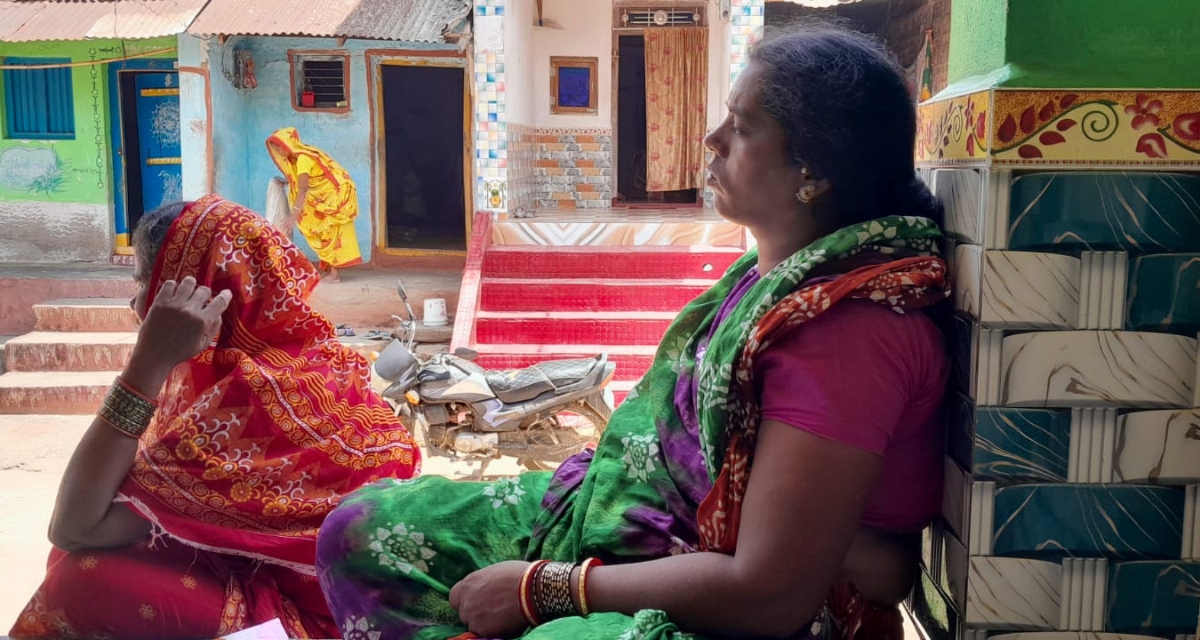 G Chanda Dora, daughter of Sabitri Dora, sitting with blank look after her mother's death (Photo - Rakhi Ghosh, 101Reporters)
The pension disruption also affected other vulnerable beneficiaries, according to the fact-finding team. Several people told the team they had repeatedly visited panchayat offices, block offices and banks in an attempt to resolve the issue.
M Gayatri Dora, a ward member of the village, said, “Not only Sabitri, many older people of the village used to come to my house every day to enquire about pension”.
The team also met Sunil Kumar Samanta, Block Development Officer of Beguniapada block. He described Sabitri's death as “unfortunate” and said the cause of death was yet to be ascertained pending the post-mortem report. He directed the Panchayat Executive Officer to conduct a preliminary inquiry.
Samanta said the government was working on the issue and that the pension would soon be disbursed to beneficiaries' accounts.
By the time this report was published, the state government had disbursed pension to over 17.6 lakh beneficiaries under the NSAP.
Pension digitisation
Odisha’s pension delivery has been progressively digitised through Aadhaar-seeded bank accounts, e-KYC and Aadhaar-based DBT on the SNA-SPARSH platform.
The state has directed district collectors to complete Aadhaar-bank linkage for roughly 3.35 lakh NSAP beneficiaries who are still on the older account-based system. From 2026-27, NSAP pensions are to be disbursed exclusively through the Aadhaar-based payment system.
The new system is intended to prevent leakage of funds and eliminate “ghost beneficiaries” from the welfare database.
But the transition to an Aadhaar-based payment system could create new vulnerabilities for elderly pensioners. Many bedridden, ailing and extremely old beneficiaries may be physically unable to travel to banks or Aadhaar centres to complete mandatory e-KYC updates.
“For older persons Aadhaar seeding often causes severe difficulties due to fading finger prints, outdated mobile numbers and lack of digital literacy. This frequently results in failed authentication leading to blocked bank accounts, stalled pensions and denied food rations. In rural and remote regions of Odisha poor internet connectivity and lack of nearby banking facilities will severely hamper the seeding process,” said Sameet Panda, convenor of the Right to Food Campaign.
State figures indicate that 1,237 villages in Odisha still lack mobile or internet network coverage. Remote and tribal-dominated districts account for the largest gaps, with Rayagada having the most unconnected villages, followed by areas such as Koraput. To bridge the remaining gap, the government is installing mobile towers and VSAT connections in phases under the Digital Bharat Nidhi initiative.
There have been documented cases of elderly beneficiaries struggling to access pensions. In 2024, 70-year-old Pathuri Dehury of Raisuan village in Telkoi block of Keonjhar district reportedly had to crawl two kilometres on her knees to reach the local panchayat office to receive her MBPY payment after officials instructed her to appear in person. The state government subsequently issued a directive to deliver pensions to elderly and disabled beneficiaries at their homes.
Panda said the move towards full digitisation could create similar problems for elderly people who depend entirely on their pensions.
“The government should not move exclusively on an Aadhaar-based single-portal disbursal model. Rather, it should reinstate the doorstep delivery option, on the lines of the earlier Jan Seva Divas, for all pension beneficiaries in the state,” he said.
HelpAge India’s national study, Climate Resilient Ageing: Ensuring Care, Dignity & Agency 2025, highlights the vulnerability of rural elderly people in India, including risks arising from poverty, poor housing, lack of education and livelihood opportunities, climate shocks, abuse and neglect. The study found that widows, people aged 80 and above and those living alone are particularly vulnerable, with many reporting financial dependence, lack of care and unsafe living conditions.
Dr Srichandan Behera, a researcher who was also part of the fact-finding team, said the erosion of the traditional joint-family system in rural Odisha had made older people more vulnerable.
“The traditional joint family system in Odisha’s rural areas or villages has started eroding and that makes the older groups more vulnerable. In Sabitri’s case also it was seen when she was reeling under depression and had left food no one was there to look after, which was quite unbelievable a decade back,” he said.
He added that a lack of work opportunities was pushing young people to migrate, leaving older parents behind.
“Due to lack of work opportunities young people (both men and women) are migrating leaving behind their older parents to survive their own. The monthly ration and pension are two survival mechanisms for them. If they are deprived, it becomes difficult for them to survive,” he said.
In Sabitri’s case, her three daughters work as daily-wage labourers in Chennai along with their husbands, leaving their mother living alone.
The vulnerability of elderly people also emerged during discussions with villagers in Chadheiapada. Several elderly residents said errors in their Aadhaar records had affected their eligibility for pensions.
P Sarojini Dora, who appears to be between 60 and 65 years old, said her voter ID records her year of birth as 1960, while her Aadhaar card records her as being 10 years younger. As a result, she said, she has to wait several more years to become eligible for a pension.
Sarojini has two sons, both of whom have migrated to Surat to work in powerloom industries. She and her husband previously worked as daily-wage labourers in Bhubaneswar and Berhampur. After the Covid-19 pandemic, they preferred to work under MGNREGA closer to their village. For the past year, however, she said, no MGNREGA work has been available, while the new VB-G RAM G scheme is yet to be implemented.
“My age proof in voter ID is the correct age while in Aadhaar card I have to wait for few more years to be listed. This was done by officials while doing Aadhaar card, we are not literate whatever they have written we are now bearing the brunt,” Sarojini said.
P Tikira Dora described a similar problem, saying he too was affected by an error in the recording of his age in his Aadhaar card.
Odisha’s 2025-26 budget set aside about Rs 7,600 crore for pension schemes and announced an increase in pension amounts under the Mukhya Mantri Sahayata Yojana. The 2026-27 budget also carried a large social-security allocation and announced “saturation”, bringing an additional six lakh previously excluded people under the MBPY.
Odisha's 2025-26 budget allocated a sum of Rs 24, 250 crore for social security schemes, of which Rs 5370 crore for Madhubabu pension yojana and Rs 3258 is provisioned under National Social Assistance Programme.
Yet, during discussions with villagers, several said that whether it was 5 kg of rice or Rs 1,000 a month, the support ran out before the end of the month, leaving them financially precarious. They demanded that the monthly pension be increased from Rs 1,000 to Rs 1,500.
For 70-year-old Parbati Dora of Chadheiapada, the pension is not only financial support but also a source of dignity.
“Monthly pension is the only money we get in hand and that gives us dignity in family and society. If that stops for any reason, immediately we become unwanted by all,” she said.
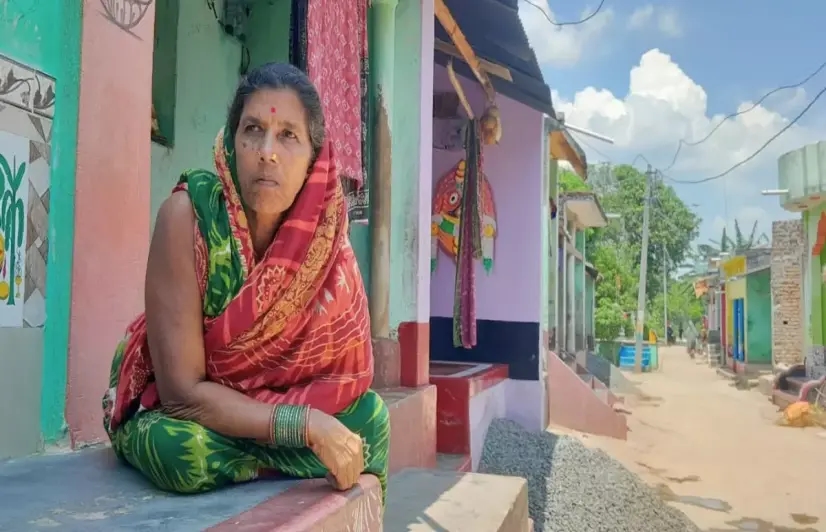
Cover Image - A relative of Sabitri sitting under the porch of her house (Photo - Rakhi Ghosh, 101Reporters)
Would you like to Support us
101 Stories Around The Web
Explore All News