Living with sickle cell in Jhabua comes at a cost

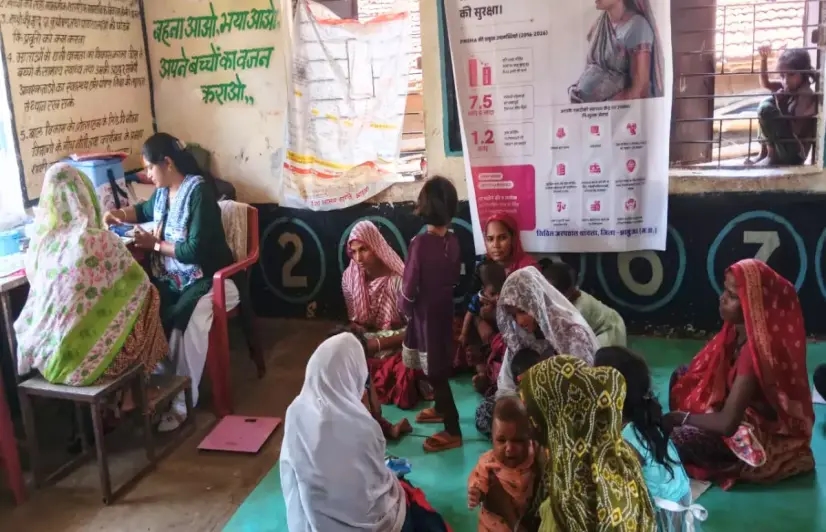
Living with sickle cell in Jhabua comes at a cost
Jhabua, Madhya Pradesh: It's two in the morning. In Timarwani village of Jhabua district, 13-year-old Vardilal (name changed) cries out in pain. His father, Vasti, places wet cloth strips on his forehead. This is sickle cell anaemia — a genetic disease that has become part of life for thousands of tribal families in the region. But Vasti's biggest worry isn't just the disease. It's where he will find blood if his son's condition worsens. The boy continues to live with the disease and recently required another blood transfusion. In Jhabua's tribal belt, sickle cell anaemia is not just a health condition. Combined with poverty, migration, unemployment, poor transport and gaps in healthcare, it places a heavy burden on entire families.
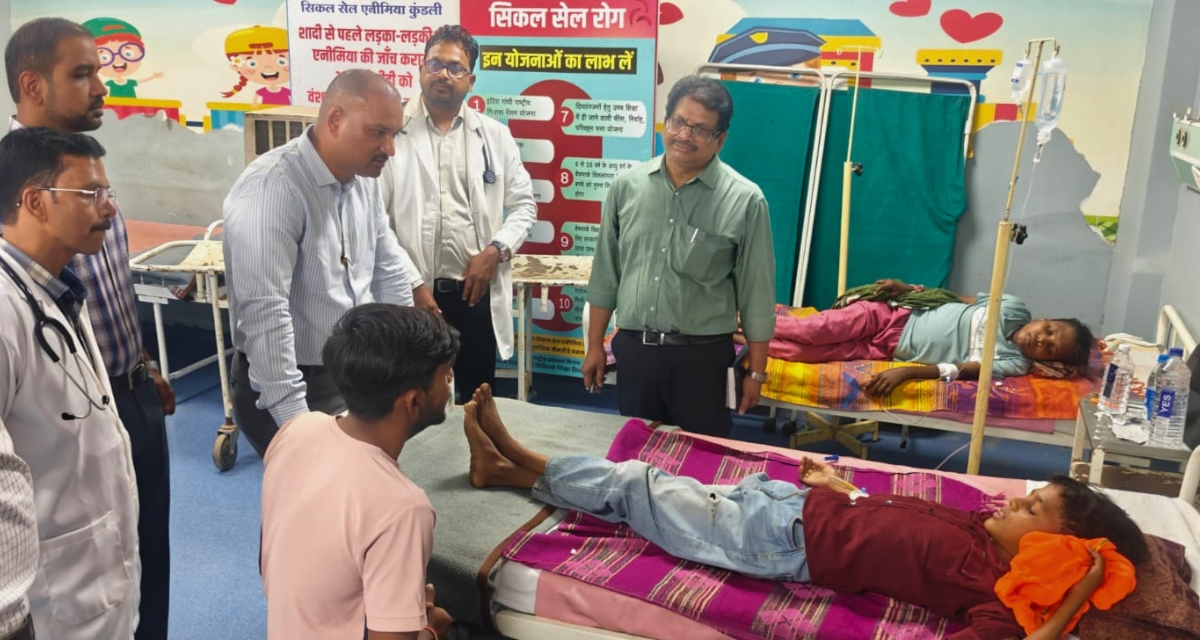 Doctors taking health information from a child admitted in the sickle cell ward at Jhabua district headquarters (Photo sourced by Laxmikanta Joshi, 101Reporters)
According to the district's sickle cell nodal office, Jhabua has 1,950 registered patients and 16,667 carriers. More than 8.57 lakh people have been screened for the disease.
Sickle cell anaemia is an inherited blood disorder in which red blood cells become curved, or sickle-shaped, instead of their normal round form. These abnormal cells restrict the flow of oxygen to different organs, causing repeated episodes of severe pain, weakness, infections and other serious health complications. The disease is more common in tribal-majority regions.
Around 80 to 100 patients in Jhabua require blood transfusions every month. Yet the district does not have a blood separation unit. District sickle cell nodal officer Dr Sandeep Chaupda said efforts are underway to establish one and that a proposal has already been sent to the headquarters.
The district administration has also stepped up blood donation drives. According to Chaupda, camps organised over the past month have collected 314 units of blood, and the campaign is continuing.
While the government is working on premarital screening, sickle cell cards and its target of eliminating the disease by 2047, many families say their immediate concerns are accessing blood, treatment and transport.
101Reporters travelled through villages in Jhabua district to understand what living with sickle cell means for patients and their families.
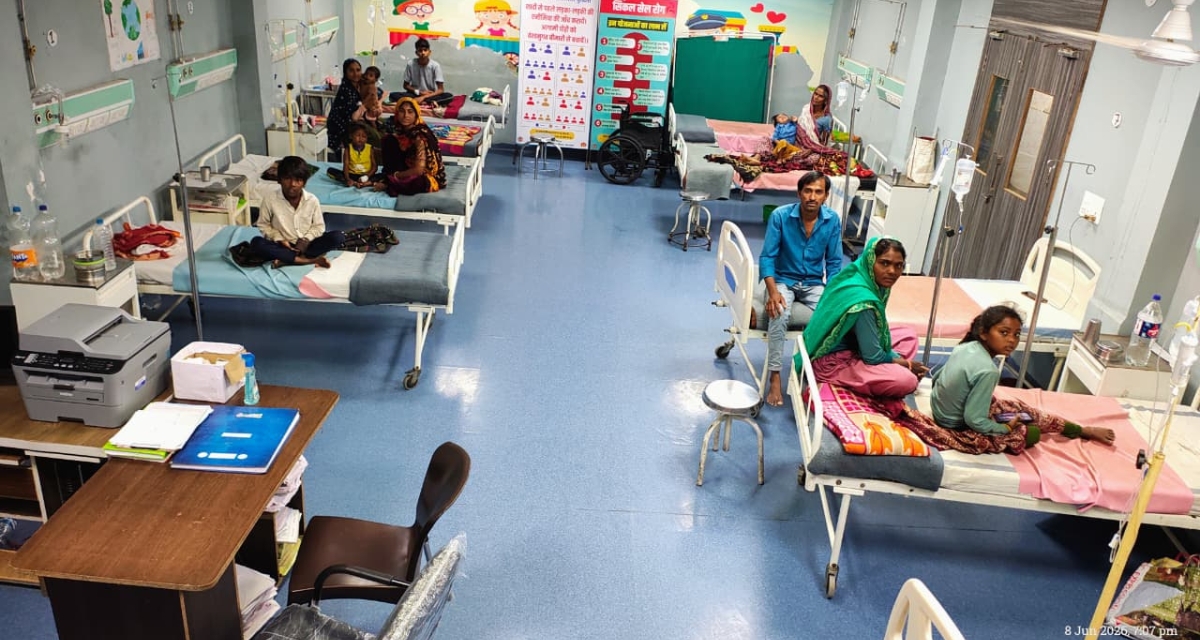 Patients and their family members in the sickle cell ward at Jhabua district headquarters (Photo sourced by Laxmikanta Joshi, 101Reporters)
Wages versus health
Vasti, father of 13-year-old "Vardilal" (name changed) from Timarwani village in Meghnagar block, said it took time for the family to understand what was causing his son's repeated episodes of pain.
"Earlier we didn't understand what was happening to the child. Later, tests confirmed it was sickle cell anaemia. If the pain doesn't stop, we have to go to the hospital," he said.
The district hospital in Jhabua is about 60-65 km from Timarwani. With limited public transport, the family often has no option but to take the child on a motorcycle. Every hospital visit means a day's work is lost.
The same pattern repeats across much of Jhabua.
In Khalkhandvi village, a three-year-old girl (name changed) lives with her grandparents. Her haemoglobin remains low, but the family has not been able to get the tests needed to confirm whether she has sickle cell disease.
In another family, 19-year-old Sarita's parents work as construction labourers. Every trip to the hospital costs them a day's wages.
Five-year-old "Harsh" (name changed) must change two buses, or take a train, to travel from his village to Meghnagar and then onward to the district hospital in Jhabua for treatment.
For many families, the struggle against poverty, lost wages and difficult journeys begins long before treatment itself.
When treatment falls short
Twenty-one-year-old Prateek Parmar of Rajla village had lived with sickle cell disease for nearly a decade. Severe pain in his hands and feet often left him unable to walk. His family sought treatment in Dahod, Gujarat, where he had first been diagnosed, rather than in Jhabua.
One day, Prateek's condition deteriorated rapidly. Blood could not be arranged in time. His family set out for Dahod, but he died of a brain haemorrhage on the way.
District sickle cell nodal officer Dr Sandeep Chaupda confirmed the incident.
For many patients, arranging blood remains one of the biggest challenges.
Shruti Dhak, an ASHA worker in Khalkhandvi who herself lives with sickle cell disease, said awareness has improved over the years, but gaps remain.
"Earlier, people didn't even know the name of the disease. They mistook the pain for ordinary weakness and relied on home remedies. Awareness has grown since, but many families still don't fully understand the disease," she said.
The shortage of blood continues to be a major concern.
"The district hospital's greatest need is for packed red blood cells, but we do not have a blood separation unit. We keep appealing to blood donors and are trying to meet the demand through donation camps. Many patients end up going to Dahod when blood isn't available here," Chaupda said.
Manisha Maida, an auxiliary nurse midwife (ANM) in Timarwani, said misconceptions around blood donation continue to hamper treatment.
"There are still many misconceptions about blood donation in tribal areas. Many people believe donating blood will make them weak. Often the patient's own family is afraid to donate, and others step in instead," she said.
ASHA coordinator Chitra Dhak said poverty often forces families to delay or avoid treatment.
"When a patient has to be admitted to the district hospital, one family member has to stay with them. That means losing a day's wages, which directly affects the family's income," she said.
Devendra Singh, a teacher in the Thandla area, said repeated illness and hospital visits have also affected some children's education.
Family of patients
In Mahuda village, sickle cell disease has reshaped the lives of Raja Chaupda's family.
His three children — 12-year-old "Shiva", 10-year-old "Ashish" and 7-year-old "Sheetal" (names changed) — have all been diagnosed with the disease.
Raja said the family had no idea what was causing their eldest daughter's recurring pain.
"When Shiva was five, she suddenly developed severe pain in her hands and feet one night. We tried home remedies and the pain eased after a few days, but it kept returning. Tests later confirmed that all three children had sickle cell disease," he said.
For Raja, the challenge is no longer understanding the illness, but managing it.
"It's not just about treatment. We have to keep taking all three children to the hospital again and again," he said.
During 101Reporters' visit to the district hospital, Ashish's haemoglobin had dropped to 4.7 and his family, along with doctors, was searching for an AB-positive blood donor. He has since received blood after a donor was arranged with the help of a voluntary organisation.
The burden is not unique to Raja's family.
In Dhanna Dungri village, 41-year-old Kegu Sigadiya and his two children — 17-year-old "Hardika" and 13-year-old "Risina" (names changed) — are all living with sickle cell disease.
District sickle cell nodal officer Dr Sandeep Chaupda said the three visit the hospital together every month for treatment.
.jpg)
Living with stigma
Many families continue to hide the disease for fear that disclosure could affect marriage prospects.
Raju (name changed), who is a sickle cell carrier, said he did not disclose this to his wife or her family before marriage.
"When the doctor asked why, I told him that if I'd informed them, the marriage wouldn't have happened," he said.
The concern is one reason the Madhya Pradesh government has been pushing premarital screening.
During a visit to Jhabua on March 13, 2026, Governor Mangubhai Patel directed officials to promote premarital sickle cell screening and encourage discussions around it at the gram panchayat level. He has also written to the state government, recommending that genetic disorders such as sickle cell anaemia be included in school and college curricula.
However, district sickle cell nodal officer Dr Sandeep Chaupda said discussions on introducing premarital screening at the panchayat level are still underway with one or two gram panchayats.
Homoeopathic physician Dr AK Dwivedi said carriers often live normal lives and may not know they have the sickle cell trait. Without screening, however, the condition can be passed on to future generations.
.png)
Government efforts, gaps remain
Alongside awareness campaigns, the district administration has begun introducing measures to improve support for patients.
According to Chaupda, Jhabua now has 1,950 registered sickle cell patients. To strengthen support systems, the district administration has launched a Sickle Mitra campaign under the leadership of Collector Dr Yogesh Tukaram Bharsat.
So far, 290 Sickle Mitras have been trained to help patients access treatment, pensions, sickle cell cards, government welfare schemes and counselling on health and marriage. The volunteers include members of civil society organisations as well as government officials and employees.
The administration has also intensified blood donation drives. Over the past month, camps organised across the district have collected 314 units of blood, and the campaign is continuing.
Chaupda said local authorities have also proposed setting up a blood separation unit in Jhabua, and the proposal has been sent to the headquarters.
Even so, social activist Kamlesh Rathore believes more needs to be done.
"If you talk about premarital screening but don't arrange blood, treatment and transport for those already living with the disease today, the fight remains incomplete," he said.
Would you like to Support us
101 Stories Around The Web
Explore All NewsAbout the Reporter
Write For 101Reporters
Would you like to Support us
Follow Us On