In UP villages, digital libraries struggle to deliver on their promise

In UP villages, digital libraries struggle to deliver on their promise
Jalaun, Uttar Pradesh: “In name it is called a library, but in reality, there is nothing here.”
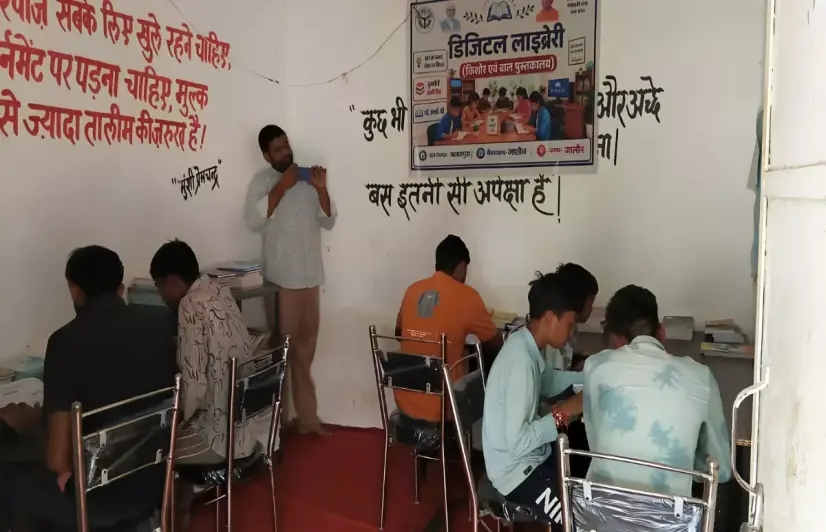
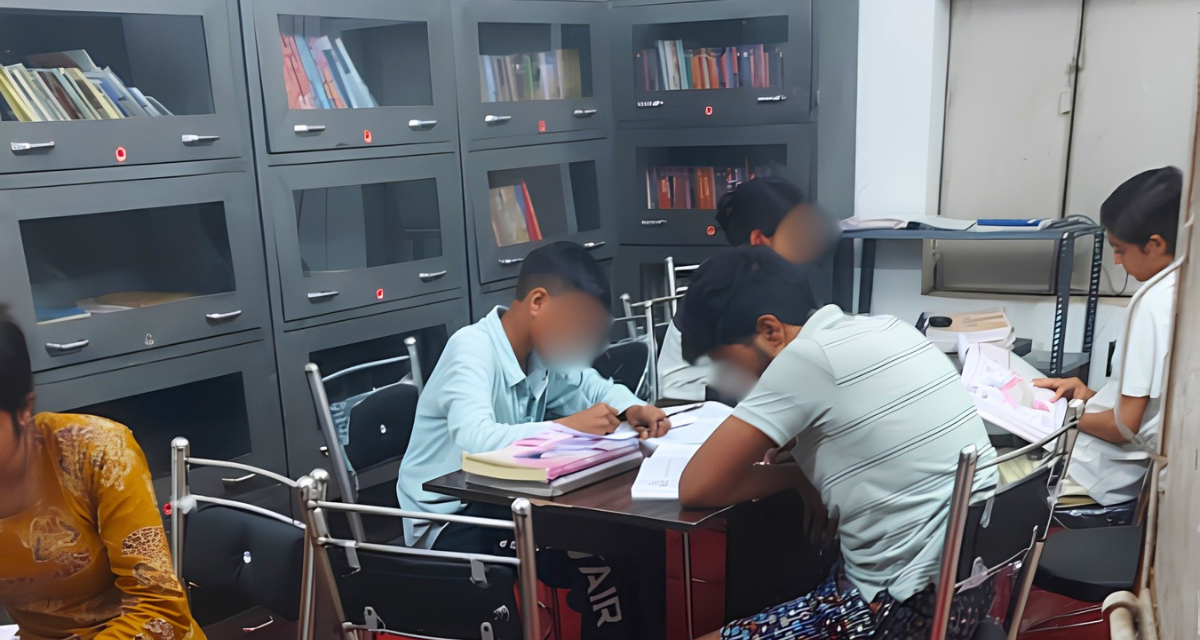
That is the succinct assessment of a student sitting in the library built at the Malakpura panchayat bhawan in Jalaun district. On October 18, she was one of six students at the tables, including boys and girls from class six to graduation. All of them agreed that the library needs to be better stocked.
There are no reference books beyond NCERT textbooks, some chairs are broken, and there is no internet. Even drinking water is brought from home.
Malakpura was among the first village panchayats picked for a digital library in Uttar Pradesh. What it has received falls short of what was promised.
The “Special Assistance for Capital Investment” scheme was launched by the central government in 2023-24. Under the scheme, the Uttar Pradesh government issued a notification on March 17, 2025 to roll out the first phase across 11,350 village panchayats.
Fully funded by the Centre, the scheme aims to cover 22,700 gram panchayats, with a total outlay of about ₹908 crore. That works out to Rs 4 lakh per panchayat: Rs 2 lakh for books and digital study material, and Rs 2 lakh for IT infrastructure and basic furniture.
Each library would sit inside the panchayat bhawan, equipped with computers, TVs, internet, electricity, drinking water, tables, chairs and books. The notification also required every panchayat to write the full list of facilities on the bhawan wall, so that villagers would know what they were entitled to. The panchayat secretary, assisted by a data entry operator or panchayat sahayak, was to run it under the Panchayati Raj Department.
On paper, it is an ambitious and well-planned scheme. But its implementation has been uneven.
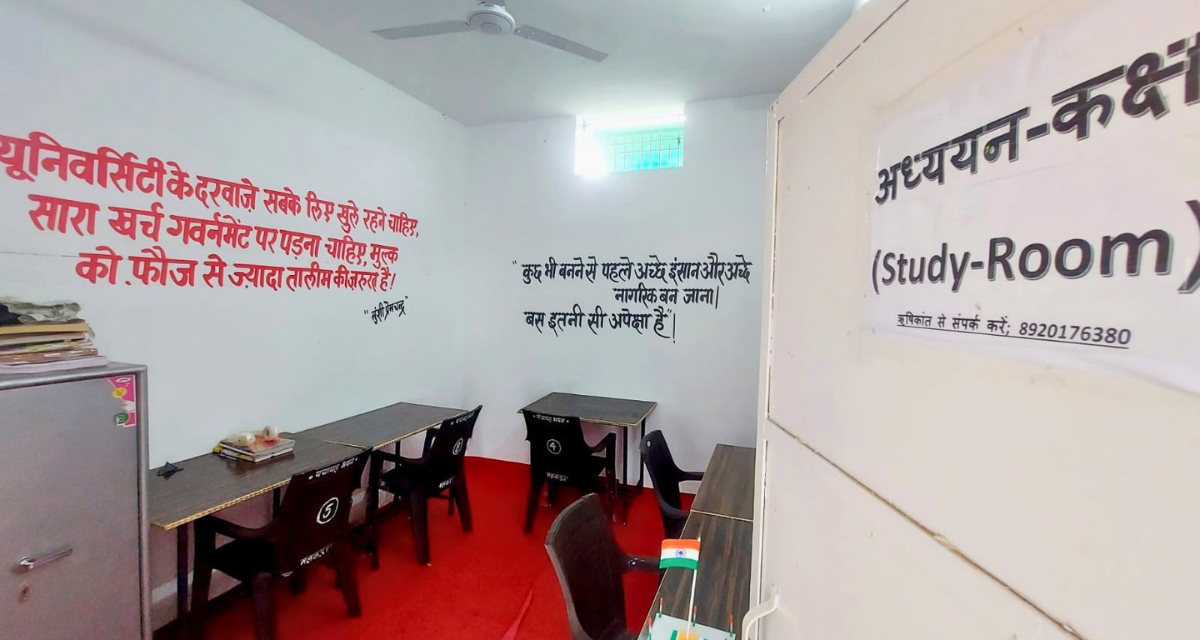 The Library, started by the Panchayat in 2024 (Photo - Aman Gupta, 101Reporters)
Grand plans, poor execution
Malakpura’s library opened in early 2026. Students say they arrive around 1 pm and stay until 10 at night, though the timing shifts with school and household chores.
Inside, much of what the notification promised is missing. Internet, drinking water is not available and toilets are not operational. The room is in a panchayat bhawan that stands outside the main village, in isolation. During the day, when the office is functioning, “people keep coming and going, which causes a lot of noise and disturbance,” said Sonam (name changed), who is doing her graduation while preparing for competitive exams. Frequent power cuts and heat add to the difficulties.
Malakpura’s Pradhan, Amit, does not dispute this. “Power cuts do happen. We installed an inverter as a backup, but it has been lying broken for months. I complained to the panchayat secretary multiple times to get it repaired, but he simply does not get it fixed. Also, out of 13 chairs delivered, four broke within the very first month.” The library is meant to be run by the secretary and an assistant, he pointed out, “but right now there is no assistant posted in our panchayat.”
Similar facilities are available in private libraries that have opened in nearby market towns outside the village. “They offer a quiet study space, table-chair arrangements, internet, water, and washroom facilities. Anyone can take admission and study there. But their monthly fee is very high, around Rs 500 to Rs 700. If we get all these facilities along with good books right inside our village, nothing could be better,” said one of the students in Malakpura’s library.
The gap is not for want of local effort. Amit, a former journalist, said that he knows “how much rural students struggle to study and what resources they need.” In 2024, a year before the scheme, he started a library with panchayat funds, converting two of the four bhawan rooms meant for the pradhan and the secretary. “We brought in internet, NCERT books, and other titles, which students used regularly.” At one point, 15 to 20 students visited daily.
When the government scheme arrived in 2025, he hoped it would build on that effort. “We were excited that our local effort had now become part of a larger government project. But my happiness did not last long because the materials supplied were of very poor quality. At first look, it was clear that the scheme was being rolled out just as a formality.” Since then, he said, “our hands have been tied. The operational control has shifted mostly to the panchayat secretary, leaving us helpless.”
His library has been absorbed into the government scheme, combining his initial resources with state supplies. But the promised IT setup, with computers, smart TVs and official internet, is yet to arrive. With the equipment delayed, he said, the services remain on hold, and the internet he once offered on a personal level has also been cut off.
Shelves full, little to read
A library can function without all the promised facilities if the books are relevant. But that is also a problem here.
Shiva, a class 6 student, estimates that the library holds more than 600 books, but for him, only “NCERT books from class six to twelve are useful.” He added, “Sometimes I try reading the other books like children’s literature or biographies, but I cannot understand them right now.”
For older students, the gap is wider. “Exam-related books are most important for us, but those books are not available here at all,” said Sonam. “What is available here is limited to NCERT, current affairs, and general study material. We need many other reference books, but they have not arrived yet.”
The problem, then, is not simply the number of books, but their relevance.
Every library in Jalaun is to receive roughly 850 books from the National Book Trust (NBT), and 189 more from the state government. 101Reporters has seen the full inventory. These largely span children’s literature, poetry, biographies and general science.
However, most of the youngsters in the village are studying locally and preparing for competitive exams, where the main bottleneck is a shortage of targeted material. In this context, the supplied titles offer limited practical use.
Sandeep Singh, a teacher in a government-run senior secondary school, said that these books do not follow school or degree curricula, nor do they include the objective practice sets, reasoning guides or solved papers needed for exams like the UP Police or SSC. “Expecting working villagers occupied with daily labour to read literature is equally unrealistic, leaving the collection out of sync with the community's primary educational needs,” he said.
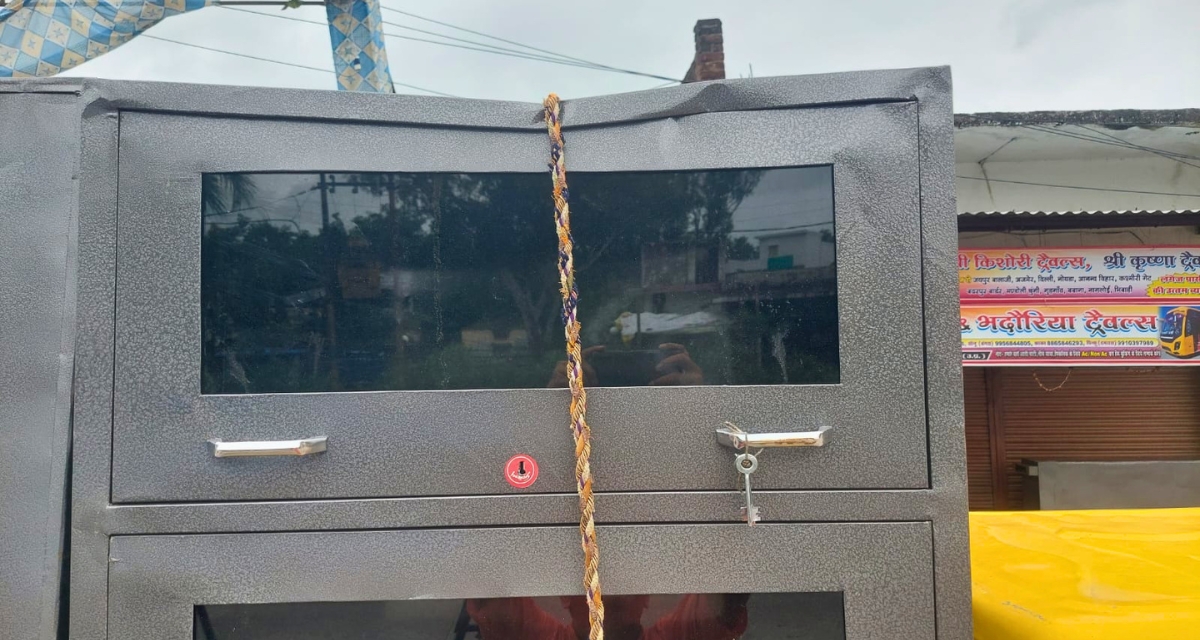 The quality of items as of 2026-10-24 (Photo - Aman Gupta, 101Reporters)
Study materials for competitive exams also need regular updates. However, Singh pointed out that the books supplied to these libraries are a one-time delivery. Over time, as exam patterns evolve, it is doubtful how useful these static editions will remain for new students. Simply put, though the titles provided by the NBT cover over twenty different subjects, they offer general reading rather than the updated, targeted preparation these exams require.
Amit said that a thorough vetting process should be followed when supplying books to a publicly funded library, especially because villagers are not equipped to do it themselves. Rakesh, a Malakpura resident whose family’s children are first-generation learners, concurs. “We cannot evaluate the quality of the books or internet provided at the facility. What matters to us is that our children have a place to sit, read, and learn something constructive. That in itself is a positive step.”
In an attempt to bridge the gap between what is supplied and what is needed, Amit tried to raise the issue with the DPRO. He has asked who selected the books and whether this was done by an expert committee at the district, state or Centre level. But no information has been shared with him.
When 101Reporters asked Jalaun District Panchayati Raj Officer (DPRO) Ram Ayodhya Prasad about the selection and quality of the books, he said, “I am not bound to answer you,” and ended the call.
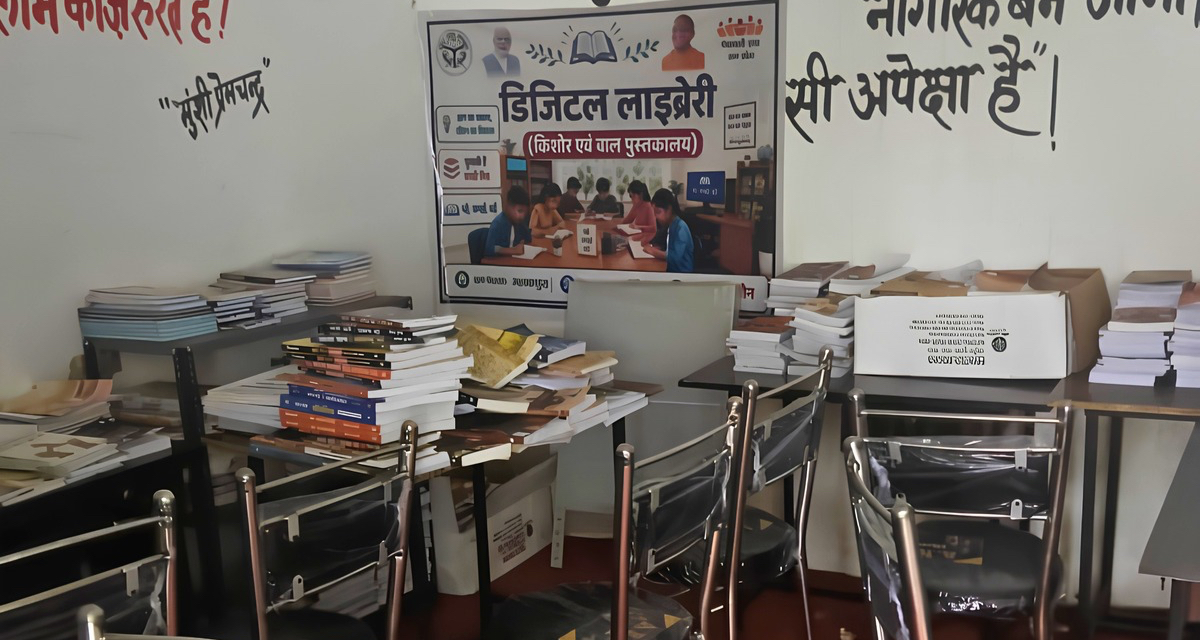 How the library looks without students (Photo - Aman Gupta, 101Reporters)
Building more than just a room
What the district does seem keen on is highlighting the library as an achievement. “District-level officials ask for photos of the library every single day,” said Amit. He added that the library has become a photo-op spot rather than a study space, which he says disturbs the students who come here to learn.
Overall, Jalaun has 107 panchayats selected for the scheme, and work is at different stages. In Kuthond block’s Bawli panchayat, a library was formally opened recently. “DPRO Ram Ayodhya Prasad cut the ribbon to start the library,” says pradhan Prashant Kashyap. “After the opening, some children from the village have started coming here to study.” He could not say how many, and referred questions on books, computers and internet to the panchayat secretary, who did not respond to several calls before publication.
In Shekhpur Bujurg, there is no library to photograph yet. “Yes, a library is proposed in our village,” said pradhan Deepu Sengar. “The file has been prepared and sent for required approvals, but the sanction has not come through yet.”
Opening a library is a useful first step. But the scheme promised more than just a room. It promised computers, internet and books that match what these students are preparing for. Until those arrive, the children of Malakpura will continue doing what they have done since the library opened: bringing their own water, struggling to find relevant books and making do with what is available.
Cover Image - A picture taken of the library (Photo - Aman Gupta, 101Reporters)
Would you like to Support us
101 Stories Around The Web
Explore All News