When farmers switched to maize, the market failed them

When farmers switched to maize, the market failed them
Barwani, Madhya Pradesh: Ganesh Chauhan, 47, had hoped maize would offer better returns. Encouraged by favourable prices in the previous season, he cultivated the crop on four acres during the 2025-'26 rabi season, spending around Rs 60,000 to Rs 70,000 on seeds, fertilisers, irrigation, labour and diesel. When it was time to sell his produce, however, Chauhan received only Rs 1,400 to Rs 1,500 per quintal, a loss of about Rs 900 per quintal, even though the Centre had announced a minimum support price (MSP) of Rs 2,410 per quintal.
"We had high hopes from maize," Chauhan said. "We thought we would get good prices like last time. But the situation turned out to be the opposite."
He is among thousands of farmers in Madhya Pradesh who expanded maize cultivation after the Centre included the crop as a feedstock under its ethanol blending programme, aimed at reducing dependence on imported fuel. Many now find themselves unable to cover their costs.
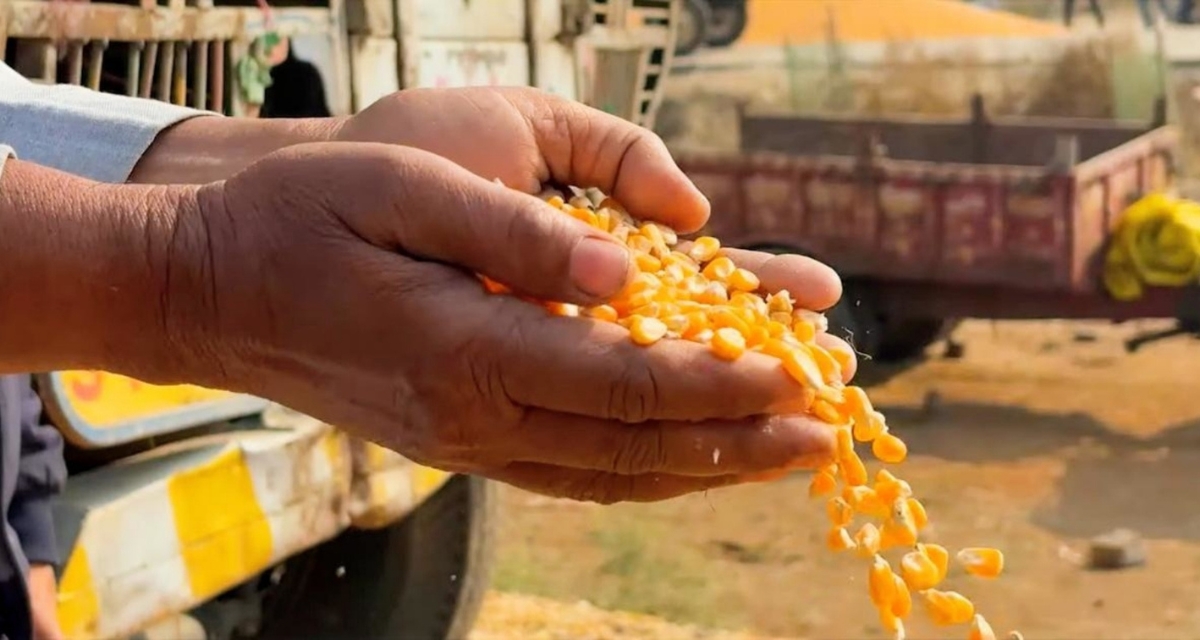 A farmer displays corn kernels at Chhindwara Mandi (Photo - Sanavver Shafi, 101Reporters)
Over the past five years, the cropping pattern in Madhya Pradesh has changed significantly. Long known as a soybean-producing state, it has seen farmers increasingly turn to maize since 2021, driven by erratic weather, yellow mosaic disease in soybean, declining yields and policy signals linked to ethanol production.
Data from the Uparjan portal and the state's Economic Survey 2025-’26 show that the area under maize cultivation increased from 15.65 lakh hectares in 2021-’22 to 23.50 lakh hectares in 2025-’26, an increase of about 50% in four years. During the same period, maize production rose from 47.30 lakh metric tonnes to 66.40 lakh metric tonnes. Districts including Chhindwara, Narsinghpur, Betul, Seoni and Chhatarpur saw farmers increasingly replace soybean with maize.
The expansion was fuelled by demand from the poultry industry, animal feed manufacturers and, crucially, the Centre's ethanol policy.
The ethanol promise
The Centre has steadily expanded its ethanol blending programme. Under the National Policy on Biofuels, the target of achieving 20% ethanol blending in petrol, originally set for 2030, was advanced to 2025-'26. Alongside sugarcane, maize was recognised as a key feedstock. By April 2026, the sale of E20 petrol became mandatory across the country.
Official data show that Madhya Pradesh produced about 66.4 lakh tonnes of maize in 2025-’26, accounting for nearly 15.3% of the country's total production. The state's installed ethanol production capacity has reached 104.1 crore litres, of which 94.38 crore litres comes from grain-based ethanol plants. Oil marketing companies also raised the procurement price for maize-based ethanol to ₹71.86 per litre, making it the highest-priced ethanol among different feedstocks.
On paper, this expansion should have driven demand for maize and raised prices. It did not.
Farmer organisations say the expansion of ethanol plants did not lead to higher maize prices because distilleries increasingly turned to subsidised rice supplied by the Food Corporation of India (FCI).
After FCI stocks reached around 36.9 million tonnes, the highest level in two decades, the Department of Food and Public Distribution lifted restrictions on supplying rice to distilleries. Under revised standard operating procedures issued in May 2025 and again in May 2026, the Centre supplied 5.2 million metric tonnes of rice to ethanol manufacturers at Rs 2,320 per quintal, including subsidy support. Distilleries were directed to produce 40% of their ethanol from FCI rice so that surplus stocks could be utilised while ensuring steady supply throughout the year.
One tonne of rice yields around 450 litres of ethanol, compared with about 380 litres from one tonne of maize. When subsidised government rice is available, industries have little reason to buy maize from farmers.
Shivkumar Sharma, president of the Rashtriya Kisan Mazdoor Mahasangh, said the decision reduced the incentive for ethanol producers to purchase maize.
"When subsidised government rice is available, industries have little reason to buy maize," Sharma said. "As a result, demand for maize declined in the open market and mandi prices fell."
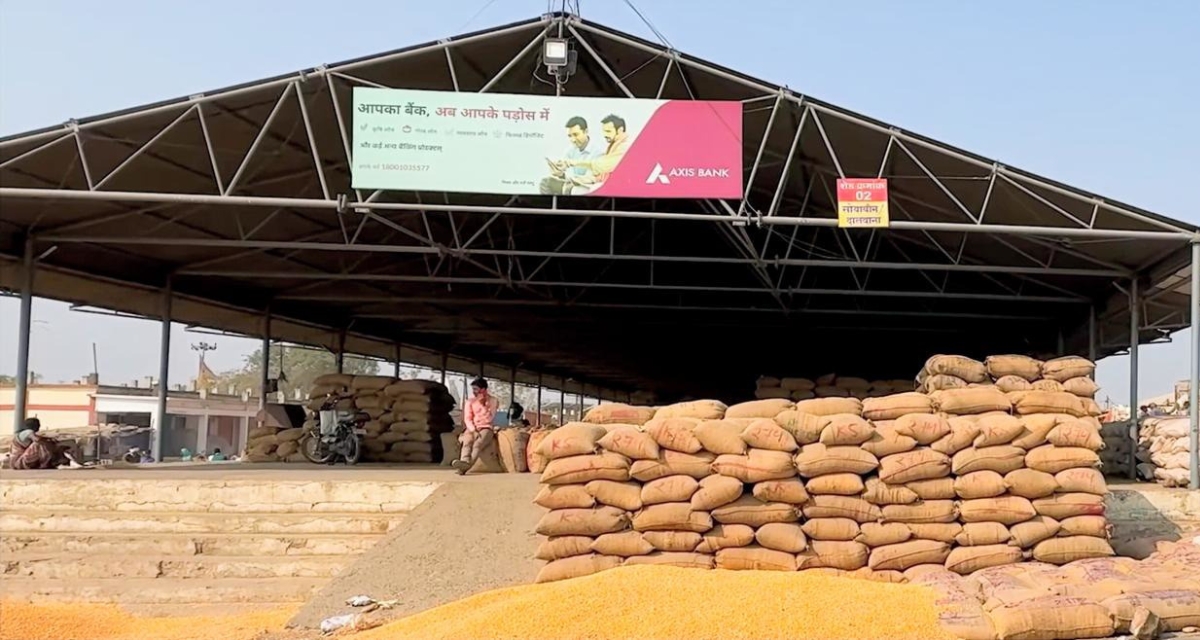 The maize godown at Chhindwara Mandi where bumper yields have failed to translate into profitable returns for farmers (Photo - Sanavver Shafi, 101Reporters)
The price collapse
At the Karond Agricultural Produce Market in Bhopal, farmer Abhishek Maran waited to auction the 30 to 35 quintals of maize he had harvested from his 10-acre farm during the rabi season. "Traders are offering throwaway prices," he said. "The cost of diesel, fertilisers, seeds and labour has gone up, but maize is selling for only Rs 1,400 to Rs 1,500 per quintal. At these prices, we cannot even recover our cultivation costs."
According to the Commission for Agricultural Costs and Prices, the cost of producing maize for the 2026-'27 kharif season was estimated at Rs 1,544 per quintal. Data from Agmarknet show that maize was selling for around Rs 2,100 per quintal in Madhya Pradesh's mandis until June 30, 2026, Rs 310 below the MSP of Rs 2,410 per quintal.
Despite rising cultivation costs, the MSP for maize was increased by only Rs 10 for the 2026-'27 kharif season.
Kamal Singh Anjana, president of the Madhya Bharat unit of the Bharatiya Kisan Sangh, said neither government procurement nor ethanol companies had provided the support farmers expected.
"Maize was neither procured at MSP nor did ethanol companies show interest in purchasing it," he said. "For most of the season, farmers sold maize for less than ₹1,500 per quintal, which was below their production costs."
Congress leader Kedar Sirohi attributed the decline to the absence of government procurement. "The government announces an MSP every year but does not procure maize at that price," he said. "Nor does it ensure that traders in mandis pay farmers the MSP. It fixes a price and then walks away from its responsibility."
When asked about falling maize prices, Union Agriculture Minister Shivraj Singh Chouhan said he would speak on the issue in detail later. Madhya Pradesh Agriculture Minister Aidal Singh Kansana rejected suggestions that farmers were facing a crisis. "Farmers are not facing any problems in any crop," he said. "These are rumours."
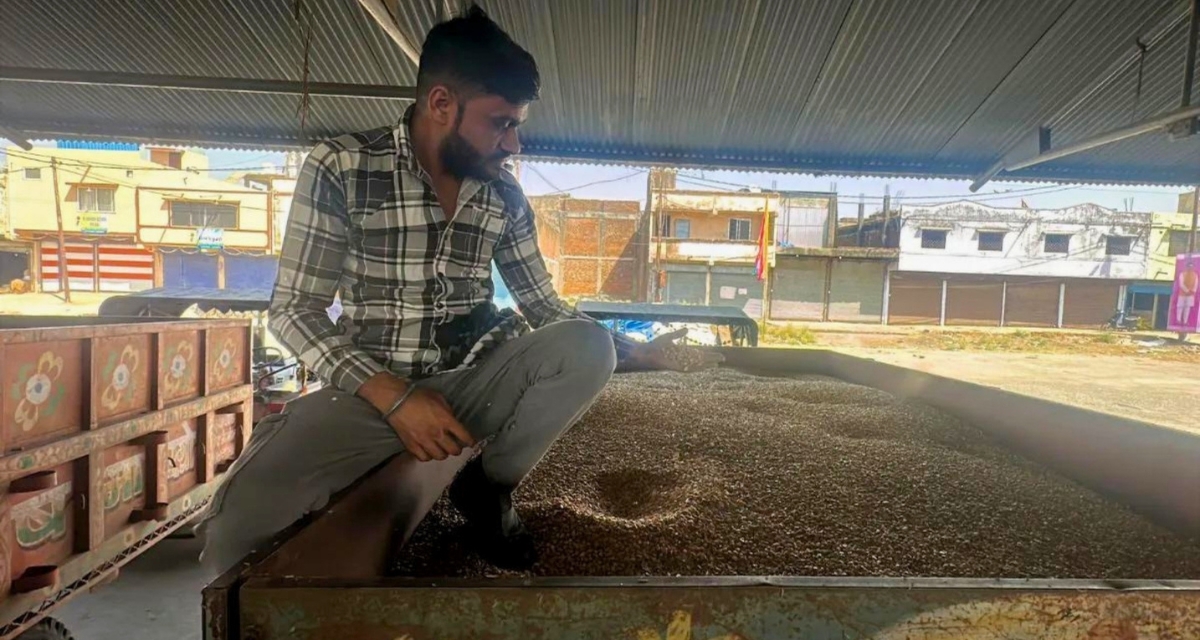 Shubham, a farmer at Bhopal's Karond Mandi (Photo - Sanavver Shafi, 101Reporters)
The monsoon fails too
This kharif season, the delayed monsoon has compounded the crisis for farmers returning to soybean and for those who remained with maize.
The monsoon usually reaches Madhya Pradesh by mid-June. This year, it arrived only around June 25 or 26. Although the agriculture department advised farmers to wait until the monsoon became fully active before sowing, many began planting after the first spell of rain. Several districts experienced long dry spells followed by intense rainfall. In many places, crops sown after the first rains showed poor germination, while farmers without irrigation facilities were left waiting for fresh rainfall.
Laxminarayan Sharma, a 56-year-old farmer from Neemuch district, decided against growing maize after watching both market prices and rainfall patterns. He sowed soybean on four acres after the first spell of rain but now fears he may have to sow the crop again.
"Before sowing, we struggled to get fertilisers. Now the rains have stopped. We are trying to save the crop by drawing water from wells," he said.
Ganesh Chauhan, who had abandoned maize after poor prices, now faces a different uncertainty. He sowed soybean after the first rains this kharif season, but the crop has started drying because of the prolonged dry spell.
"If it doesn't rain in the next two or three days, whatever remains of the crop could also be damaged," he said. Having already spent around ₹8,000 per hectare on sowing, Chauhan said he feared the cost of sowing the crop again.
Even maize growers in Chhindwara, often referred to as Madhya Pradesh's "corn city", have already completed sowing on about 70% of their maize-growing area after early rains. Kishore Rajput said he followed common practice after seeing other farmers begin sowing.
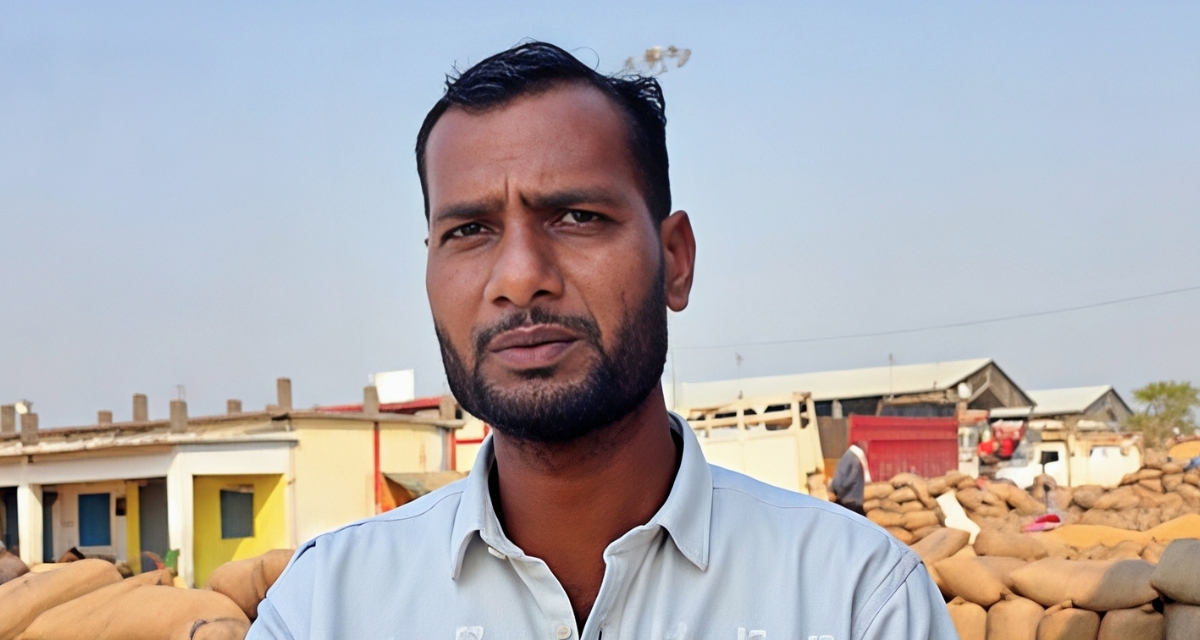 Pawan Sahu, a farmer in Chhindwara Mandi (Photo - Sanavver Shafi, 101Reporters)
"There was some rain during the pre-monsoon period, but it stopped afterwards," he said. "The crop failed, and now we are sowing again."
He estimated that the initial cost of sowing maize was between Rs 10,000 and Rs 12,000 per acre. Re-sowing not only increases expenditure but also reduces yields.
Yatin Kumar Mehta, deputy director of agriculture in Neemuch, said crops could suffer further damage if adequate rainfall did not arrive within the next few days.
Over the past five years, policy incentives encouraged many farmers in Madhya Pradesh to shift from soybean to maize. This year, poor maize prices have prompted some to return to soybean. But delayed rains and rising cultivation costs have meant that, for many farmers, changing crops has not eased the uncertainty.
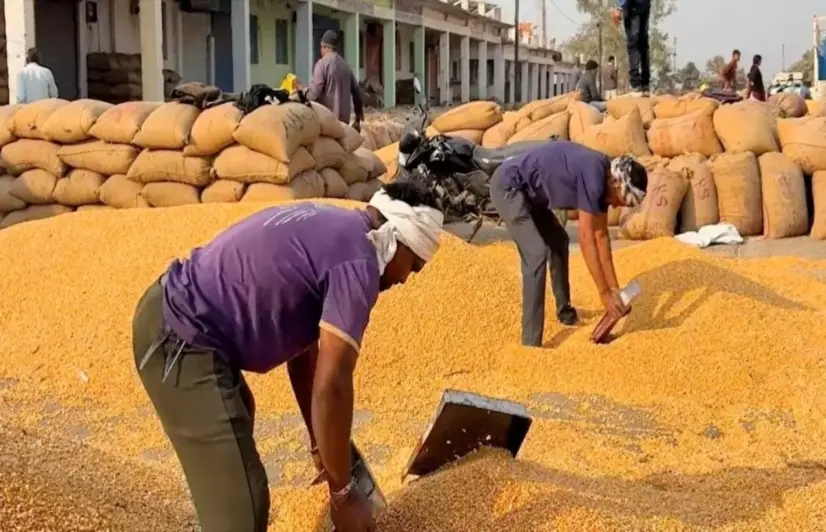
Cover Image - Farmers handle harvested maize at Chhindwara Mandi (Photo - Sanavver Shafi, 101Reporters)
Would you like to Support us
101 Stories Around The Web
Explore All NewsAbout the Reporter
Write For 101Reporters
Would you like to Support us
Follow Us On