Negamam’s handloom weavers say GI tag hasn’t changed their lives

Negamam’s handloom weavers say GI tag hasn’t changed their lives
Nearly two years after Negamam cotton sarees received a Geographical Indication tag, weavers say wages remain stagnant, orders irregular and welfare out of reach
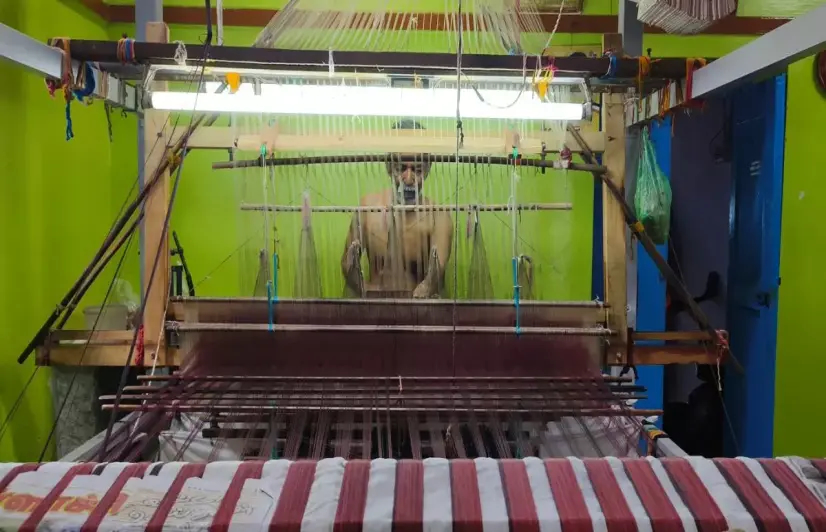
Coimbatore, Tamil Nadu: “They told us our lives would change after the Geographical Indication tag. But look around…what has changed for us?” said Nagaraj (48), a handloom weaver from Negamam in Tamil Nadu’s Coimbatore district.
For over 30 years, Nagaraj has woven Negamam cotton sarees in Pollachi taluk. His father and grandfather were handloom weavers too. Between the steady clack of the loom and the cotton threads running through his fingers lies three generations of labour, without the security or dignity he once hoped the craft would bring.
In March 2023, Negamam Cotton Handloom Sarees received a Geographical Indication (GI) tag, a legal recognition meant to protect products whose quality and reputation are tied to a specific place. At the time, officials from the Handlooms Department, cooperative societies and textile traders held meetings with weavers, promising higher demand, better wages and recognition.
Nearly two years later, Nagaraj said the GI tag exists largely on paper.
“They said orders would increase and wages would rise,” he said. “But our income is the same, our struggle is the same. Only the name ‘GI tag’ has come, not the benefits.”
Handloom weaving has thrived for over two centuries in the Pollachi, Negamam, Kinathukadavu and Sulur regions of Coimbatore district. Three decades ago, the region had over 4,650 handloom units. Today, that number has dropped to about 1,700, according to estimates by cooperative societies and Textile Department officials, as younger generations move away in search of stable livelihoods. Negamam cotton sarees are popular across Tamil Nadu, Kerala and Karnataka.
The decline becomes easier to understand when viewed against the daily economics of weaving.
Nagaraj earns between Rs 1,000 and Rs 1,250 per saree. It takes him two full days to weave one Negamam cotton saree, fetching an average of about Rs 1,100. He works from 7 am till evening, breaking only for lunch.
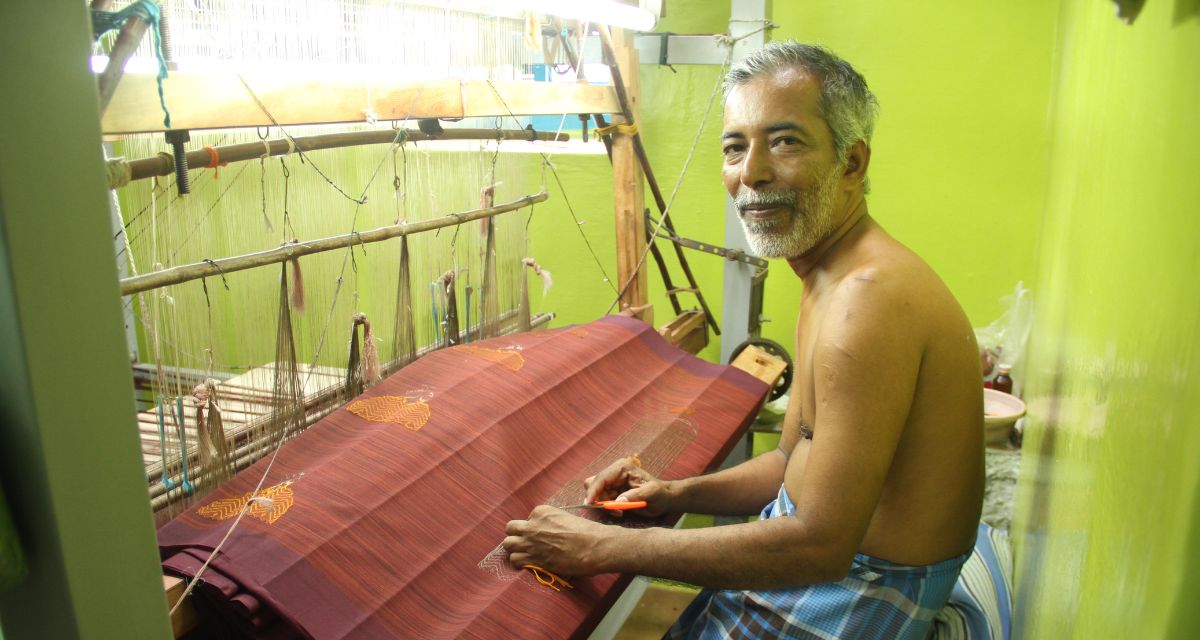
“Thousands of beats with my hands, two days of hard work, and this is what we earn,” he said.
In the retail market, however, Negamam cotton sarees sell for far higher prices. Genuine handwoven sarees typically retail from Rs 1,600 and can go up to Rs 6,000 depending on the weave, design and finish, according to traders and weavers. Products sold at significantly lower prices are usually powerloom-made or falsely labelled; one of the key reasons weavers had pushed for the GI tag to protect their craft.
Government and cooperative orders are irregular, and payments are often delayed. “Some months there are only seven or nine sarees to weave,” Nagaraj said. “That is why I now depend on private textile shops. They may pay slightly less sometimes, but at least they pay on time.”
His family survives on a monthly income of Rs 12,000 to Rs 15,000 from weaving. His daughter is studying engineering.
But the pressures are not only financial.
By noon, the small room where Nagaraj works turns suffocating. The tiled roof traps heat, and the air barely moves. “By afternoon, it feels like a furnace,” he said. “But the work cannot stop.”
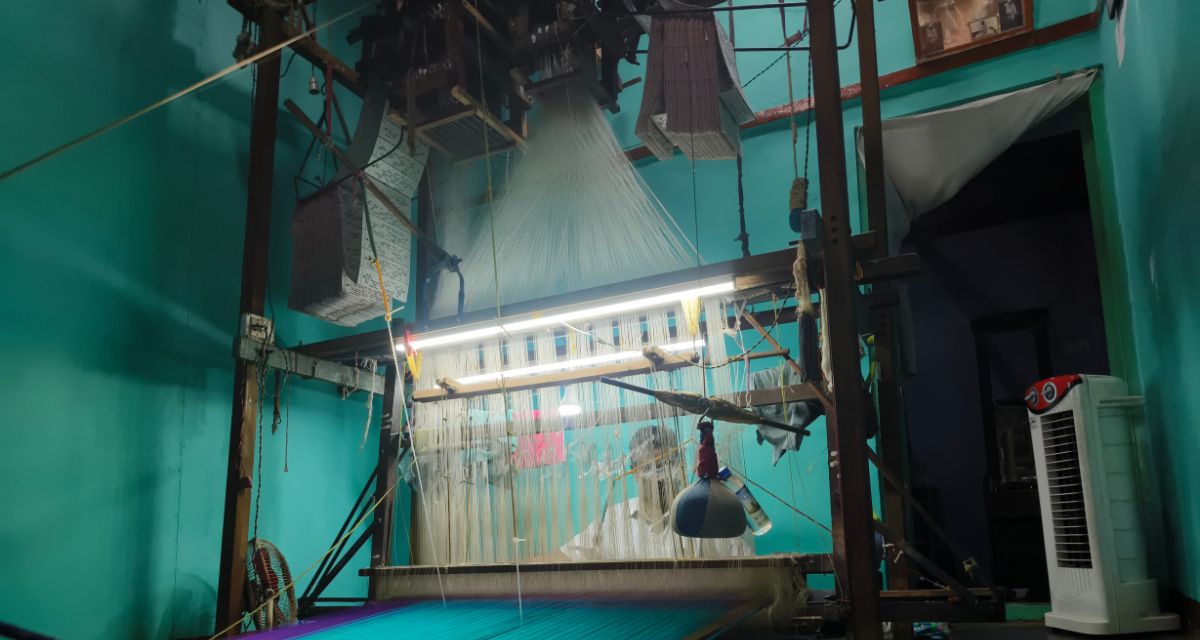
Ironically, he weaves sarees prized for their comfort in hot weather. “This is our identity,” Nagaraj said. “What is the use of recognition when our lives remain exactly the same?”
Nagaraj’s experience is not unique. Even weavers who remain within the cooperative system say the work available through official channels is insufficient to sustain a family.
Mohana Sundaram (52) has woven Negamam cotton sarees for over three decades. Despite being a cooperative member, he said he gets only seven to nine sarees a month from Co-optex.
“How can a family survive on that?” he asked.
Years at the loom have taken a physical toll. “Our tiled-roof houses trap heat. Sitting for seven to ten hours daily has damaged my back,” he said. “Every summer, I get skin infections. I had to buy an air cooler just to work.”
Women at the loom
Alongside men, women form the backbone of Negamam’s handloom economy, yet remain its most invisible workers.
Deepanandhini has woven Negamam cotton sarees for nearly 20 years, continuing a craft passed down through three generations. “My mother wove. My grandmother wove. For us, weaving is not a profession…it is the life we were born into,” she said. “But even after giving our whole lives to this craft, we remain in the same poverty.”
She and her husband earn about Rs 1,100 per saree, which takes two days of joint labour. The same saree sells in the market for Rs 2,500 to Rs 4,000.
“Everyone in the chain makes money except us,” she said.
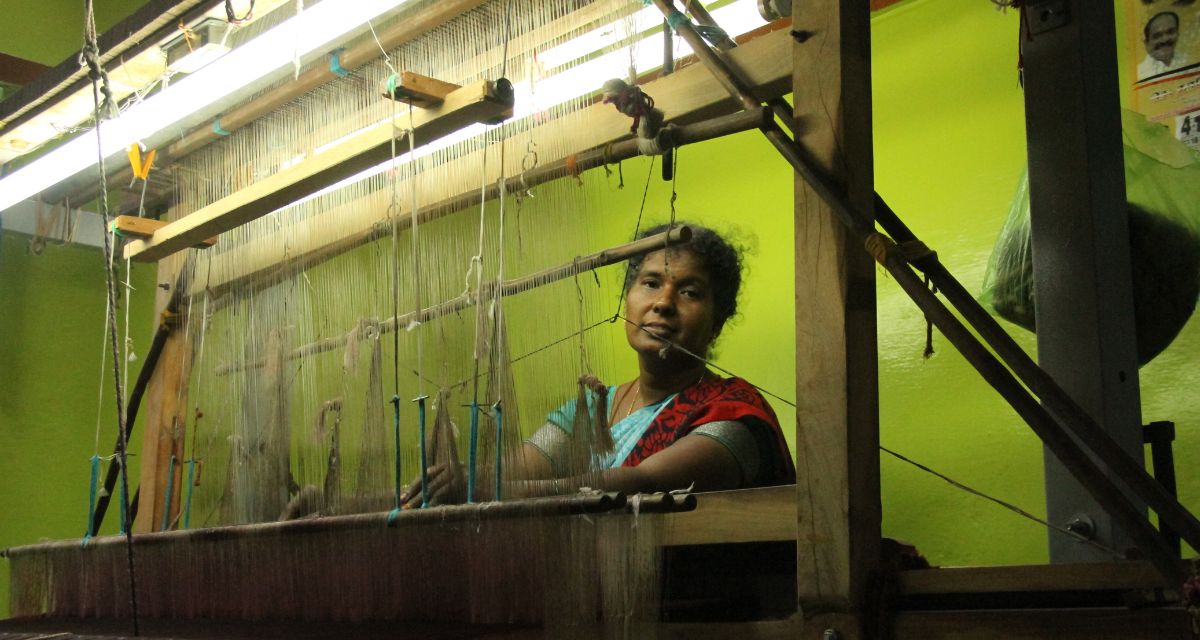
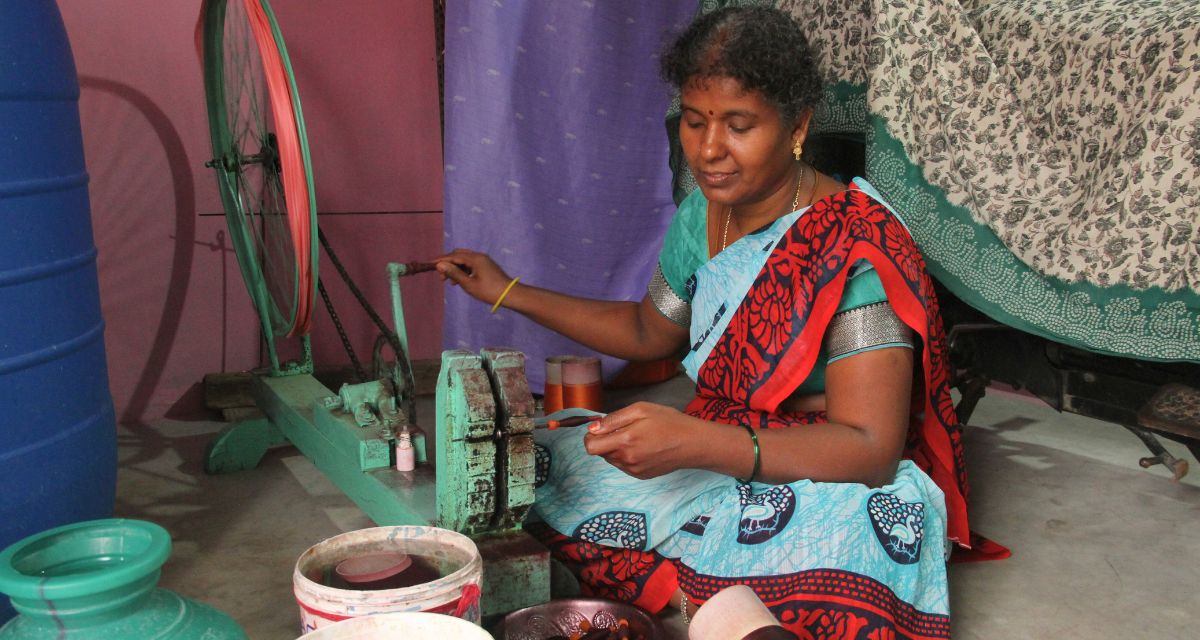
“I have worn a Negamam cotton saree only once…at my daughter’s wedding,” she added quietly. “Even then, we bought the cheapest one. We weave these sarees every day, but we cannot afford to wear our own work.”
During lean periods, many women take up daily wage labour or work under the Mahatma Gandhi National Rural Employment Guarantee Act.
Deepanandhini said she had hoped the GI tag would bring regular orders and better wages. “They said recognition would improve our lives,” she said. “But nothing changed...for festivals, for daily expenses, or for the future.”
Education, she said, is now the only exit. “We send our children to school because we don’t want them stuck at the loom like us. Almost all weavers’ children here have moved to other fields.”
“If things don’t change,” she said, “we might be the last generation of Negamam weavers.”
‘Same struggle, passed on’
If younger weavers feel abandoned, older weavers feel erased.
Savithri (62) has spent 45 years at the loom but does not receive the old-age pension meant for senior weavers, particularly cooperative members above 60.
“I started weaving when I was 19,” she said. “From the day I got married till today, this loom has been my life.”
Her family turned to private buyers out of necessity. “For emergencies, medicine, school fees, private buyers give advances immediately. The cooperative does not,” she said. Leaving the cooperative, however, meant losing access to welfare schemes.
Sundaram said private buyers offer 12 to 17 sarees a month and advances of up to Rs 1 lakh. “In 30 years, the government has given me hardly Rs 5,000 worth of accessories,” he said. “Private buyers support us when we are in trouble.”
“On paper, everything looks beautiful,” Savithri said, gesturing towards the loom. “In our hands, nothing comes.”
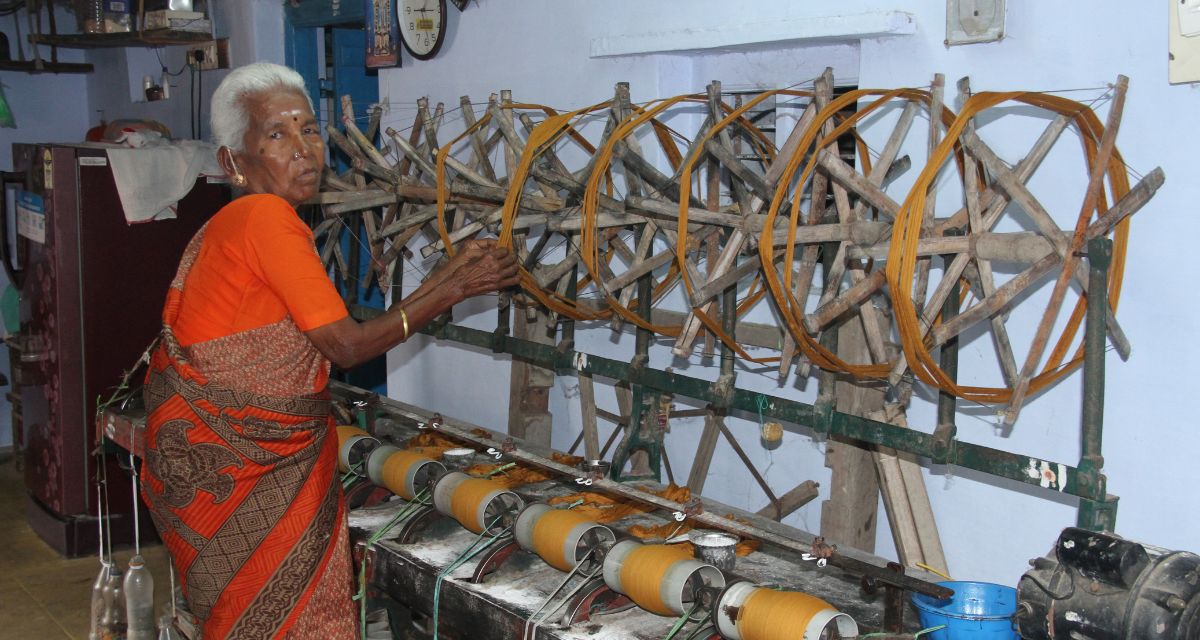
As she spoke, she continued operating the jandham, winding dyed threads—her hands moving steadily, even as the system remained out of reach.
A manager associated with a local handloom cooperative, involved in preparing Negamam’s GI application, said the tag alone cannot change livelihoods.
“To weave one saree, yarn worth about Rs 500 is supplied,” he said. “After two days of labour, the cost is around Rs 1,500. The cooperative adds a 20% margin and sells it to Co-optex or private shops. In the market, it sells for Rs 2,500 to Rs 4,000.”
Payments through cooperatives usually come within two to three days, though delays occur. Private buyers often pay the same day and offer advances, one reason weavers prefer them.
“Without government-led promotion, GI cannot create demand,” he said. “GI tag alone cannot do magic.”
A senior official familiar with the GI Registry process in Chennai agreed. “A GI tag certifies origin. It does not automatically raise wages or create markets,” the official said. “Without branding, buyer linkages and sustained state support, GI remains symbolic.”
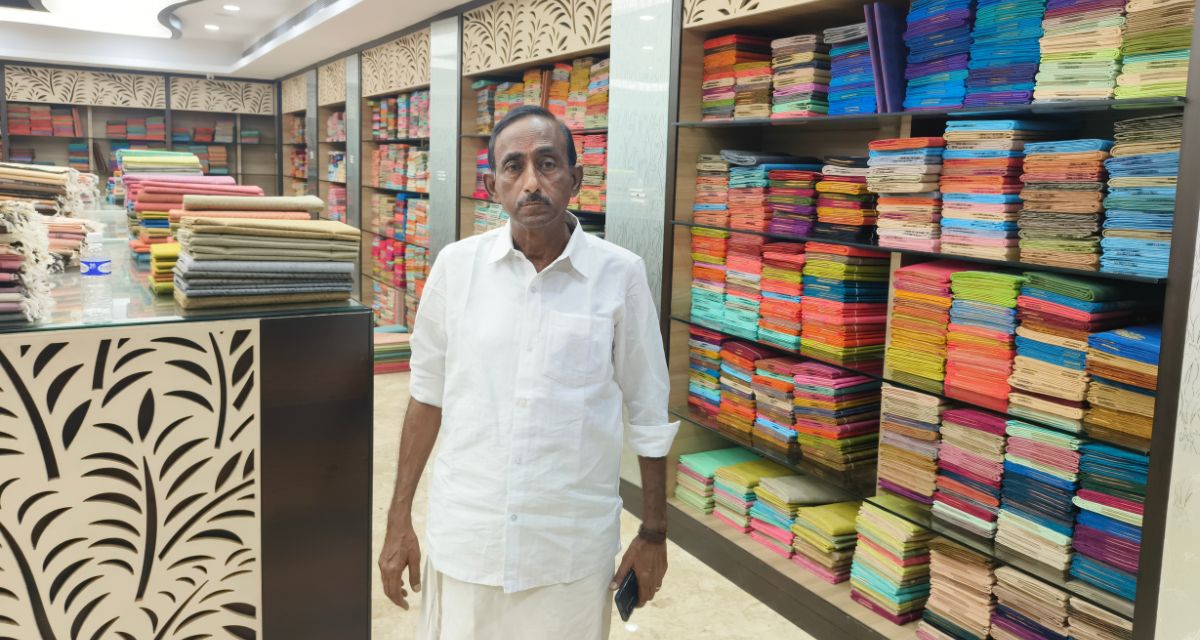
Second-generation textile shop owner N K Nachimuthu echoed this view. “Negamam cotton is our identity. Customers love it, but many still don’t know it has a GI tag,” he said. About 20 weavers work for him, earning Rs 1,100 to Rs 1,500 per saree.
“If sales increase through proper promotion, we can pay more,” he said.
He also pointed to structural pressures. “Powerlooms have weakened handlooms. The 5% GST on cotton makes it worse. Most weavers’ children have moved away.”
What the government says
Bommaiyasamy, Handloom Officer for Coimbatore district, said the government supports weavers through multiple schemes. “We provide free accessories and looms costing Rs 20,000 to Rs 22,000 at a 90% subsidy. Weavers above 60 are eligible for pensions. Benefits are routed through cooperatives,” he said.
At the state level, Handlooms Secretary Amuthavalli said around Rs 50 crore is allocated annually for weaver welfare. “We provide subsidised looms, pensions, housing and scholarships. All Co-optex outlets have been instructed to highlight GI-tagged products,” she said.
On the ground, however, many weavers say these measures have yet to translate into meaningful change. While GI-tagged Negamam cotton sarees are sold at premium prices in showrooms, weavers say their incomes and working conditions remain unchanged.
Cover photo: For 30 years, Nagaraj has been beate the loom thousands of times a day for barely Rs 1,100 a saree (Photo - Prasanth Shanmugasundaram, 101Reporters)
Would you like to Support us
101 Stories Around The Web
Explore All NewsAbout the Reporter
Write For 101Reporters
Would you like to Support us
Follow Us On