In Sangaria, migrants can find work but not security

In Sangaria, migrants can find work but not security
Sangaria, Hanumangarh: Sangaria, a town of around 40,000 people in Rajasthan's Hanumangarh district, has neither large factories nor a strong formal employment structure. Yet it has become a destination for migrant workers from different states. Among them are fruit and vegetable vendors, cart pullers, dhaba workers, taxi drivers, agricultural market labourers, daily-wage workers, and small entrepreneurs. They are not native residents, but for decades they have been part of the town's economy and social life.
Around 3,000 migrants from Punjab, Haryana, West Bengal, Jharkhand, Uttar Pradesh, and Bihar work in Sangaria, with the largest numbers coming from Uttar Pradesh and Bihar.
Ramkaran Gupta (65) is originally from Kalwari Thana in Basti district, Uttar Pradesh. He came to Sangaria about 44 years ago for what was supposed to be a short visit, but ended up making it his home.
“I had come here to visit my uncle. I liked the people and the environment, so I stayed,” said Gupta.
Initially, he sold the popular children's sweet known as "Bombay ki Mithai" while moving through neighbourhood lanes. Later, he started selling popcorn and bhelpuri, and that remains the basis of his livelihood even today. After marriage, he brought his wife to Sangaria. All three of their children were born here. Around 26 years ago, he built his own house. His son now works for a company in Delhi, while both daughters studied through college and are married. "When my parents were alive, I used to visit my village. Now Sangaria itself is my village. My ration card, Aadhaar card, and domicile certificate are all from here," he said.
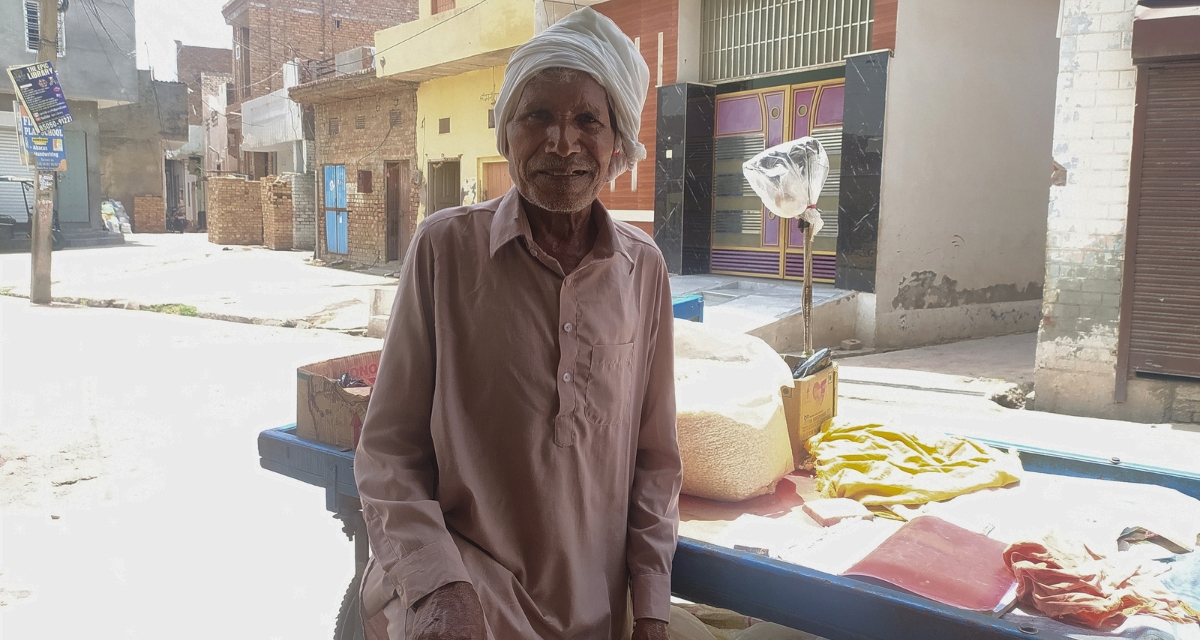 Ramkaran Gupta selling bhelpuri in Sangaria (Photo – Amarpal Singh Verma, 101Reporters)
Most people arriving in Sangaria do not come with a fixed job. They do not move because of advertisements, companies, or government schemes. Often, they arrive with just one connection, a relative, someone from their village, or an old acquaintance. This “invisible network” quietly keeps the town's economy running. It may not be visible in Sangaria's streets, but it can be felt in how one person arrives, calls another, and gradually these chains of relationships create pathways to work, housing, and market access.
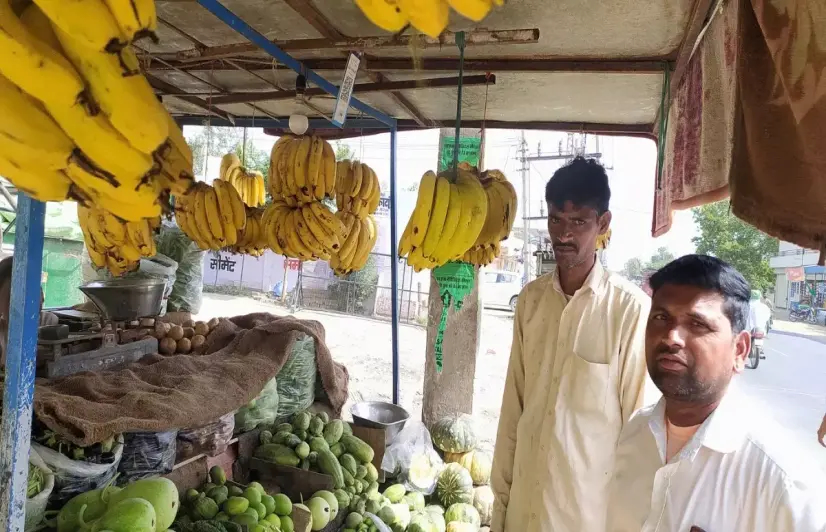
Deepu Pal (27) sells fruits and vegetables on the roadside. He owns a house and lives with his wife and two children, but his story begins with his father.
Pal is from Shahidabad village in Mainpuri district, Uttar Pradesh. He said his father came to Sangaria from the village nearly 40 years ago, travelling about 800 kilometres.
“One of my father's acquaintances was already working here. At his suggestion, he came and started working as a labourer in the vegetable market. Twelve years ago, after passing Class 10, I started selling vegetables. The business runs well enough, and it supports my family,” said Pal.
Limited options
Ankit Yadav (30) is from Hakikatpur village in Farrukhabad district, Uttar Pradesh. He came to Sangaria around three years ago.
"We are four brothers. Our family owns only two bighas of land — it was not enough to survive on. There was no work in the village, whereas there is always some work available in Sangaria. A friend told me opportunities were better here, so I came," he said.
These days, he sells watermelons. As the seasons change, the fruits change — and so does the nature of his work. Earnings are reasonably good, he says, and he manages to send some money home. A local resident has even provided him a place to stay free of charge.
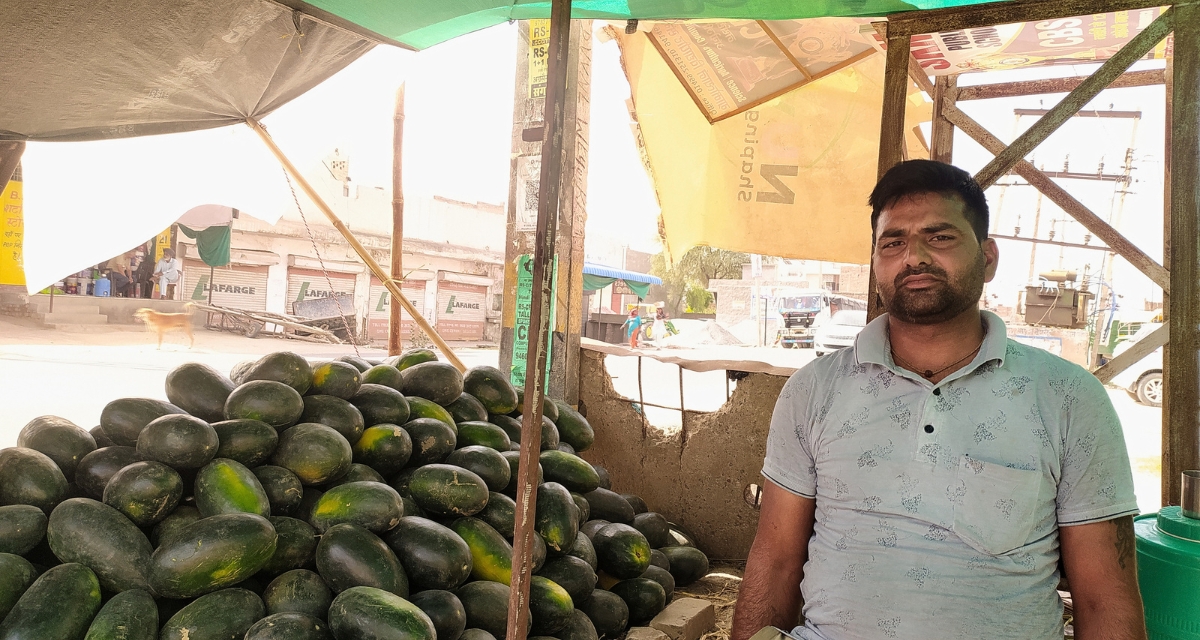 Ankit Yadav selling watermelons in Sangaria (Photo – Amarpal Singh Verma, 101Reporters)
Ratnesh Kumar (31) travelled nearly 1,400 kilometres from Sadullahpur village in Muzaffarpur district, Bihar, to Sangaria. His brother had first worked as a cook in Jaipur before moving to Sangaria and taking up driving, then called Ratnesh to join him.
"I had learned tyre servicing while living in Delhi. My brother told me work was good here, so I came too," said Kumar.
Today, he runs a tyre shop in the town. He later brought his father as well, got married, and now has a child. "Life is going well for the family now," he said.
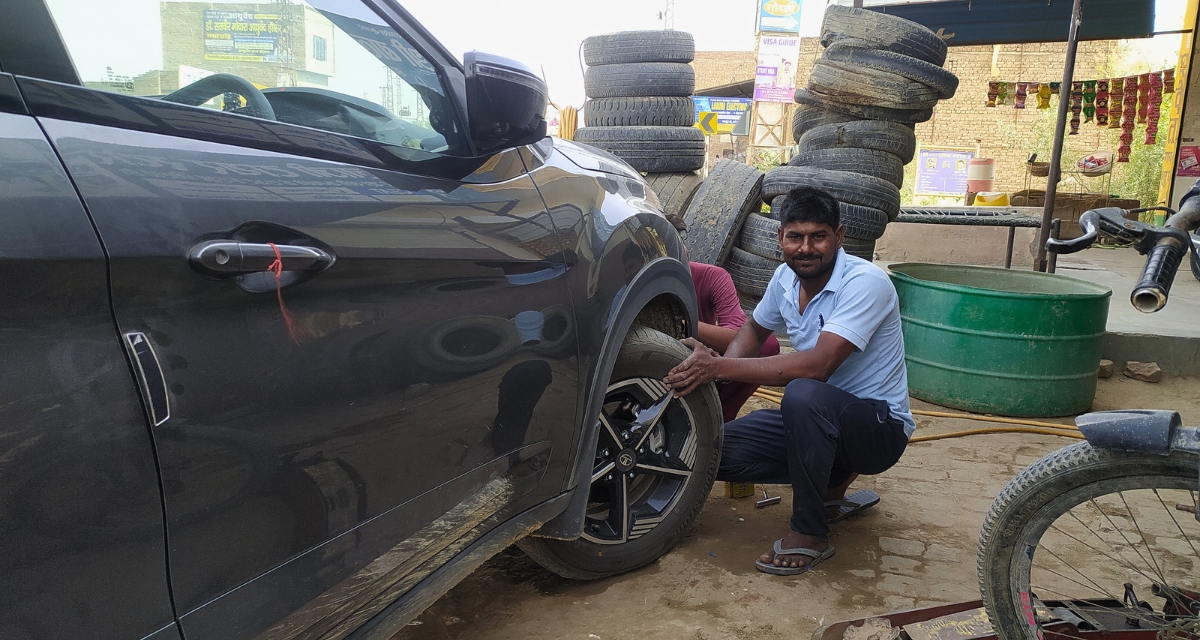 Ratnesh Kumar changing a car tyre at his shop in Sangaria (Photo – Amarpal Singh Verma, 101Reporters)
A sense of belonging
Jayprakash Sharma (48) is from Dhanora village in Jhansi district, Uttar Pradesh. Twenty-two years ago, he moved to Sangat Mandi in Punjab, but things did not work out there. On a relative's advice, he shifted to Sangaria and started a fast-food business.
"Gradually, people became my regular customers. Once the business picked up, I brought my wife Aarti here too," he said. "Today I have my own house, and my two daughters are studying in school."
His wife Aarti said, "We are happy here. Local people are good. During festivals, everyone participates together."
Sharma believes the social structure of small towns is different. "In a big city, a person gets lost in the crowd. Here, people begin to recognise you. Relationships with shopkeepers, customers, and landlords develop quickly," he said
But not every story is equally stable. Those who have managed to establish their own businesses are relatively better off. The experience of daily-wage workers, market loaders and unloaders, and those dependent on temporary jobs is quite different.
Former chairman of the Rajasthan Economic Council, Santosh Rajpurohit, said: "Small towns do not have the visible structures of large factories or government jobs. Instead, an invisible network keeps the market functioning. Vegetable vendors, dhaba workers, taxi drivers, daily-wage labourers, and people connected to markets and agriculture sustain everyday life."
However, he added that this system has limits. "It provides work, but not permanent security. Most jobs operate on trust and verbal agreements. Earnings fluctuate. There is no insurance, no pension, and no guaranteed support. The economy is alive, but insecurity is built into it. If someone falls ill or the market slows down, the impact is felt not only by the worker but by the entire family."
Ajay Kumar, a migrant worker from Uttar Pradesh, puts it simply. "Sometimes there is no work available. And if we fall sick, we lose our daily wages," he said.
The limitations
Rameshwar Verma, state sub-committee in-charge of CITU, said that while the economies of small towns depend heavily on informal labour, workers do not enjoy equal conditions.
"Towns like Sangaria show that India's economy is not driven only by metropolitan cities. Small markets, agricultural mandis, dhabas, and informal labour-based towns provide work to thousands of people. However, many migrant workers involved in loading and unloading receive lower wages than local labourers," he said.
Verma also raised concerns about housing. Most migrants in small towns are forced to share cramped rooms with several others. Despite repeated demands, governments have not built dedicated housing colonies for them. Basic services such as healthcare, housing, education, and labour rights remain weak.
"As a result, the system provides work, but the promise of a dignified and secure life remains incomplete," he said.
Wholesale vegetable trader Omprakash Midha noted that migrants have helped ensure an adequate labour supply in the town, while local residents earn rental income by providing them accommodation.
Cover Image - Deepu Pal selling fruits and vegetables in Sangaria (Photo – Amarpal Singh Verma, 101Reporters)
Would you like to Support us
101 Stories Around The Web
Explore All News