In Charida, Chhau mask-makers are surviving by working nonstop

In Charida, Chhau mask-makers are surviving by working nonstop
Despite recognition for the artform, livelihoods still depend on seasonal work, tourism and travel across states in this West Bengal village.
Purulia, West Bengal: When Bimal Dutta (71) works with clay and paper, he does so slowly, deliberately. “If we want to preserve Chhau, we must preserve this art,” he said. “This is real paper-mâché work. Working with moulds is easy. Handwork needs effort and precision.”
A resident of Charida village in the Baghmundi block of Purulia district of West Bengal, Dutta has been making Chhau masks for decades. His son, Parimal Dutta (39), works alongside him. Together, they represent a craft tradition that has shaped their village’s identity for generations.
Charida is widely known as Mukhosh Gram, or the mask village. Almost every household here is connected to Chhau mask-making, an art that originated as part of the martial folk dance tradition of Chhau, performed in West Bengal, Jharkhand and Odisha. Over time, artisans in Charida expanded the craft far beyond performance masks, turning it into a livelihood that includes idols and decorative sculptures for festivals, homes and public spaces.
Unlike many folk artists in India, Chhau mask-makers in Charida are not among the poorest. But their relative stability comes at a cost: relentless labour, seasonal migration and constant adaptation to market demand.
The Dutta family works from their home, where orders arrive through much of the year. “We get orders for Durga Puja pandals, for idols, and for masks,” Parimal said. “Often, we don’t need to go outside because the work comes to us.”
The small idols made by the family are sold at varying prices, depending on the intricacy of the work. As Parimal told 101Reporters, a Durga idol, one of the more elaborate pieces, costs Rs 12,000 and takes about a month and a half to complete. Most of their work is bulk-based, commissioned by organisers who design themes for Durga Puja pandals and contract artisans to create all the decorative figures apart from the main idol.
“These organisers act like contractors,” Parimal told 101Reporters. “They give us the work, fix the deadline and pay us for the entire lot.”
But not all artisans can rely only on local orders. For many in Charida, travelling outside West Bengal is essential to sustaining their income.
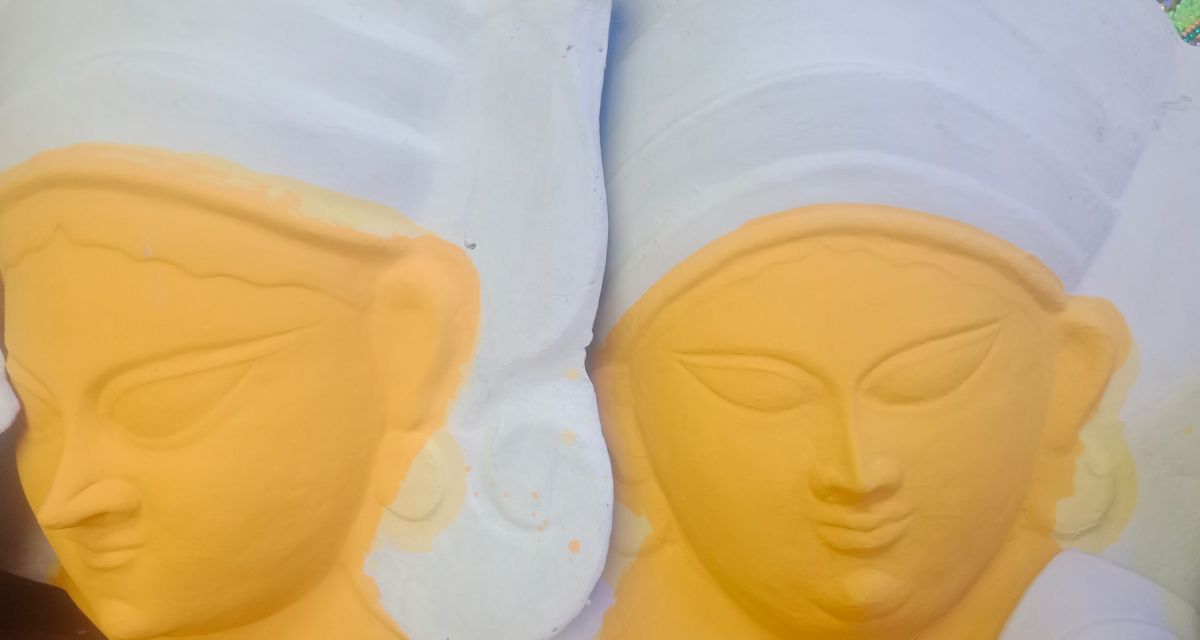 Glimpse of Chhau masks in the making (Photo - Rahul Singh, 101Reporters)
Migration as livelihood strategy
Several sculptors told this correspondent that income from outside work forms the larger share of their earnings, roughly 60%, compared to 40% from local sales.
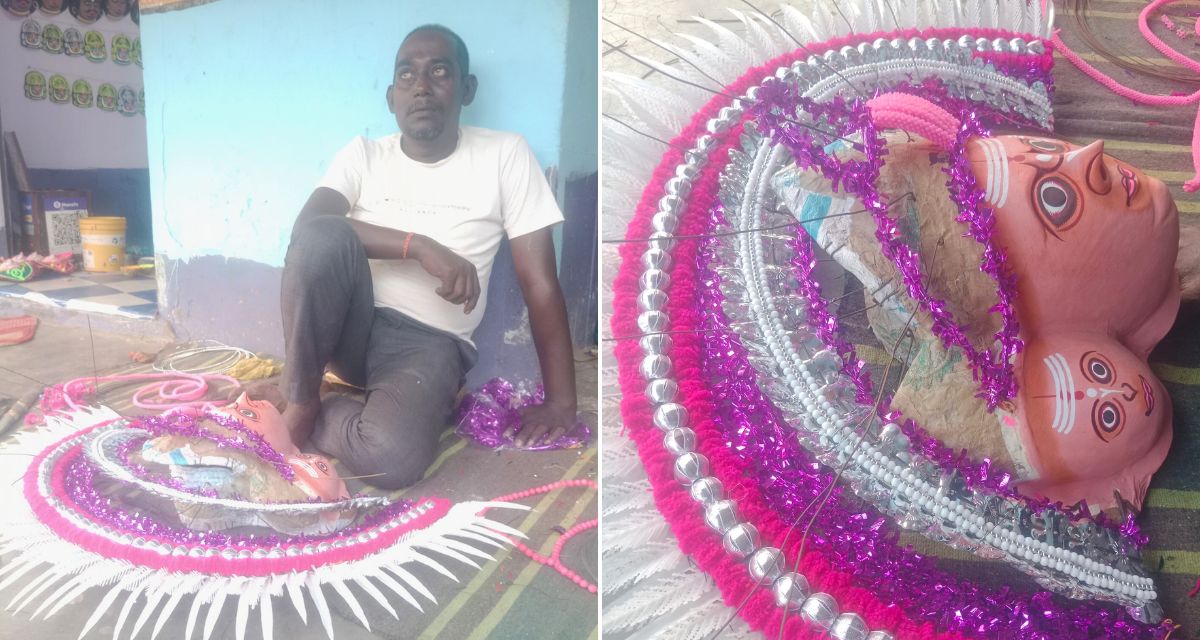
One of them is Bhim Sutradhar (49), a mask-maker who also crafts large idols across states. “We have been going outside for idol-making for 25 years,” he said. “More than 300 artists from this village travel for work.”
Every year, about three months before Durga Puja, Sutradhar travels to Bahari in Madhya Pradesh’s Sidhi district. “That has been my base for many years,” he said. “I rent a small place there and expand when the work increases.”
During the peak season, he rents a larger workspace to accommodate big idols. Once the idols are installed in pandals, he returns to Charida for Puja, leaving his tools and materials stored in a smaller rented room, for which he pays rent year-round.
Even after expenses, Sutradhar said he is able to save over Rs 1 lakh during the three-month Puja season. The rest of the year, he supplements his earnings by travelling to exhibitions and fairs across India, often at the invitation of government bodies or cultural institutions. In his absence, his son Chand Sutradhar (18) manages the family’s shop in Charida.
Artisans invited to government-sponsored fairs receive travel reimbursement and a daily allowance of about Rs 75, Bhim said, adding that while direct sales are limited, such events help artists secure future private orders.
Migration, however, is rarely solitary. “Sometimes, one artist gets a contract and connects others,” Sutradhar said. Artisans from Charida regularly travel to Odisha, Bihar, Jharkhand, Chhattisgarh and Madhya Pradesh, building informal networks that keep work circulating within the village.
Despite its rootedness in tradition, the Chhau craft economy operates through modern systems of contracts, deadlines and inter-state mobility.
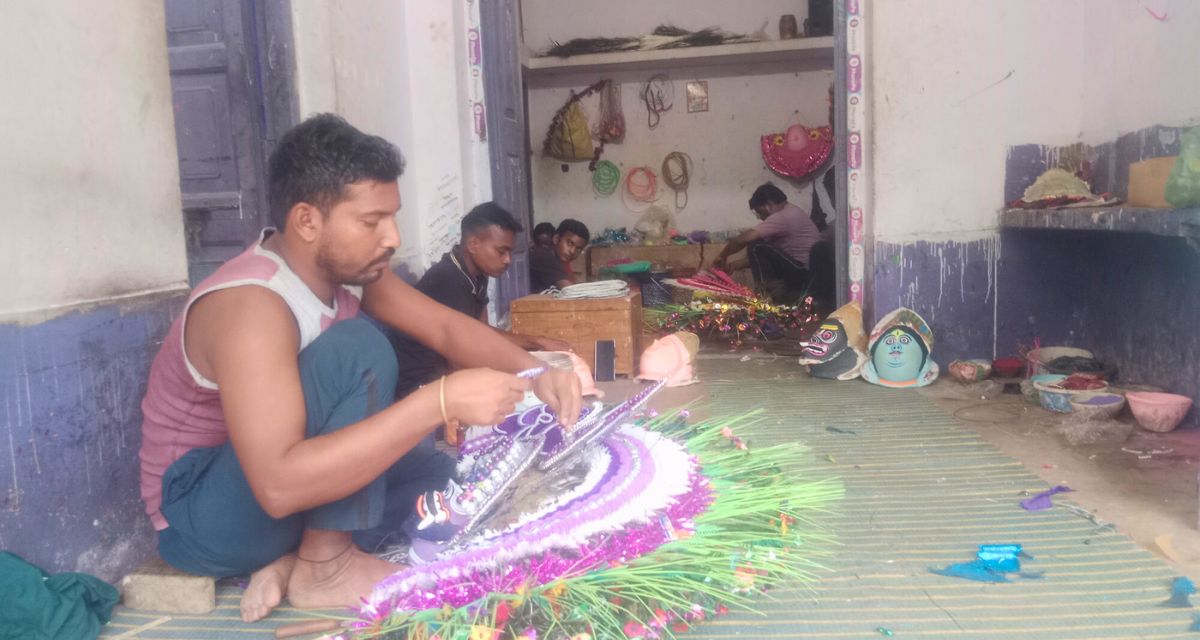 The locals represent a craft tradition that has shaped their village’s identity for generations (Photo - Rahul Singh, 101Reporters)
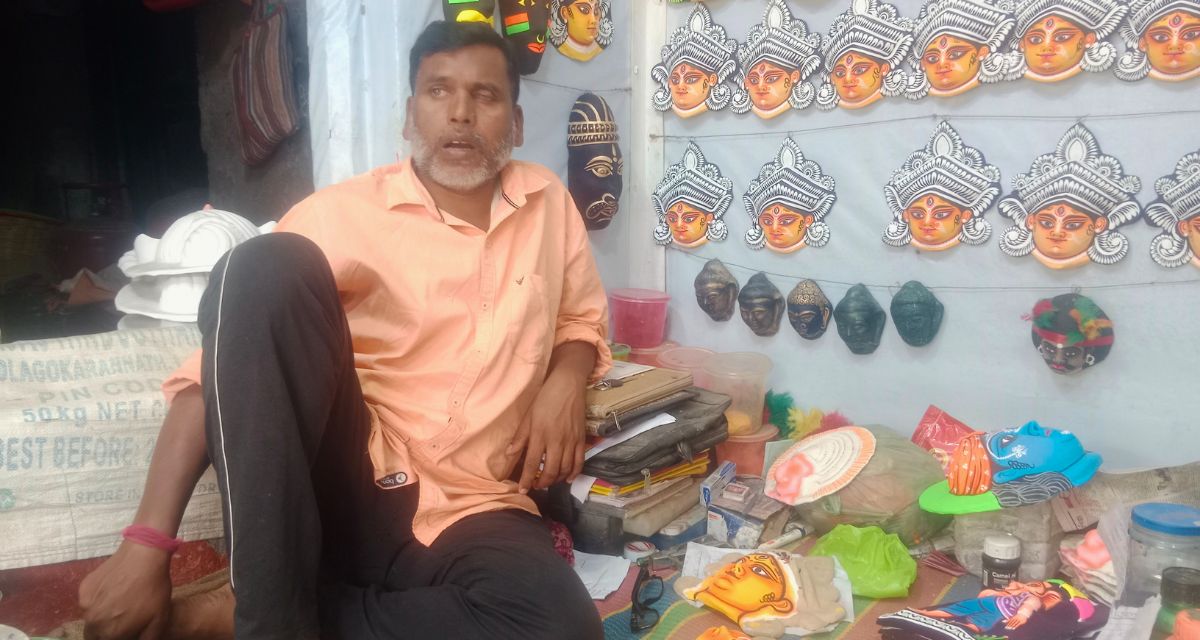
From dance masks to all-round craft
Originally, Charida’s artisans made only masks used in Chhau dance performances. Over time, demand reshaped the craft.
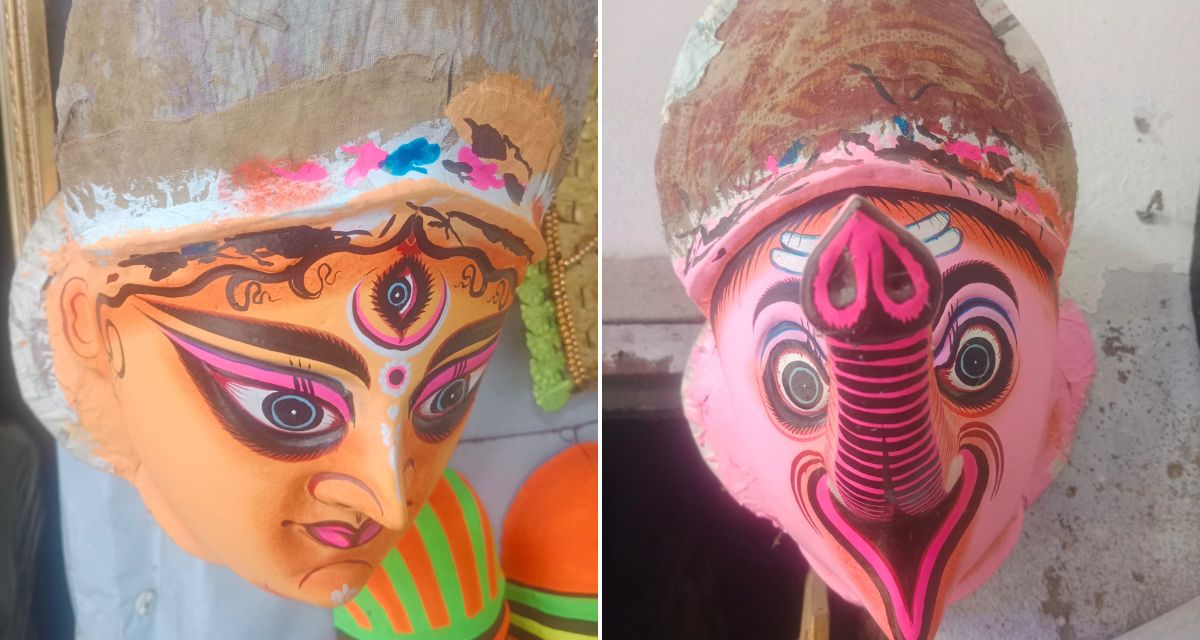
Today, artisans produce idols of Hindu deities such as Durga, Shiva, Ganesha, Vishnu, Kartik, Hanuman and Narasimha, as well as representations of demons, tribal figures and Kathakali-inspired forms from South India.
“Earlier, our work was limited to dance masks,” Sutradhar said. “Now, we make art for homes, hotels, exhibitions and museums. We make what people ask for.”
He recalled a customer once bringing a wooden mummy mask from abroad. “We made a Chhau version of it,” he said. “Earlier, only dance masks and Kirat-Kiratini figures were part of the tradition. Now, every year, new forms are added.”
According to Sutradhar, Purulia-style Chhau alone includes nearly 500 mask types, with new designs introduced annually as performances demand fresh characters and scenes from the Ramayana and Mahabharata.
Decorative Chhau craft sculptures are generally made with seven layers of high-quality paper, while masks used for Chhau dance performances have eight to ten layers. Over time, Chhau masks have become larger, and without sufficient thickness, they lack strength and are prone to breaking.
Lalu Roy (37), a sculptor who primarily makes Chhau masks, said, “We mainly make large masks, and there is demand for our work both in Purulia and in Saraikela, Jharkhand, though the demand is higher in Purulia.” He added, “The demand for Chhau masks peaks between Durga Puja and Chaitra Sankranti.”
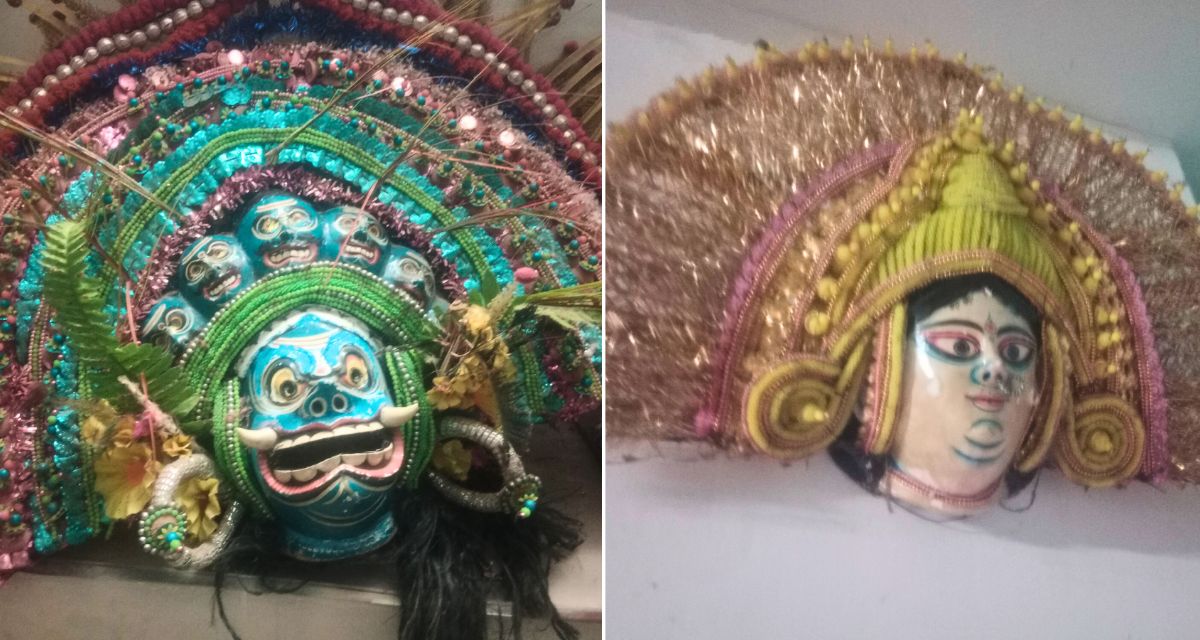 Almost every household in Charida is connected to Chhau mask-making, an art that originated as part of the martial folk dance tradition of Chhau (Photo - Rahul Singh, 101Reporters)
Recognition helps, but unevenly
The Chhau dance, which draws from both folk and martial traditions, was inscribed on UNESCO’s Representative List of the Intangible Cultural Heritage of Humanity in 2010. In 2022, Purulia Chhau Mask received the Geographical Indication (GI) tag – a name or sign identifying a product as originating from a specific location, possessing unique qualities, reputation, or characteristics due to that origin.
Bhim told 101Reporters, “In 2004-05, our village had only about 10 shops selling Chhau masks. Now there are 130. Out of these, 31 shops have received GI tags since 2022, while 20 others have been approved and are awaiting certification.”
“Locally, GI doesn’t matter much,” Sutradhar said. “Tourists here want cheaper products. But outside the state, GI helps. Buyers trust the authenticity and pay better.”
“The GI tag gives us pride,” he added, “but unless there is regular training, marketing support and online selling facilities, young people will not stay in this work.”
While recognition has raised Chhau’s profile, its economic impact is shaped largely by dance performances, tourism and inter-state work.
Charida’s mask-makers are closely linked to Chhau dance troupes that perform across the country. Kartik Singh Munda, a Chhau dancer from the village, said troupes of around 35 members travel for 15 to 30 days at a time, with performers typically earning about Rs 1,000 per day, especially between January and June when demand is highest.
Tourism also plays a crucial role in sustaining local sales. Charida lies close to Ayodhya Hills, one of Purulia’s major tourist attractions, and most visitors stop at the village to watch mask-making and buy souvenirs. “About 90% of our tourist sales come from people already visiting Ayodhya Hills,” an artisan said.
To cater to this market, artisans have adapted their materials and designs. Traditionally, Chhau masks were made from clay and layers of paper bonded with natural glue. Today, many use cardboard and lighter materials. “For tourists, we make smaller masks so they’re easy to carry,” Sutradhar explained. “People want durability.”
This shift is also tied to growing interest in Chhau performances beyond eastern India. “When we go to make idols in other states, we also help connect Chhau troupes with local organisers,” Sutradhar said.
Even though the Government of West Bengal and central cultural agencies have taken some initiatives—such as providing stalls at fairs, small grants and awards—many artisans say the support remains inadequate. Dipali Dutta (39) said, “We hear about schemes, but only a few people get benefits. Many of us still have to buy our own materials, and the cost of paints and paper has gone up.”
The West Bengal Khadi and Village Industries Board is yet to respond to 101Reporters on the welfare efforts taken for Chhau mask artists.
At the same time, some institutional support has emerged through collaborations outside the state machinery. Prabir Banerjee, regional manager of Bangla Natak.com, which works with Chhau artists in West Bengal and Jharkhand, said a resource centre for Chhau mask-makers has been developed through a collaboration between UNESCO and the state government. He added that efforts have also been made to train artisans, link them to markets and promote their work on social media.
For now, Charida continues adapting, travelling, innovating and negotiating markets far beyond the village. “We don’t want charity,” Sutradhar said. “Only steady work and respect. Chhau is our identity. We just want it to live on.”
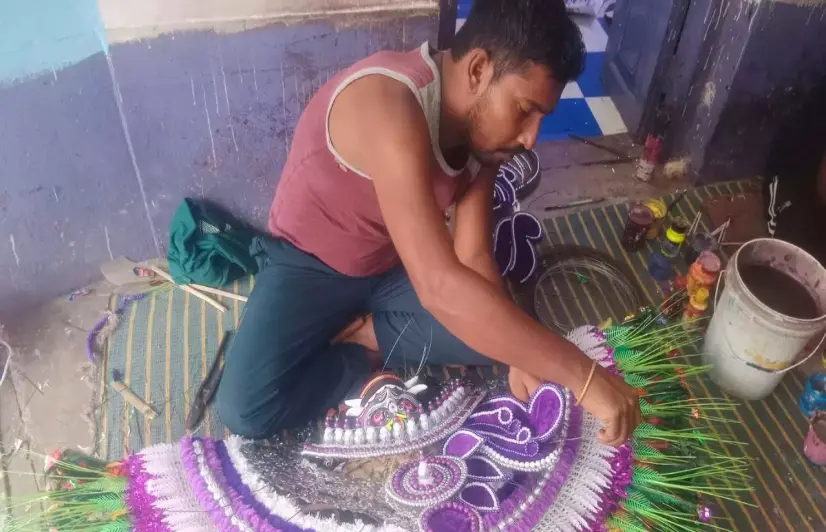
Cover photo - An artist making vibrant Chhau masks (Photo - Rahul Singh, 101Reporters)
Would you like to Support us
101 Stories Around The Web
Explore All News