How an Assam panchayat built a self-sustaining waste management system

How an Assam panchayat built a self-sustaining waste management system
Nagaon, Assam: For the last 24 years, Narayan Chandra Shil and Madhabi Shil, a shopkeeper couple who set up their stall twice a week at the Jumarmur weekly market in Assam's Nagaon district, had their lives overshadowed by unmanaged waste. Narayan Chandra, in his early 50s, frequently suffered respiratory issues, while Madhabi, in her late 40s, dealt with recurring headaches and skin problems.
"Waste disposal in the market was pathetic, especially after market days… Wednesday and Sunday. For days afterwards it was difficult even to enter or pass by, as garbage piled up unattended," the couple told 101Reporters. "The condition was so unbearable that many times we were compelled to burn the waste openly."
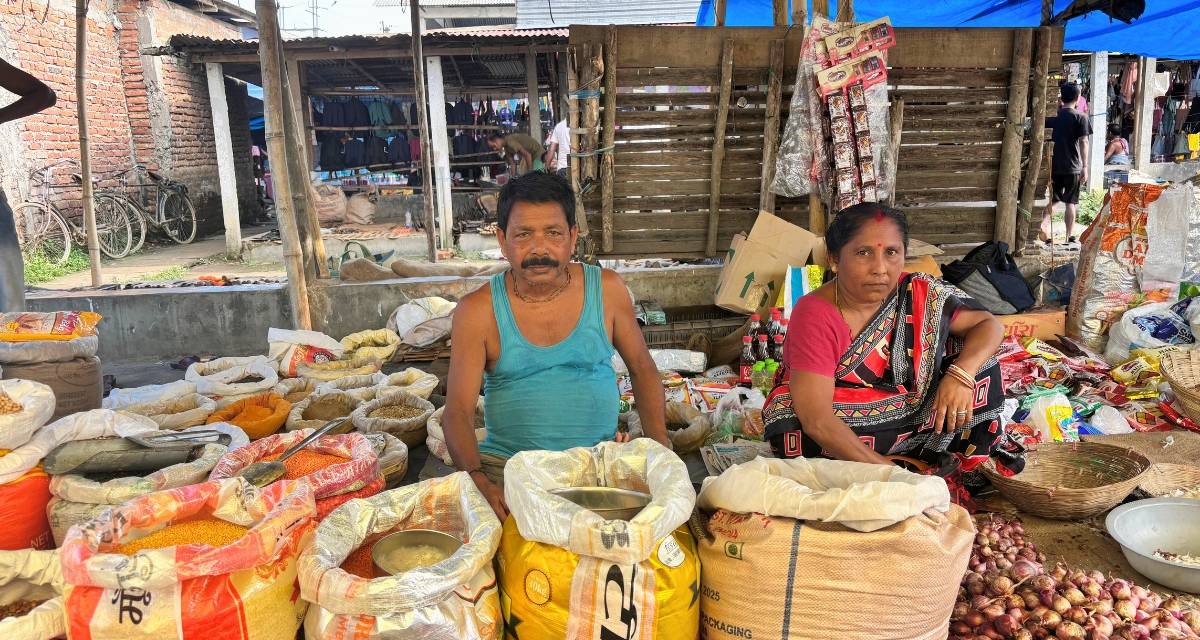 Narayan Chandra & Madhabi Shil at their makeshift shop in Jumurmur bazaar (Photo - Sayantani Deb, 101Reporters)
That changed two years ago, when the Jumarmur Gaon Panchayat set up a centralised waste segregation facility as part of its solid waste management initiative.
"The market generates around 100 kg of waste every week—about 50 kg each on Wednesdays and Sundays—and the pile-up was not just foul-smelling but also generated toxic air that affected nearby residents. So a centralised waste segregation facility was built under the Mahatma Gandhi National Rural Employment Guarantee Act (MGNREGA) during 2023-24," said Nitu Bora, the ward member under whose jurisdiction the market falls.
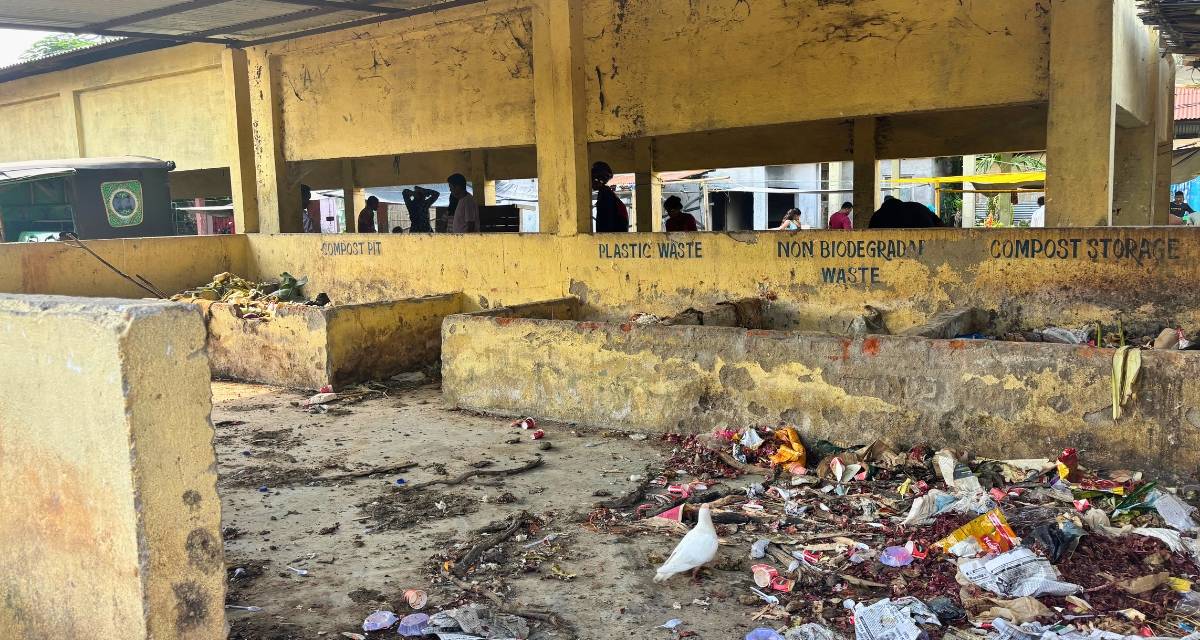 Centralised waste deposit & segregation facility (Photo - Sayantani Deb, 101Reporters)
Former Gram Panchayat Secretary Rajeeb Dev Goswami said the facility was constructed at a cost of Rs 1.75 lakh, with 30% of the funds coming from the 15th Finance Commission grant and the remaining amount provided by the Public Health Engineering Department.
Located about 20 km from the district headquarters in Nagaon, Jumarmur Gaon Panchayat falls under the Kathiatali Development Block. Spread across 252.36 hectares and six revenue villages, it is home to nearly 14,000 people from Hindu, Muslim and Christian communities. In 2023-24, the panchayat jointly won the second prize in the Clean and Green category of the Deen Dayal Upadhyay Panchayat Satat Vikas Puraskar (DDUPSVP), receiving a cash award of Rs 37.5 lakh along with a trophy and citation.
"Keeping every corner of the panchayat clean and waste-free is one of my prime focuses, and we're using various methods to do it," said Ummul Maskin, president of Jumarmur Gaon Panchayat. "Waste management in rural areas is often seen as difficult, but as a team, Jumarmur wanted to prove that rural communities can build a sustainable environment if everyone works together."
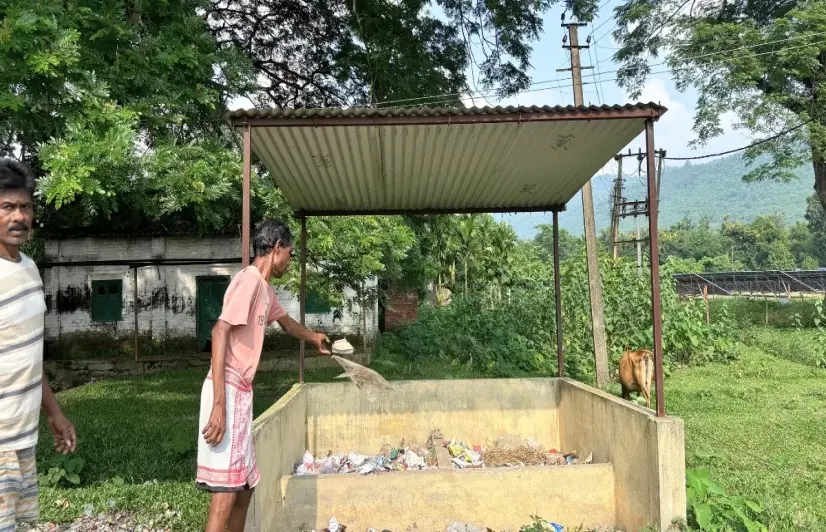
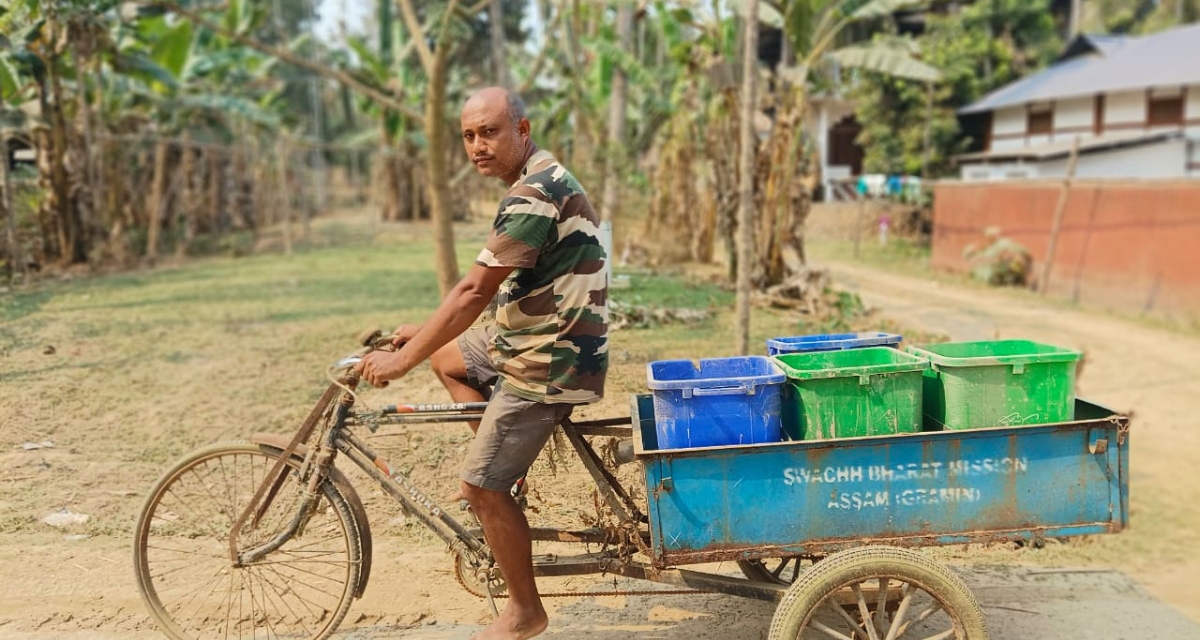
The panchayat's first step was to set up mini waste collection centres in each ward. Waste collected through door-to-door collection is deposited at these centres, which residents can also use directly. From there, it is transported by e-rickshaw to the centralised segregation facility. Waste generated at the weekly market, however, is taken directly to the central facility on market days.
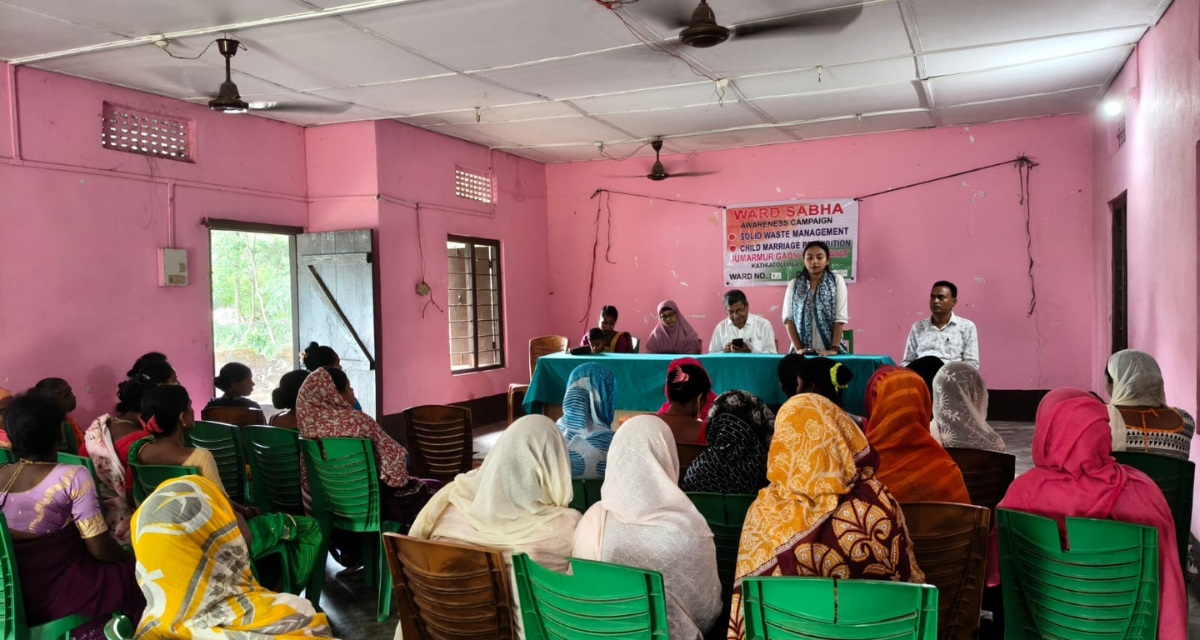 Gram sabhas at the panchayat (Photo - Sayantani Deb, 101Reporters)
Maskin said convincing villagers to adopt the new system was initially a challenge.
"Proper waste disposal is more a mindset than anything else. At first, many were reluctant. They were used to dumping garbage in their backyards or by the roadside, or burning it, so adjusting to the new rules was difficult. We brought in Self-Help Group (SHG) members to guide them," she said.
Women from local SHGs then began visiting households to spread awareness.
"We visited every household, holding sessions especially with women since they manage most household activities. We educated them on why waste management matters and how to segregate organic and inorganic waste," said Badrabati Kalita, a member of Pub Kawaymari Kanaklata Aatma Sahayok Gut.
"At first, people found it difficult because waste segregation was a completely new concept. But we kept visiting homes, explaining that the whole village's environment would suffer if waste wasn't managed properly. Slowly, they understood and changed their behaviour," Kalita added.
SHG members also explained how unmanaged waste can block drains, pollute land and water bodies, and how open burning harms both humans and animals. Gram sabhas were held at various stages to reinforce these messages.
Changing habits
"It's now mandatory for every shopkeeper in the market to deposit waste at the designated spot in the segregation facility on market days. Those who don't face consequences, but everyone complies," Madhabi said. She added that the market, once difficult to sit in all day because of scattered waste, is now clean and healthy.
The change has extended beyond the marketplace. Sixteen-year-old Ankurima Bora begins each morning by checking whether her household's waste has been properly segregated before the collection vehicle arrives.
"As soon as I wake up, I check the backyard to make sure everything is arranged before I do anything else. On period days, I keep sanitary napkins in a completely separate bag, since mixing them with regular waste can be a health and environmental hazard," she said.
Gaon Burah Dipak Saikia said changing decades-old habits required sustained effort.
"Villagers usually follow practices they've seen for decades, and changing that mindset is difficult. But with joint efforts from the panchayat, SHGs and concerned citizens, the awareness campaigns against careless dumping and plastic burning have paid off," he said.
Saikia said the village still needs an improved drainage system to ensure rainwater flows out smoothly, a demand he has been raising with the panchayat since becoming Gaon Burah in 2023.
Innovative strategies
Goswami, who oversaw the financial aspects of the initiative, said the panchayat received Rs 1.55 crore under the 15th Finance Commission grant. Of this, Rs 90 lakh was used to construct 36 community toilets, Rs 2.5 lakh was allocated for solid waste management and another Rs 2.5 lakh for purchasing e-rickshaws and tricycles used for waste collection. The tricycles collect waste from households and transport it to the ward-level collection centres, while the e-rickshaws carry the waste from these centres to the centralised segregation facility.
The remaining funds were used to construct boundary walls for village schools, temples and namghars, besides building paved block roads, Goswami said.
He said the panchayat soon realised that government grants alone would not be enough to sustain its cleanliness and waste management efforts.
"A few years ago, when the Assam government announced it would procure foodgrain from local farmers, villagers asked us to build a godown where they could store grain in exchange for rent to the panchayat. Since we were already working on cleanliness, greenery and waste management, and needed funds beyond what was allocated, the panchayat decided to construct a 30x20-foot godown on the panchayat office premises," Goswami said.
Since 2023, the godown has generated Rs 5,000 a month in rent, which is used entirely to support cleanliness, greenery and strengthen the waste management system.
"We've even hired two safai karmacharis, whose salaries are paid entirely from this rental income," he said.
The panchayat also earns nearly Rs 20,000 annually through trade licences issued to a rubber company and a petrol pump operating within its jurisdiction. Goswami said this revenue, along with the rental income, is used for village maintenance and beautification.
He added that household and market waste is now scientifically segregated into seven categories for disposal and recycling, with organic waste converted into compost and plastic and other recyclable material separated for sustainable handling.
Block Development Officer Sweta Pradhan Sarma credited continuous gram sabhas with ensuring community participation.
"The awareness reached even the last person in the community, and participation has grown significantly. None of this would have been possible without community support," she said.
Maskin said she never imagined the panchayat would receive national recognition.
"Coming from such a remote place, it was beyond imagination," she said.
The panchayat received Rs 37.5 lakh in prize money under the Deen Dayal Upadhyay Panchayat Satat Vikas Puraskar, which it plans to use for initiatives focused on women's empowerment and building a child- and women-friendly village.
Cover Image - Local residents using mini waste collection centre (Photo - Sayantani Deb, 101Reporters)
Would you like to Support us
101 Stories Around The Web
Explore All News