Under the disappearing shade of the khejri tree

Under the disappearing shade of the khejri tree
As horticulture expands in western Rajasthan, the desert’s oldest tree, and the livelihoods it sustained, are fading.
Barmer, Rajasthan: “Odh paludo khejdiyo rai, khejdiyo rai
Mathe betho morudiyo rai, mathe betho morudito rai”
“Wrap me in the shade of the khejri tree, may the peacocks live above.”
This folk song still echoes across the villages of western Rajasthan.
But the tree it celebrates, the khejri, the desert’s oldest companion, is quietly disappearing.
For centuries, the khejri shaped life in the Thar. It provided shade in extreme heat, fodder for livestock, and food in times of scarcity. During the Chhappaniya famine of 1899-1900, its leaves and bark sustained people. Under its canopy, marriages were held, and local deities worshipped. The tree was not an ornament of the desert landscape; it was its infrastructure.
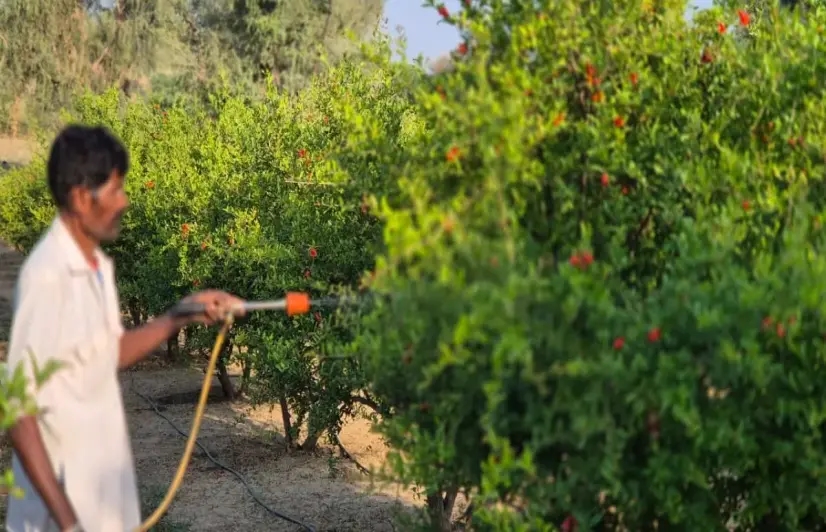
Today, across western Rajasthan, khejri trees are being cut down for solar power projects and, increasingly, for horticulture. Landscapes once defined by dunes, native shrubs, grasses and grazing herds are being cleared and replanted with pomegranates, date palms and other commercial crops. The desert is turning green, but at a cost that cannot easily be reversed.
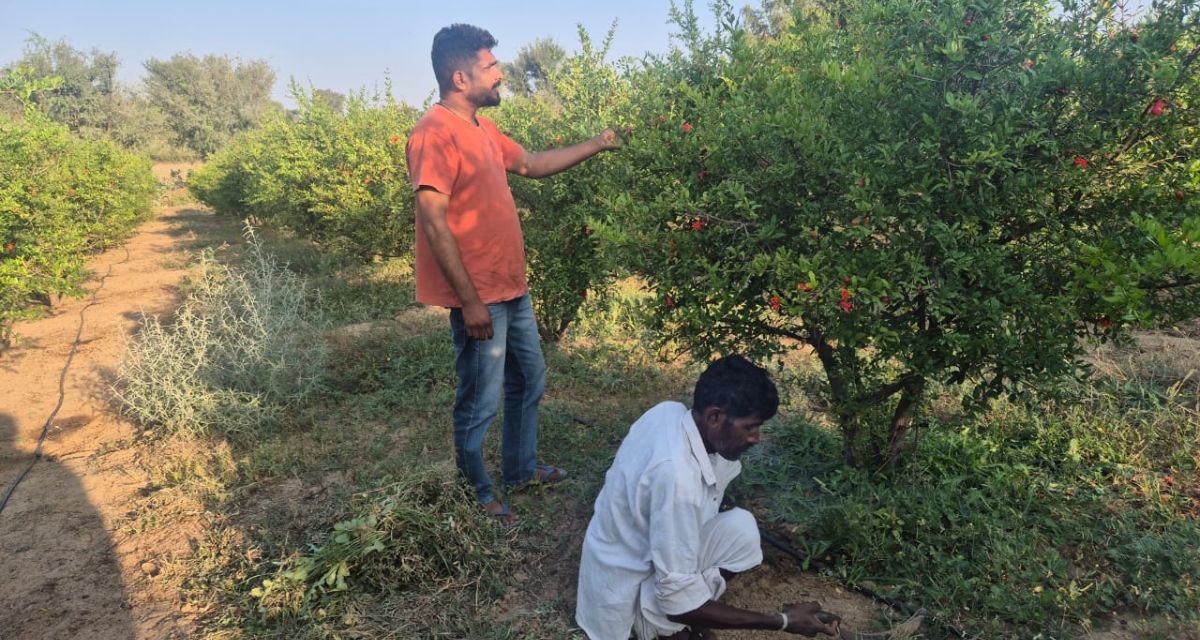
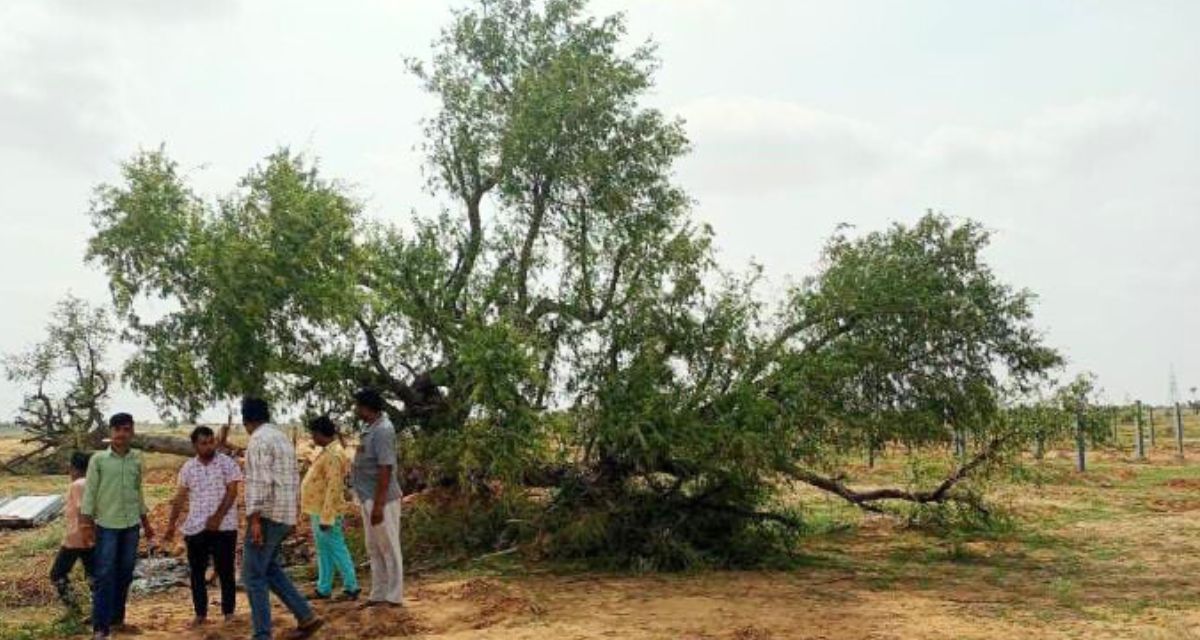
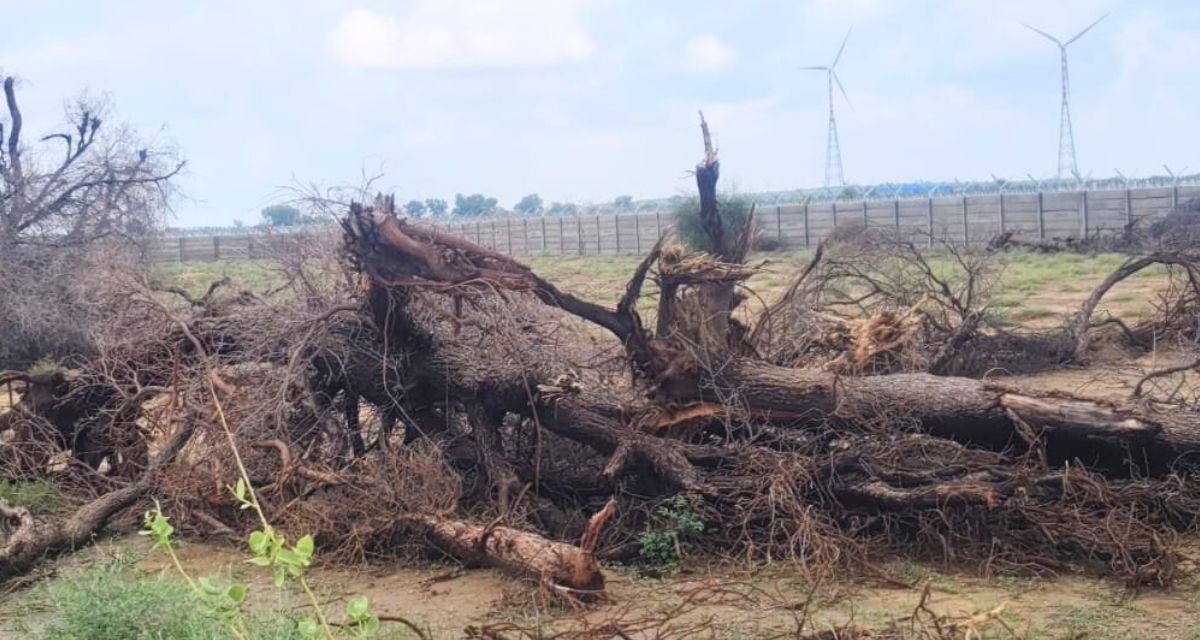 (Above) Remains of Khejri trees cut down for a solar plant in the Shiv area of Barmer; (Below) A tenant farmer cultivates pomegranate in Itwaya village of Balotra district (Photos - Salim Attar, 101Reporters)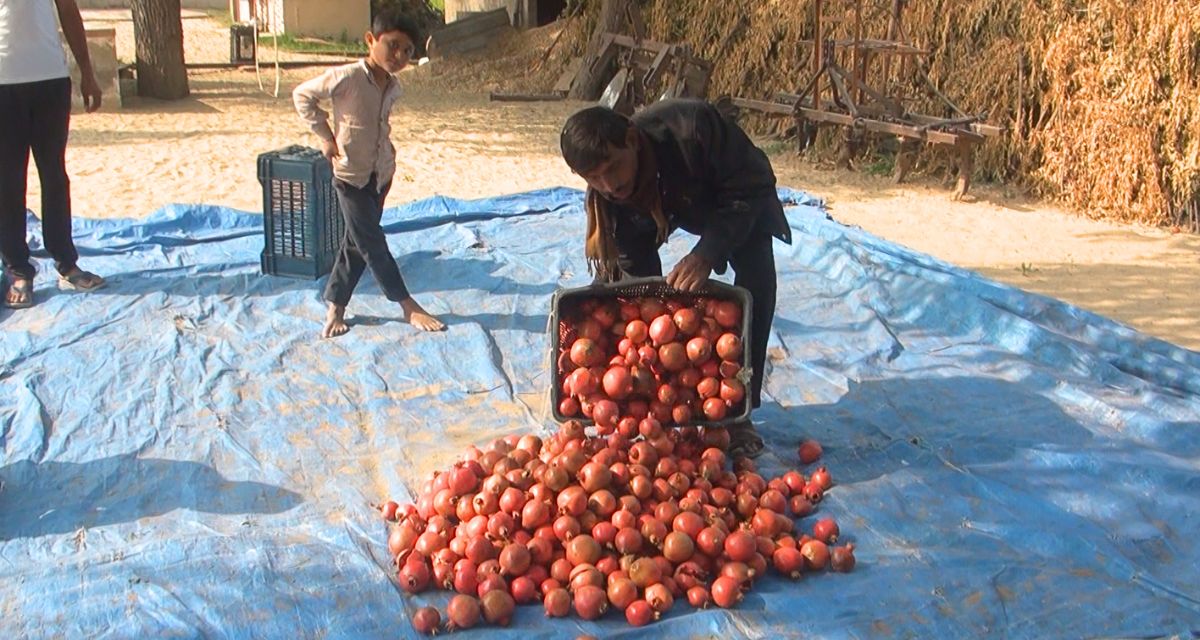
What cannot be undone
Horticulture in the Thar requires total land clearance. Native vegetation—trees, grasses, herbs and shrubs—is removed to make way for irrigated plantations. This is not a cosmetic change. It dismantles the grazing ecology that pastoral communities depend on.
“To practice horticulture, land has to be completely cleared,” said Gaduka Ram Dewasi, a pastoralist from Asada village. “Everything is destroyed. Where will animals graze?”
As grazing commons shrink, livestock numbers have collapsed. Tikma Ram Dewasi, a livestock farmer from Budiwara village, once kept nearly 200 animals. Today, he has fewer than 20. “Leaves and waste from horticulture are full of pesticides,” he said. “If sheep or goats eat them, they die. Even cattle avoid them.”
This loss is structural. Once land is converted to horticulture, it no longer supports pastoral livelihoods. The khejri, rohida, jal and native grasses that sustained animals through droughts cannot simply be replanted at scale. Their disappearance marks the end of a system built around mobility, commons and resilience.
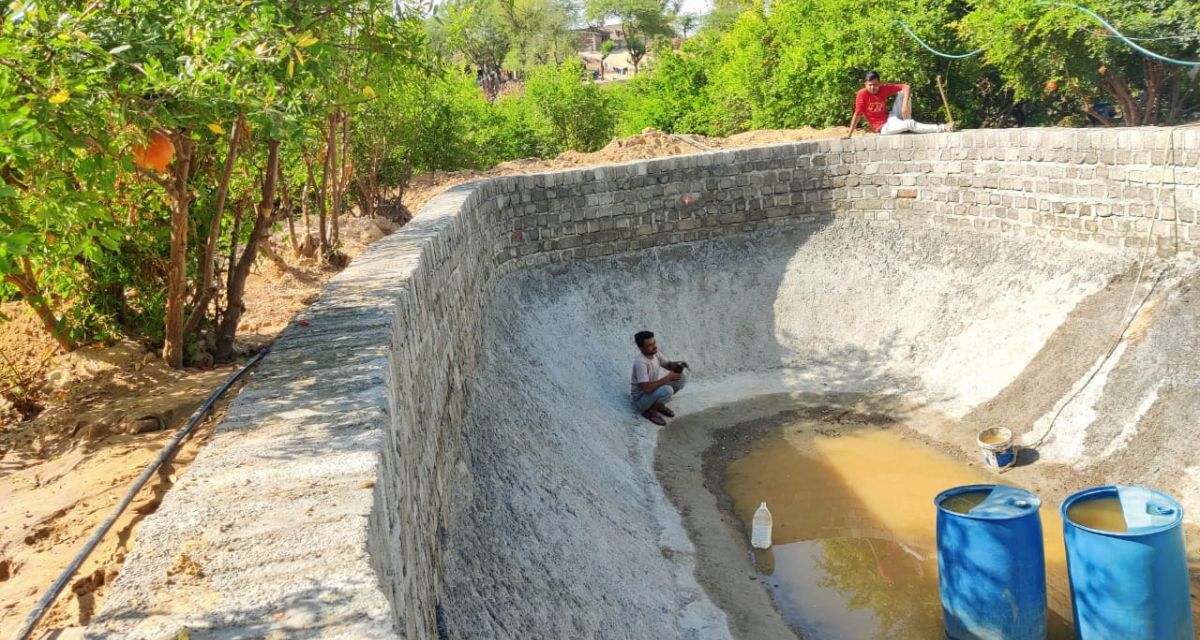 A farmer in Kalan ki Sarai in Padru, Barmer, has constructed a pond on his farm to store water for drip irrigation (Photo - Salim Attar, 101Reporters)
A green desert, engineered by water
The rapid expansion of horticulture has been enabled by technology, particularly drip irrigation and groundwater extraction. Farmers pump water from borewells, store it in lined ponds and irrigate crops precisely. Thousands of such ponds are now being built every year, supported by government subsidies.
Much of this groundwater is saline. Drip irrigation makes its use efficient, but it does not change the underlying constraint: water is being mined in a desert ecosystem.
“This greening is entirely engineered,” said Dr Dhruv Raj Godara, founder of the Institute of Date Palm Research and CREE. “Without drip irrigation and ponds, horticulture here would not be possible.”
The system produces high returns in good years, but it replaces rainfall-based resilience with permanent dependence on infrastructure, electricity and groundwater. It postpones scarcity rather than resolving it.
The ecological cost goes deeper—literally.
According to Dr Bhagirath Chaudhary of the Asia Biotechnology Centre, deep-rooted horticultural plantations fundamentally alter desert soils. “They disturb the soil profile to a depth that traditional crops never did,” he said. “Once this happens, land becomes unsuitable for traditional desert farming for generations.”
Crops such as millet, moth bean, mung, sesame and guar—adapted to low water and erratic rainfall—cannot be reintroduced once soil structure is altered. The shift to horticulture locks land into a single economic pathway, experts said.
Why farmers are switching
Before 2001, agriculture in the Thar Desert was largely traditional and rain-fed. Farmers grew pearl millet (bajra), mung bean, moth bean, guar and sesame—crops adapted to low water but vulnerable to excess rainfall. Even in good years, this system demanded heavy labour while offering limited yields and profits, leaving many farmers dissatisfied.
Over the past two decades, scientific and technological interventions have transformed farming in western Rajasthan. Techniques such as drip and sprinkler irrigation, sub-surface drip systems, fertigation, salt-tolerant crop varieties, polyhouse cultivation and limited hydroponics have made agriculture viable even with saline or scarce water. These methods have increased productivity and water efficiency, but have also fundamentally altered desert ecosystems.
Rainfall patterns, once predictable, have become erratic. Delayed or intense rains now leave fields fallow for longer periods, while traditional crops like millet and pulses, once resilient even in drought, fail under heavy downpours.
India Meteorological Department data show that Barmer received 389.5 mm of rain in 2025, far above its normal of 272.7 mm. Between 2001 and 2023, annual rainfall across the Thar increased by 64%, accelerating what scientists describe as the “greening” of the desert.
Against this backdrop, the move away from traditional farming is not difficult to understand.
Mustaq Ali (30), a farmer from Padru village in Barmer district, explained: “Traditional farming here is entirely rain-fed… With so little water, agriculture was barely possible.”
Three years ago, Ali cleared trees from 12 bighas of his 50-bigha landholding to plant 1,200 pomegranate saplings. “From my first crop between November and March 2024, I earned around Rs 10 lakh,” he said. As he awaits the next harvest in January–February, he expects even higher returns.
Earlier, Ali grew castor, radish, cumin and wheat during the rabi season, and millet during kharif, when rains permitted.
For large landholders, the shift has been lucrative. Narpat Singh (40), from Itwaya village in Balotra district, owns around 200 bighas of land, 50 of which now host 2,000 pomegranate trees. “Earlier, I grew castor, mustard, cumin, wheat and groundnut,” he said. “After paying partners, I earned barely Rs 2-3 lakh. With horticulture, a good pomegranate harvest can increase income fourfold in a single year.”
Uneven gains
For landless workers, the change has also been significant, but uneven.
Hiralal Bhil, who works as a haali, a year-round farm labourer, receives one-fifth of the harvest. This year, his share amounted to Rs 2.25 lakh. “Earlier, daily wage work barely met our needs,” he said. “Now I have built a permanent house.”
According to Babulal Meena, former assistant director of the Krishi Vigyan Kendra in Gudhamalani, Barmer district, had a cultivated area of 16.07 lakh hectares in 2022-23. Agricultural Statistics of Rajasthan show that the total cropped area in western Rajasthan has expanded to between 16.56 and 17.5 lakh hectares, with millions of new trees planted annually.
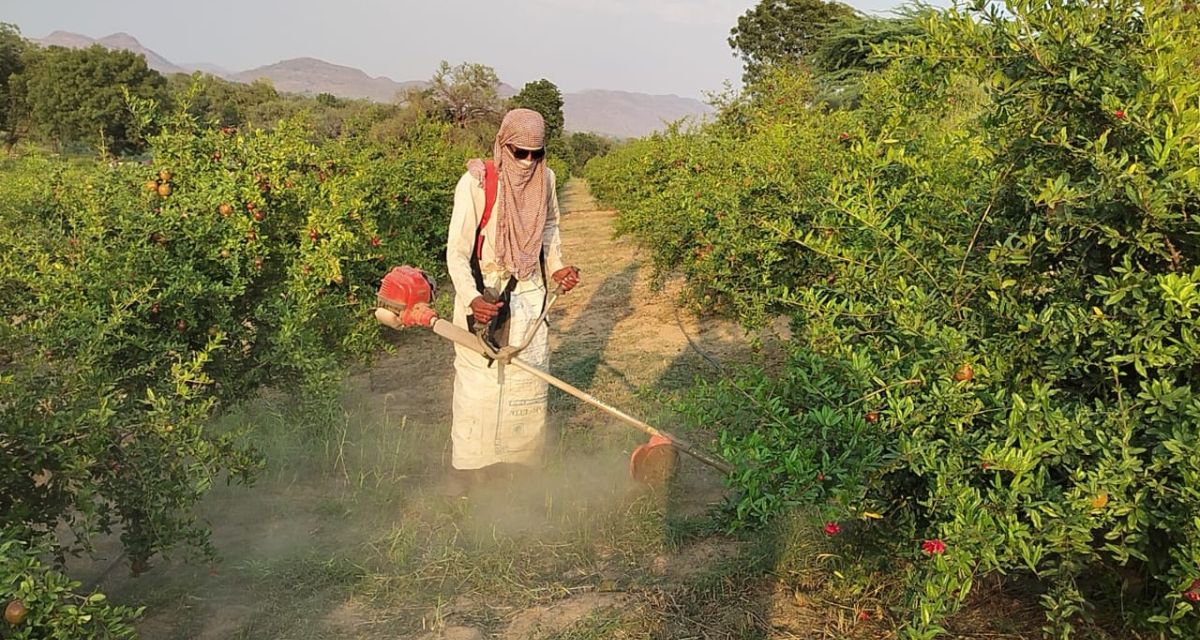
Labour relations are also shifting. Where workers were once compensated with food (laya), they now receive either a fixed wage of Rs 500-700 per day or a share of produce—often two to four times the value of their labour. Women, earlier restricted to seasonal farm work earning around Rs 250 per day, now find year-round employment in horticulture, earning up to Rs 500 daily.
Small farmers are also finding work on large horticulture farms when their own land remains unsuitable. Jamal, a farmer from Jagsa village in Balotra district, tends 5,000 pomegranate plants on a large landowner’s farm. “My share of the income is four times what my own four hectares could produce,” he said.
Others lease out their land. Bhatta Ram Seju (30) from Pau village has leased his 20 bighas for 13 years. “There is no electricity or borewell,” he said. “I cannot afford horticulture on my own land.”
Women labourers have benefited most visibly. “Earlier, farm work lasted only four months and paid Rs 200 a day,” said Phooli Devi (55) from Pau. “Now we get year-round work.”
Rukma Devi, another worker, described the pace: “Cleaning plants, removing flowers, digging pits, fixing drip pipes, we do it all.”
Who is left out
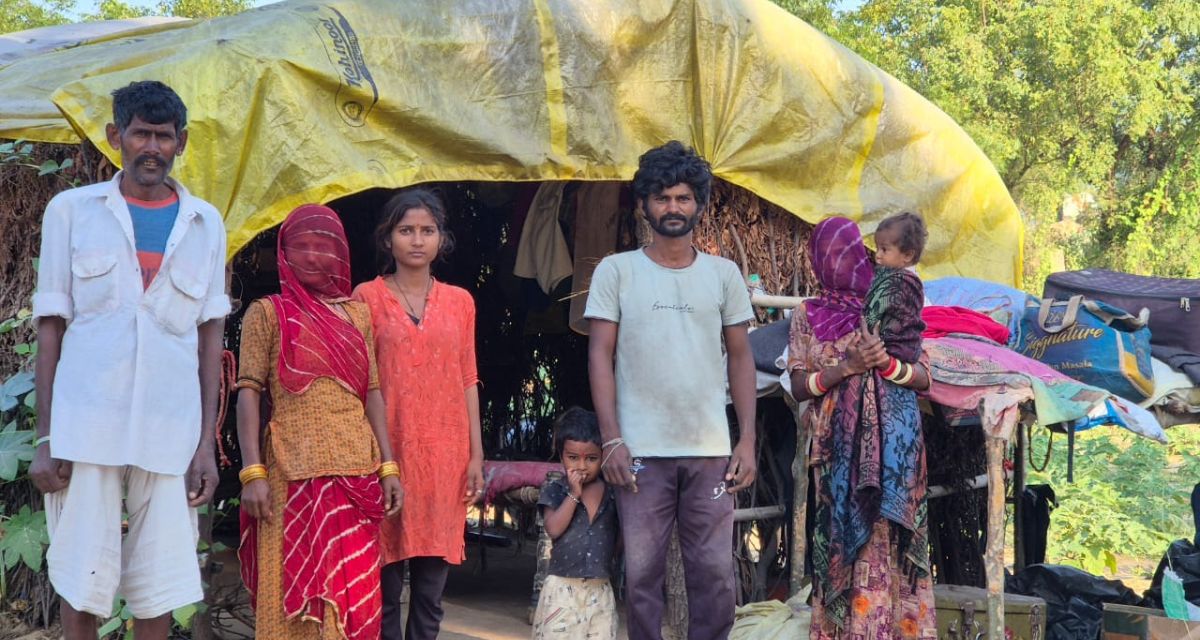
Under the engineered system, pastoralists lose grazing land. Small farmers without electricity or borewells lease out land they can no longer farm. Sharecroppers and labourers work year-round for a harvest that comes once, bearing the brunt of crop failure in bad years.
Paburam Bhil (35), who migrated from Balyana village to Padru, works year-round caring for nearly 1,000 pomegranate plants under a sharecropping arrangement. “After a full year of work, I earned only Rs 1.5 lakh,” he said.
This year was worse. Excessive rainfall damaged the crop. “The owner sold pomegranates worth about Rs 4 lakh, but I received only Rs 60,000,” Bhil said.
Ramesh Meghwal, a landless worker from Siner village who has worked in pomegranate fields for five years, echoed the sentiment. “The work is intense, from morning to evening,” he said. “But the income is only enough to survive. Life doesn’t move forward…it just goes on.”
Losing more than trees
The disappearance of khejri trees also threatens desert food systems. The GI-tagged dish ker sangri, made from khejri pods and native shrubs, is central to Rajasthan’s cuisine and rural incomes.
“If khejri trees disappear, our livelihood will collapse,” said Samsuddin, a sangri trader from Kalyanpur in Balotra. In villages around Jodhpur and Barmer, women collect 20-40 kg of ker and sangri each season, which is dried and sold for Rs 500-Rs 1,000 per kg during the wedding season.
Excess rainfall and tree loss have already reduced yields. “The trees now give more leaves and less fruit,” said Shanti Chaudhary from Baytu. “Fungal infections have increased.”
Solar parks and industrial projects have compounded the loss. In villages across Shiv, Bariada, Balai, Dhrav, Sochra and Ranji Ki Basti, thousands of native trees have been felled in recent years. Replantation, where it occurs, rarely replaces mature desert species or restores grazing land.
A narrowing future
Technology-driven horticulture has brought unprecedented prosperity to a section of farmers in western Rajasthan. In 2022-23, Rajasthan produced about 1,59,644 tonnes of pomegranates, with Barmer alone accounting for 1,02,112 tonnes from 18,300 hectares. Produce from the region is now exported to Nepal, Bangladesh, Dubai and other markets.
But as more land is converted, common grazing areas and native vegetation continue to shrink, deepening social and ecological divides.
“In my area, Doli Dhawa, conservation is my biggest concern,” said Sharvan Patel, a conservationist. “People call this development green, but it is not environmentally friendly.”
Experts warn that productivity alone cannot define sustainability in a desert. Restoration of indigenous trees, protection of grazing commons and clear land-use planning are essential if horticulture is to coexist with pastoral and traditional farming systems.
Without such safeguards, the transformation underway risks hollowing out the desert’s ecological foundation. The Thar may look greener, but it will be more fragile, dependent on groundwater, chemicals and infrastructure, and unable to sustain the livelihoods and cultures it once supported.
The shade of the khejri does not return quickly. Once lost, it may not return at all.
This project is supported by the Internews Earth Journalism Network with funding from the Swedish International Development Cooperation Agency (Sida) Cover image - More rain is bringing new land under horticulture in the Thar, requiring the clearing of native vegetation —trees, grasses, herbs and shrubs (Photo - Salim Attar, 101Reporters)
Would you like to Support us
101 Stories Around The Web
Explore All News