Timber trade takes root in Bundelkhand as farmers sell trees


Timber trade takes root in Bundelkhand as farmers sell trees
Hamirpur, Uttar Pradesh: Around the major towns of Hamirpur and Mahoba, timber yards are becoming an increasingly familiar sight. Locally called addis, these yards are where freshly cut wood is brought from villages, unloaded, sorted and stacked before being sent by truck to markets in other parts of Uttar Pradesh and to Rajasthan and Madhya Pradesh.
The traders who run the yards say most of the timber comes from farmers who have agreed to sell trees standing on their land. Farmers, too, describe a trade that has expanded rapidly over the past two or three years, as contractors began approaching them directly and offering cash for trees that had previously been left standing along field boundaries.
Mansingh Yadav, a farmer from Akauna village in Hamirpur district, says the practice spread through the villages after outsiders began approaching tree owners. “Farmers here are getting their trees cut. It has been two or three years since some outsiders started coming to the village and began negotiating with farmers or people who owned trees to buy them. Farmers earned good money in return, and after seeing others make money, the practice spread. Even those who have just one or two trees are now willing to get them cut.”
Among the commonly felled species, he says, are Babool, Ber, Riunjha and Chilbil, although “whatever is available” is increasingly being cut.
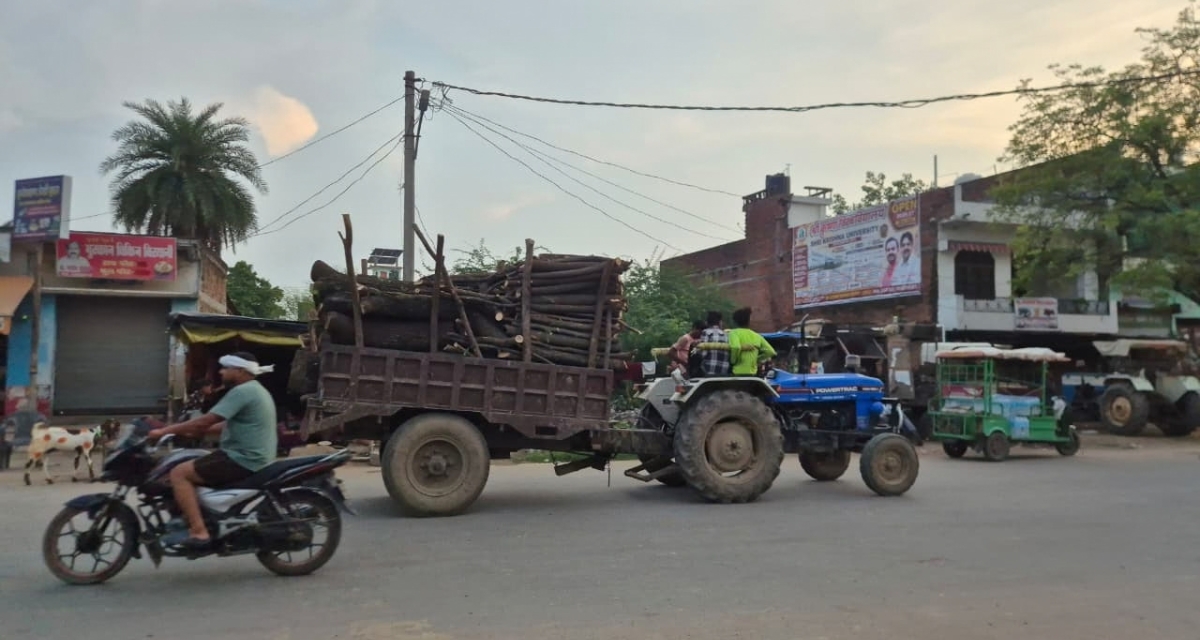 Wood being transported to the market for sale (Photo - Aman Gupta, 101Reporters)
Source of cash
For farmers, the change is partly economic. Vipin, from Dhawari village in Mahoba, says trees once had a practical value that is now less important because rural households have become less dependent on wood. “Earlier, farmers did not cut the trees growing along the boundaries of their fields because they provided firewood, fodder for cattle and wood for other household needs. But with LPG becoming more accessible and modern agricultural equipment increasingly being used, the need for firewood and wood for other purposes has declined.”
Trees, he says, are now more often seen as a source of cash alongside farming.
Some farmers also planted trees with precisely that expectation. Shiv Singh, from Sena village, says many boundary trees planted years ago have now matured and can be sold. Others are removing trees because they need money or want to increase crop production. Trees standing within fields can reduce sunlight reaching crops, he says, and rising timber prices have changed the calculation for farmers who had previously tolerated them.
For some, however, the decision comes under financial pressure. Chandrashekhar, a farmer from Patkhuri village in Sarila tehsil of Hamirpur district whose name has been changed, says around 200 teak trees stand along the boundary of his nine-bigha plot(agricultural land). He has also planted Neem, Shisham and Peepal on his land.
Last year, when his daughter was getting married, a contractor came to know about the situation and began repeatedly trying to persuade him to sell the trees.
“After that, he tried very hard to persuade me to get the trees cut and made hundreds of phone calls. I know how I managed to resist,” he says.
According to Chandrashekhar, contractors looking for farmers who own trees are now common in villages, including people who specifically seek out households that may be more likely to sell because they urgently need money.
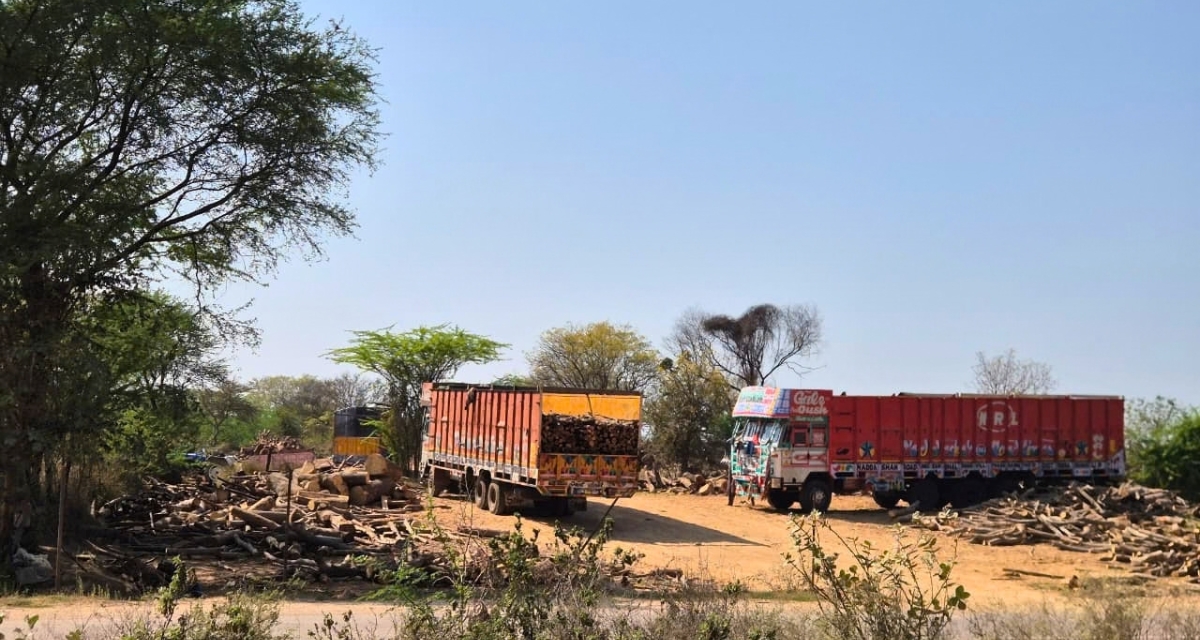 Wood being transported from farmers’ land to a dumping yard (Photo - Aman Gupta, 101Reporters)
Contractor’s system
The growth of the trade has also created a network of people who handle everything between the farmer and the timber yard.
Vivek Rajput, a contractor involved in the business, traces the recent expansion of the trade to the construction of the Bundelkhand Expressway. He says large-scale tree cutting for the project around 2020-21 made traders aware of the amount of timber available in the region. Traders from outside subsequently began entering the market and offering local people money to find farmers willing to sell trees.
As the business became profitable, more local contractors entered it, and timber yards began appearing on the outskirts of towns.
Ashok, another contractor who spoke on condition of anonymity, describes a system in which contractors handle almost the entire process. “Our job as contractors is to find farmers who own trees and are willing to have them cut, get the trees felled safely and transport the cut timber securely to the yards.”
Once a farmer agrees to sell, the contractor negotiates the price, arranges the cutting and organises transport. “There is a complete system for this — where and whom to pay, how much to pay, when to load the tractor and when to move it. Everything is managed.”
The same system determines what happens once the timber reaches a yard. Vakil, another timber trader, says farmers only need to tell contractors how many trees they have. The contractor can arrange the rest, including cutting and transport, while the farmer is paid according to the agreed market rate.
He says prices vary by species and size. Trees such as Ber, Chilbil and Babool, he says, are fetching around Rs 350-500 per quintal.
Transporters have become part of this expanding chain. Nikhil, who has carried timber on his tractor for the past three years, says he originally used the vehicle for agricultural work but began renting it out to timber traders.
Most trips start around 7 pm and continue through the night until 8 am, he says. If the distance is short, the tractor can make four or five trips in one night. Drivers are given details in advance about where the wood has to be collected, who owns it and where it is to be taken.
At the timber yards, wood from different farms is brought together, sorted by size and quality and then sold onwards.
Yard operators insist that the trade itself is legal. Gulab Singh, who runs a timber yard in Gohand, says he buys only species whose felling and sale are permitted by the government and that most of his stock comes from farmers. Bharat Chaubey, another operator, says the business is run through registration and tax formalities and that he holds a licence from the Mandi Samiti.
Rajesh Kumar Verma, secretary of the Naveen Mandi Samiti in Rath, confirms that licences are issued for timber trading. He says licensed traders can operate across Uttar Pradesh and that outside traders working in the area are required to obtain permission and pay mandi fees.
But the Mandi Samiti's role, he says, is limited to licensing and revenue. Determining whether timber has been legally felled and what species it belongs to is the responsibility of the Forest Department.
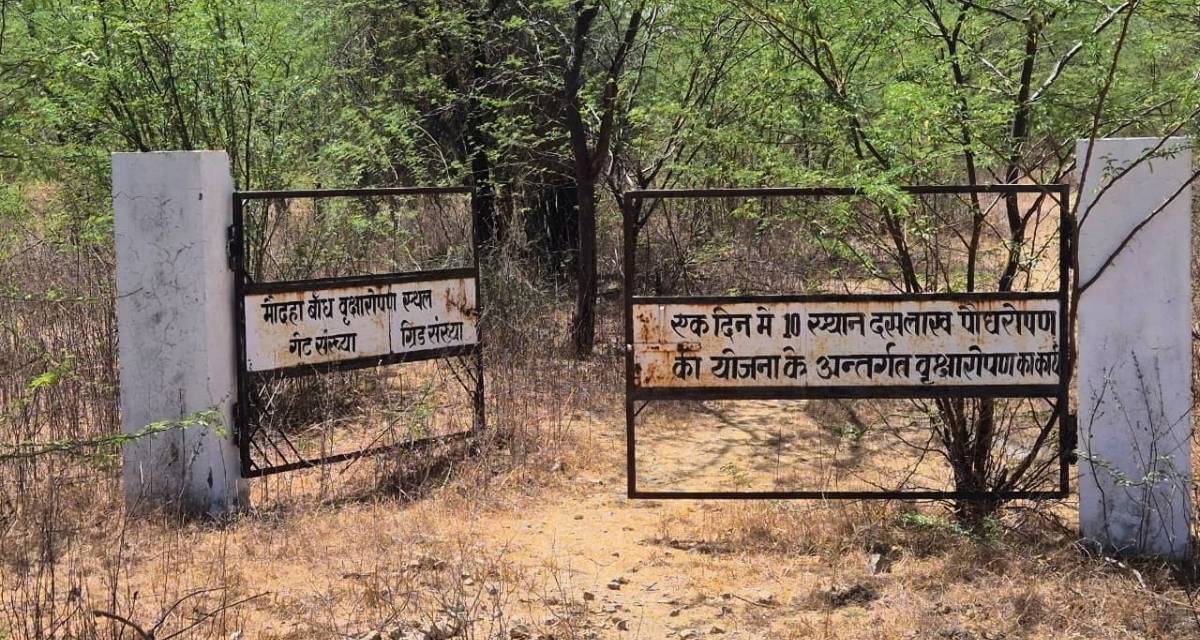 Sites where trees have been heavily felled (Photo - Aman Gupta, 101Reporters)
‘Legal’ tree felling
That distinction is important because Uttar Pradesh's rules do not treat all tree species in the same way. The state has prohibited the felling of 29 species, or made prior permission mandatory for their felling. These include Neem, Mahua, Peepal, Bargad, Shisham and Teak. Other species are subject to more relaxed rules.
The state government has also relaxed tree-felling rules in recent years as part of efforts to promote agroforestry and increase farmers' incomes. The rules introduced in this period have been extended until 2027.
But legal felling does not automatically mean that timber can be moved without documentation. Under the Uttar Pradesh Transit of Timber and Other Forest Produce Rules, 1978, timber generally requires a valid transit pass for movement, subject to specified exemptions. Transport during the night, between sunset and sunrise, requires special written permission from the Divisional Forest Officer.
The distinction between permitted and prohibited species is also at the heart of allegations emerging from the region.
The rules also depend on ownership of the land. Farmers can fell permitted species standing on their private land, subject to the applicable rules, but the same permission does not extend to trees standing on government or forest land. Where the Forest Department receives information about tree felling, officials can verify the land records and ask the person responsible to establish ownership.
For permitted felling, there are also plantation obligations: under the applicable CAMPA provisions, 10 trees are to be planted and maintained for five years for every tree felled, with the cost recoverable from the tree owner where the requirement is not met.
But legal felling does not automatically mean that timber can be moved without documentation. Under the Uttar Pradesh Transit of Timber and Other Forest Produce Rules, 1978, timber generally requires a valid transit pass for movement, subject to specified exemptions. Transport during the night, between sunset and sunrise, requires special written permission from the Divisional Forest Officer.
Uttar Pradesh's rules do not treat all tree species in the same way. The state has prohibited the felling of 29 species, or made prior permission mandatory for their felling. These include Neem, Mahua, Peepal, Bargad, Shisham and Teak. Other species are subject to more relaxed rules.
Ashok, the contractor, says contractors involved in the trade do not necessarily check whether every tree being cut belongs to a permitted species. “We simply need the wood,” he says. He estimates, without providing documentary evidence, that around 70 per cent of the timber being cut comes from permitted species and the remaining 30 per cent from prohibited species.
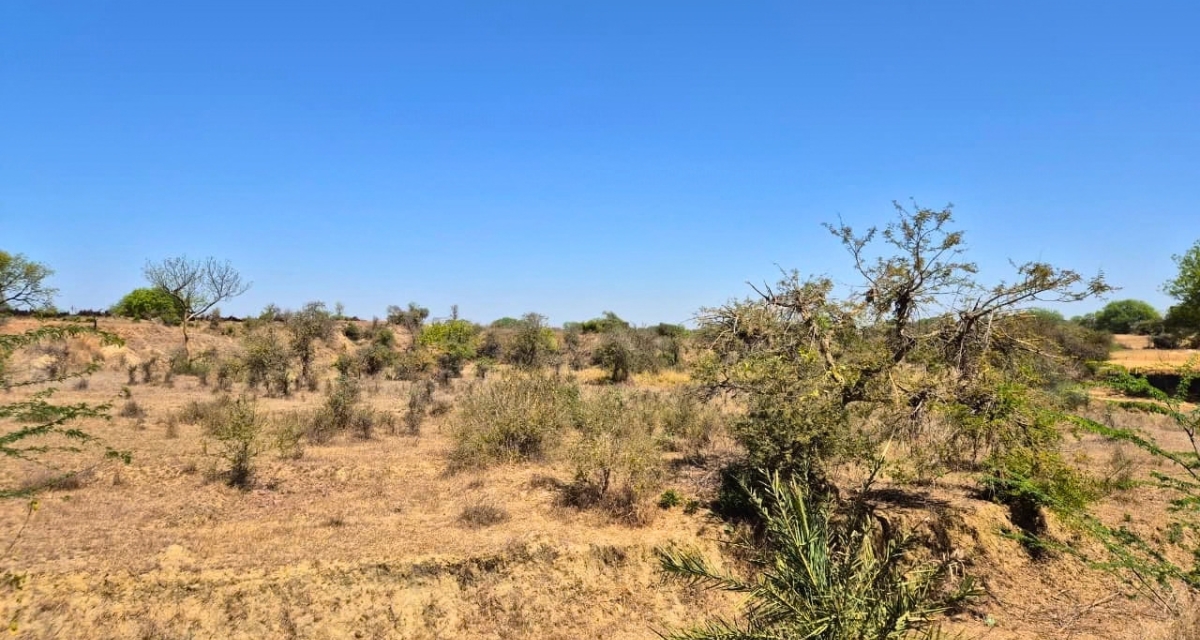 Sites where trees have been heavily felled (Photo - Aman Gupta, 101Reporters)
Other people involved in the trade make similar allegations. Amarchandra Rajput, who has operated a sawmill since 1995, says he has never seen tree felling on this scale. He alleges that prohibited species are sometimes cut under the pretext of cutting permitted ones and says he and others in the industry have complained to officials without seeing action.
There are also specific recent instances cited by people in the area. Ashok says four Mahua trees were cut in Bira village under the Sarila Forest Range within about 20 days. Photographs of the trees are available with 101 Reporter. Neem trees were also cut in the village, according to those familiar with the case.
Government speaks
Sarila Forest Range Ranger Amit Srivastava denied that such cutting was taking place in his area. After details about the alleged felling were shared with him, he asked for evidence and said action would be taken if the allegations were established.
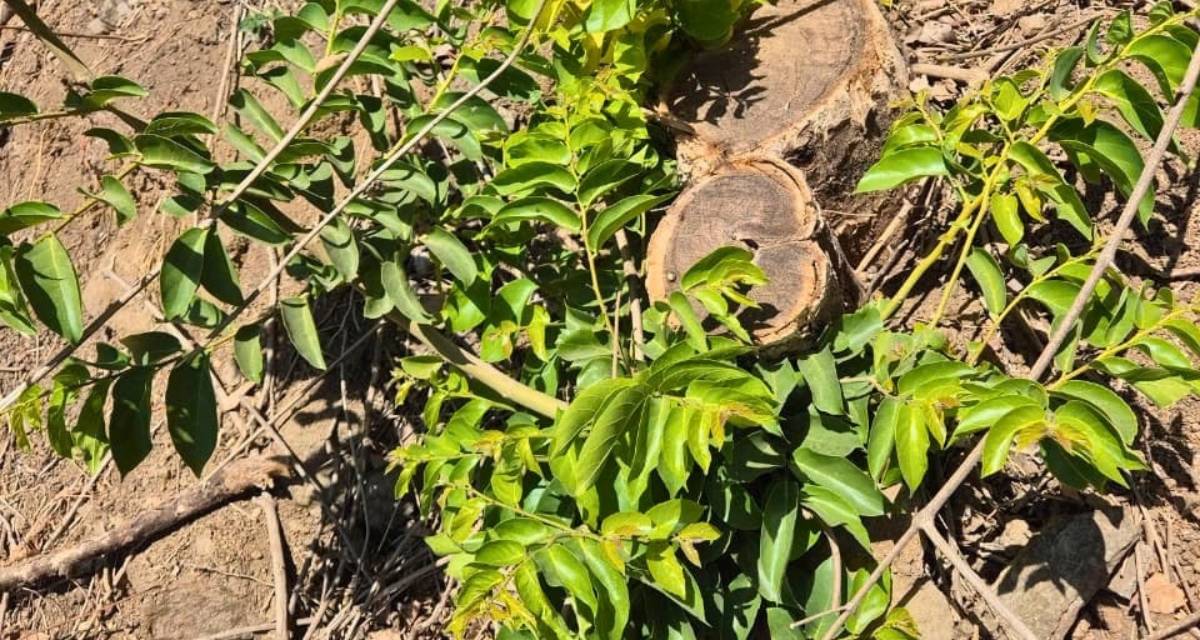 A few of the trees that have been felled (Photo - Aman Gupta, 101Reporters)
Forest officials say they cannot, however, stop all tree felling. Satyendra Singh, ranger of the Rath Forest Range, says the relaxation of rules for non-prohibited species has contributed to increased cutting. Where such trees stand on private agricultural land and belong to farmers, the Forest Department cannot simply prevent their removal.
The department can intervene when prohibited species are being felled or when trees are cut in areas under its jurisdiction, he says.
Cover Image - Workers sorting and processing timber at a wood dumping yard (Photo - Aman Gupta, 101Reporters)
Would you like to Support us
101 Stories Around The Web
Explore All News