The women behind Rajasthan’s cow dung cake economy

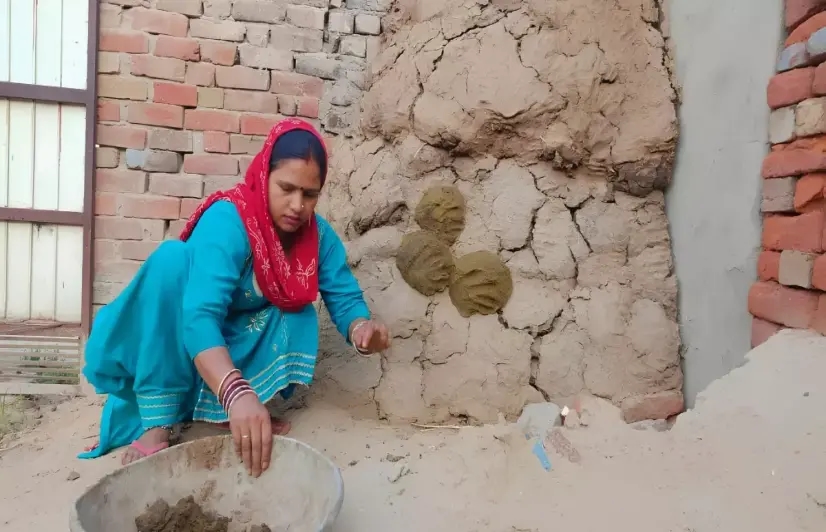
The women behind Rajasthan’s cow dung cake economy
Hanumangarh, Rajasthan: Three months ago, Desi Devi noticed something unusual.
Women she had never seen before began arriving at her home in Tibbi village in Rajasthan’s Hanumangarh district, asking to buy cow dung cakes.
"They said LPG cylinders were becoming difficult to get," she recalled. "They wanted to keep cow dung cakes at home in case they needed them."
For years, Desi Devi had made and sold cow dung cakes using dung collected from the more than 30 cows her family owns. The work—collecting dung, shaping it into cakes, drying them in the sun and selling them—had long supplemented the family's income.
But this time was different.
As tensions between the United States and Iran raised concerns over global energy supplies earlier this year, uncertainty over LPG availability in parts of India prompted some rural households in Hanumangarh to stock up on traditional fuels. For a few months, that translated into higher sales—and, in some cases, higher prices—for women who make and sell cow dung cakes.
The episode was not simply about people turning to an alternative fuel. It briefly brought into view an informal rural economy, sustained almost entirely by women's labour, that often goes unnoticed until a crisis makes it visible.
Desi Devi said she had never seen so many new customers.
"Earlier, a sack containing around 100 cow dung cakes sold for Rs 100," she said. "We usually sold five or six sacks a day. When demand increased, we raised the price to Rs 150 a sack, and sales also went up to six or seven sacks a day."
The additional income made a noticeable difference.
"I have two children," she said. "I buy their clothes, school supplies and meet small household expenses with this money."
Many of the women who came to buy cow dung cakes, she said, had already begun cooking on traditional mud stoves, worried that delays in LPG supplies might continue.
According to Desi Devi, demand has since returned to normal as LPG supplies stabilised. But for a few months, work that is usually treated as part of household labour became an important source of additional income.
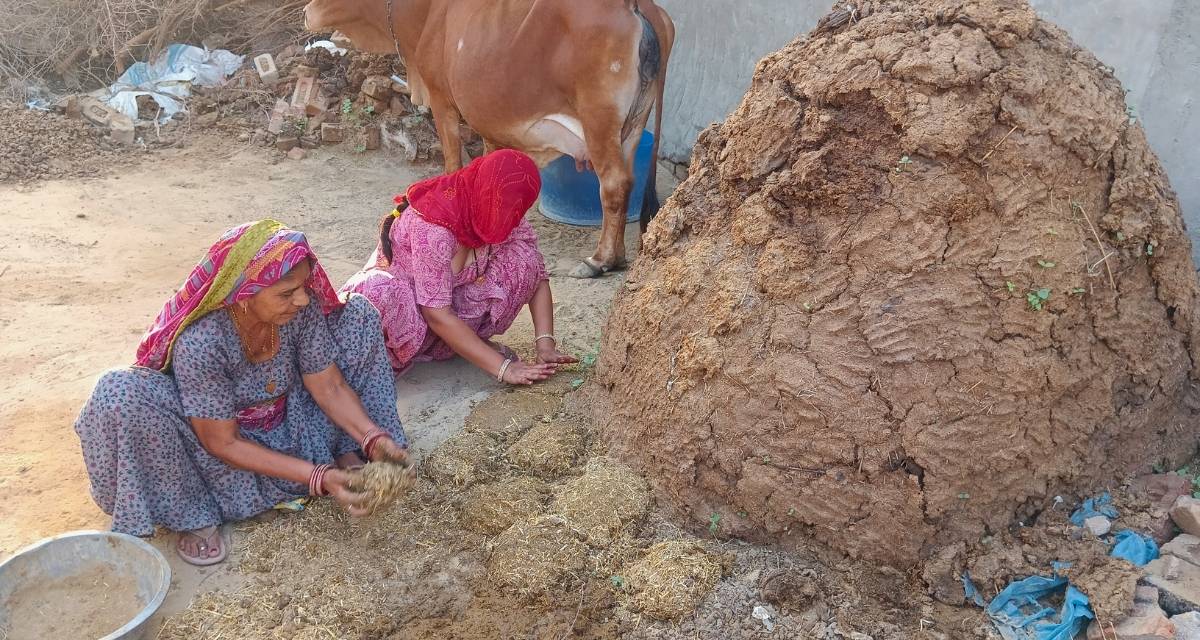 Women patting cow dung cakes in Hanumangarh district (Photo - Amarpal Singh Verma, 101Reporters)
An informal market built on familiarity
Cow dung cakes are not sold through formal markets in Hanumangarh.
There are no dedicated shops or wholesale traders. Instead, buyers rely on informal village networks, knowing which households with large numbers of cattle are likely to have surplus stock.
Families with substantial livestock prepare more cow dung cakes than they need for their own use and sell the surplus directly to nearby villages and towns.
Even when demand surged, however, production could not increase overnight.
Freshly made cow dung cakes take several days to dry in the summer heat before they can be used or sold. As a result, the initial increase in demand was largely met through existing stockpiles, with new production reaching the market only after several days.
Not the same trend
In Hanumangarh Junction's Sector 12, Zainab Begum also found more customers arriving at her home as concerns about LPG supplies spread. But unlike Desi Devi, she did not raise her prices.
Zainab and her two daughters-in-law make cow dung cakes using dung from the family's 30 cows. On most days, they sell about 100 cakes.
"People started coming because they were not getting LPG cylinders as easily as before," she said. "Earlier, we sold around 100 cow dung cakes a day. During those two or three months, sales increased to between 200 and 250 a day."
Her customers included not only households but also potters, who use cow dung cakes to fire traditional kilns.
Although demand more than doubled, Zainab continued selling each cake for Rs 2.
"We never increased the price," she said. "Our earnings increased because we sold more."
The experiences of Desi Devi and Zainab Begum suggest that the spike in demand was not uniform across Hanumangarh. In some villages, sellers increased prices as demand grew. Elsewhere, prices remained unchanged but higher sales still resulted in additional income.
For women already engaged in making and selling cow dung cakes, however, the uncertainty surrounding LPG supplies briefly created an unexpected economic opportunity.
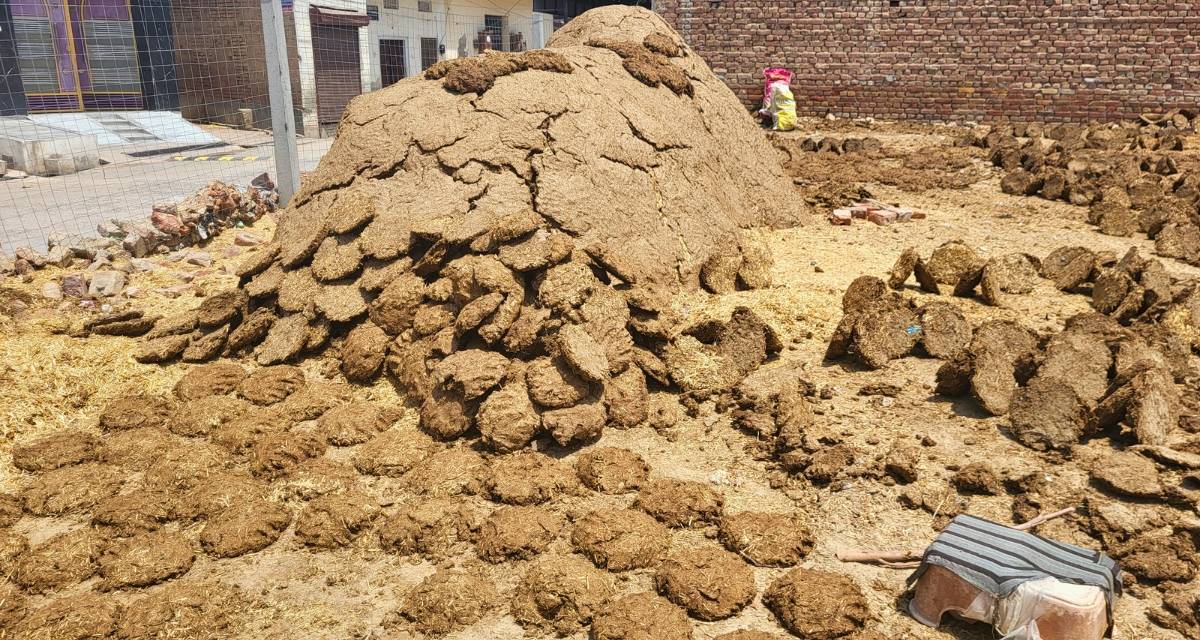 Cow dung cakes being dried in an enclosure in Hanumangarh district, alongside a gheera (traditional stack) used to store them (Photo - Amarpal Singh Verma, 101Reporters)
Women’s work, women’s income
For many livestock-owning families in Hanumangarh, cow dung cakes provide more than an alternative source of fuel. They also generate a modest but independent source of income for women.
Bag Ali, a livestock owner in Hanumangarh Junction, estimates that around 50 families in the area rear enough cattle to regularly sell cow dung cakes.
According to him, a woman can earn between Rs 30,000 and Rs 40,000 a year from these sales.
"That money is separate from the family's regular income," he said. "When an urgent expense comes up, this is often the first money that is available."
He argued that selling cow dung cakes gives women a degree of financial independence within livestock-rearing households.
Desi Devi's husband, Mahendra Kumar Jat, echoed that view.
"My wife keeps whatever she earns," he said. "I never ask for that money. My brother's wife also keeps her earnings. They use it for the children's needs or small household expenses."
In Tibbi village, he said, more than a dozen livestock-owning families with between 30 and 70 cattle supplement their income by selling cow dung cakes.
For a brief period during the uncertainty over LPG supplies, those households earned more than usual.
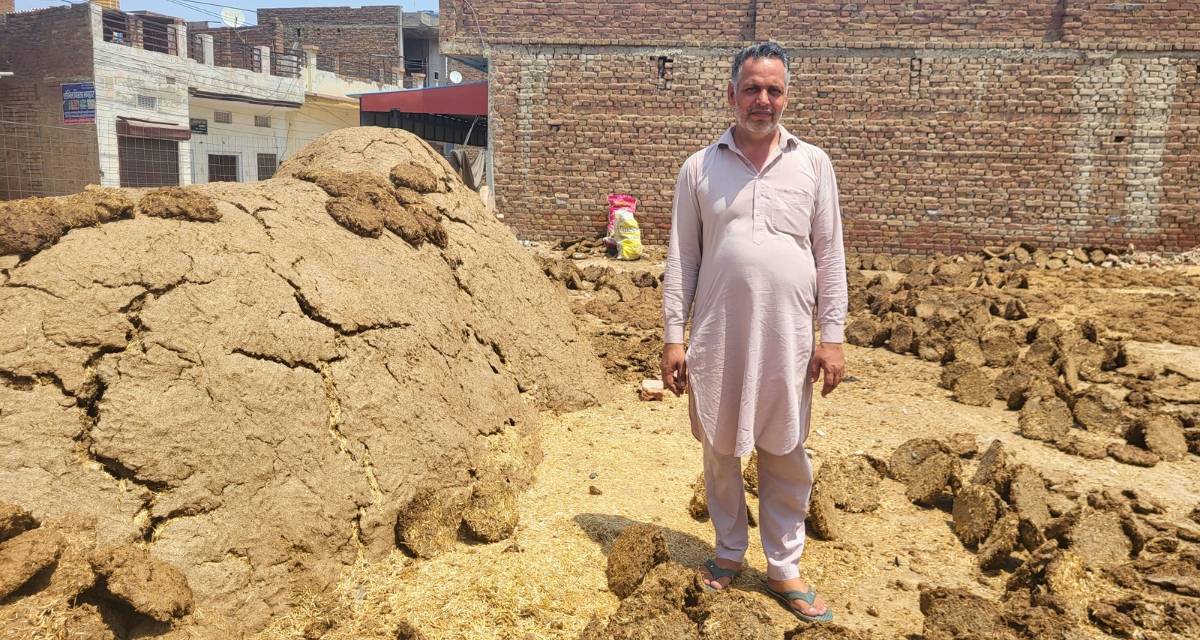 Dairy operator Bhola Singh present at an enclosure where cow dung cakes are being dried in Hanumangarh district (Photo - Amarpal Singh Verma, 101Reporters)
More than a household chore
The work behind every cow dung cake is almost entirely done by women.
They collect the dung, shape it by hand, dry it in the sun, store it and eventually sell it.
Dr Archana Godara, a sociology professor at NM PG College in Hanumangarh, said this labour has traditionally been treated as part of domestic work rather than recognised as an economic activity.
"In rural areas, cow dung cakes are not merely a source of fuel," she said. "They are also the product of women's labour. Yet that labour is rarely recognised as contributing to household income."
The temporary rise in demand, she said, briefly revealed the economic value of work that usually remains invisible.
Cover Image - Woman patting cow dung cakes in Hanumangarh district (Photo - Amarpal Singh Verma, 101Reporters)
Would you like to Support us
101 Stories Around The Web
Explore All News