Maharashtra: Premature Fruit Drop Threatens Orange, Sweet Lime Farmers’ Incomes in Vidarbha

Maharashtra: Premature Fruit Drop Threatens Orange, Sweet Lime Farmers’ Incomes in Vidarbha
Warud, Maharashtra: The Ambiya bahar, or the annual flowering and fruiting season for oranges and sweet lime, is an important source of income for farmers like Purushottam Jane in Maharashtra’s Amravati district.
Jane, who has two acres of farmland planted with sweet lime trees in Dawargaon village in Warud taluka, says he will struggle to earn even Rs 1.5 lakh this year, compared with the Rs 2.5 lakh to Rs 3 lakh he usually earns from the season.
Changing rainfall patterns and fluctuations in temperature have contributed to premature fruit drop in orange and sweet lime orchards across parts of Vidarbha, threatening growers' incomes.
Much of Jane's expected harvest has been lost to Dehtsuki, or stem drying, a condition in which fruit stems dry up, causing oranges and sweet limes to fall before they are ready for harvest.
Jane’s uncle, Ramdas, 65, is also facing a sharp decline in earnings. His orange orchard normally generates a gross annual income of Rs 5 lakh to Rs 6 lakh. After expenses, he is left with Rs 4 lakh to Rs 4.5 lakh. This year, he expects that amount to fall to around Rs 2 lakh.
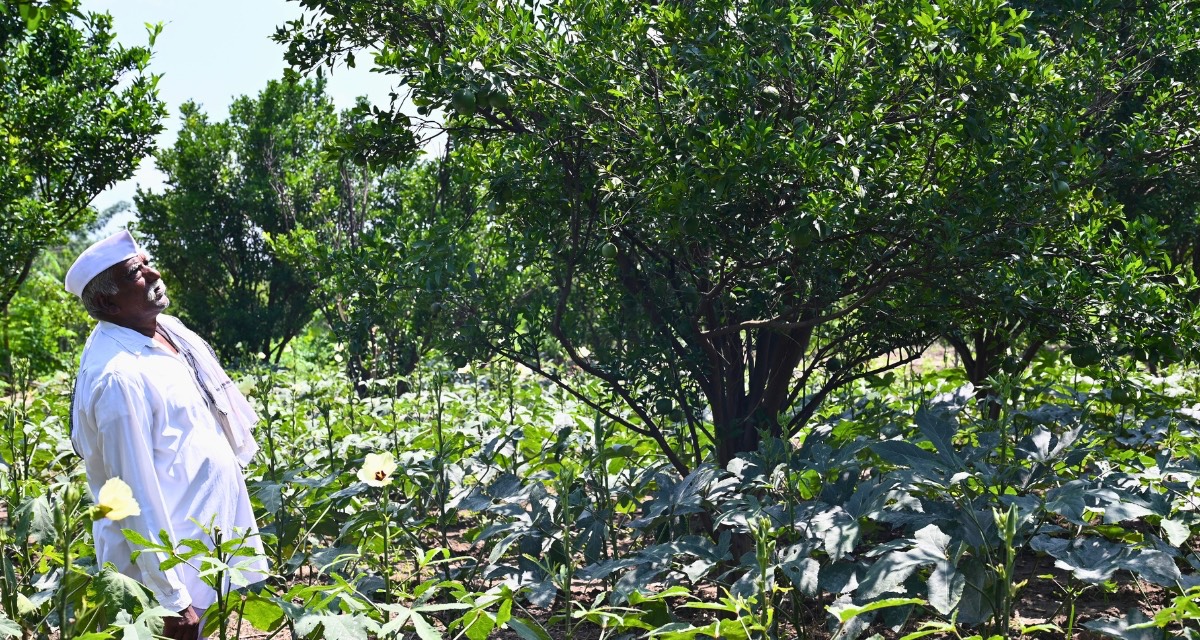 Ramdas Jane, an orange farmer from Dawargaon (Photo - Shantanu Khuje, 101Reporters)
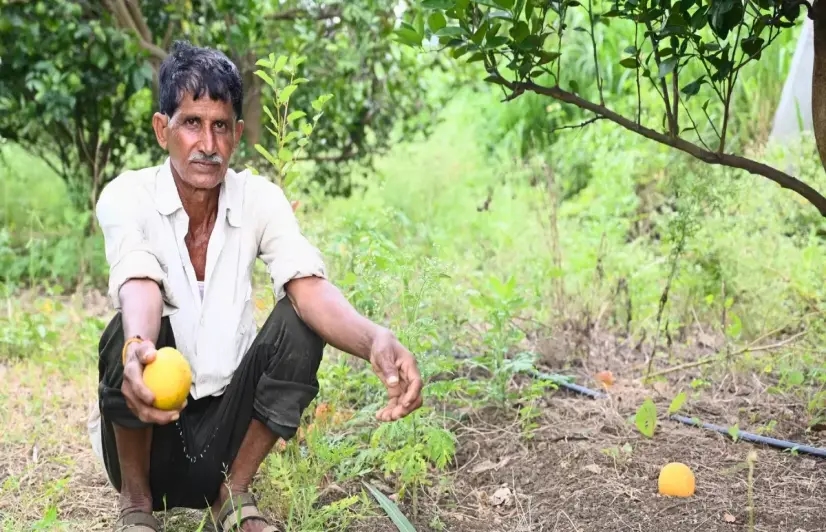
In Aloda village in Warud taluka, farmer Suresh Lokhande says premature fruit fall has been occurring for the past five to six years, but has intensified since last year.
“We have only one acre of farmland, with 100 sweet lime trees, and we used to get 5-6 tonnes of sweet lime from it every time. But this year, nearly 1.5 tonnes of fruit have fallen. If we consider the current price of Rs 25,000, we have suffered a loss of Rs 35,000-40,000 right here,” he says.
Ajay Wankhade, who owns around 100 sweet lime trees in Sarfapur village in Chandur Bazar taluka, estimates that Dehtsuki accounts for seven out of every 10 fruits falling prematurely from his trees. The remaining losses, he says, are due to other factors.
Amol Bhingare, who manages around 1,000 orange and sweet lime trees in Narkhed taluka near Warud, also reports substantial fruit losses. He says several farmers in neighbouring villages have been affected.
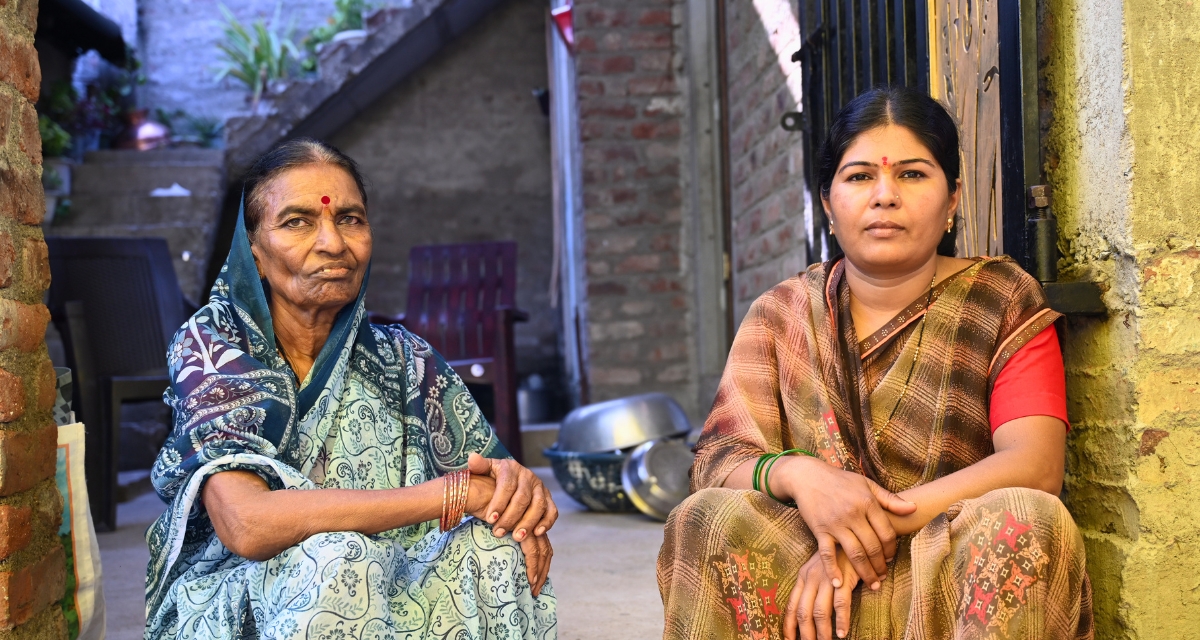 Purushottam Jane's mother Suman Jane and wife Priti Jane (Photo - Shantanu Khuje, 101Reporters)
Changing weather patterns
Dr Dinesh Paithankar, head of the Citrus Dieback Project at Dr Panjabrao Deshmukh Krishi Vidyapeeth in Akola, says delays in the arrival of the monsoon and breaks in rainfall are contributing to fruit drop in sweet lime and orange orchards.
“The monsoon, which used to arrive in June, now arrives in July. Even if the monsoon arrives in June, the amount of rainfall at that time is very low, which causes extremely high humidity in the atmosphere. This humidity creates a different kind of microclimate in the fruit orchards. Due to this abiotic stress caused by the weather, dormant fungi such as Colletotrichum and Brown Rot become prevalent on the trees, causing the fruit stems to dry and the fruits to fall,” he says.
Rainfall figures from Warud indicate a sharp decline during the monsoon. In June, the region received 99.8% of its average rainfall. In July, it received 159 mm against the expected 268 mm, or 59% of the average. In August, rainfall fell further to 37 mm, just 15% of the average.
Temperatures also fluctuated during this period. The highest temperature recorded in July was 35°C, while the average was around 30°C. In August, the average temperature fell by 2°C to 29°C.
Paithankar says the combination of below-average rainfall and temperature fluctuations created conditions in the orchards that contributed to stem drying and fruit drop.
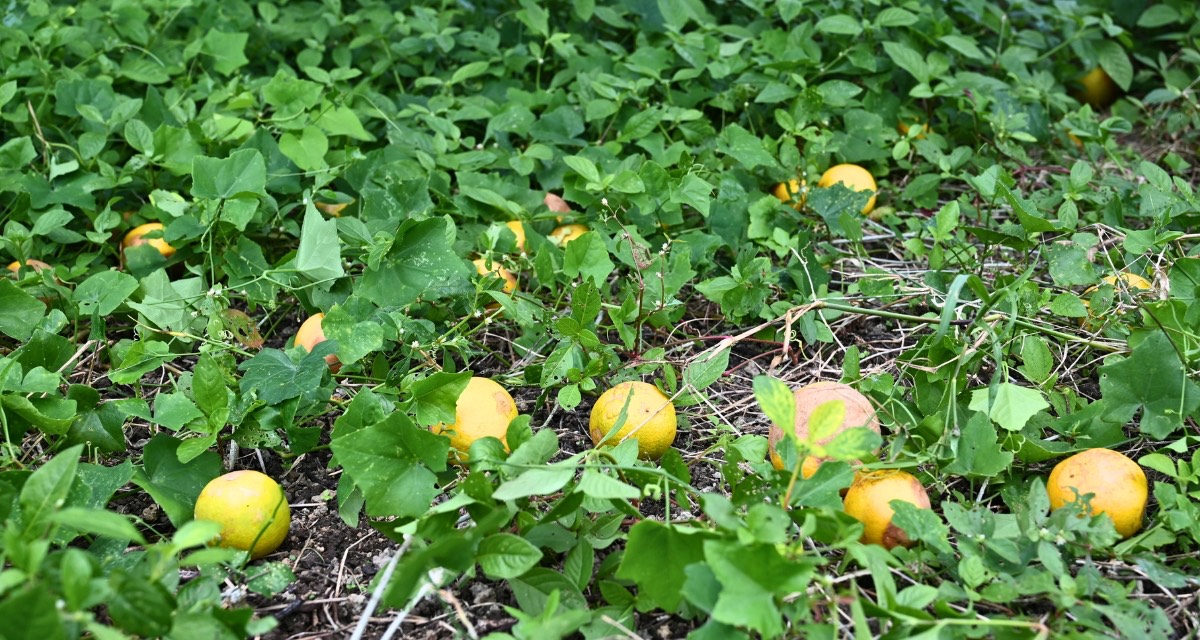 Fruit drop in a Mosambi orchard due to stem drying (Dethsuki) (Photo - Shantanu Khuje, 101Reporters)
The problem is particularly pronounced during the Ambiya bahar, the flowering season that produces the main orange and sweet lime crop. The Mrig bahar, which follows the monsoon, and the Hathi bahar, the winter flowering season, are less affected.
Maharashtra is the second-largest sweet lime-producing state in India. In 2023-’24, sweet lime was cultivated across 1.92 lakh acres in the state, producing 9.44 lakh tonnes.
Vidarbha has traditionally been considered suitable for citrus cultivation because of its dry climate, relatively low humidity and moderate rainfall. Sweet lime grows well in the region’s black soil and semi-arid conditions, particularly in Amravati district.
However, farmers in the region have been facing increasingly erratic weather conditions. In May this year, temperatures in Amravati reached as high as 45°C.
Anil Band, head of the Meteorology Department at Dr Panjabrao Deshmukh Krishi Vidyapeeth’s Shri Shivaji Agriculture College in Amravati, said that although no specific long-term trend had been formally established, average temperatures in Amravati district were consistently rising.
He said the monsoon had started late and withdrawn late over the past two to three years. This year, the situation had worsened significantly due to El Niño.
Band said climate change was already underway and that Vidarbha could experience more severe weather over the next five to 10 years, with increasingly hot and difficult conditions for agriculture.
The region’s weather conditions also affect the growth and quality of citrus fruits. Citrus fruits generally grow best at temperatures between 22°C and 34°C. For sweet lime, the range is between 13°C and 37°C. Temperatures outside these ranges can affect photosynthesis, destabilise cell membranes and increase oxidative damage, affecting fruit size and quality.
Falling incomes and insurance gaps
Farmers in the region depend heavily on orange and sweet lime cultivation, and many have devoted most or all of their land to citrus orchards rather than seasonal crops.
Ramdas says his entire two-acre farm is planted with orange trees because other crops offer less certainty.
“There is not as much certainty with other crops, so I planted these trees across the entire field. But when a year like this comes along, it causes a major loss. There are 250 orange trees on our farm. Every year, after deducting expenses, we are assured of receiving Rs 4 lakh to Rs 4.5 lakh, but this year it seems that after expenses, only Rs 2 lakh will remain in our hands,” he says.
The reduced earnings affect his joint family, which includes his two married sons. “Rs 2 lakh is a large amount, but I have two sons and we are a joint family, and both of them are married. So when such income declines, many problems arise,” he says.
The losses have also left Jane's family uncertain about repaying its debts. His wife, Preeti, says they regularly borrow money to meet household expenses, including the cost of educating their three daughters, two of whom study at the taluka headquarters.
“We have to take small loans every month to send them money. By the end of the year, this amount becomes quite large. When we receive the money from the sweet lime crop, we repay all these loans. But now, because such a situation has arisen this year, the big question is how we will repay the debt,” she says.
Farmers are also concerned that losses caused by Dehtsuki may not be covered under the crop insurance scheme.
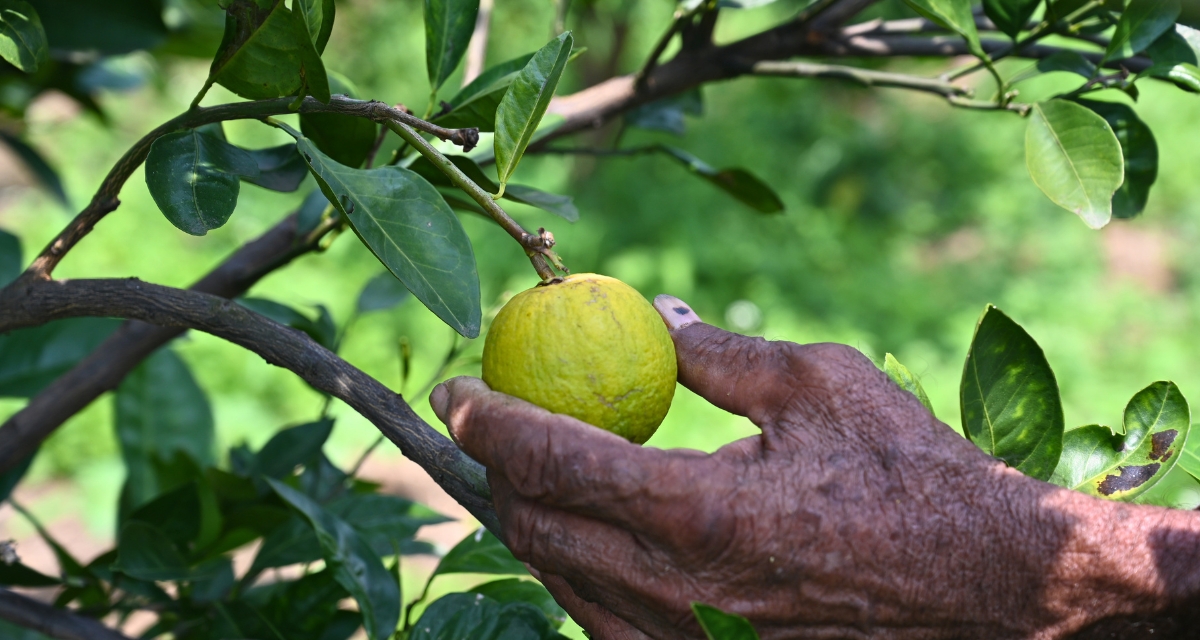 A Mosambi fruit with a dried stem (Dethsuki) (Photo - Shantanu Khuje, 101Reporters)
The Maharashtra government has implemented the Restructured Weather-Based Fruit Crop Insurance Scheme under the Pradhan Mantri Fasal Bima Yojana for 2026-'27, covering the Mrig and Ambiya bahars.
Under a government resolution, farmers can seek insurance protection for notified fruit crops, including oranges, sweet lime, pomegranate, grapes and figs, against specified weather-related risks. These include low rainfall, breaks in rainfall and increases in temperature. However, Dehtsuki is not explicitly listed as an independent risk under the scheme.
Rohan Mujawar, the taluka agriculture officer in Warud, said the scheme did not provide blanket compensation for all pest- or disease-related damage. Payments depended on notified weather conditions, specific timeframes and predetermined criteria.
Farmers cannot generally claim compensation specifically for Dehtsuki-related losses. However, Mujawar said they could file a complaint if widespread fruit drop occurred. Agricultural experts would then inspect the affected orchards and assess the damage before a proposal could be submitted to the government. During the 2024-'25 season, such proposals were sent and compensation was distributed, he said.
The scheme also restricts farmers to insuring one notified fruit crop on a given plot of land in a year. They must choose between the Ambiya and Mrig bahars rather than insure both seasons on the same land.
The restriction is intended to prevent multiple insurance claims on the same plot in a year and to account for the different risks associated with each crop and season. Agricultural and horticultural guidelines also discourage farmers from taking both bahars consecutively on the same trees, as this can weaken them, cause nutrient deficiencies and increase their vulnerability to diseases, including Dehtsuki.
Limiting losses
The impact of Dehtsuki is particularly significant during the Ambiya bahar, while the Mrig bahar is largely unaffected, says Chhatrapati Gawande, a farmer from Aloda village. Farmers nevertheless prioritise the Ambiya bahar because the Mrig bahar crop fetches much lower prices in the market.
To reduce fruit drop, Gawande has sprayed his orchard with chemical inputs, including Ridomil Gold, Rogor and Microlax. The treatment costs around Rs 1,500 to Rs 2,000 for every 100 trees. With 400 sweet lime trees, one round of spraying costs him approximately Rs 8,000.
This story was produced as a part of 101Reporters Climate Change Reporting Grant.
Cover Image - Suresh Lokhande, a Mosambi farmer from Aloda (Photo - Shantanu Khuje, 101Reporters)
Would you like to Support us
101 Stories Around The Web
Explore All News