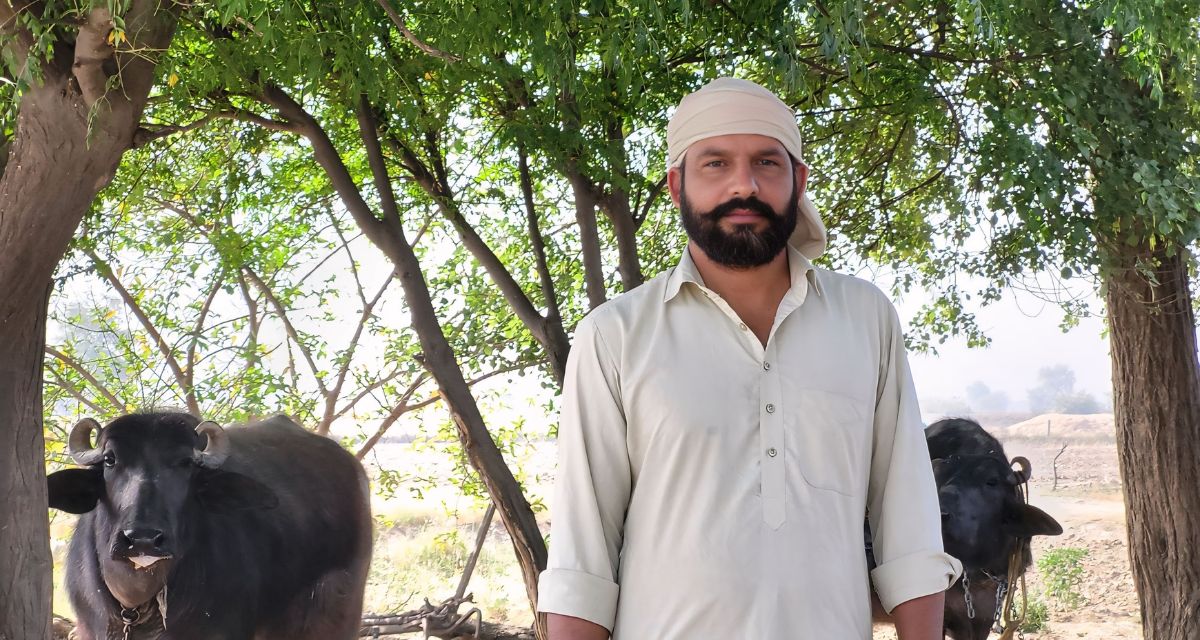
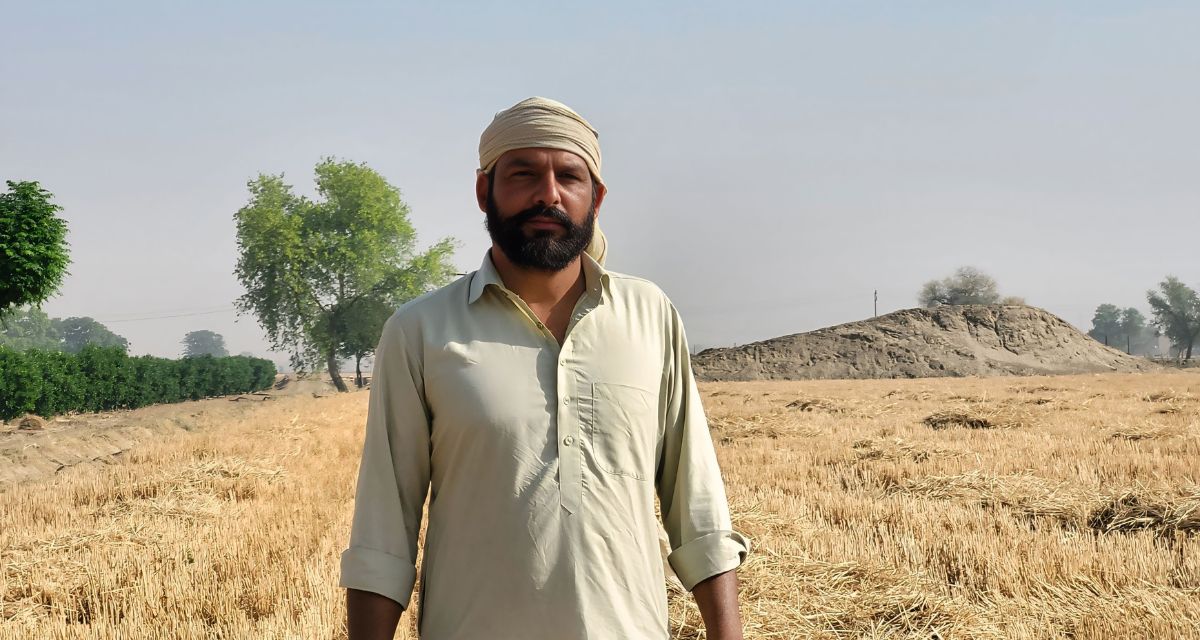
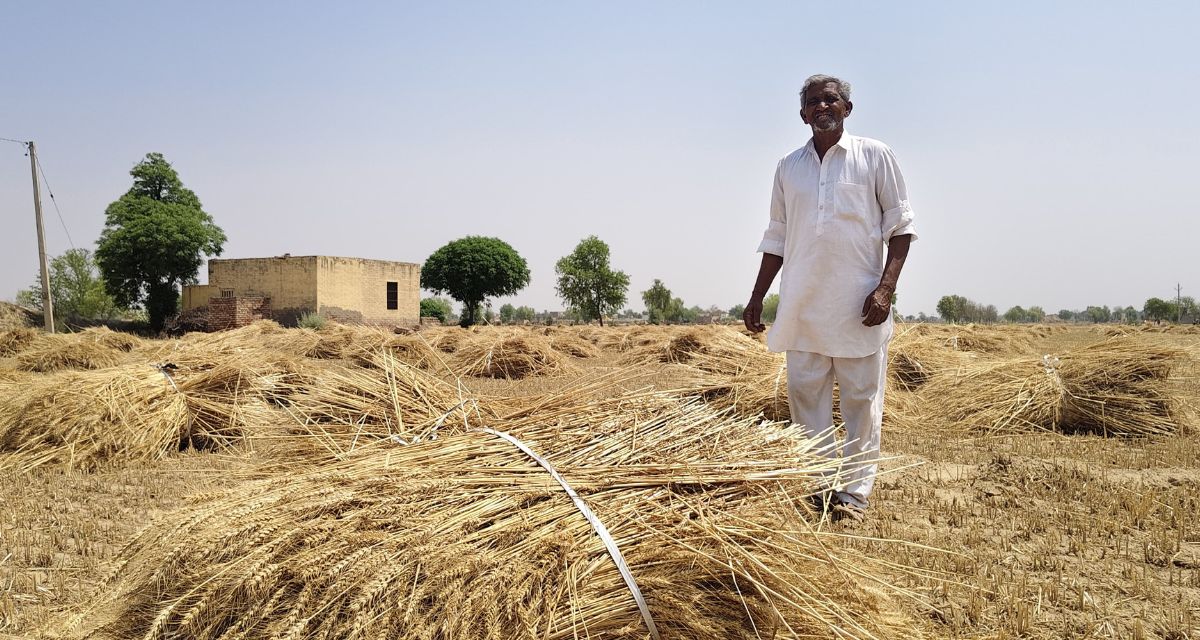
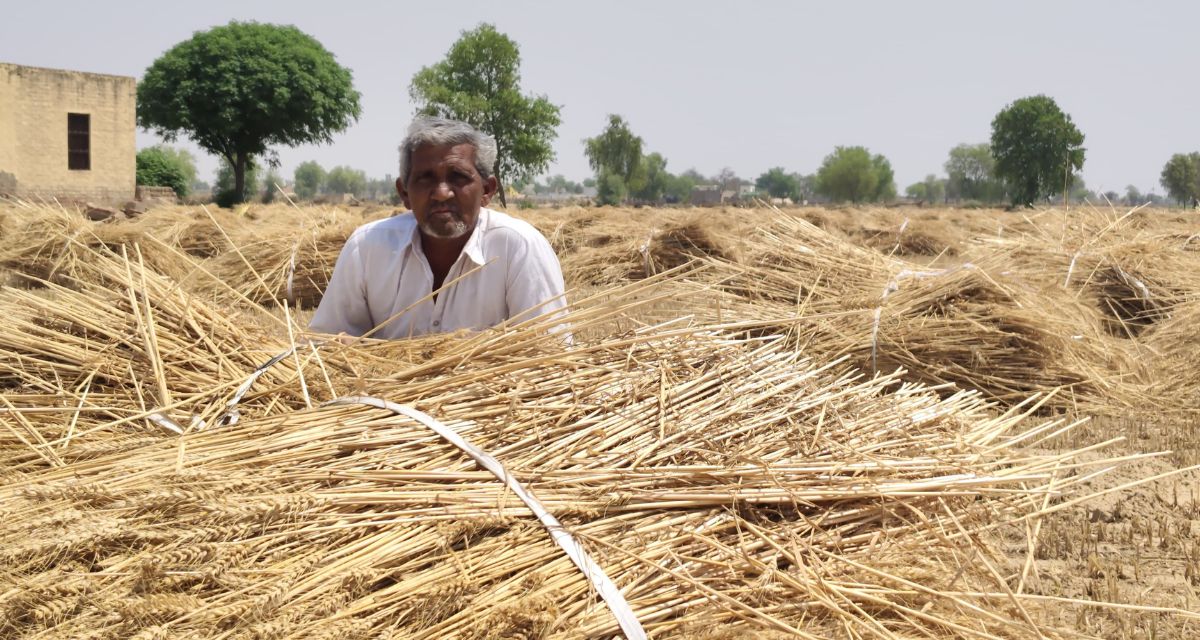
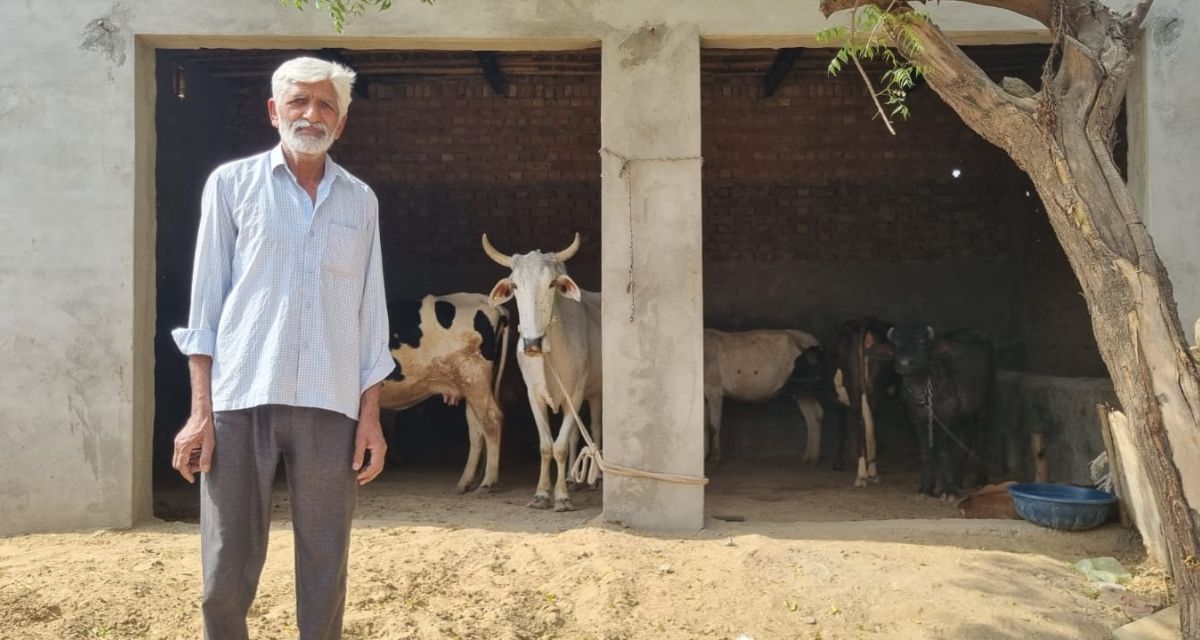
“During Kharif season, crops like cotton, green gram and guar falli (cluster bean) often fall prey to unseasonal rains, storms and hail at the time of sowing. Farmers also have to worry about a rise in pest infestation due to the unpredictable weather,” Bishnoi said.
“Pesticide sprays have increased from two to five rounds, raising costs,” he added.
“This is part of a larger pattern,” said Dr Raghuveer Singh Meena of the Agricultural Research Centre in Sri Ganganagar. “Even February and March now see sharp rises in temperature that are disastrous for rabi crops.”
Rainfall patterns have also swung wildly. Sangaria recorded just 2.41 mm of rain in January 2022, which jumped to 21.5 mm in January 2025.
Hailstorms and sudden downpours — like those on April 11 in Nohar tehsil of Hanumangarh — have flattened standing crops overnight. Earlier, on March 15, heavy rains and strong winds had damaged wheat and mustard crops in Sri Ganganagar district.
Even traditionally resilient crops like kinnow are suffering. Farmers have uprooted orchards after repeated losses.
Dr Anoop Kumar, Chief Scientist of the Agricultural Science Centre in Sangaria said, “The climate of the area has changed a lot, which is affecting the farming patterns."
Even Solda has scaled back this year. Instead of renting three acres of land like he usually did, he has taken only one. Along with the one acre he owns, he has planted cotton on both acres. “If it rains now, the cotton seeds will get kurand,” he said.
Cotton is typically sown in May in this region, though some farmers start in April if the weather gets too hot. But unexpected rainfall after sowing can ruin the crop. When fields flood, cotton seeds rot and fail to sprout: a condition called kurand. If this happens, they are forced to sow again, and if the window closes, cotton can't be grown at all. In such cases, farmers switch to alternative crops like moong or guar.
Earlier, the seasons were predictable, and the Agriculture Department advised farmers on sowing timelines accordingly. For example, wheat was recommended to be sown between November 1 and 25, with delayed sowing permitted up to December 15. But now, because of rising temperatures and changing weather patterns, sowing often happens at the end of December, sometimes even in January. Similarly, while cotton sowing is officially recommended by May 20, farmers rarely follow this anymore due to shifting climate conditions.
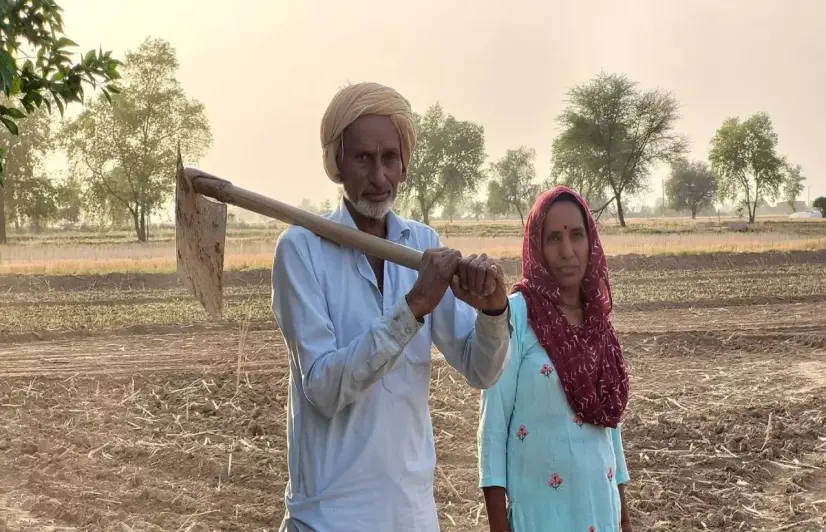
“The sun feels like fire now,” said Anusuiya Sharma (55), standing in her six-bigha field in Nathwana village. “We’ve always worked through heat and cold, but now the intensity causes dizziness.” Last year, she says, the cold was also so intense it felt like “it had frozen like snow”.
She said, “Too much heat before Holi ruined our wheat. Cotton was lost to unseasonal rain and pests. Fortunately, this time wheat and mustard survived.”
Her husband Ramkumar Sharma (60) said, “Earlier I used to take four bighas of land on rent… But after so many crop failures, we stopped renting any additional farms. Now I sometimes work as a labourer for Rs 400 a day to make some more income.”
Satnam Singh (30) incMeharwala village has also been facing continuous losses on the 10 bighas of land he cultivates. In 2022, wheat failed due to extreme heat, and the cotton crop was destroyed by pink bollworms. In 2023, though the wheat yield was good, hailstorms wiped out the harvest. That year’s cotton was again hit by pest infestation. In 2024, heavy rains ruined his peanut, cotton, and guar crops, and the damage was compounded by the pink bollworm.
“This year’s wheat crop has finally offered some relief, a harvest of 72 quintals from six bighas, but even that is not enough,” he said.
“Half the wheat went to the landowner. With what’s left, I can repay only Rs 20,000–30,000 of my loan, it won’t make a dent,” Singh added.