In Bundelkhand, wheat farmers can’t afford to wait for MSP

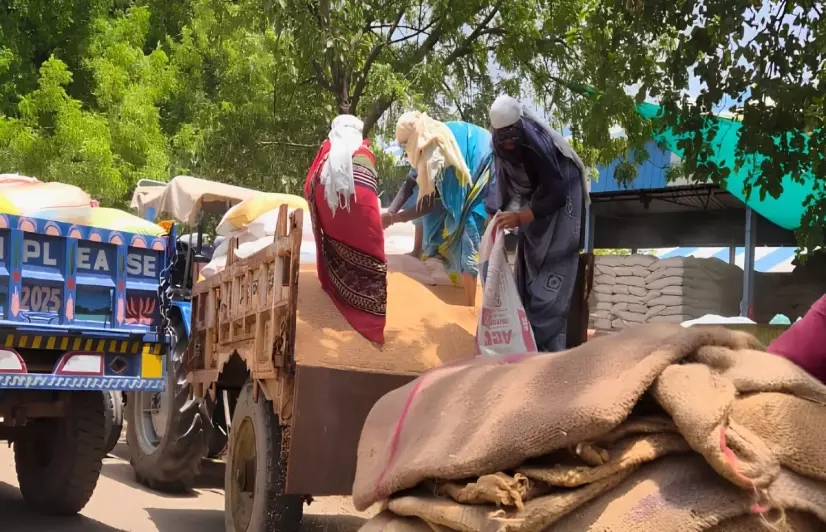
In Bundelkhand, wheat farmers can’t afford to wait for MSP
In this region of Uttar Pradesh, farmers say delayed payments, transport costs and limited procurement are pushing them towards private traders Hamirpur, Uttar Pradesh: Ramsevak, a farmer from Karahi village in Hamirpur district of Uttar Pradesh, sowed wheat on his five bighas of land this year after spending two years cultivating peas and other crops.
He told 101Reporters he switched back to wheat after failing to get a fair price for his produce, hoping wheat would fetch a better return. At the time he sowed the crop, wheat was selling in the local market for around Rs 2,600-2,700 per quintal.
The Minimum Support Price (MSP) for wheat for the 2026-27 Rabi Marketing Season was Rs 2,585 per quintal.
Ramsevak hoped prices would remain around the same level by the time his crop was ready for harvest. But when he harvested the wheat in April, prices in the local market had fallen to around Rs 2,200-2,300 per quintal.
He waited for nearly a month, hoping prices would recover. There was little improvement, and he eventually sold his 40-quintal crop in the open market.
Asked why he did not sell his produce to the government at the MSP, he said, “There was a wedding in my family at the end of May. I had no other choice.”
Gangaram, another farmer, explained why farmers may choose the open market even when the government offers a higher price.
“What’s the point of selling my crop today if I get the money a month or even later?” he said.
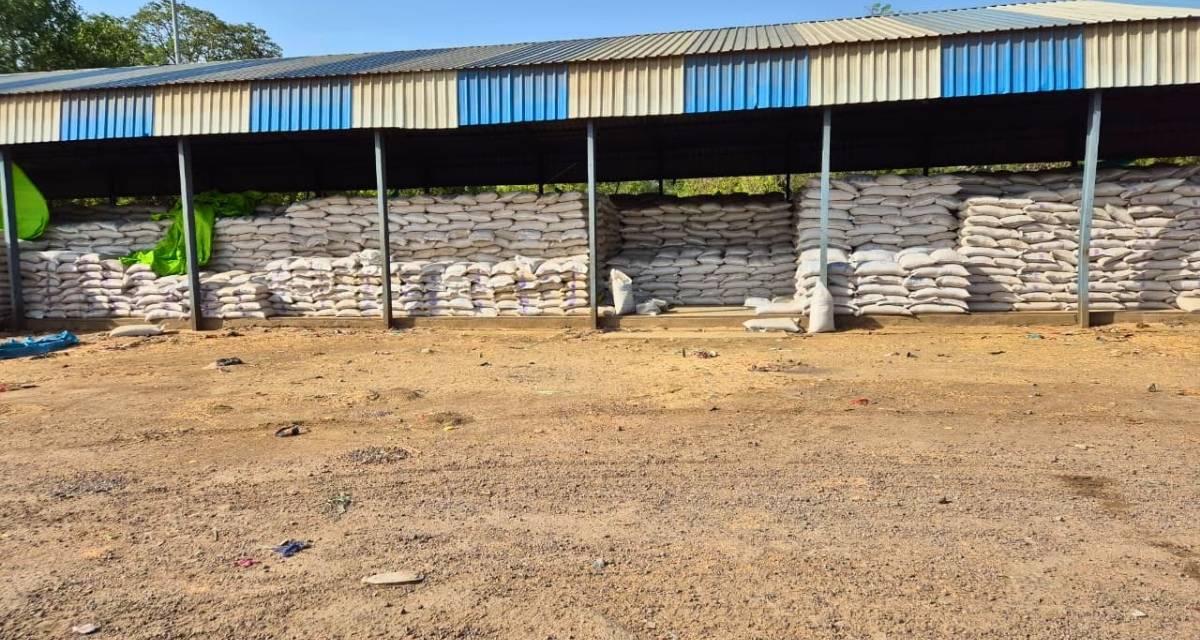 In the procurement centre, where purchased wheat is to be lifted (Photo - Aman Gupta, 101Reporters)
 Procedural delays
To sell wheat to the government at MSP, farmers first have to register online, link their bank account and complete KYC formalities. The government then allots them a procurement centre, along with a date and time to bring their produce. At the centre, the wheat is checked for quality, weighed and procured before payment is transferred to the farmer’s Aadhaar-linked bank account.
For farmers who need money immediately after harvest, the process can make the higher MSP difficult to access. A private trader, by contrast, can buy wheat directly from the farmer and pay immediately.
This year, at Rs 2,585 per quintal, along with an additional Rs 20 per quintal towards cleaning, grading and labour charges, the MSP was Rs 160 higher than the previous year.
The state initially set a target of procuring 50 lakh metric tonnes of wheat, but later revised it down to 25 lakh MT. Procurement began on March 30 and was scheduled to continue until June 15.
But how much wheat actually reached the government procurement system?
In Hamirpur, 14,994 farmers registered to sell wheat at the MSP this season, but wheat was ultimately procured from only 6,591 of them — about 44% of those who registered, according to data from the Central Foodgrain Procurement Portal. The government purchased 50,985.14 metric tonnes of wheat from these farmers and paid Rs 130.29 crore under the MSP scheme.
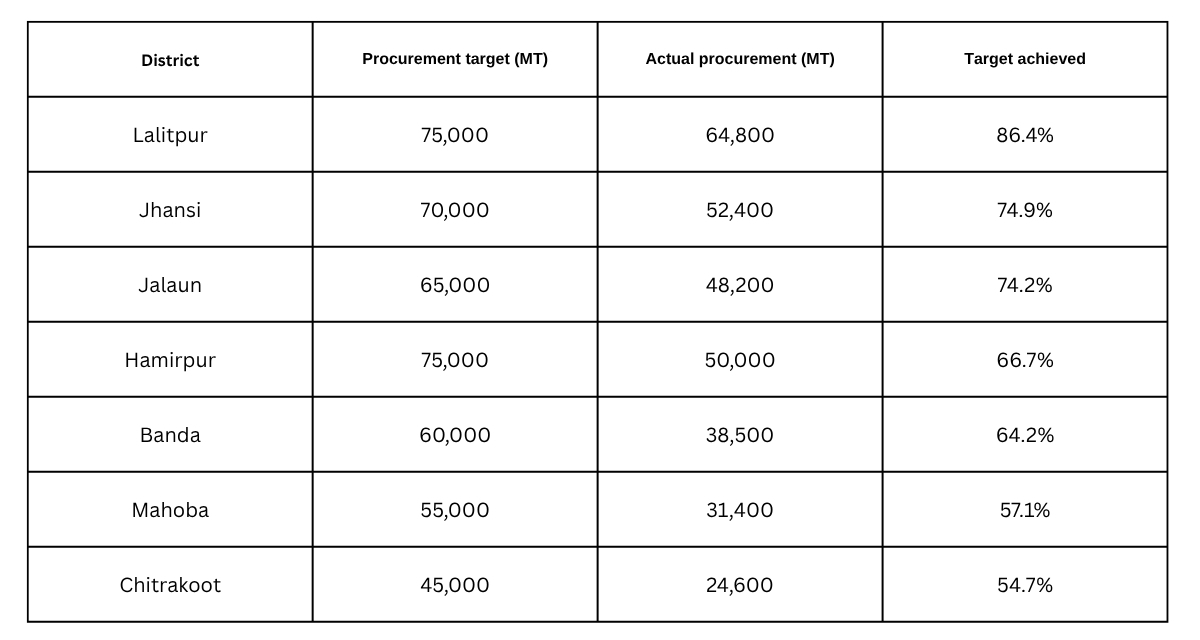 Government procurement also fell short of targets across Bundelkhand, with none of the seven districts meeting their procurement targets (Photo sourced by - Aman Gupta, table made on Canva, 101Reporters)
 Across Bundelkhand, annual wheat production is estimated at around 2-2.2 million metric tonnes. Despite this large production base, the government procures only around 10-15% of the region’s wheat production, according to available data. To procure wheat, the Centre and the Uttar Pradesh government deployed eight procurement agencies and set up nearly 6,500 procurement centres across the state. Hamirpur had 60 centres.
This year, the procurement process was shifted online, and farmers were promised payment within 48 hours. The move was aimed at making the system more transparent and reducing the role of middlemen.
But farmers continued to sell a large share of their wheat to private traders.
Himanshu, who runs a grain trading business at the mandi, said most farmers who sell to him need money immediately.
“Most farmers who come to us can't afford to wait,” he said. “They need money as soon as they sell their crop.”
He said wheat production was good across the region this year, keeping market prices low. When the new crop began arriving in markets towards the end of March, wheat was selling for Rs 2,200-2,350 per quintal, around Rs 200-300 below the MSP.
Prices began to rise after government procurement ended, and wheat was selling at around Rs 2,410 per quintal when this story was reported.
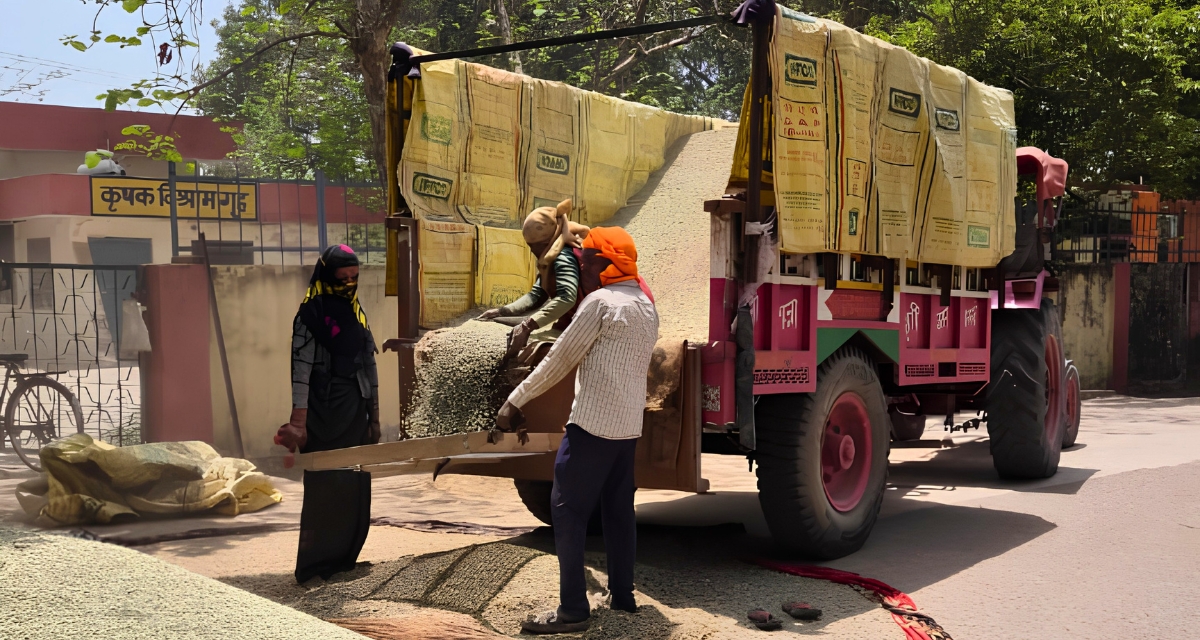 Women sift and sort wheat by hand beside a loaded tractor trolley, part of the informal labour that keeps grain moving through the mandi.
Price not the only hurdle
Chandu, a commission agent at Rath Mandi, said the government cannot procure all the wheat produced in Hamirpur and neighbouring districts because production is much higher than the quantity procurement centres can handle.
The shift to online procurement has not necessarily made the process easier for farmers, he said. During the harvest season, large quantities of wheat arrive at procurement centres, forcing farmers to sometimes wait two or three days before their produce is purchased.
For farmers without their own tractor or other means of transport, the wait adds to the cost of selling at MSP. They have to pay for transport, labour and food while waiting at the mandi. In some cases, Chandu said, these costs can wipe out the additional amount they would have earned by selling at MSP.
Most farmers in the region are smallholders, he said. Many share a tractor trolley to transport their produce, splitting the cost because they do not have enough wheat to fill one on their own. Even then, taking the crop to a government procurement centre can be expensive.
An official at Rath Mandi, speaking on condition of anonymity, acknowledged that procurement fell short of the target this year but said the main reason was that farmers need immediate cash.
“This situation arises every year, but its impact is felt more strongly when production levels are higher, as is the case this year,” he said. The government, he added, is unable to procure the entire produce even in years of lower output, pointing to limitations in the procurement system.
The official said government procurement follows a fixed process, which naturally takes time. Authorities also have to verify each transaction to prevent middlemen from using farmers’ identities to sell wheat through the government system.
But he rejected the argument that procurement centres were unable to purchase the wheat allotted to them.
“If farmers bring their wheat to the procurement centres, we are fully capable of purchasing our allotted target,” he said.
The verification process is necessary, he said, because traders can use farmers’ registration details and documents to sell wheat in their names. He also said payment delays are part of a centralised system over which local procurement officials have no control.
This year, farmers were waiting an average of two to three weeks for payment, he said.
But farmers say that private traders offer a simpler alternative. Himanshu said traders buy wheat directly from farmers in their villages, arrange its transportation and pay them immediately. This saves farmers the cost of taking their produce to the mandi and is particularly useful for small farmers whose harvests are too small to justify hiring an entire tractor trolley.
“We purchase wheat directly from farmers at their villages,” he said. “That means they don't have to bring the produce to the mandi, saving them transport and labour costs. More importantly, they receive cash immediately.”
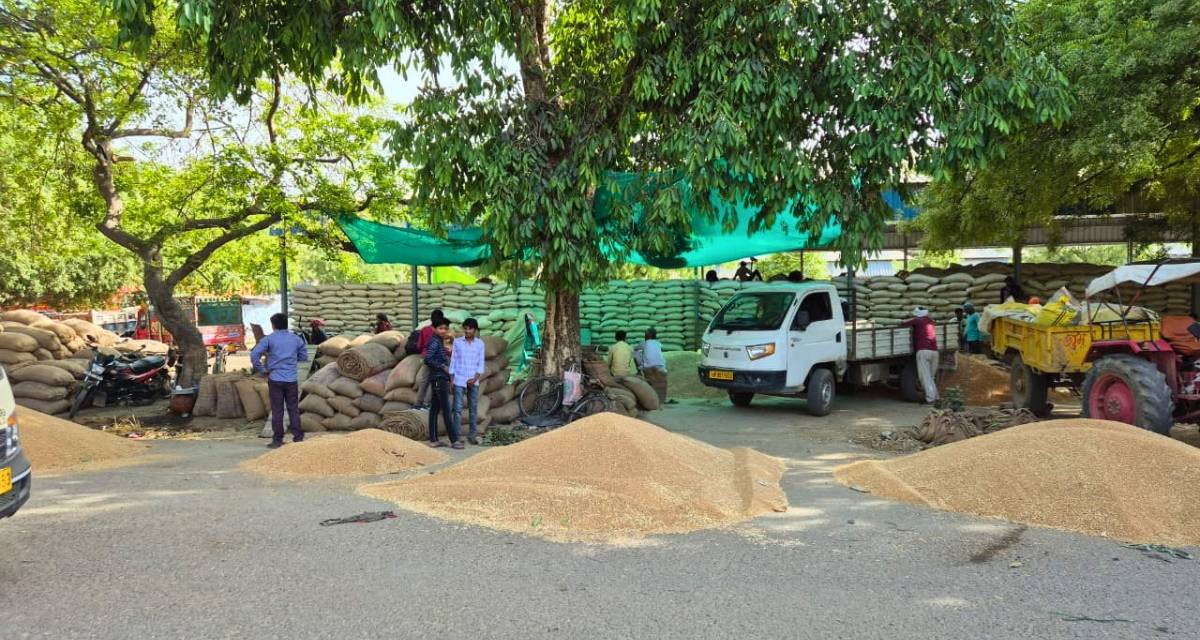 Wheat stored in the open (Photo - Aman Gupta, 101Reporters)
 Himanshu said traders can then sell the wheat to government agencies using the farmers’ registration and documents. Farmers agree to the arrangement because they need the money immediately, while traders have enough working capital to wait for government payment.
The trader, he said, earns the difference between the price paid to the farmer and the MSP received from the government.
The practice is at odds with the verification mechanism described by the Rath Mandi official, who said authorities check transactions specifically to prevent middlemen from using farmers’ identities and documents to sell wheat through the government procurement system.
But private traders offer what the government procurement system cannot always provide: immediate payment, collection from the village and no waiting at procurement centres.
According to official records, wheat production in Hamirpur was around 4.35 lakh metric tonnes in 2025-26, while government procurement in 2026-27 stood at about 50,000 MT. Government procurement therefore covered only around 11% of the district’s wheat production, leaving a large share of the crop outside the MSP procurement system. Cover Image - Routine Chores in Mandi, where everyone is busy with their work (Photo - Aman Gupta, 101Reporters)
Would you like to Support us
101 Stories Around The Web
Explore All News