Can Carbon Credits Pay Bhoj’s Farmers To Protect Bhopal’s Upper Lake?

Can Carbon Credits Pay Bhoj’s Farmers To Protect Bhopal’s Upper Lake?
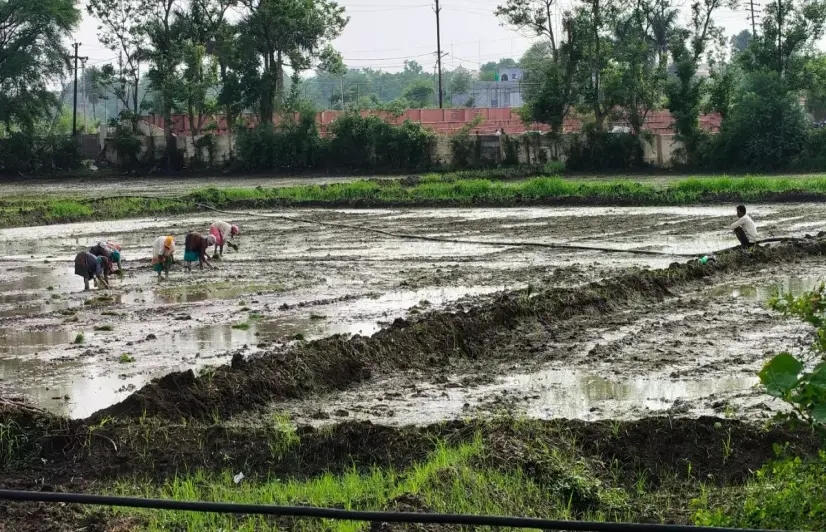
Bhopal, Madhya Pradesh: From the edge of a field in Nathoo Barkheda village, about 22 km from Bhopal, the Upper Lake is nowhere in sight. There is only green, and the slope of the land. But when monsoon rain hits this soil, runoff carrying fertiliser, pesticide and fine topsoil makes its way to the lake.
The lake covers 32.29 sq km but drains a catchment of 370.6 sq km. It supplies drinking water to about 40% of Bhopal’s population.
Farmers in the catchment say they have been changing how they farm for years to help protect the wetland. By reducing chemical fertilisers, using organic inputs and adopting practices that retain soil and moisture, they can reduce the pollutants and nutrients that wash from their fields into the lake. But no scheme to pay them for these environmental benefits has become operational.
For Abhishek Sigrole, a farmer in Nathoo Barkheda, the benefits were visible in his fields. About a decade ago, bird scientists told him that chemicals used on farms were contributing to the deaths of sarus cranes. He reduced chemical fertilisers and adopted moisture-conserving and cow-dung-based alternatives. The cranes returned to his fields, he told 101Reporters.
 An image of a Sarus crane on the wetlands (Photo - Birds Society Bhopal, 101Reporters)
There was no corresponding benefit in the price of his produce. In the initial years, production fell, while organic farming required more labour and raised his costs. No separate market was willing to pay more.
“In the initial years, crop production fell. Even after changing our farming methods, there was no difference in the price of our produce,” Sigrole said. “Organic farming increased production costs and labour. We had neither an organic market nor a fair price.”
His experience points to a larger problem. Farmers bear some of the cost of farming in ways that can benefit the wetland, but there has been no lasting mechanism to compensate them. The idea is nearly two decades old: a pilot project in 2005-07 tried to establish such a system and fell short.
Now the question is being revisited through carbon credits, which put a monetary value on additional carbon stored in soil through changes in farming practices. Farmers in Punjab and Haryana have begun receiving such payments. Could Bhoj’s farmers also be paid?
Who pays the cost of conservation?
Dheerat Singh Thakur, who farms 10 acres in Int Khedichhap village, tried organic cultivation on two acres, using cow-dung manure, vermicompost, jeevamrit, neem oil and trichoderma. In the first two to three years, his costs rose and production fell. By the fourth year, yields recovered, he says, but the price did not: organic produce fetched the same price as chemically grown grain.
In kharif, organic soybean cost him about Rs 14,500 an acre and yielded about five quintals. The chemical crop cost Rs 12,000 an acre and yielded 6.5 quintals. Both sold for about Rs 5,300 a quintal.
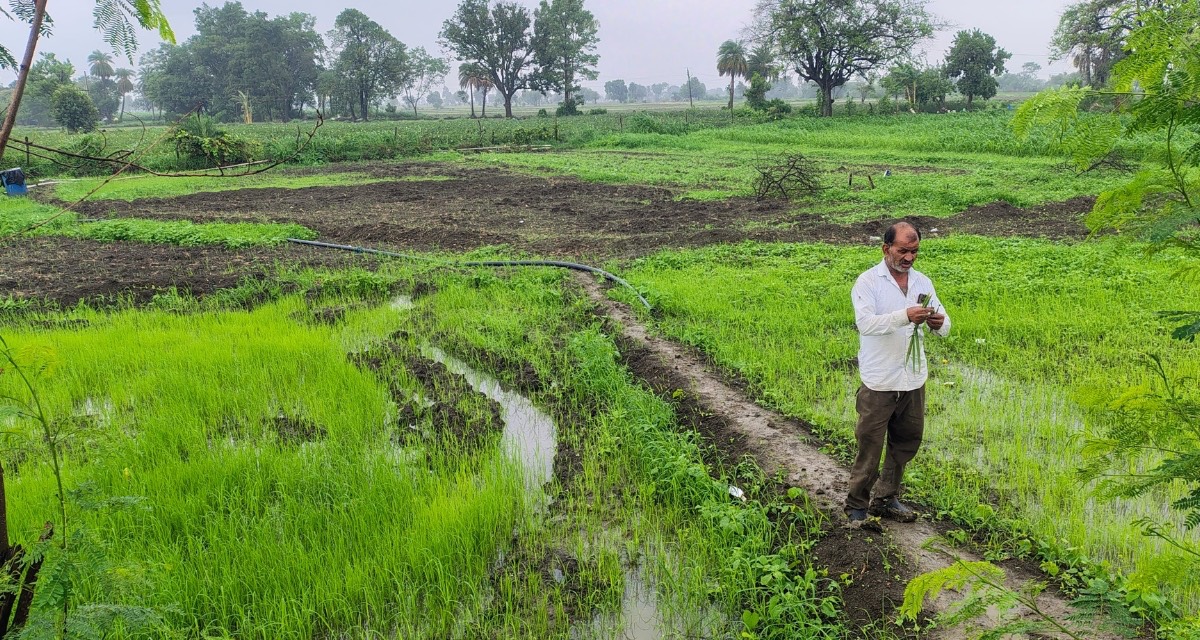 An image of Dhirat Singh Thakur from Intkhedi village (Photo - Sanavver Shafi, 101Reporters)
After costs, organic soybean earned him about Rs 12,000 an acre, compared with Rs 22,450 from chemical farming – a gap of Rs 10,450 an acre, or about Rs 20,900 across his two organic acres. In rabi, at about Rs 2,585 a quintal, the gap was about Rs 11,840 an acre, with earnings of Rs 29,360 from organic cultivation against Rs 41,200 from chemical farming. Thakur has farmed fully with chemicals since 2010.
Dwiyanshu Patidar, 31, of the same village, describes a similar squeeze. His father began organic farming on three acres in 2006-07 after attending an awareness camp, but the market did not cover the cost.
“We also want to do chemical-free farming, but it is our compulsion,” Patidar said. If farmers were given the right price or an incentive for organic produce, he added, they would adopt it again.
Not everyone has turned back. From 2013, Bhopal Birds and the Wildlife Trust of India worked with farmers in Nathoo Barkheda, Bishankhedi and Goragaon, enlisting them as “Sarus Mitra”, or friends of the sarus crane. About 30% of farmers gradually adopted organic farming, with no payment attached. Sangeeta Rajgir of Bhopal Birds says organic inputs were expensive and persuading farmers was difficult.
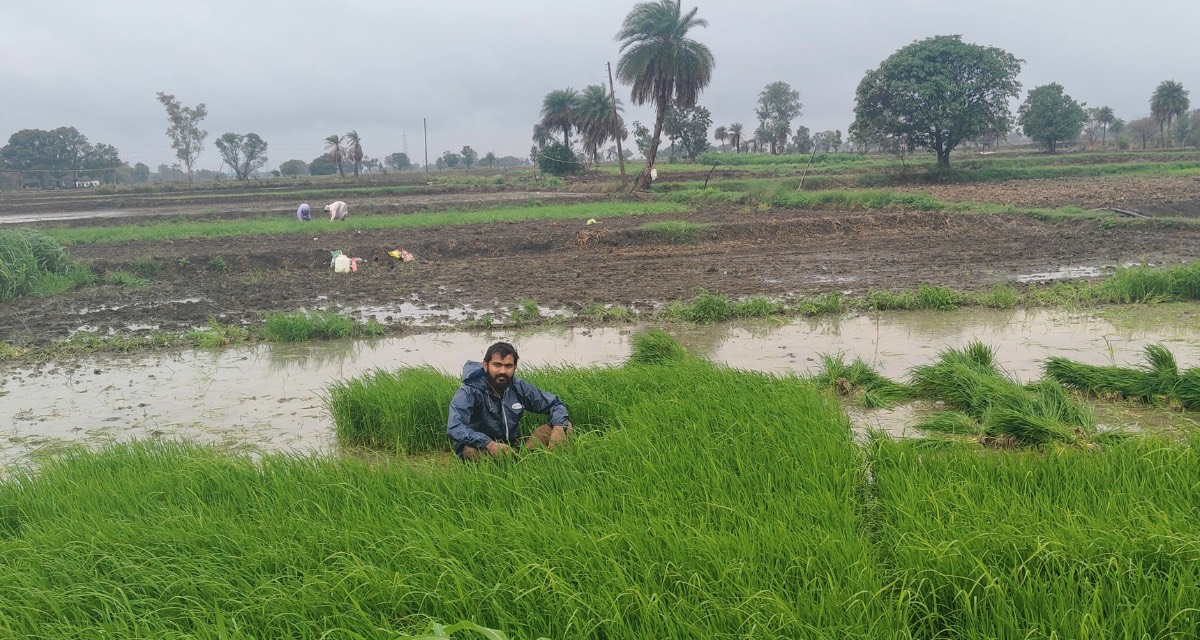 An image of Divyanshu Patidar from Intkhedi village (Photo - Sanavver Shafi, 101Reporters)
Some farmers have found a way around the price problem. Gajraj Singh Verma, who farms about 10 acres organically in Sehore district, began selling directly, first pickles and pulses and later other crops, to customers who knew the produce was organic. He now has more than 500 customers in Bhopal, Sehore, Raisen and Vidisha, reached by phone and WhatsApp, and gets a premium.
But not every farmer can build a customer base this way. Reaching farmers at scale would require institutional support, which the government has not provided.
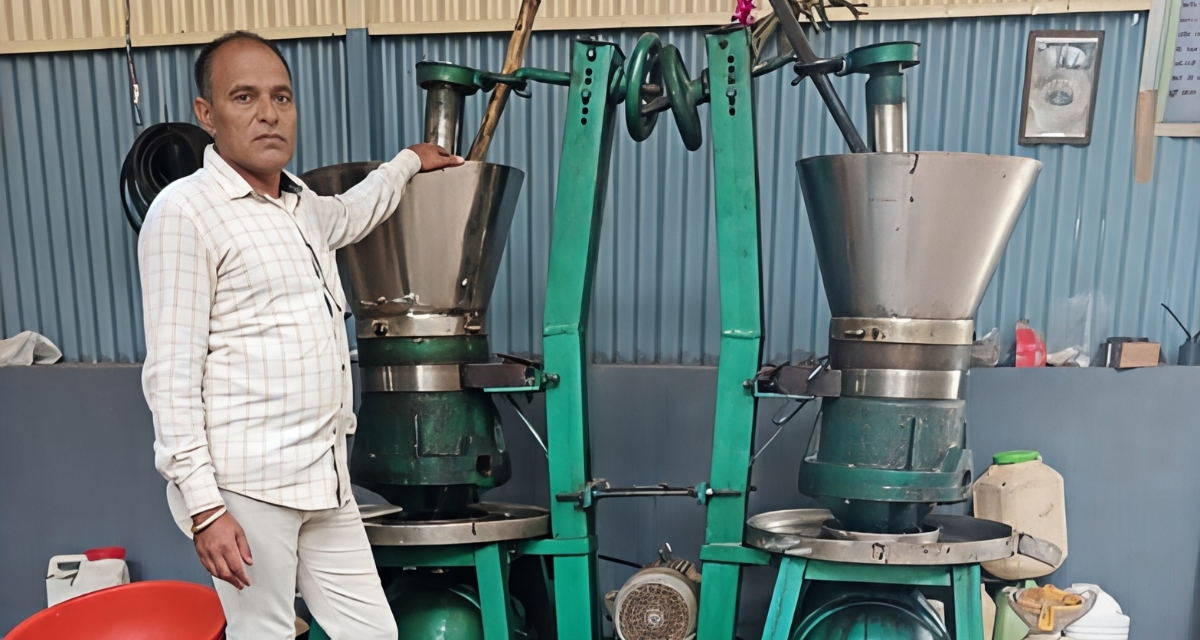 An image of Gajraj Singh Kisan with his organic oil-making machine (Photo - Sanavver Shafi, 101Reporters)
The pilot that never paid
The question of how to compensate farmers for conservation is not new. Between 2005 and 2007, the International Institute for Environment and Development and Winrock International India worked with local organisations on a pilot project exploring “payments for environmental services” in the Bhoj catchment.
The premise was straightforward: if farming practices affected the quality of water flowing into the Upper Lake, farmers could be compensated for practices that reduced nutrient and chemical runoff. The service was reduced nutrient runoff, the Bhopal Municipal Corporation was the beneficiary, and farmers were the providers.
About 90 farmers in eight villages agreed to try organic farming on one acre each. The project proposed technical advice, market access and lower input costs, with a market premium and funding through corporate contributions also under discussion.
But the payment never materialised. According to the project’s 2007 synthesis report, farmers received technical assistance, including training in composting and exposure visits, but no direct cash from the municipal corporation or any dedicated fund. The report identified the Lake Conservation Authority, the corporation and farmers’ committees as parties to any negotiation, but said a state or private institution would need to provide political, financial and administrative leadership.
Without that, the report said, a lasting incentive mechanism would remain uncertain. Rashid Noor Khan, an environmental activist who has fought a legal case against encroachment on the wetland, said stakeholders showed interest at the time, but the proposal never became a real transaction. No operational government scheme to pay farmers has started since, he said.
There was some evidence that residents were willing to contribute towards lake conservation. A 2011 study led by economist Madhu Verma of the Indian Institute of Forest Management surveyed about 1,500 households across Bhopal’s 66 wards on what they would pay for conservation of the lake. After screening, 804 observations were used.
The median willingness to pay was Rs 241 as a voluntary contribution and Rs 29.50 as a compulsory municipal tax. The averages were higher – Rs 537.85 and Rs 219.17 respectively – and the researchers used the median for the city-wide estimate because of the gap between the averages and medians.
Meanwhile, public money has gone towards other measures. Bhopal generates about 308 million litres of wastewater a day, while its treatment capacity is 204 million litres, according to municipal engineer Udit Garg. The remaining 104 million litres of wastewater go untreated and flow into the city's lakes and other water bodies.
Garg said that under the AMRUT scheme, new treatment plants and pumping stations with a combined capacity of 171 million litres a day would be set up at a cost of Rs 160 crore. He said treating all the wastewater generated each day would help address the pollution problem to a considerable extent.
The municipal corporation is also focusing on increasing the capacity of Bhopal's 18 existing treatment plants. However, there are no plans to involve farmers in conservation efforts or introduce an incentive-based model to compensate them. Environmental activists have described the corporation's measures as inadequate.
Farmers are not the only pressure on the lake. Khan points to resorts and construction in the catchment alongside chemical farming. But farmers have received far less attention as conservation partners.
Subhash C Pandey, an environmentalist who has fought a legal battle for the lake, says conservation has been reduced to formality and engineering. If even a fraction of the sewerage budget were reserved for the catchment and organic farmers, he argues, it could lead to a significant improvement.
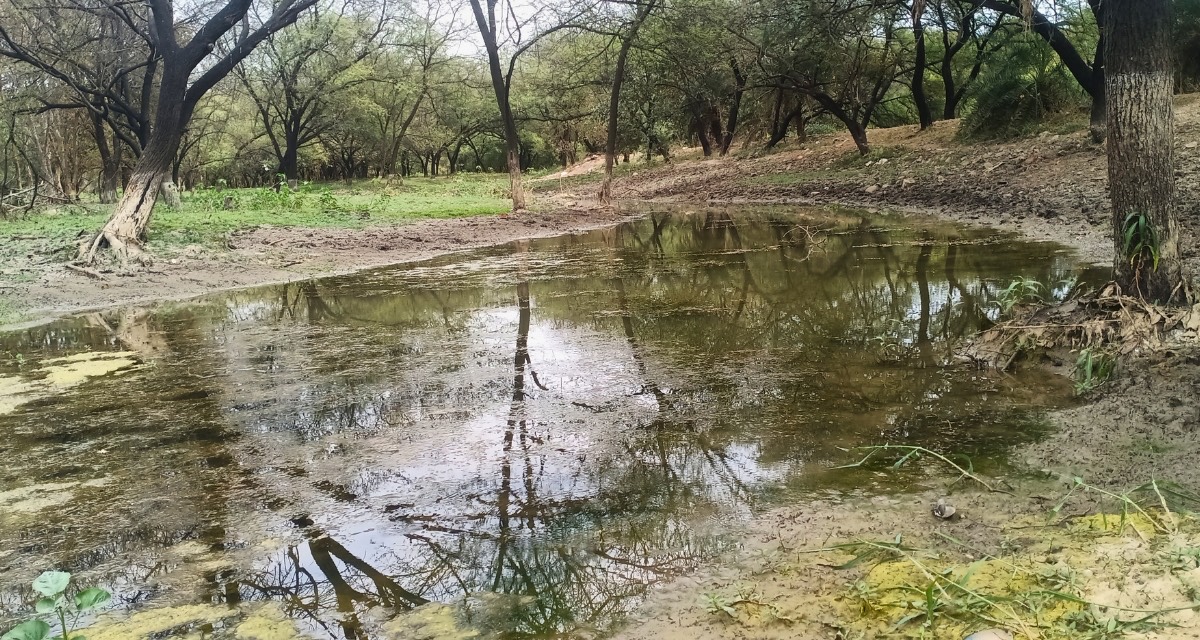 An image of the wetlands in Bhopal, million litres of wastewater go untreated and flow into the city's lakes and other water bodies (Photo - Sanavver Shafi, 101Reporters)
What the soil can tell us
For carbon credits to work in Bhoj, the first question is whether the carbon stored in its soils can be measured and whether farming practices can increase that storage. A 2025 study by researchers from Barkatullah University measured carbon in soil and vegetation at eight wetlands in the Bhopal area, including Kerwa, Bhadbhada Dam, Laharapura and Shahpura.
With soil sampled to a depth of 12 cm, total carbon stocks ranged from 16.34 to 23.28 tonnes per hectare. The highest soil organic carbon was recorded at Kerwa, at 22.41 tonnes per hectare. The differences between sites point to the role of land use. The researchers linked Kerwa’s higher carbon stocks to less tillage and human intervention, lower grazing pressure and forest restoration. Sites with lower stocks, including Bhadbhada and Laharapura, were affected by farming, grazing, pollution and degradation.
Ankita Singh, one of the researchers, said agroforestry and traditional ecological knowledge could suit the Bhoj landscape. Other research supports the link between farming practices and soil carbon. A 2025 review of 147 studies from India found that organic manure, green manure, compost, crop residues and reduced tillage can increase soil organic carbon, with clearer gains after more than five years.
But this evidence does not yet answer the question that matters for carbon credits in Bhoj: how much additional carbon can farmers in the catchment store by changing how they cultivate?
The 2025 wetland study measured existing carbon stocks. It did not calculate annual carbon sequestration by farmers or how many credits their farming practices could generate. A separate study led by Ashish Biswas at IISER Bhopal, funded by the Madhya Pradesh Council of Science and Technology and running since June 2025, is assessing carbon stocks in the Bhoj Lake wetland environment.
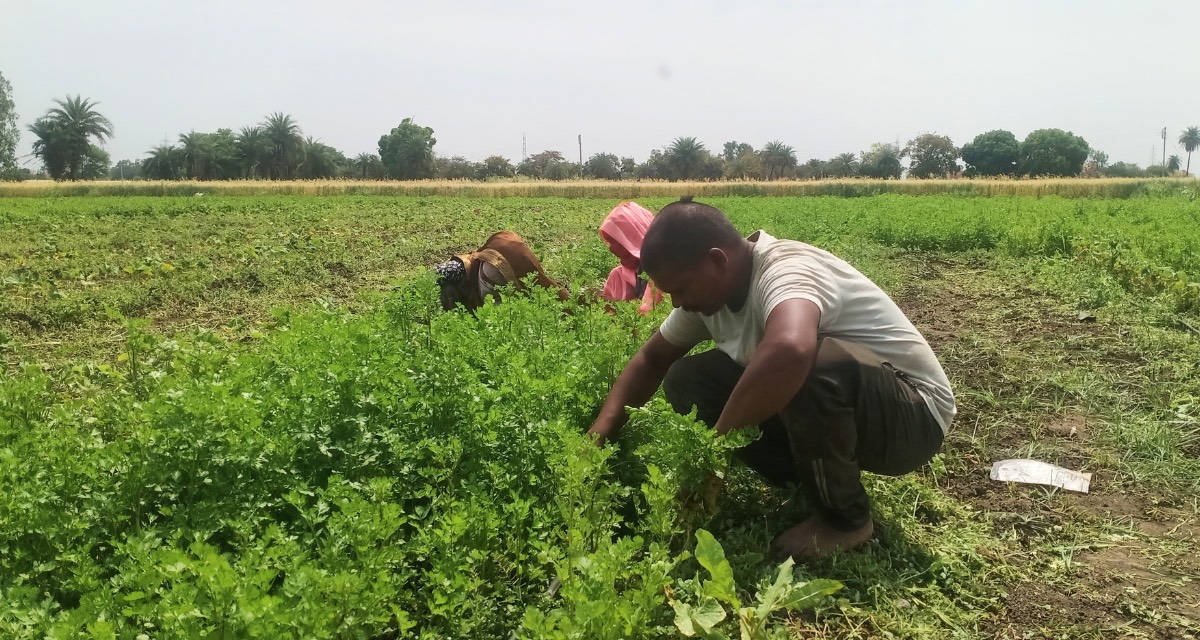 Farm Labourers working in the field (Photo - Sanavver Shafi, 101Reporters)
Lessons from India
On 17 September, the central government said more than Rs 2.9 crore was being paid to 2,550 farmers in Punjab and Haryana for adopting practices that increase soil carbon. The first digital payment was made at Punjab Agricultural University in Ludhiana.
The programme covers about 30,000 acres, where farmers avoided stubble burning and adopted direct seeding and minimum tillage. The practices were verified under Verra’s VM0042 methodology and generated more than 50,000 carbon credits. Payments ranged from Rs 3,000 to Rs 15,000 per farmer.
The payments are linked to the Grow Indigo Farmer Carbon Program, launched in 2019 with technical guidance from the Indian Council of Agricultural Research. It is a specific agricultural carbon programme, not a universal government scheme for payments to farmers.
The model is also different from what was attempted in Bhoj. The 2005-07 pilot was built around a wider environmental benefit: reducing nutrient and chemical runoff into the Upper Lake. The Punjab-Haryana programme puts a price on one measurable outcome – additional carbon stored in agricultural soils.
Farmers around the Upper Lake may already be using practices that can improve soil health and reduce runoff, but there is not yet enough evidence to establish how much additional carbon those practices store or how many credits they could generate. There is also a question of scale. Spread over roughly 30,000 acres, the Rs 2.9 crore announced for the Punjab-Haryana programme comes to under Rs 1,000 an acre. That is a fraction of the Rs 10,450 to Rs 11,840 an acre by which Thakur’s organic crops trailed his chemical crops.
The comparison is rough as the Bhoj figures come from one farmer, and it is not clear over what period the carbon payments are earned. But it suggests that carbon income alone may not close the gap faced by farmers who switch to organic cultivation. Still, the Punjab-Haryana programme changes the question facing Bhoj. It shows that soil-carbon gains can, under a verified carbon-credit system, be turned into payments. The issue is whether a similar model can be established for farmers in the Upper Lake catchment.
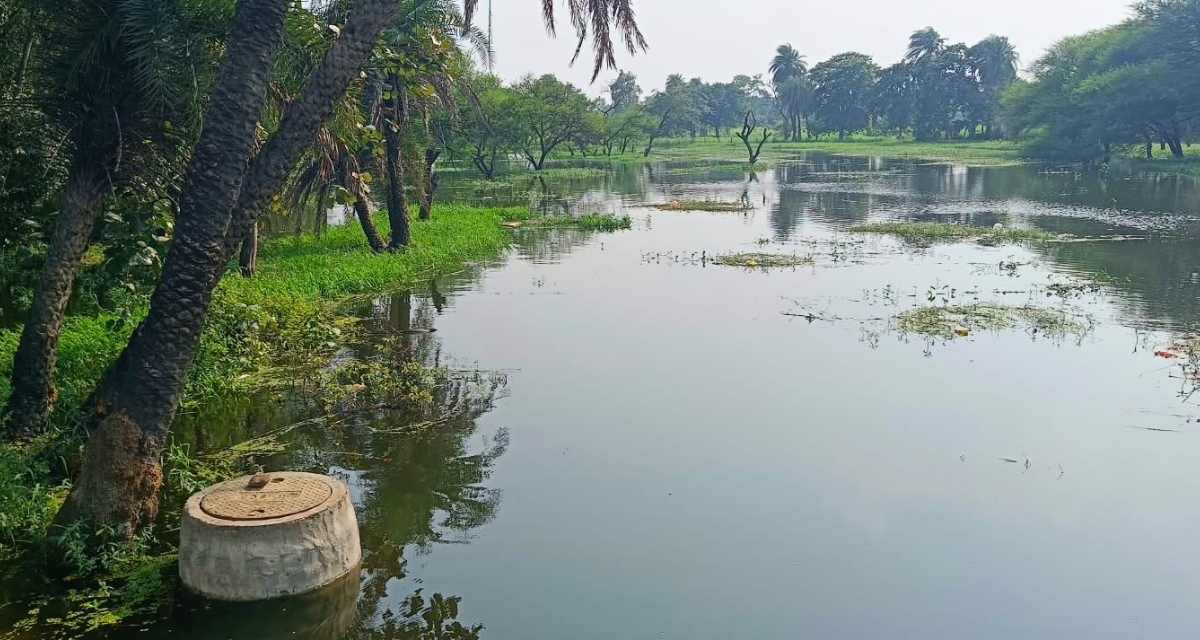 An image of the wetlands in Bhopal (Photo - Sanavver Shafi, 101Reporters)
What would it take to make it work?
A carbon-credit system in Bhoj would first require reliable data on how much carbon farmers’ soils hold, how that changes under different practices and how those changes can be verified over time.
Measuring carbon alone, however, would not create a payment system. There would also have to be a way to connect farmers with buyers of carbon credits, verify the farming practices and carbon gains, and ensure that farmers receive a fair share of the resulting payments.
The question of who would lead such a system has been unresolved for nearly two decades. The 2007 report identified political, financial and administrative leadership as necessary to establish a lasting incentive mechanism.
The Madhya Pradesh government’s draft Bhopal Development Plan-2047 gives priority to conserving the Upper Lake and its catchment. Claims and objections have been invited before the plan is finalised.
For environmentalists working on Bhoj, the question is also about how conservation itself is approached.
Pradeep Nandi, director general of the National Centre for Human Settlements and Environment, said farmers and climate-smart farming were once part of the work of the state’s Environmental Planning and Coordination Organisation, but its focus now seems to be engineering alone.
“How will the distance be closed between treating the catchment merely as a protected area and making the farmer living there a partner in conservation?” he asks.
Carbon credits, then, are one possible route, not a ready-made solution. Bhoj would first need reliable soil-carbon data, a way to measure additional sequestration and a system that can turn those gains into payments for farmers.
“When the farmer of Punjab and Haryana can take cash benefit of carbon credits through low tillage,” Nandi asks, “why not the farmer of the Bhoj catchment?”
Cover Image - Farm Labourers planting saplings in the field (Photo - Sanavver Shafi, 101Reporters)
Would you like to Support us
101 Stories Around The Web
Explore All NewsAbout the Reporter
Write For 101Reporters
Would you like to Support us
Follow Us On