Back to Classroom: Maharashtra’s farmers are turning to a peer-run digital collective to navigate climate shocks

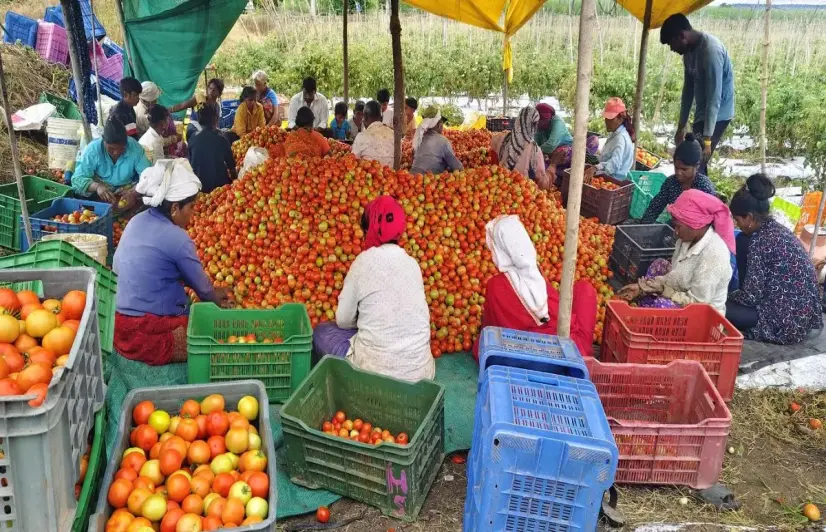
Back to Classroom: Maharashtra’s farmers are turning to a peer-run digital collective to navigate climate shocks
As climate volatility and market risks deepen, thousands of farmers across Maharashtra are relying on Maitri Vicharanchi for real-time advice, support and decision-making.
Pune, Maharashtra: Sunil Dhumal (42), a farmer from Devkarwadi village in Pune district, cultivates tomatoes on his eight acres of land. This year, he was able to complete his cultivation on time despite uncertain weather.
“We cultivated tomatoes on September 25,” Dhumal said. “The group’s weather expert alerted us about rainfall in October through online sessions. This gave us enough time to prepare the soil bed and carry out mulching. Otherwise, the cultivation would have been delayed. The information helped me take timely action, and my cultivation was completed within the planned timeframe.”
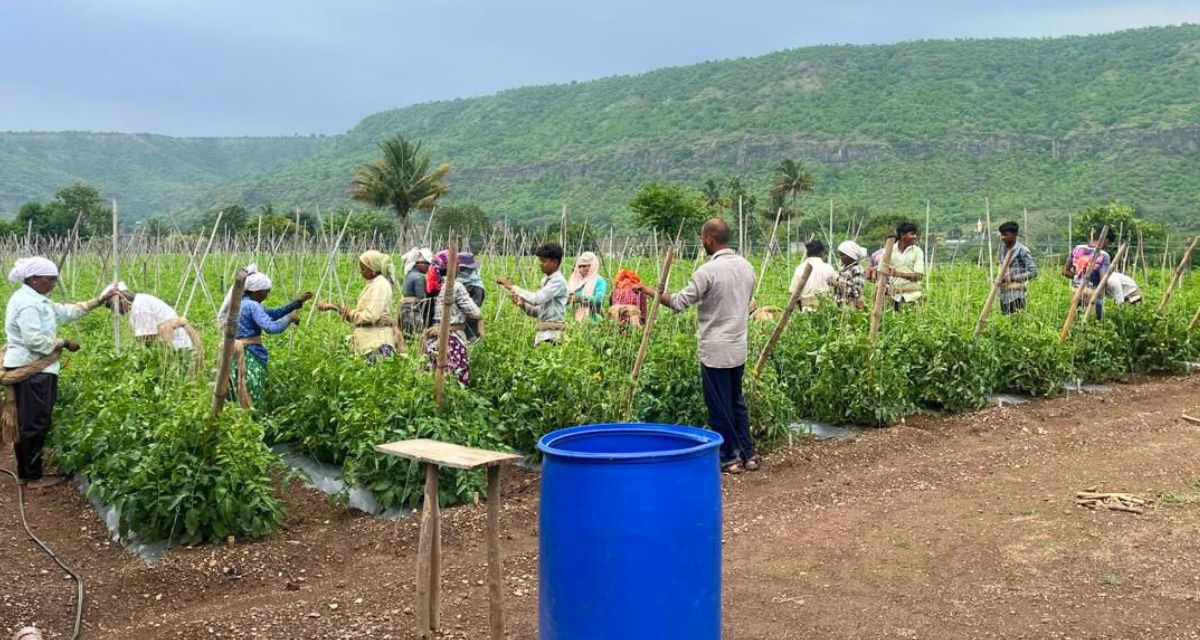 Many farmers in Maharashtra are now moving beyond official advisories to cope with climate change (Photo - Shekhar Paigude, 101Reporters)
For farmers like Dhumal, such decisions are increasingly shaped by erratic rainfall, repeated crop losses and growing uncertainty over prices and such conditions have pushed many in Maharashtra to look beyond official advisories.
In 2015, amid these pressures, a group of farmers started Maitri Vicharanchi, literally, a friendship of thoughts, in the state’s western region as an informal space to exchange farming knowledge.
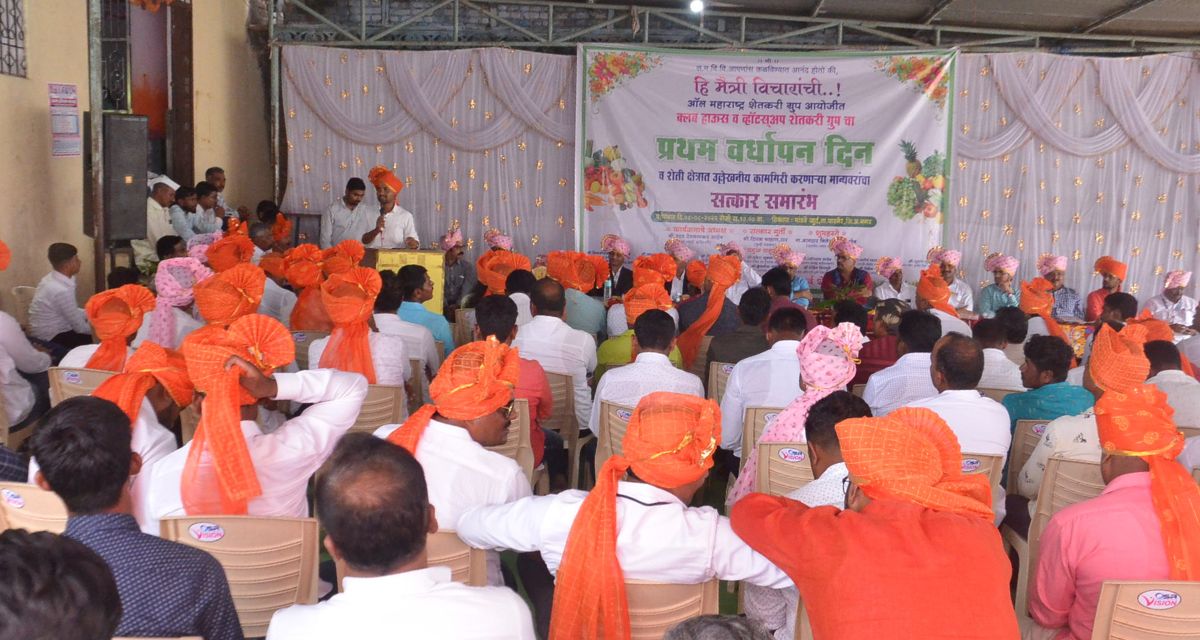 The first anniversary meeting of the group (Photo - Shekhar Paigude, 101Reporters)
A decade later, the farmer-run digital collective connects around 6,000 small, marginal and semi-medium farmers across nearly 700 villages in western and northern Maharashtra and the Marathwada region. Through WhatsApp messages, audio sessions on the mobile application Clubhouse and peer-to-peer exchanges, farmers now discuss what to sow, when to irrigate and where to sell—more often than not without waiting for guidance from government extension services.
“Farmer is the real innovator,” said Bajirav Gagare, a farmer from Mandave Khurd village in Ahilyanagar district and one of the founders of Maitri Vicharanchi. “He experiments with everything starting from watering to seed selection. But there is very little coordination between the government and farmers, and officials hesitate to recognise farmers as innovators.”
An English graduate and a semi-medium farmer who owns 15 acres, Gagare started the WhatsApp group with a few friends, initially sharing practices from his own farm. According to him, top-down advisories rarely work. “My belief is that a farmer learns best from another farmer in the vicinity,” he said. “When farmers communicate with farmers, the rate of adoption and adaptation is much higher.”
Over time, what began as informal exchanges evolved into a structured knowledge-sharing system. Farmers raise questions as they arise—about crop selection, fertilisers, irrigation methods, weather risks or market prices—which are then discussed collectively, often late at night, when many farmers are irrigating their fields.
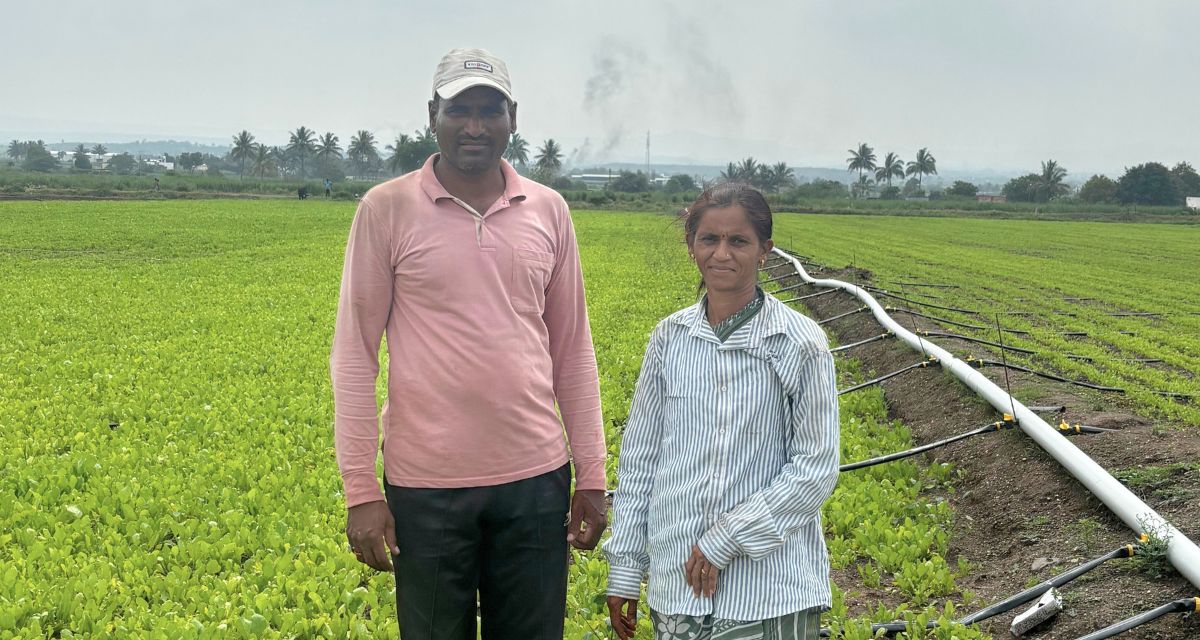 Ramdas and Swati Memane of Memanewadi of Daund taluka of Pune (Photo - Shekhar Paigude, 101Reporters)
Daily risk
The need for such a collective is rooted in the agrarian realities of Maharashtra, where climate unpredictability is no longer an abstract forecast but a lived challenge for farmers.
This year, heavy and erratic rainfall battered large parts of the state — particularly in Marathwada and central regions — with multiple spells of intense rain and thunderstorms disrupting sowing and harvesting schedules, as flagged by the India Meteorological Department over the monsoon months.
In September 2025, Marathwada received 362.9 mm of rain in September 2025, compared to the normal 160.5 mm, which is about 126% more than the long-term average for the month.
For many farmers, the volatility has had devastating consequences. Balaji Sule, from Ravankola village in Nanded district’s Mukhed taluka, lost his entire 1.5-acre crop to heavy rains in September. “Despite information, I did not expect such heavy rain,” he said. “But group members counselled me and assured me of help to rebuild.”
For Sule, the collective’s value went beyond agronomy. “This was extremely important. We need people and moral support,” he said. “Overcoming loss is an individual journey, but when people trust you, the journey becomes easier.”
One reason farmers increasingly rely on the collective during climate stress is its ability to translate complex weather information into local, actionable advice. Vijay Jaybhaye, a farmer and the group’s informal weather expert, has built a reputation for doing precisely that. With a laptop and smartphone, Jaybhaye studies weather patterns independently, decoding meteorological bulletins into practical guidance.
“Farmers struggle to understand the jargon-heavy language of the Meteorological Department,” Jaybhaye said. “I translate IMD’s press notes, fortnightly updates and outlooks into Marathi and explain what they mean for specific districts and talukas.”
Instead of broad regional forecasts like “interior Maharashtra,” he frames predictions in terms that matter on the ground. “When they say ‘interior Maharashtra,’ farmers don’t know what that means,” he said. “I explain it using district names like Latur, Nanded or Parbhani.”
Jaybhaye conducts weekly sessions on Clubhouse and shares alerts on WhatsApp. Farmers consult him during sowing and harvesting, adjusting schedules to reduce losses. Sunil Dhumal credits these alerts with helping him complete tomato cultivation on time this year. “We cultivated tomatoes on September 25,” he said. “Vijay alerted us about rainfall in October. This gave us time to prepare soil beds and do mulching. Otherwise, cultivation would have been delayed.”
Sule said Jaybhaye’s July forecast of low rainfall prompted him to grow a short-duration fenugreek crop instead. “I earned Rs 1.5 lakh from it,” he said. “This will help me navigate difficult times ahead.”
These climate pressures intersect with long-standing cropping patterns that shape farmers’ choices. Western Maharashtra is known as the sugar bowl of the state, where cooperative sugar factories offer assured procurement and steady income, making sugarcane the default crop for many. Over time, this dependence narrowed cropping choices and increased vulnerability to water stress and climate shocks.
Sunil Dhumal (42), a farmer from Devkarwadi village in Pune district, grew up seeing sugarcane farms all around him. “For years we cultivated sugarcane and forgot about other crops completely,” he said. “Sugarcane makes you lazy and exploits the soil for almost a year.”
Dhumal owns eight acres. In October this year, instead of tending sugarcane, he was supporting young tomato plants with bamboo sticks, having decided to allocate four acres to vegetables, tomato, coriander, bitter gourd and ridge gourd, breaking with the pattern most farmers in his village still follow.
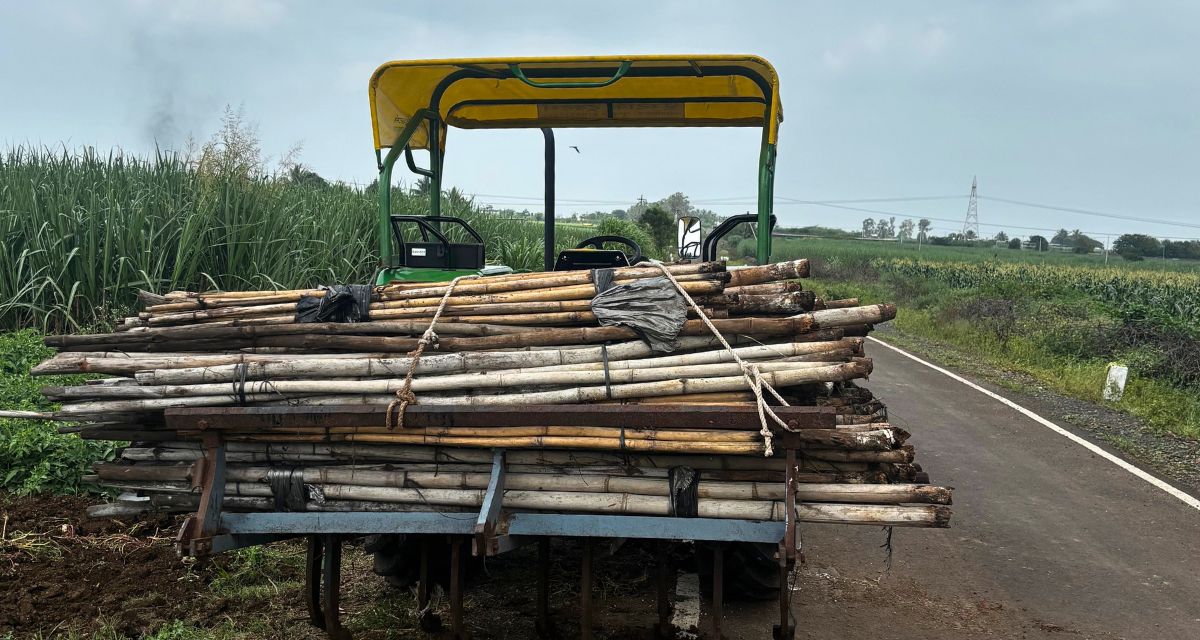 Tractor carrying bamboo sticks to support tomato plant (Photo - Shekhar Paigude, 101Reporters)
The decision was neither easy nor obvious. “When I explained the idea of vegetables to my father, they left no argument to prove me literally mad,” he said. “My father, wife and children laughed when I started mulching. They had never seen such methods.”
What made the shift possible, Dhumal said, was his membership of Maitri Vicharanchi.
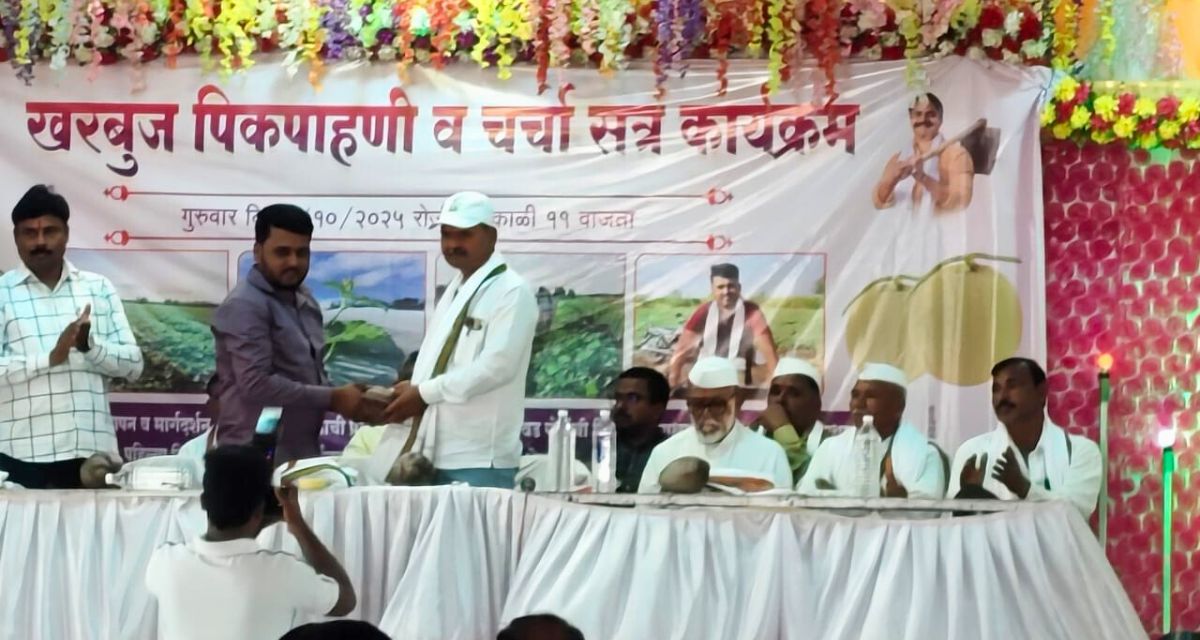 Crop inspection and discussion program (Photo - Shekhar Paigude, 101Reporters)
Beyond crops
As the collective expanded, it began drawing in government officials as well. Narayan Ghule, deputy agricultural officer in Ahilyanagar and an active participant in the group, said communication was central to climate adaptation. “Climate change communication should be in farmers’ own language,” he said.
Ghule explained that during peak summer months, low humidity combined with constant irrigation can damage crops. “We advise farmers to use sprinklers during summer and crop cover for horticulture,” he said. “During cloudy weather and unseasonal rain, reliance on chemical fertilisers alone does not work. We focus on bio-fertilisers.”
Farmers said such advice was easier to absorb when reinforced by peers who tackle similar problems.
Ganesh Salgar, a farmer from Solapur district, said the group helped him rethink irrigation practices. “In March and April, the air is dry,” he said. “Constant irrigation may damage crops. Sprinklers help maintain temperature.”
For some, the collective has also become a form of social support during personal crises. Lalita More (41), a farmer from Kalvan in Nashik district, joined Maitri Vicharanchi after her husband died suddenly of a heart attack in 2019.
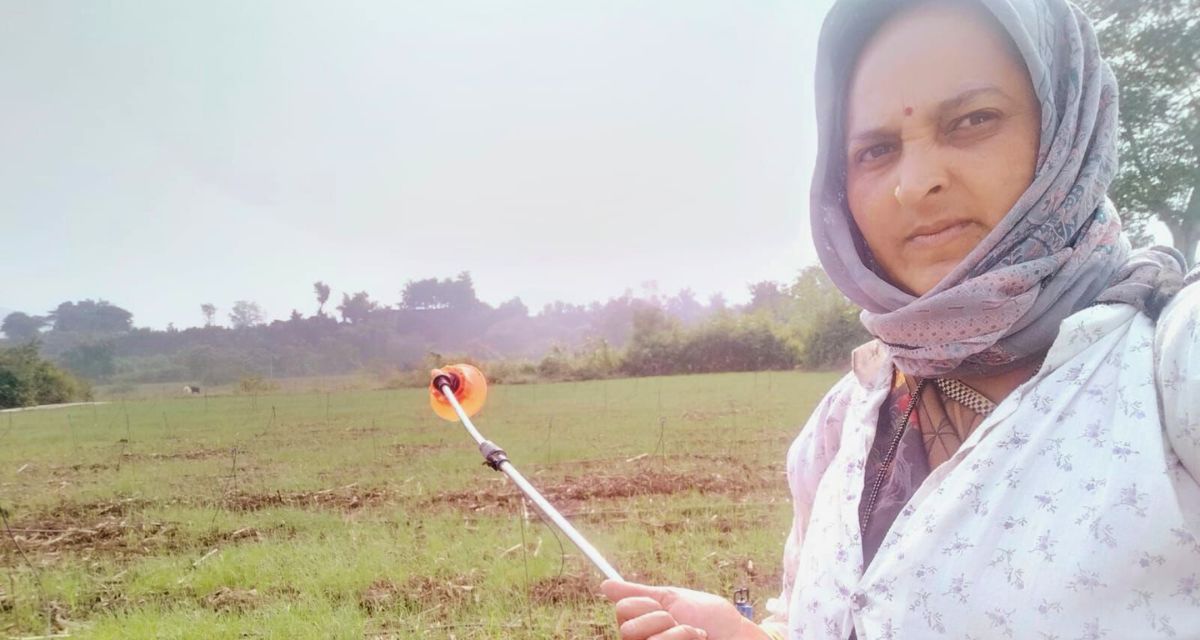 Lalita More, who lost her husband and turned to kisan collective for advice (Photo - Shekhar Paigude, 101Reporters)
“When he died, my daughter was in Class 11 and my son in Class 6,” she said. “We had no other income apart from farming.”
Although she had assisted with cultivation earlier, More lacked knowledge of seeds, fertilisers and markets. “I tried farming with my knowledge till 2023 but faced many difficulties,” she said. With help from her son, she began attending the group’s online sessions. “Members shared knowledge, told me about bio-fertilisers in winter and gave weather alerts,” she said. “Now I farm on my own and share my experiences with other farmers.”
Beyond climate and cultivation, the collective also helps farmers navigate markets—often the most opaque part of farming. Gagare described a recent cabbage crop he grew. “I was offered Rs 8 per kg in the Sangamner market,” he said. “When I asked in the group, farmers from Nashik said rates were Rs 15- Rs 17.”
Through group contacts, he connected with buyers in Nashik and sold his produce at Rs 12 per kg after transport costs. “It saved me Rs 60,000,” he said. “I earned Rs 1.5 lakh in two months.” Farmers also routinely share information about traders, warning one another about unreliable merchants across districts.
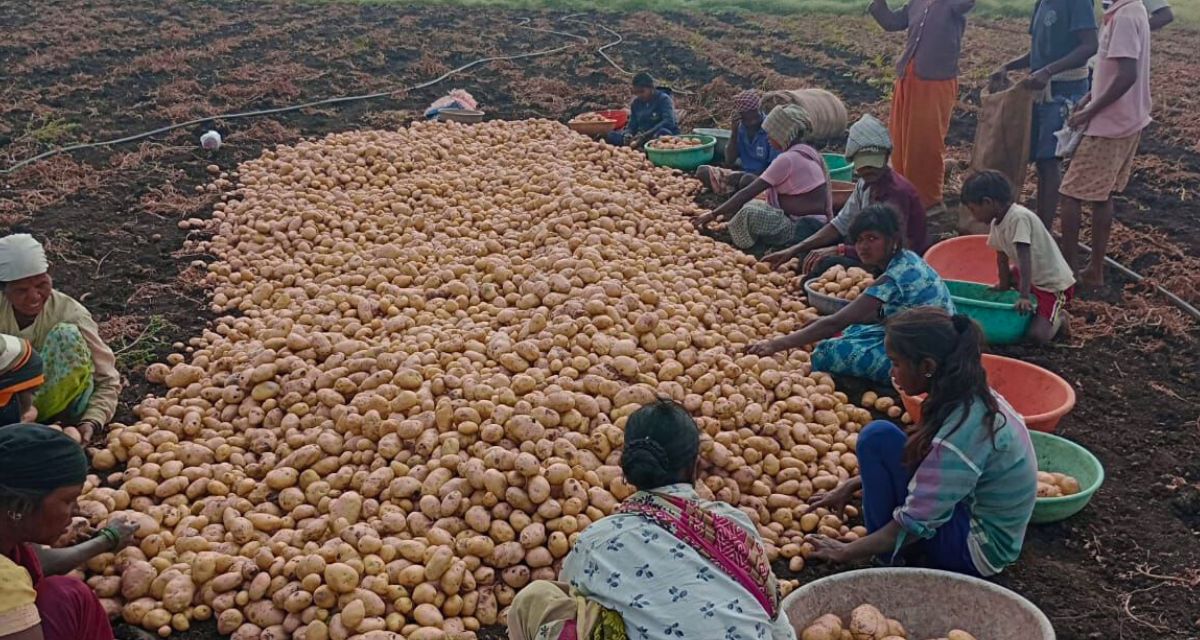
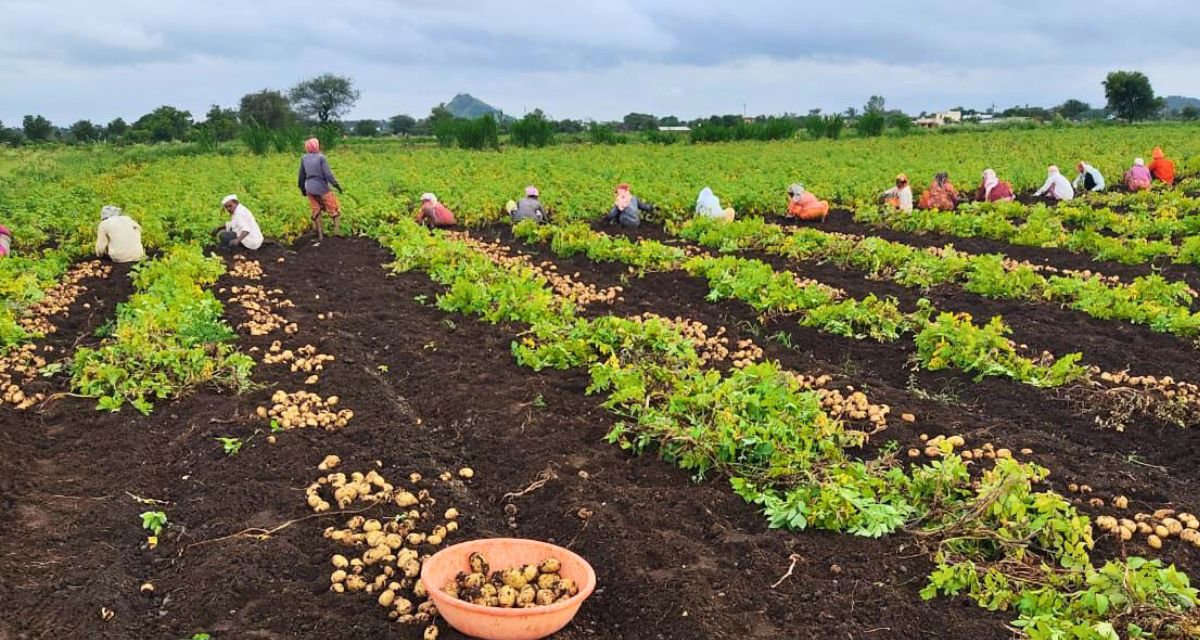 Beyond climate and cultivation, the collective also helps farmers navigate markets (Photo - Shekhar Paigude, 101Reporters)
More than an online group
Over the years, Maitri Vicharanchi has moved beyond digital interactions. Members now meet once a year in person, with farmers from different districts organising gatherings in cities such as Pune, Nashik and Solapur. Participation is voluntary, with farmers pooling money to cover costs. Around 3,000 farmers attended the 2024 meeting, Gagare said.
“These gatherings matter,” he said. “Farmers meet experts, exchange experiences and build a sense of belonging.”
Maitri Vicharanchi does not claim to solve all agrarian problems. But for thousands of farmers navigating climate uncertainty, market volatility and shrinking institutional support, it has become a practical space for collective learning and decision-making.
For Sunil Dhumal, the change is already visible. “Earlier, we waited for someone to tell us what to do,” he said. “Now we ask, discuss and decide.”
In a landscape shaped by sugarcane monoculture and unpredictable weather, that shift—from dependence to collective confidence—has become one of the most meaningful adaptations farmers are making on their own.
This project is supported by the Internews Earth Journalism Network with funding from the Swedish International Development Cooperation Agency (Sida) Cover image - Climate volatility and market risks are deepening as thousands of farmers across Maharashtra are relying on Maitri Vicharanchi for real-time advice (Photo - Shekhar Paigude, 101Reporters)
Would you like to Support us
101 Stories Around The Web
Explore All NewsAbout the Reporter
Write For 101Reporters
Would you like to Support us
Follow Us On