Around Imphal's women's market, heat and conflict are pushing vendors to the edge

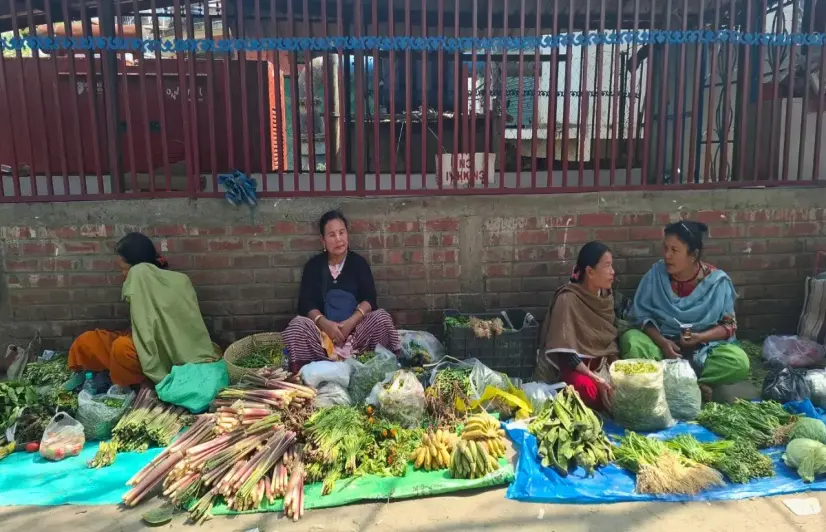
Around Imphal's women's market, heat and conflict are pushing vendors to the edge
As temperatures rise and recurring shutdowns disrupt daily life, women vendors around Ima Keithel are struggling to protect their health, preserve perishable goods, and hold on to shrinking livelihoods.
Imphal, Manipur: Every morning before sunrise, Chongtham Mani (72) collects her goods, traditional edibles like Kabok, Heingan, and Lalu, from local producers near her home on Changangei Airport Road. By 5 or 6 am, she has claimed her spot on the street corner of Khwairamban Bazaar, in the heart of Imphal, the capital of Manipur. There is no shade, no shelter, just a small umbrella between her and the open sky.
She will sit there through the morning heat and into the afternoon, when temperatures in Manipur's capital regularly climb past 35°C.
She has done this for 21 years. But these days, it is getting harder.
"After enduring extreme heat throughout the day, I suffer from exhaustion, fatigue and sleepless nights. To cope, I relied on ORS and other electrolyte solutions in the evening. My children had to gently massage me to help ease the strain," she told 101Reporters. "But the next morning, I have to repeat the same. If I don't reach early enough, I can lose the spot to another vendor."
Vendors like Chongtham Mani already survive on the sidelines.
She is one of hundreds of women temporary street vendors who operate around Khwairamband Ima Keithel, widely recognised as the world's oldest and largest women-only market, and its surrounding streets.
On an ordinary day, she earns Rs 600-Rs 800. On good days, she can manage to earn Rs 1,500-Rs 2,000. But in the strife-torn Manipur, even ordinary days are harder to come by now.
The heat has always been a part of the job. What has changed is how much worse it has become, and how little margin these women have left to absorb it, amid the violence.
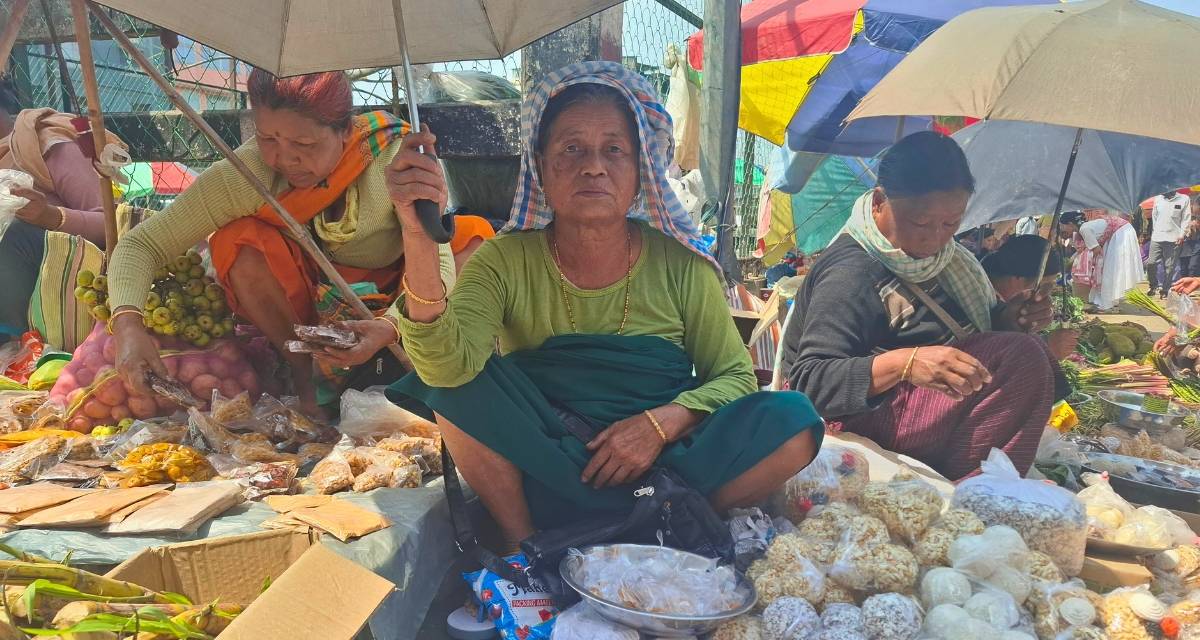
Chongtham Mani (middle) and others selling their produce (Photo - Ngangom Suraj, 101Reporters)
Numbers behind the heat
Data from the Directorate of Environment and Climate Change, Government of Manipur, showed that the state has recorded some of its highest temperatures in over 13 years in recent years.
In September 2024, in the Noney district, the temperature reached beyond 42°C – an anomaly during the month. Additionally, even the average annual peak temperatures have trended steadily upward, from 34.7°C in 2013 to 35.7°C in 2024.
The Manipur State Action Plan on Climate Change projects a further rise of above 1.7°C by mid-2030. Over the last 100 years, the state's minimum and maximum temperatures have increased by at least 1.7°C and 1.5°C, respectively.
In addition to the uncomfortable weather, this spike has also translated into shorter shelf life for street vendors’ products such as vegetables, fish and perishable goods.
“The vegetables I procure from wholesalers are drying out or rotting at a much faster rate," Khambi, 58, from Thoubal Babu Bazar, said. “Their market value falls quickly.”
Khambi has been selling vegetables at Khwairamban Bazaar for 40 years.
Another vendor, Sanatombi (61) from Nambol, said that the rotting and drying of the vegetables in the hot weather has often resulted in her selling her goods at a loss of more than 50 per cent.
And, for fish vendors, the crisis is sharper still. Debla Okram, 40, of Leimapokpam, described an additional cost that now eats into already thin margins: "The rise in temperature has forced us to spend more on purchasing ice to preserve the fish." When that ice runs out, there is no recovery. "At times, after incurring such losses, we had no option but to give the fish away to neighbours for free, as it had lost all market value."
Prabitrarani, 54, of Yumnam Leikai, who also sells fish, said: "There are many instances when I have no choice but to sell at a loss of over 50 per cent, and at times I incur a complete loss."
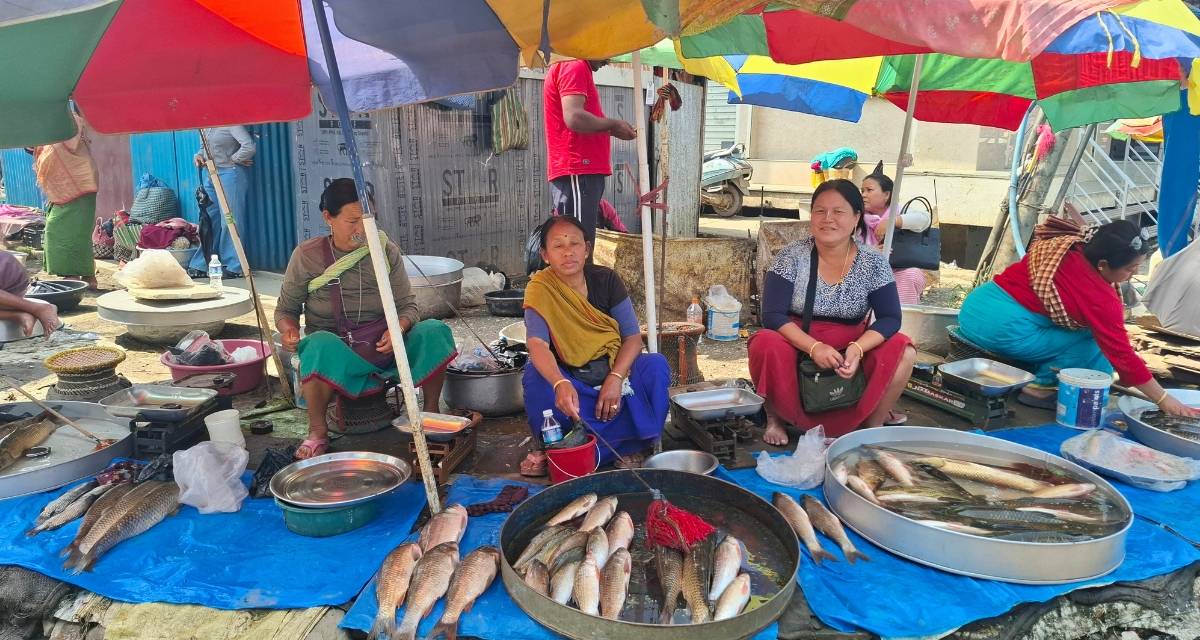
Debla Okram (middle) selling fish (Photo - Ngangom Suraj, 101Reporters)
The cost of staying hydrated
Landhoni, 61, from Patsoi village in Imphal West, sells vegetables grown in her small kitchen garden. On a good day, she earns Rs 300 to Rs 400. Of that, Rs 60 goes towards daily travel. On hotter days, she spends another Rs 20 to Rs 30 on packaged drinking water.
“For people like me who earn only Rs 300 or Rs 400 a day, spending another Rs 20 or Rs 30 on drinking water along with travel costs is very difficult,” she says.
Even using a toilet comes at a cost. Landhoni uses the washrooms at Ima Keithel or a nearby public toilet, paying Rs 5 for the urinal and Rs 10 for toilet use. Each time she leaves, she asks neighbouring vendors to watch her goods.
“If the government installs free drinking water stations or running taps at regular intervals, it will help not just street vendors but all outdoor workers cope with the heat,” she says.
There are currently no such water points or shaded shelters along the streets where the women sit.
Almost all the vendors this correspondent spoke to reported headaches, nausea, dizziness, weakness, painful cramps in the legs or abdomen, heat rashes and episodes of fainting.
Living inside a conflict
Into this already difficult situation, Manipur's ongoing conflict, which broke out on May 3, 2023, has arrived like a second blow. Sudden curfews, internet shutdowns, general strikes, and protests have become recurring features of life in the valley districts. They are imposed without adequate warning and can last for days. When they do, vendors who have already bought their stock cannot sell it. And in the heat, the stock does not wait.
Sanatombi explained what it means: "There have been instances when all the vegetables I had procured for sale were completely lost after sudden curfews were imposed for several consecutive days. The high temperatures only worsened the situation."
Debla Okram described how the two crises interact specifically for fish sellers, "There have been instances when we suffered heavy losses because ice was unavailable due to sudden market shutdowns."
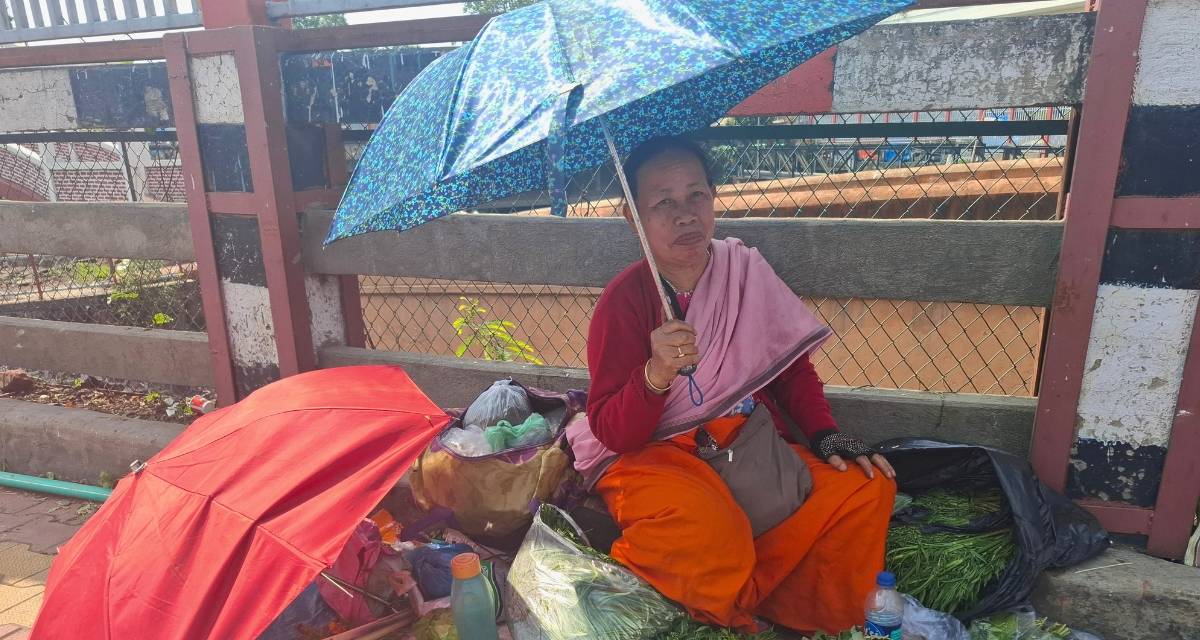
Sanatombi selling her produce (Photo - Ngangom Suraj, 101Reporters)
Centuries of history
The streets around Ima Keithel have long been a space of women’s commerce, labour and political resistance.
According to Asem Nirmala (58), Secretary of Lukmai Selup, one of the women’s associations of Ima Keithel, the market was established in the 16th century, during the reign of King Khagemba. Today, it houses more than 4,000 women vendors across three main buildings.
The market also played a central role in the two Nupi Lan, or Women’s Wars, of 1904 and 1939. In 1904, Manipuri women protested against the colonial government’s decision to reinstate forced, unpaid labour for local men. In 1939, they mobilised against large-scale rice exports that had triggered acute shortages within the state.
“These movements stand as enduring symbols of the courage, unity and political agency of Manipuri women,” Asem Nirmala said.
Today, Ima Keithel remains the economic and social heart of Imphal, with women selling vegetables, fruits, dry fish, handloom products, spices and household goods. Asem Nirmala described it as “the greatest information centre”, where people from across the region gather every day.
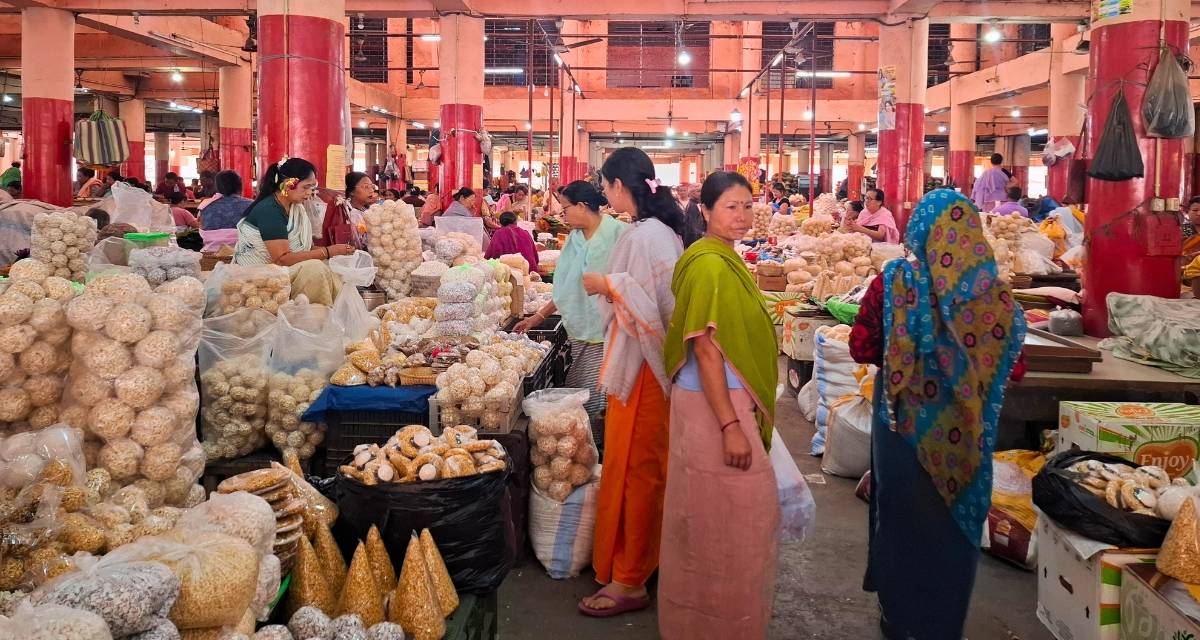
But the conflict has changed the character of the market.
“Thousands of people have been displaced, many have lost their livelihoods,” she said. “Frequent strikes, curfews and prolonged instability have disrupted economic activity and severely affected both vendors and customers alike.”
But even within Ima Keithel, access to basic infrastructure remains deeply unequal.
Women who hold permanent stalls inside the three market buildings, allotted through the Imphal Municipal Corporation at a monthly fee of Rs 120, at least have access to fans, ventilation, lighting and washrooms. Drinking water was installed there only in 2025 through funding from MP Dr Bimol Akoijam.
The women selling goods along the surrounding streets have none of these protections. They continue to work under direct sunlight, with no shaded shelters or reliable access to water.
Health systems struggle to keep pace
Dr Nevida Yengkhom, state nodal officer for the National Programme on Climate Change and Human Health, said Manipur is not among the 23 states officially identified as vulnerable to heatwaves, and no heatstroke deaths have been formally recorded so far.
But, she added, temperatures are steadily rising, and the health impacts are becoming increasingly visible.
Cooling wards have been set up at health centres, and 32 ambulances equipped with cooling facilities have been deployed across the state. Sensitisation programmes on heat precautions are periodically conducted for traffic police and municipal workers, while advisories are circulated through media channels.
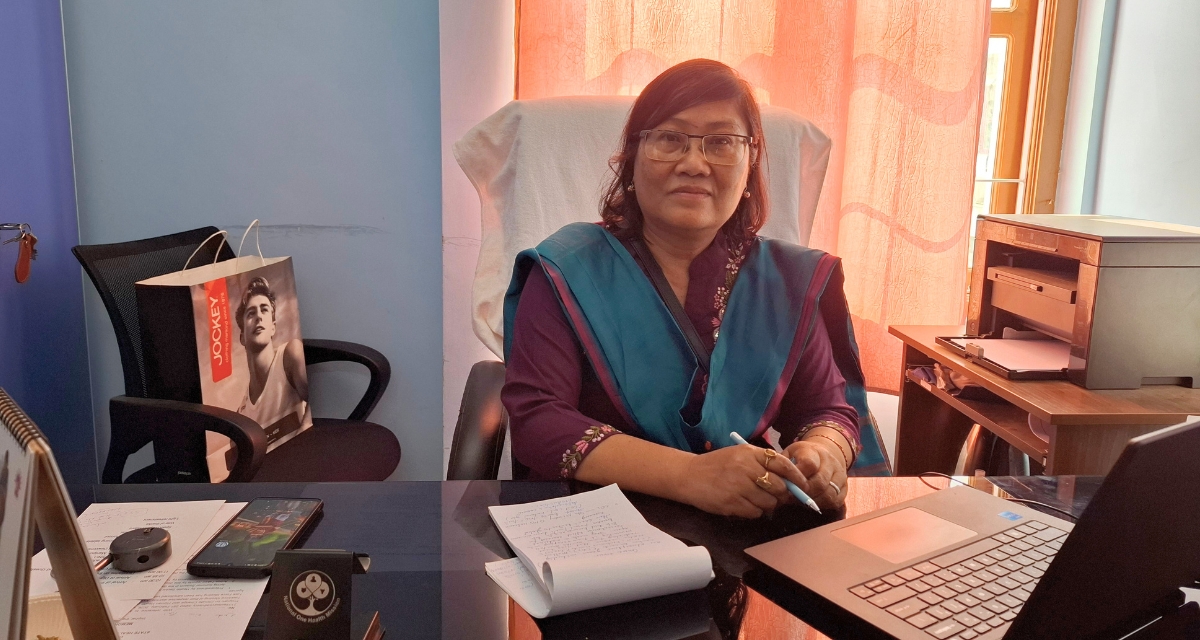 Dr Neveda Yengkhom in her office (Photo - Ngangom Suraj, 101Reporters)
In 2024, the Health Department also began awareness programmes specifically for street vendors. However, the initiative could not continue, Dr Nevida said, because of the “prevailing law-and-order situation and other related challenges”.
Cover photo - Landhoni and other vendors selling their produce (Photo - Ngangom Suraj, 101Reporters)
Would you like to Support us
101 Stories Around The Web
Explore All NewsAbout the Reporter
Write For 101Reporters
Would you like to Support us
Follow Us On